Speech by FS at Future Science Prize Science Gala Dinner
Following is the speech by the Financial Secretary, Mr Paul Chan, at the Future Science Prize Science Gala Dinner today (November 8):
Professor Dennis Lo (President of Hong Kong Academy of Sciences), Mr Zhang Yichen (Rotating Chairman of the Council of the Future Forum 2026), Future Science Prize Laureates, distinguished guests, ladies and gentlemen,
Good evening. It is a great pleasure to join you tonight, at the Future Science Prize Gala Dinner, celebrating the 10th anniversary edition of the Future Science Prize and this year's Laureates.
I am honoured to welcome to Hong Kong some of the world's finest scientists, many of whom have devoted decades to solving science's most complex theoretical questions and its most challenging practical problems.
There is a classic observation in business: great companies often lose their lead not because they are poorly run, but because they focus too closely on what already works. They serve their biggest customers and improve their best products, while new and innovative technologies quietly take root elsewhere.
Consider the smaller hard-disk drives that emerged in the 1980s. They stored less and seemed to hold little appeal for consumers. Yet they improved, found new markets and eventually transformed the industry. The incumbents saw the technology, but underestimated its promise. By the time its value became clear, it was already too late.
The same challenge confronts science. The most disruptive discoveries may initially offer little hint of their significance. If basic research has a customer, it is the future. And the future takes time to fully reveal itself. What seems obscure today may become the accepted starting point for the next generation.
The Future Science Prize understands that scientific and societal evolution. In 2016, a group of scientists and entrepreneurs committed their own resources to establish the first privately funded science prize in China. Ten years on, it has honoured 49 scientists and become a highly anticipated event on the international scientific calendar.
Tonight, we pay tribute to three outstanding laureates. Professor Zhang Hong has uncovered how autophagy works in multicellular organisms. Professor Zhao Dongyuan has pioneered mesoporous materials. Professor Yuan Xinyi has made foundational contributions to arithmetic geometry. Their trailblazing research is a reminder that the full significance of a discovery often takes time to emerge. And this is more the rule than the exception.
That is why the Future Science Prize matters. It celebrates groundbreaking research that has yet to fully unfold and reveal itself. It reflects the wisdom of science, the openness of society, determined to pursue what it cannot yet understand or foresee.
Hong Kong has deep ties to the Prize. The Future Science Awards Foundation is registered here in this city, and we are proud to host the four-day Prize Week. Over the past decade, six Hong Kong scientists have been named laureates of the Prize. We are part of this scientific community. And we will continue to develop Hong Kong as an international innovation and technology centre, where even the most modest beginnings can be recognised, nurtured and given room, and time, to flourish.
Tonight, we celebrate both remarkable discoveries and the possibilities that lie ahead. Let us salute our Laureates, the spirit of science and a future rich with promise.
I know you will enjoy this memorable evening. And the rest of Future Science Prize Week, right here in Hong Kong, Asia's world city.
Thank you.
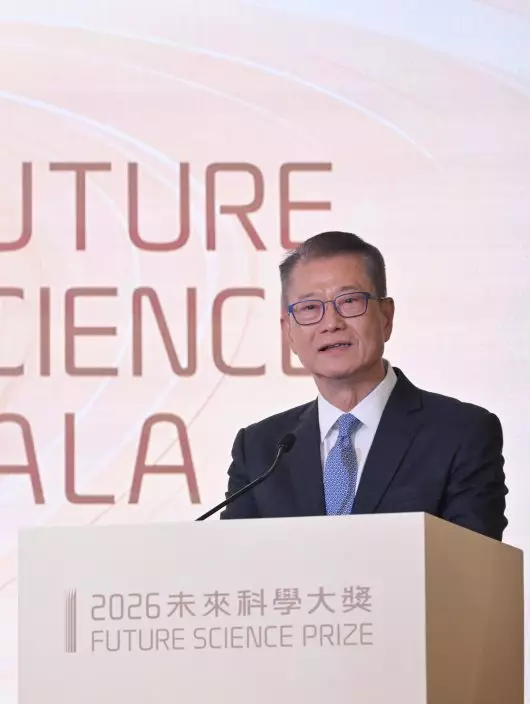
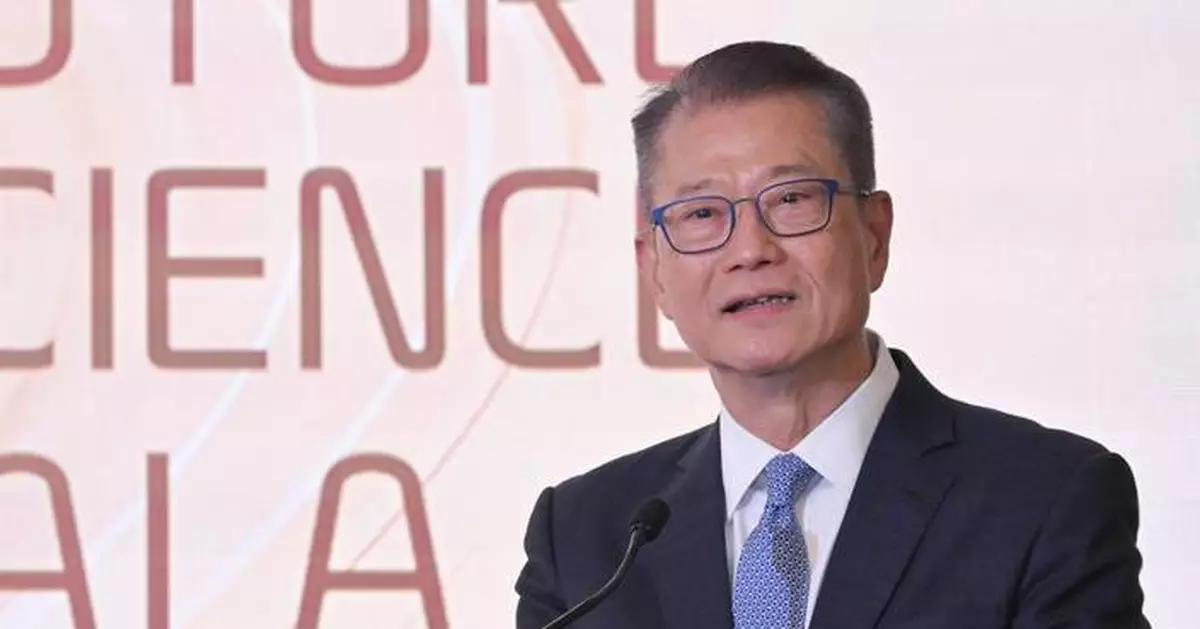
The Financial Secretary, Mr Paul Chan, speaks at the Future Science Prize Science Gala Dinner today (November 8). Source: HKSAR Government Press Releases
Speech by SITI at Hong Kong International Computer Conference 2026
Following is the speech by the Secretary for Innovation, Technology and Industry, Professor Sun Dong, at the Hong Kong International Computer Conference (HKICC) 2026 today (November 9):
(Deputy Director-General of the Department of Economic and Financial Affairs II of the Liaison Office of the Central People's Government in the Hong Kong Special Administrative Region (HKSAR), Mr Chen Dali), Dave (President of the Hong Kong Computer Society, Mr Dave Chen), Charlotte (Conference Chairperson of the HKICC 2026, Ms Charlotte Wong), Tony (Programme Chairperson of the HKICC 2026, Mr Tony Wong), Professor Cui (Deputy General Secretary of the China Computer Federation, Professor Cui Peng), distinguished guests, ladies and gentlemen,
Good morning. It is my honour to join you all today again at the Hong Kong International Computer Conference 2026. This year's theme, "Hong Kong's Next 5 Years: from AI+ to Competitive Advantage", is timely as artificial intelligence (AI) has become the core engine reshaping our industries and the world.
In tandem with our country's "AI+" Initiative, the HKSAR Government is accelerating "industries for AI" and "AI for industries" to power high-quality development. Guided by Hong Kong's First Five-Year Plan and the 2026 Policy Address, we aim to establish Hong Kong as an international innovation and technology centre, harnessing "AI+" to build enduring competitiveness. As such, I would like to share our focus on three fundamental pillars over the next five years.
First, we are building world-class infrastructure and institutional capability to support "AI+". The Sandy Ridge Data Facility Cluster currently under construction will substantially expand Hong Kong's computing capacity and is expected to provide 180 000 PFLOPS (peta-floating point operations per second) of computing power after 2030, a 36-fold increase from the current capacity. Alongside, the Hong Kong Artificial Intelligence Research and Development Institute will promote frontier AI research and transformation of research outcomes, while our InnoHK research clusters continue to bring together leading local and international research expertise. In addition, through further injection of $1 billion into the Artificial Intelligence Subsidy Scheme, we will support the use of high-performance computing power for frontier research and accelerating innovative breakthroughs.
Second, we are accelerating AI adoption across industries and society. Our Digital Transformation Support Pilot Programme encourages small and medium-sized enterprises to adopt AI-related solutions to enhance their daily operations. The Government is also leading by example. We are optimising our public services with AI technologies to enhance operational efficiency and service quality. Meanwhile, we are upskilling our local talent pool through the "AI for All" Inclusive Programme so that all of us, no matter whether we are from the business sector or the general public, may deploy various AI tools to help our business or make our lives more convenient.
Third, we are ensuring safe and responsible AI development. As set out in the 2026 Policy Address, the Government will adopt a multipronged approach to advance our AI risk management. The DPO (Digital Policy Office) will select pilot departments to require bidders for public-facing AI projects to submit safety and ethics compliance declarations for AI technologies used. We will also drive industry-led development of their governance frameworks and also promulgate safety-management guidelines for AI agents. We hope these measures will foster public trust, safeguard citizens' rights, and make Hong Kong a secure place for global AI deployment.
World-class research must be connected with industrial application in order to convert technological breakthroughs into economic competitiveness. As much as government policies may catalyse this transformation, the true driving force lies in cross-sectoral collaboration. We appeal to universities, businesses, industries, as well as every one of you here to join hands with us to reap the benefits brought by AI in this technological transformation of our time.
Thank you, and I wish you all a fruitful experience.

Source: AI-found images
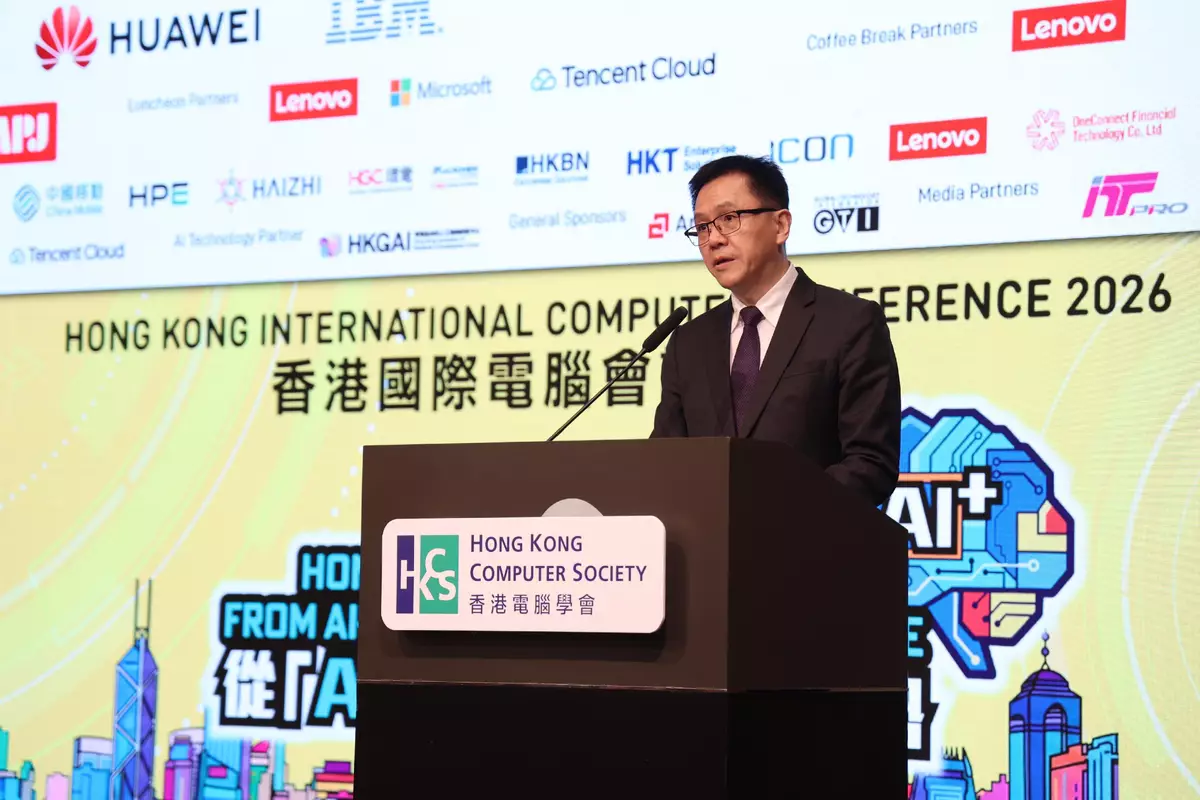
Speech by SITI at Hong Kong International Computer Conference 2026 Source: HKSAR Government Press Releases
Source: AI-found images