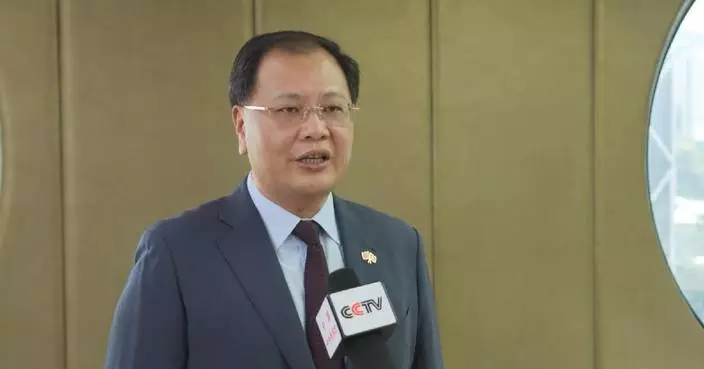
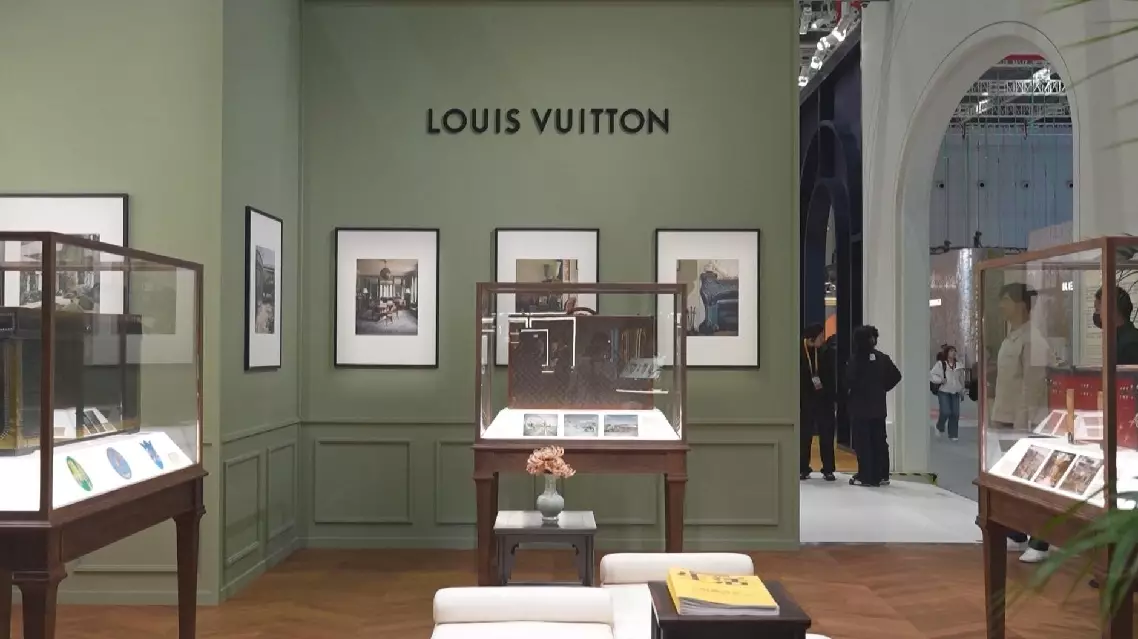
Pietro Beccari, chairman and CEO of Louis Vuitton, part of the LVMH Group's fashion division, said he is "100 percent" optimistic about the Chinese market and will continue to invest, hoping to bring more products to Chinese consumers through the China International Import Expo (CIIE) in Shanghai.
In an interview during this year's CIIE, Beccari said Chinese consumers are a vital source of business for the brand, crediting their long-standing appreciation for Louis Vuitton as a key reason for its global success.
Founded in 1854, Louis Vuitton is making its seventh appearance at the 9th CIIE this year. The French luxury fashion house currently operates 53 stores across 31 Chinese cities, employing more than 3,200 people, making China one of the markets with the broadest retail network coverage for the brand globally.
"Chinese clients, I tell you, are the main source of business for us. So, the reason why we are the No.1 in the world is the Chinese clients and it is the love they have for Louis Vuitton that goes back to them. We are optimistic about China and we see it very optimistic growth in the future. [It's] one hundred percent right that we are here to invest, and we are to show that at this import exhibition that we want to import even more products in China," he said.
Beccari highlighted Louis Vuitton's pioneering role in China's luxury market, noting that the brand was the first luxury label to enter the country.
"You have to know that Louis Vuitton is the very first luxury brand in China. We opened in 1992 in the basement of the Palace Hotel in Beijing. There was no luxury brand at all. We were the very first one and we are the very first fully foreign-owned company that received from the government commercial license in 2004," he said.
Responding to market rumors, Beccari firmly denied reports that Louis Vuitton was scaling back its presence in China.
"We built the important store like in Sanlitun in Beijing [where we] just opened a store. There are some people saying that we are closing stores in China. We are not closing stores in China. We are opening stores in China. We open the Sunlitun store. We'll open [the store] in Sanya in Hainan Province and we just reopened [the store in] Changchun, doubling the size of the store. So, where we close, we close a store to open a bigger one just besides. So, we never close stores. We are very happy with our imprint in China," he said.
Looking ahead, Beccari said he is strongly confident in the future of the Chinese market, emphasizing that the brand is paying close attention to the evolving tastes of Chinese youth.
"Definitely we believe in the future of China. We know that there are some talking about how the youth is changing the taste. And I think the Chinese love beautiful things. They have beautiful, incredible, very old culture, and I think you appreciate beautiful things in the DNA. Well, I think that China now became a trendsetter. Before, trends were coming to China and China was adopting that. Now China is grown enough, mature enough, cultural-wise very strong. And they create the trend. So, we observe the youths in China to understand what they like and maybe that we will take the products we put in the world," he said.
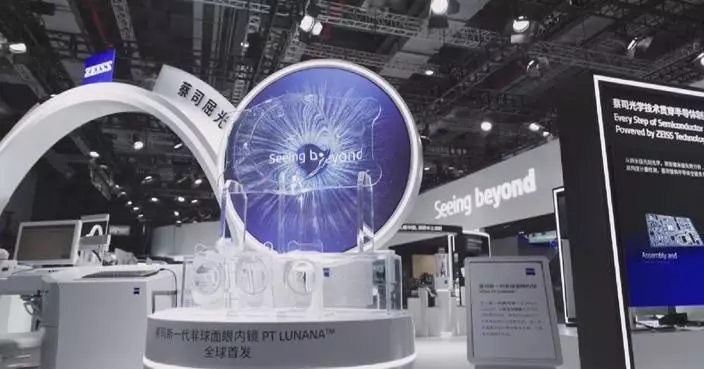
Running from Nov. 5 to 10 in Shanghai, the 9th CIIE has brought together 4,142 overseas exhibitors, with total exhibition area exceeding 440,000 square meters. Over 480 exhibits are making their global, Asian or China debut at the event, the highest number in history.
Louis Vuitton CEO says "100 percent optimistic" about China market, pledges more investment