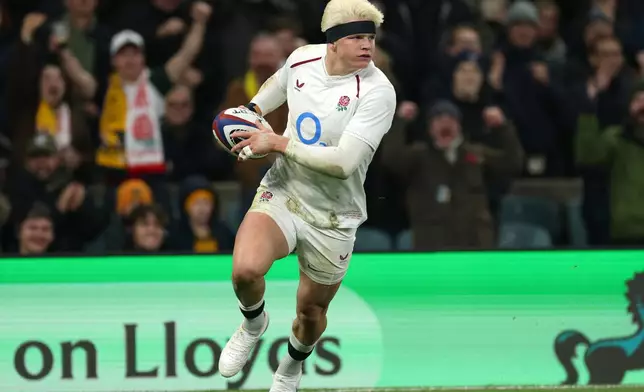
LONDON (AP) — Henry Pollock enhanced his growing reputation in rugby by coming on at halftime and scoring two tries in as many minutes as a makeshift winger to lead England to a record 45-22 win over Australia in the Nations Championship on Sunday.
The most talked-about player in the English game grabbed the headlines again with a second-half performance that highlighted both his versatility and explosiveness, while also wrapping up a significant victory for England coach Steve Borthwick following pre-match reports of player unrest and rifts in the squad.
Click to Gallery
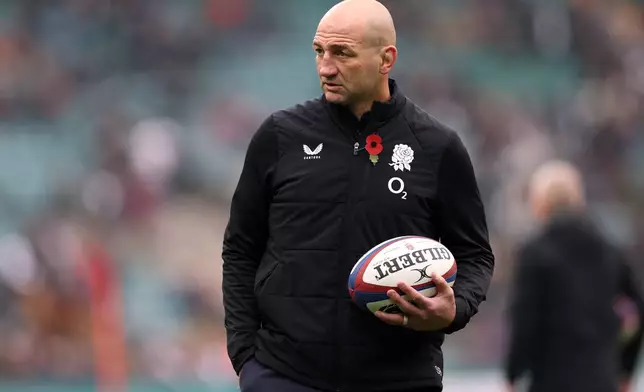
England's head coach Steve Borthwick walks on the pitch before the start of the Nations Championship rugby match between England and Australia in London, Sunday, Nov. 8, 2026.(AP Photo/Ian Walton)
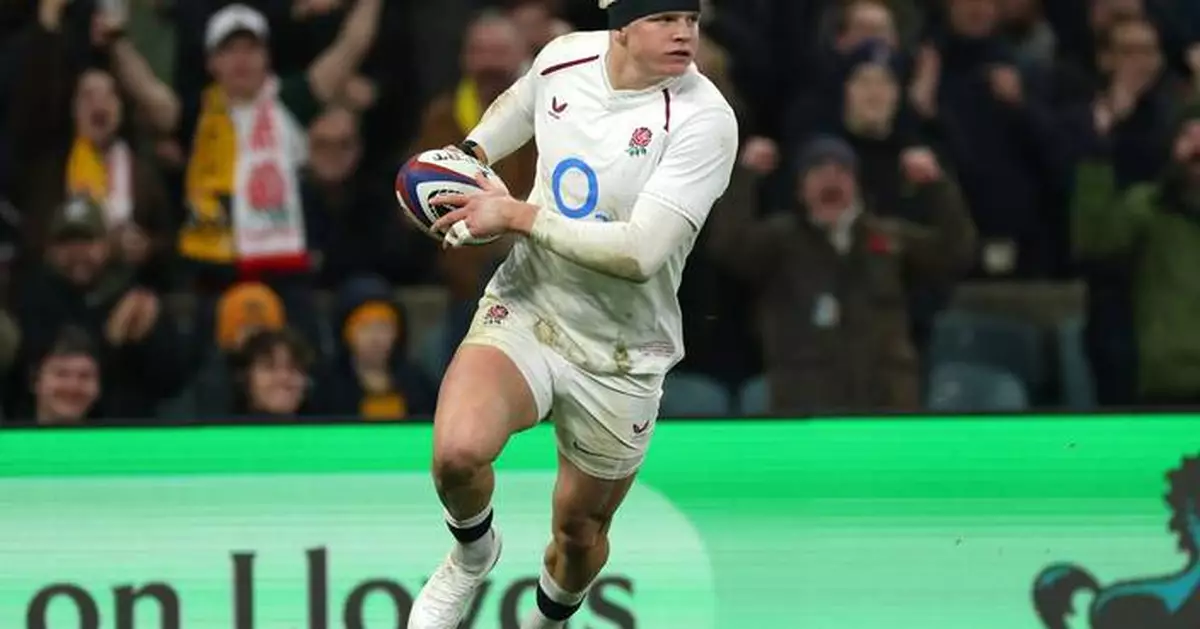
Henry Pollock of England runs with the ball for a try during the Nations Championship rugby match between England and Australia in London, Sunday, Nov. 8, 2026.(AP Photo/Ian Walton)
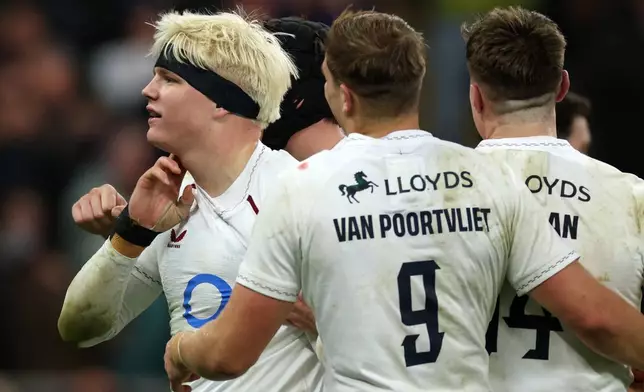
Henry Pollock of England celebrates with teammates after scoring a try during the Nations Championship rugby match between England and Australia in London, Sunday, Nov. 8, 2026.(AP Photo/Ian Walton)
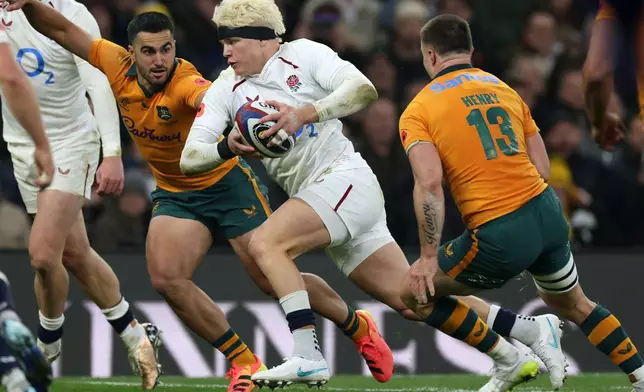
Henry Pollock of England runs with the ball during the Nations Championship rugby match between England and Australia in London, Sunday, Nov. 8, 2026.(AP Photo/Ian Walton)
“I loved it — I love the challenge, I love being nervous at halftime and being like this in a new position for me,” said the 21-year-old Pollock, a back-row forward with a distinguishable shock of blond hair who entered as a replacement for the injured Immanuel Feyi-Waboso and delivered classic winger's finishes in the 55th and 57th minutes to move to eight tries in just 14 tests.
“I really enjoyed it and thought that out there it was even more fun. Hopefully again.”
England, which sealed a third win in four games of the inaugural global tournament, had seven tries in total at Twickenham on the way to scoring more points than ever before against Australia. The first was scored by hooker Jamie George, who became the most prolific try-scoring England forward in test history with 18.
Ollie Chessum and Joe Heyes, two more members of England’s pack, also went over in the first half before winger Max Jorgensen’s interception try from inside his own half gave Australia hope at halftime at 19-10.
After England scrumhalf Jack van Poortvliet — to blame for Jorgensen’s score because of an errant pass — made amends with his own try, it turned into the Pollock show.
The youngster replaced Feyi-Waboso, who was hurt from Angus Bell's hip-drop tackle that earned the prop 10 minutes in the sin-bin, and made an instant impact with a left-wing surge that set up Van Poortvliet’s try.
He then crossed himself in the 55th after collecting a mispass to the right wing and cutting through Australia’s defensive line to score.
Pollock streaked down the right flank to go over again in the 57th and was soon thrilling the Twickenham crowd by kicking the ball through an opponent’s legs as he made another break down the wing.
Pollock said he has played “a little bit” on the wing for his club team Northampton, but described a half against Australia in test rugby as “obviously a massive step-up.”
“They wouldn’t put me there, the coaches, if they didn’t think I could do anything there,” Pollock said. “The biggest thing is going out there and being as confident as I can. If I mess up, it’s a new position and I’ve got to take learnings from it.”
Ben Spencer wrapped up England’s try haul in the 76th, after Filipo Daugunu and Jeremy Williams added their own for the Australians.
England, which jumped to second place in the Northern Hemisphere standings, has more tests against Japan and New Zealand at Twickenham over the next two weekends, before the playoff finals at the same stadium from Nov. 27-29.
Borthwick's team beat Argentina and Fiji in July, while also losing to South Africa.
Australia plays Scotland and Wales next, and is third in the Southern Hemisphere standings behind the Springboks and the All Blacks.
See AP’s full rugby coverage here
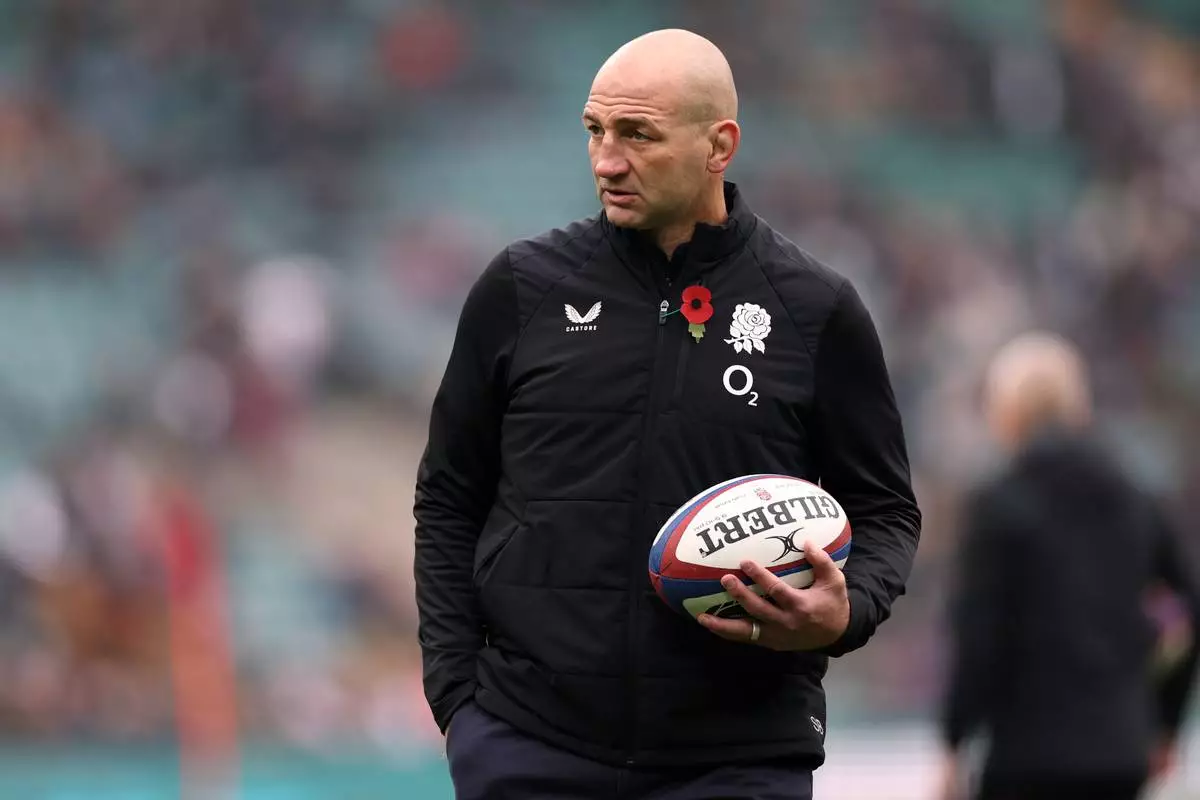
England's head coach Steve Borthwick walks on the pitch before the start of the Nations Championship rugby match between England and Australia in London, Sunday, Nov. 8, 2026.(AP Photo/Ian Walton)
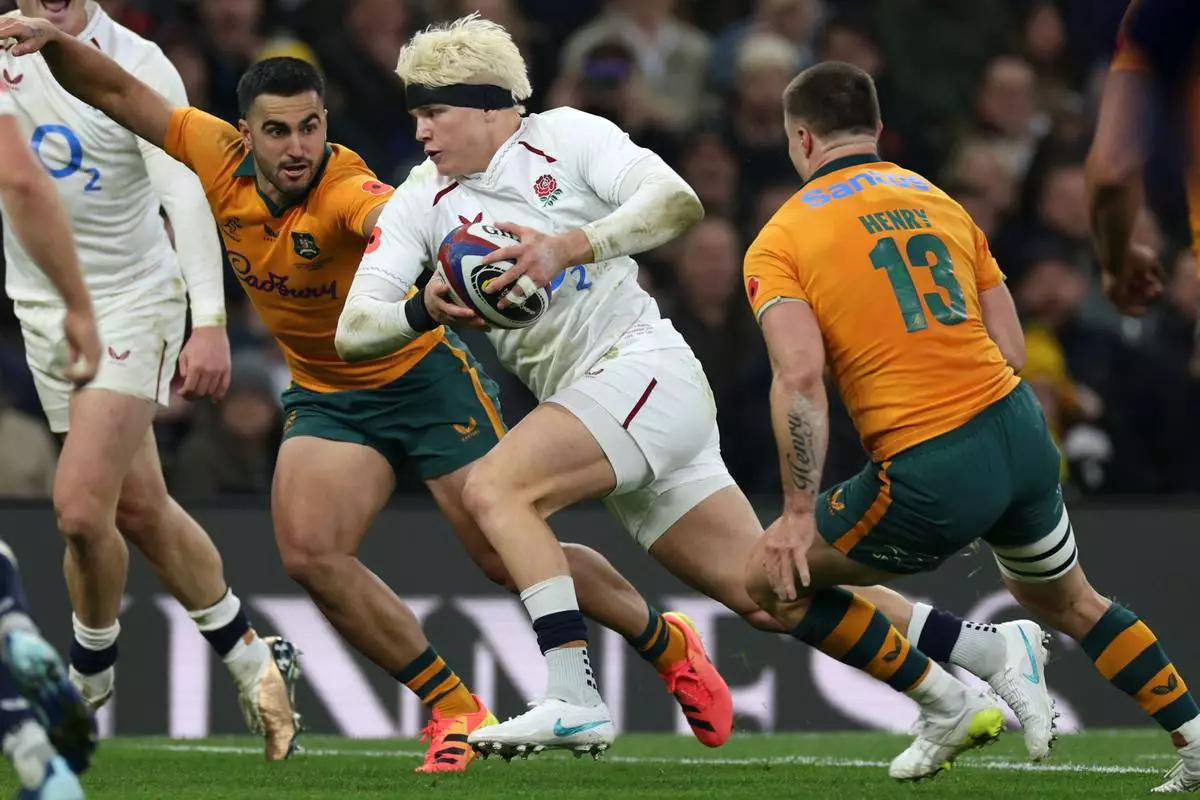
Henry Pollock of England runs with the ball for a try during the Nations Championship rugby match between England and Australia in London, Sunday, Nov. 8, 2026.(AP Photo/Ian Walton)
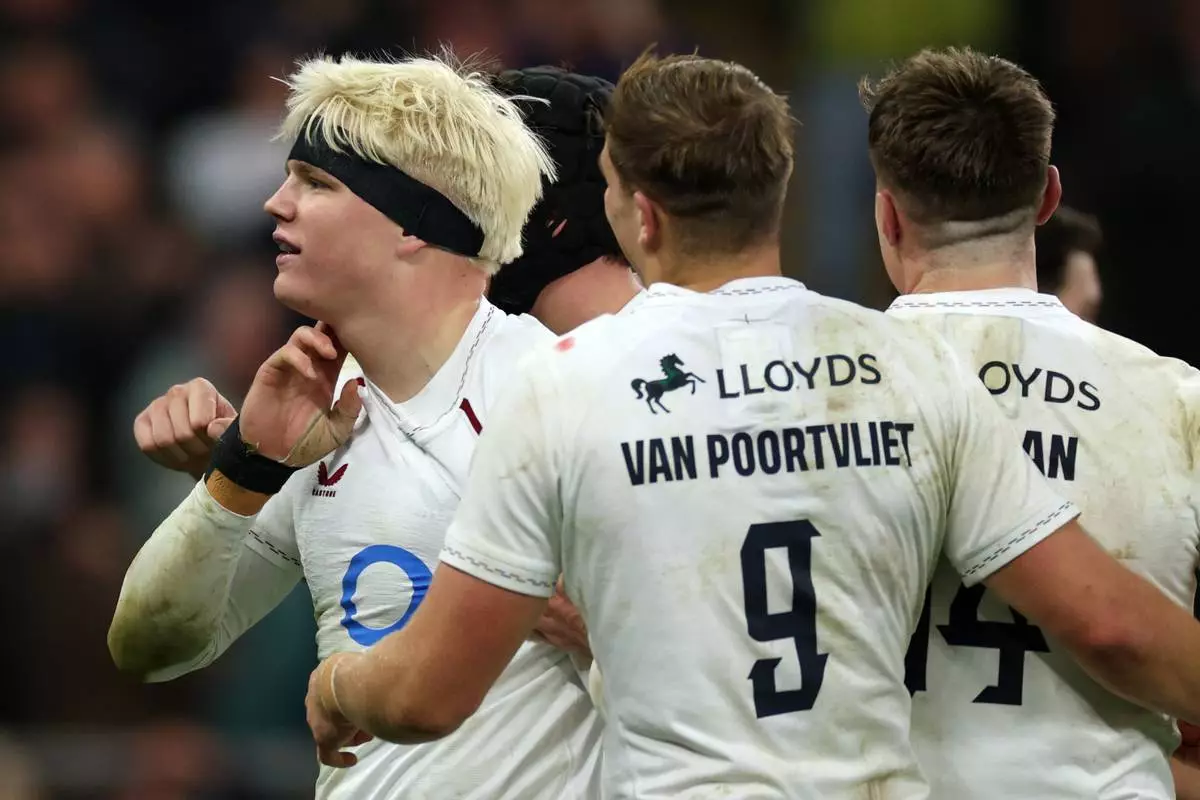
Henry Pollock of England celebrates with teammates after scoring a try during the Nations Championship rugby match between England and Australia in London, Sunday, Nov. 8, 2026.(AP Photo/Ian Walton)
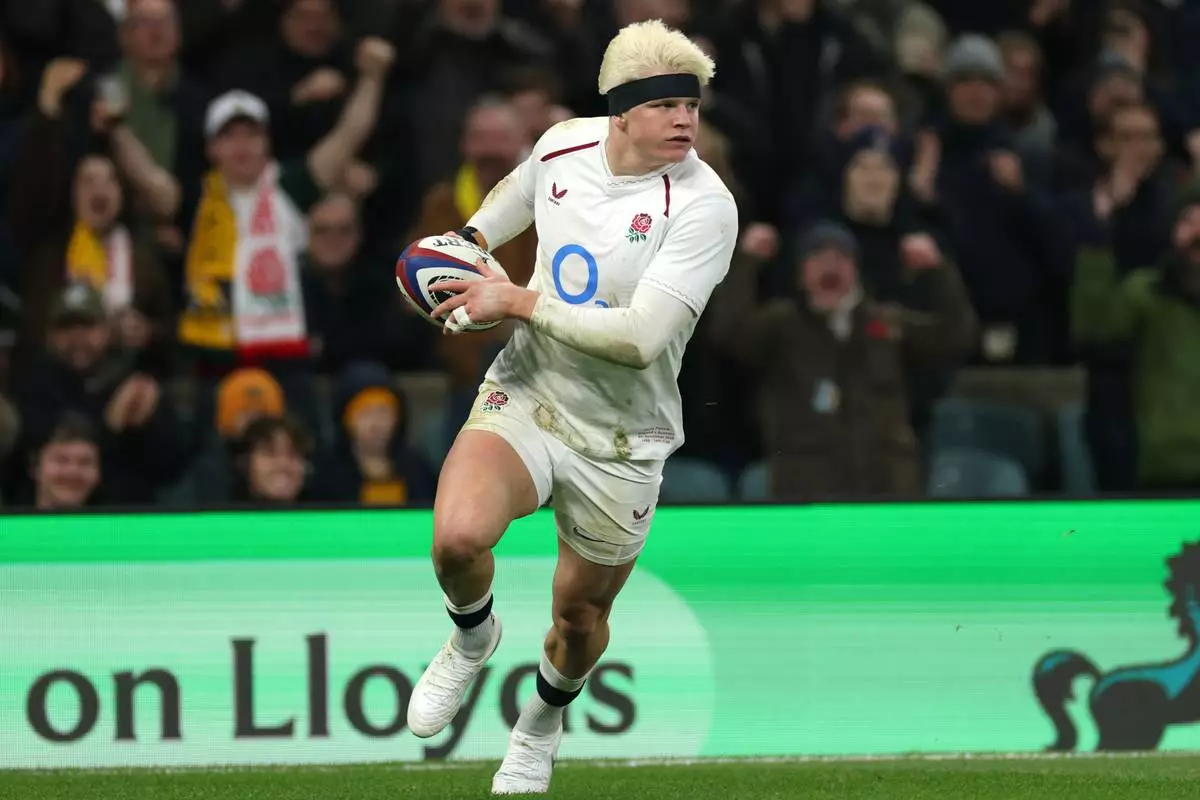
Henry Pollock of England runs with the ball during the Nations Championship rugby match between England and Australia in London, Sunday, Nov. 8, 2026.(AP Photo/Ian Walton)
JERUSALEM (AP) — Israeli President Isaac Herzog formally gave opposition politician Gadi Eisenkot the first chance to form the next government Sunday evening.
Complex coalition negotiations still lie ahead, but it marked a significant step in the former military chief's effort to oust Israel's longest-serving prime minister, Benjamin Netanyahu, after elections held in a deeply divided country. Israel remains scarred by the Hamas-led attacks of Oct. 7, 2023, and the multifront wars they triggered.
“I hope with all my heart that whatever government is formed will lead to unity, connection and healing among all segments of our people — for our very existence depends on it, and we have only one country,” Herzog said at the ceremony at the presidential residence in Jerusalem.
The announcement doesn't guarantee that Eisenkot, a former army chief, will become the next prime minister. He has up to six weeks to form a coalition government by securing alliances, a daunting challenge because the Oct. 27 election gave neither his bloc nor Netanyahu’s a clear majority in parliament.
Herzog said that in consultations with the parties, a majority of members of parliament, known as the Knesset, supported giving Eisenkot this task.
At Sunday's ceremony, Eisenkot promised to give the country leadership that people can trust, that will act in the interests of the public and that represents all parts of society.
“An absolute majority of Knesset members representing the Israeli public support change,” he said. “I intend to navigate the situation with patience, humility, composure and a deep commitment to a Jewish, equal, liberal, and secure Israel.”
Among the possible kingmakers — and most politically fraught potential allies — are the Arab-led parties. They made historic gains in the election thanks to high voter turnout among Israel's Arab citizens.
Only one Arab party, Ra’am, has ever joined a governing coalition, in 2021. Ra’am has said it will support Eisenkot, but the party does not have enough seats on its own to give Eisenkot a parliamentary majority.
Breaking with decades of precedent, the second Arab-led party, the Joint List, has offered to support Eisenkot from outside the coalition to end Netanyahu’s grip on power.
But that cooperation is fraught for both sides. For the Joint List, it would mean backing a government unlikely to end Israel’s wars or curb settlement expansion in the occupied West Bank. For Eisenkot and other opposition parties, it would mean aligning with parties that not only criticize Israel’s policies but reject its identity as a Jewish state.
One of Eisenkot’s partners, the more conservative Yisrael Beytenu party, already has said it will not join a coalition with Arab-led parties.
Eisenkot has laid out four conditions for parties that want to join him. They must recognize Israel as a Jewish and democratic state, accept its declaration of independence, support military, national or civil service for all citizens, and declare the Hamas militant group a terrorist group. It remains unclear whether his would-be Arab partners are ready to accept these conditions.
Furthermore, Netanyahu has repeatedly asserted unsubstantiated claims that the election was “stolen” by Arab parties. In a pressure tactic on Eisenkot, he says any alliance with these parties would be an act of betrayal.
Israel’s Shin Bet security agency has launched an investigation into possible foreign interference in the vote, but the country’s Central Elections Committee — and Herzog — say the vote was valid and even if wrongdoing is found, it did not have a significant impact on the electoral results.
Eisenkot has vowed to form a government as quickly as possible. But each likely scenario appears to entail compromises or broken promises.
Aside from seeking the support of the Arab-led parties, Eisenkot has two options: a power-sharing agreement with Netanyahu or an agreement with the ultra-Orthodox parties, which demand military exemptions for their community.
Eisenkot and his partners made equal military service a central part of their campaign. Specifically, they are seeking an end to the long-standing draft exemptions.
The religious parties, which were part of Netanyahu’s outgoing coalition, want to preserve them, calling them essential to their devout lifestyle. But the exemptions have grown especially controversial among the broader public during the past three years of war.
Anticipating its position as a swing vote, the ultra-Orthodox party United Torah Judaism has left the door open to cooperating with Eisenkot.
Eisenkot has 28 days to form a coalition, with a possible two-week extension from the president. If he is unable to form a government, Netanyahu could then be given a chance to put together a coalition. If Netanyahu is also unable to do so, the country would return to elections early next spring.
Israel’s new members of Knesset will be sworn in on Tuesday evening. Netanyahu and his cabinet will remain in office in a caretaker capacity, with limited powers, until a coalition is formed.
Despite tenuous ceasefires, Israel's military remains engaged in fighting Hamas militants in Gaza and Iran-backed Hezbollah militants in Lebanon — and the war the country launched jointly with the United States against Iran remains unresolved as well.
Both Eisenkot and Herzog mentioned these challenges on Sunday, as well as what Herzog called “the new political situation in the United States," where the midterm elections suggested weakening support for Israel on both sides of the aisle.
He called on Eisenkot to use his military leadership skills — as well as his experience of loss, since Eisenkot lost a son in combat in Gaza — to unite the country.
“You have commanded soldiers from every part of the Israeli people and Israeli society. Your face bears the scars of bullets from decades of command and combat,” Herzog said. “In the coming days, Gadi, as you and your counterparts enter the negotiating rooms, I ask that you remember that the eyes of the entire nation, with all its pain, hopes, prayers, and fears, are upon you.”
Lidman reported from Tel Aviv, Israel. Associated Press journalist Josef Federman contributed from Jerusalem.
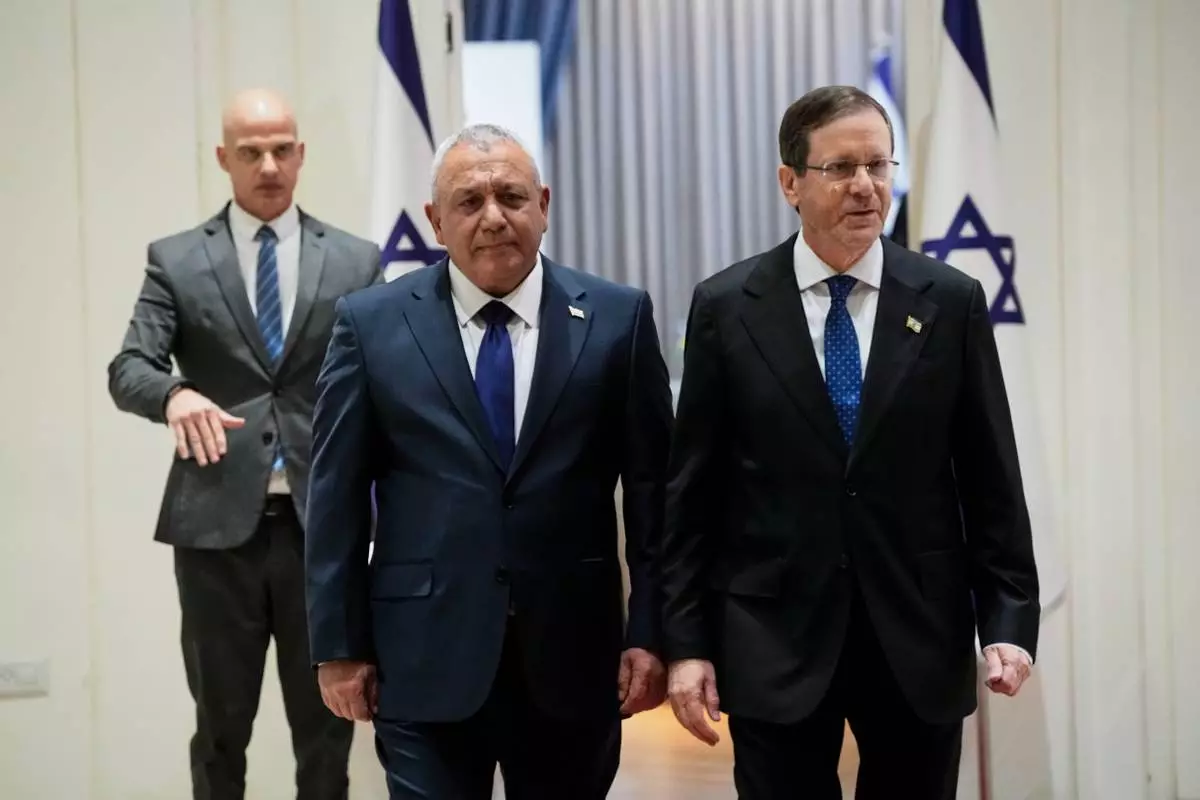
Israeli President Isaac Herzog, right, tasks Gadi Eisenkot, leader of the Yashar ("Straight") Party, with forming a government at the President's Residence in Jerusalem, Sunday, Nov. 8, 2026. (AP Photo/Ohad Zwigenberg)
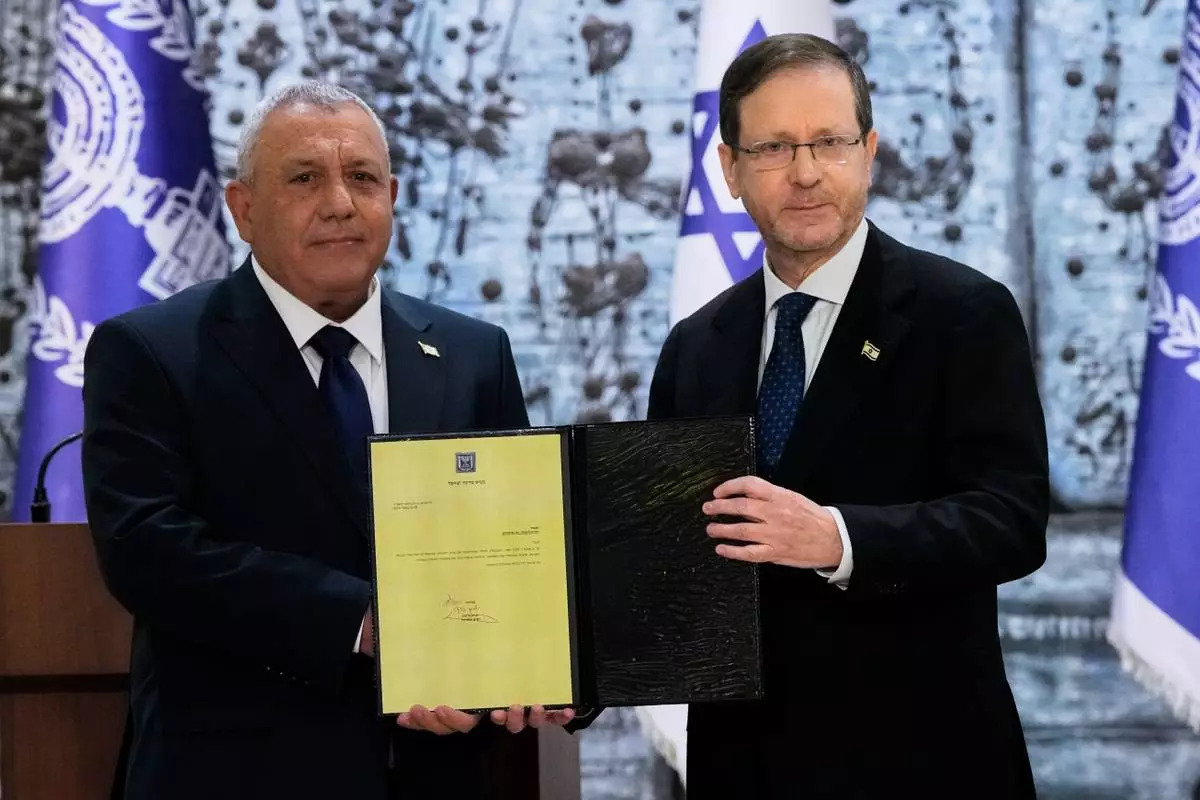
Israeli President Isaac Herzog, right, tasks Gadi Eisenkot, leader of the Yashar ("Straight") Party, with forming a government at the President's Residence in Jerusalem, Sunday, Nov. 8, 2026. (AP Photo/Ohad Zwigenberg)
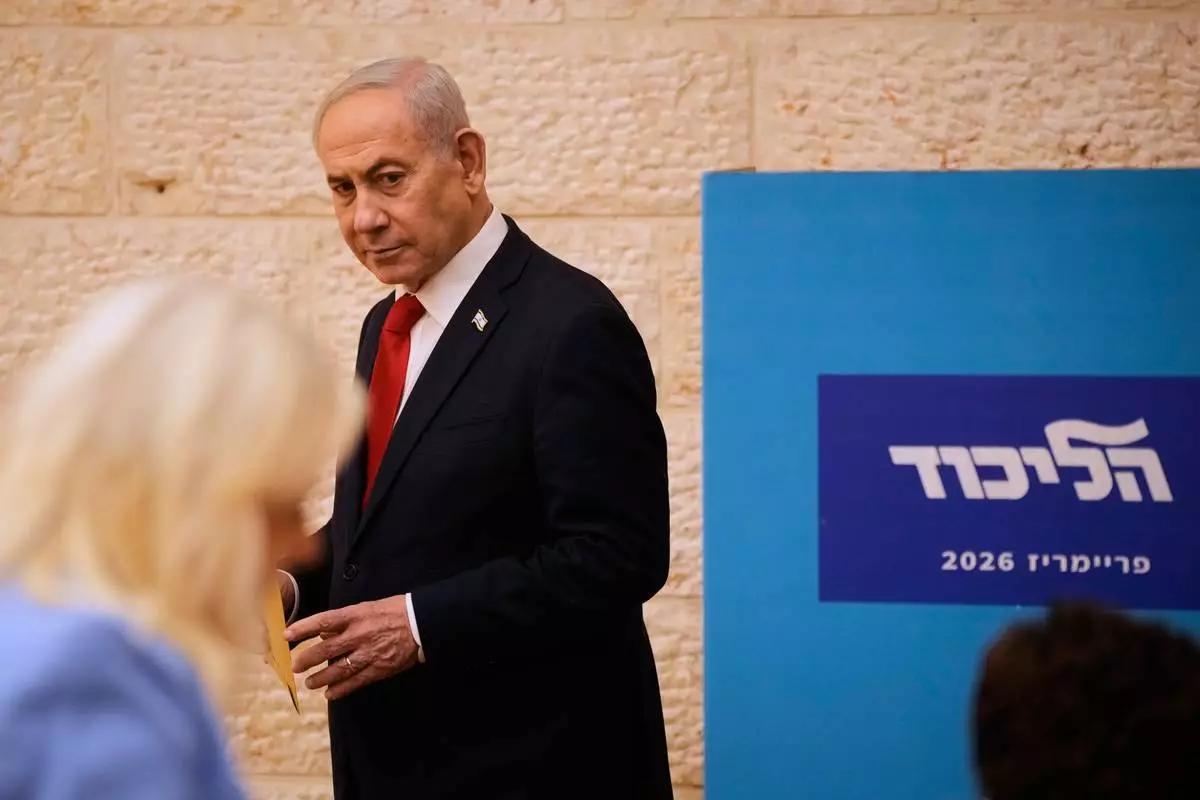
FILE - Israeli Prime Minister Benjamin Netanyahu, casts his ballot in his Likud party primary elections ahead of Israel's general election in October, in Jerusalem, Monday, Aug. 17, 2026. (AP Photo/Ohad Zwigenberg, file)
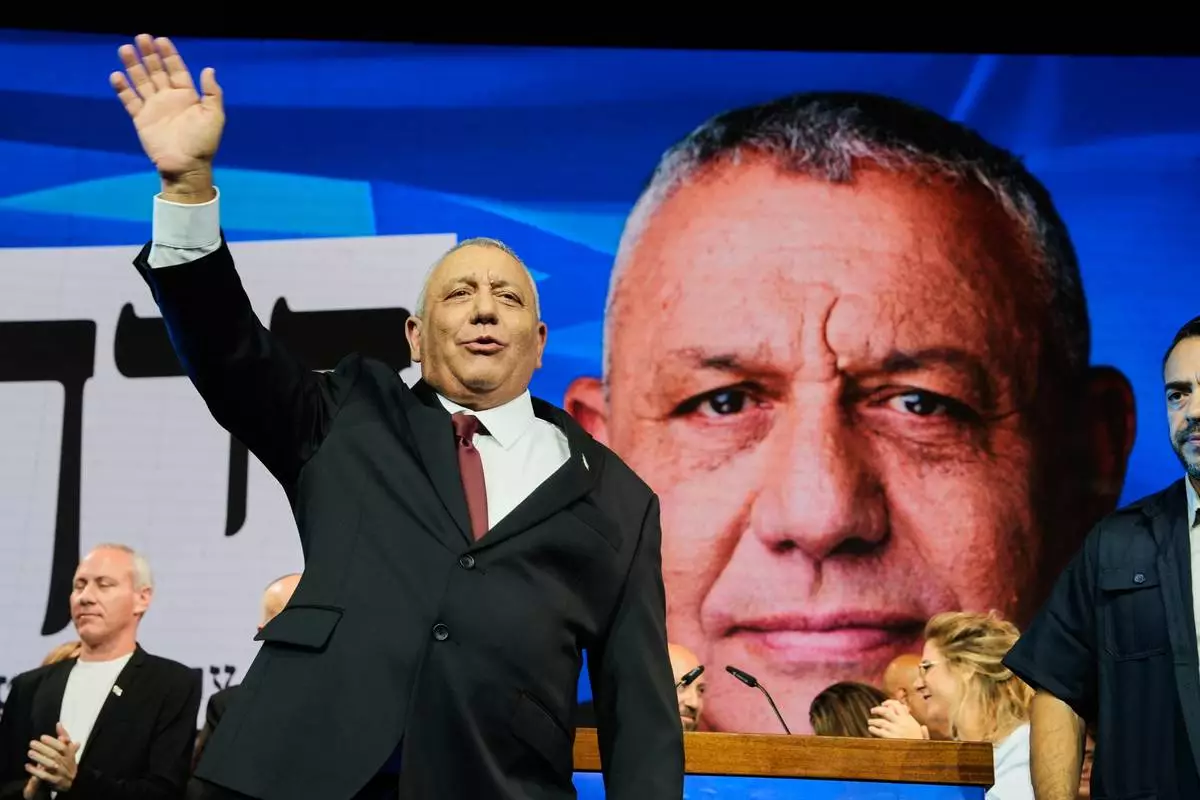
Gadi Eisenkot, leader of the Yashar ("Straight") party, waves to supporters following the release of the first exit poll results in Israel's general election in Tel Aviv, Israel, Wednesday, Oct. 28, 2026. (AP Photo/Baz Ratner)