Multinational companies are increasingly turning China from a mere sales market into a global hub for research, development and innovation, using the country as a launchpad for the Asia-Pacific region and beyond, executives said at the ongoing China International Import Expo (CIIE).
The ninth CIIE, running from Nov. 5 to 10, opened just ahead of the Asia-Pacific Economic Cooperation (APEC) Economic Leaders' Meeting in Shenzhen. Nearly all APEC economies are taking part in the expo, with several making their debut.
South Korean battery giant LG Energy Solution is among the first-time exhibitors. The company, which established its regional headquarters in China in 2025, has brought its lithium-ion prismatic battery cell to the country for the first time this year. The cell is manufactured in China, a deliberate choice reflecting the country's deep industrial integration.
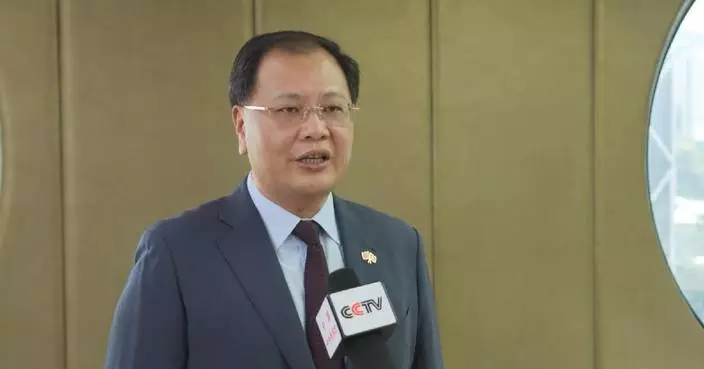
"According to incomplete statistics, China's industrial and supply chain system for lithium iron phosphate is 97 percent complete. Given this level of completeness, LG Energy Solution will not treat China merely as a production base, but also as a hub for experimentation, research, development and commercialization, using China as a foundation to jointly explore international markets with Chinese partners," said Lyu You, general manager of government affairs and public relations at LG Energy Solution China.
U.S. industrial automation company Rockwell Automation echoed this strategy. Specializing in industrial automation controllers, the company formed a joint innovation center for net-zero smart manufacturing with Shanghai's Caohejing Hi-Tech Park in 2023.
"I think the advantage for China has been obviously covering the entire industry chain. We're focusing around the demand side all the way to the supply side, making it in sync. And China is the best test ground for it. By saying that, we're trying to leverage all these collaborations, not just within China, but also an extension to Asia-Pacific and potentially to the rest of the world," said Ian Shih, president of Rockwell Automation Greater China.
Over the years, a growing number of companies have established research and development centers and invested billions of dollars in China, adopting a strategy they call "in China, for the world."
The trend extends beyond Asia-Pacific companies. Global firms from other regions are also leveraging China’s massive consumer market to drive innovation and serve as a gateway to the broader Asia-Pacific.
In the gaming sector, Switzerland-based Logitech has invested heavily to improve user experience and capture market share.
"[We've invested significantly to] reallocate resources into China. The key reason is that the Chinese consumer is really sophisticated, especially in gaming. We have R and D and design on the ground here in Shanghai, we develop products here and we have a state-of-the-art manufacturing site in Suzhou which produces all of our volume that we sell in China and much of what we sell in the rest of the world," said Hanneke Faber, CEO of Logitech.
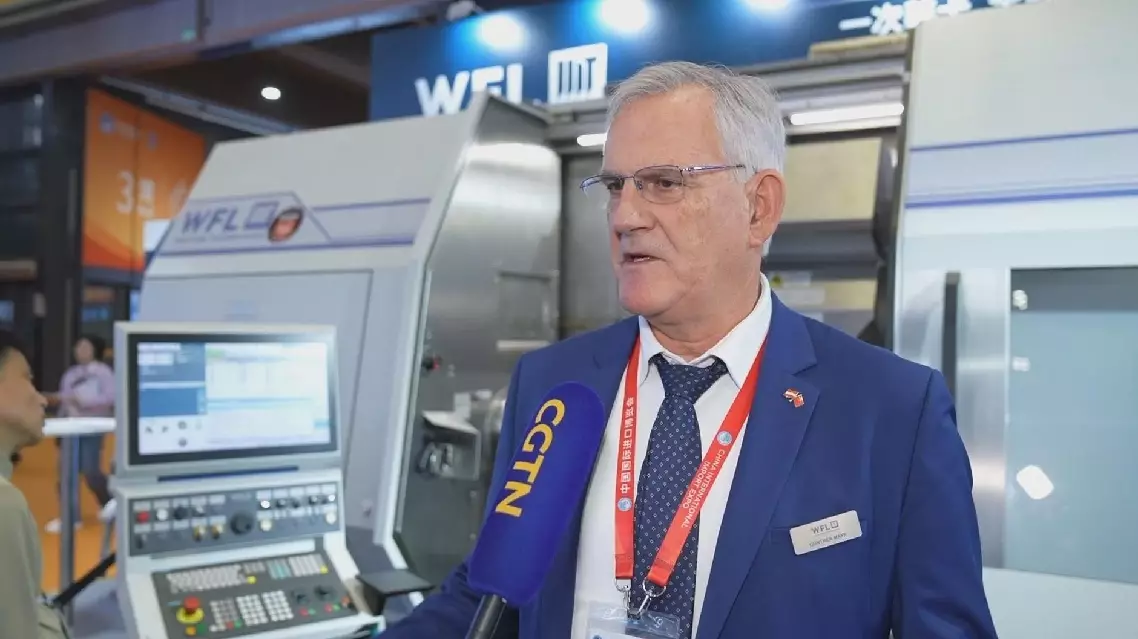
Austrian machine tool maker WFL, a hidden champion in complete machining, is also exhibiting at the CIIE for the first time despite being in China for over two decades. The company hopes to deepen connections with its Asia-Pacific partners through the expo.
"You cannot use an aircraft -- it doesn’t matter whether it’s a Russian one or a Chinese one, whether it’s a COMAC, an Airbus or a Boeing -- there are always parts produced by WFL machines. The growing of China is the growing of WFL; both depend together," said Gunther Franz Josef Mayr, general manager of WFL.
Data underscore China’s shifting role in global corporate strategies. According to a report by China’s Ministry of Commerce, multinational companies' research and development investment in China accounted for 14.3 percent of their global total last year.
Furthermore, one-fifth of China’s actually utilized foreign investment was directed to the scientific research and technical services sector in 2025, a share that has risen steadily for seven consecutive years.
Global companies see China as innovation hub for Asia-Pacific, world