SEOUL, South Korea, Nov. 9, 2026 /PRNewswire/ -- For startups entering foreign markets, proving their technology and turning it into real business is an uphill battle. They must navigate local regulations, understand market demand and win the trust of companies wary of adopting new technology. CrossHub, a developer of identity verification and payment solutions, is tackling these hurdles by running proofs of concept (PoCs) with overseas partners, building a track record, and converting those references into field deployments and partnerships with financial institutions.
A voice authentication pilot in Singapore's healthcare sector shows how CrossHub is testing the real-world potential of its technology abroad. This year, the company signed a non-disclosure agreement (NDA) with Singapore's National Healthcare Group Diagnostics (NHGD) and is currently running a PoC. Last month, it completed an on-site demonstration ahead of the service launch.
In Singapore, patients must state their name and address by voice before seeing a doctor. Until now, staff have manually checked whether the information matched the patient. CrossHub is addressing this with V-Pay, a voice authentication solution that analyzes a speaker's voice to confirm their identity.
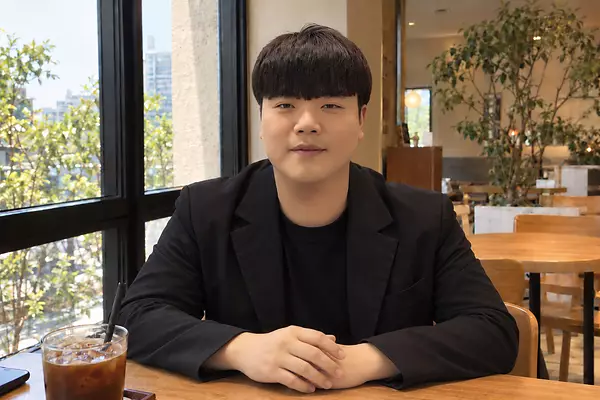
"If this moves to a full contract, we'll have the opportunity to use voice data from northern Singapore," said Kim Dong-ju, team lead at CrossHub. "We believe the technology can be applied not only to healthcare but to other industries as well."
CrossHub is investing heavily in overseas pilots because earning the trust of adopting companies matters as much as technical performance. Businesses considering identity verification technology need proven cases that demonstrate not only accuracy and convenience but also security and data protection. In tightly regulated industries such as finance, a startup's pitch alone rarely leads to adoption.
"Startups offer innovative technology, but traditional industries are reluctant to adopt it," Kim explained. "They demand safety and references, so we decided to solve that problem overseas first."
CrossHub has validated its technology through a range of PoCs with partners including French security firm Thales. Building on that, it has begun collaborating with Korean financial institutions such as Woori Bank, Samsung Card, Woori Card and Hana Bank—leveraging its overseas track record as a foundation for partnerships at home.
The company was born out of the frustrations foreign tourists face with Korea's digital services. Many major Korean apps require mobile phone-based identity verification, making it difficult for short-term visitors without a Korean phone number to use services such as Kakao T or Baemin. CrossHub set out to solve this by developing passport-based identity verification.
Its core technologies are self-sovereign identity (SSI) and zero-knowledge proofs (ZKP). SSI lets users manage their own identity rather than having personal data stored by individual services, while ZKP allows users to prove a necessary fact without disclosing the underlying personal information. CrossHub combines the two to verify identity while minimizing the storage and exposure of personal data.
The company is now expanding from identity verification into payments and remittances. Travel Pass, an integrated payment and travel platform for foreign visitors to Korea, is being developed with Woori Bank. It aims to help tourists pay for goods and access transportation and tourism services in Korea. In September, CrossHub broadened the service's reach by signing an integration and sales agreement for transportation and tourism products with Japanese travel platform Linktivity.
CrossHub is also exploring opportunities in cross-border remittance. Under a project commissioned by the Korea Internet & Security Agency (KISA), it is developing a stable-token remittance solution based on cross-border API connections, with plans to link Korean and Vietnamese banks.
Kim expects blockchain to become less of a standalone industry and more of a foundational technology that enhances fields such as artificial intelligence (AI), quantum technology and AI agents. Beyond technical maturity, he stressed, what matters is securing services and markets that users find easy to adopt.
CrossHub tailors its approach to each overseas market. Japan's regulatory environment resembles Korea's, but market entry and building trust take time. Singapore, with its advanced financial services and relatively active collaboration between startups and corporates, is being positioned as a hub for pilots and commercialization. The company plans to expand technology validated in Singapore into Europe and North America, with North America as its long-term target market.
Product development continues on an annual cycle. CrossHub launched its identity verification solution IDBlock in 2024, followed by the payment solution B-Pay in 2025. This year it introduced V-Pay, featuring voice authentication, and it is developing another product slated for release in 2027. The company accumulates technology from identity verification to payments and voice authentication, then turns it into real business.
CrossHub has also broadened its investor base. In 2025, it raised funding from four accelerators, and all four returned as follow-on investors in its recently closed round. Two banks and a government institution also participated.
Support from SVC has aided its global expansion. CrossHub uses SVC as a base for Travel Pass, one of its flagship services. Located near Hongdae, the space allows the team to engage directly with tourists and better understand the needs of foreign visitors to Seoul. Networking through support programs, along with meeting rooms, conference spaces and other facilities, has also helped drive the business forward.
"Since moving into SVC, our global networking has grown, expanding our reach from about 20 countries last year to about 40 this year," Kim said. "The diverse networks and support programs have helped us scale the business."
CrossHub plans to convert the partnerships and validation cases it has secured abroad into actual contracts and service operations, and then extend them to other countries and industries. "Our strength is that we build up and expand our technology every year and commercialize it," Kim said. "We aim to grow into a technology-driven fintech company."
The company is also a resident of SVC Seoul, a global startup hub in Seoul's Hongdae area. The hub was established to connect startups with strong overseas growth potential to companies, universities, and investors in Korea and abroad.
** This press release is distributed by PR Newswire through automated distribution system, for which the client assumes full responsibility. **
Global Validation First: How CrossHub Is Building Trust to Scale Overseas
- FFR's EAI Brain—OmniMind—and its model ranked No. 1 overall on RoboColiseum's global leaderboard as of November 6, where RoboColiseum tests embodied AI models in simulation. Proves how far the Company has come with its EAI Brain core in Phase One of its "Built in USA" program.
- FFR will hold its third-quarter 2026 earnings call on November 12 at 4 p.m. Pacific Time, this will be FFR's first earnings call since its listing. FFAI will hold its third-quarter 2026 earnings call on November 16 at 4 p.m. Pacific Time.
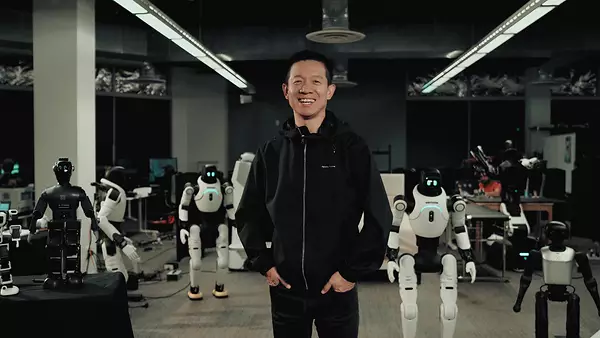
LOS ANGELES, Nov. 9, 2026 /PRNewswire/ -- FF EAI Robotics Ecosystem Inc. (NASDAQ: FFR) ("FFR" or the "Company"), a California-based Physical AI robotics ecosystem company, today shared a weekly business update from YT Jia, Founder and Global CEO of FFR and FF.
"Welcome to our 80th weekly report. I spent last week working in New York, and it was a very productive week. This week, I'm back at our Silicon Beach headquarters, and the good news keeps coming.
Let me start with FFR's EAI Brain—OmniMind—and its model. As of November 6, the OmniMind model ranked No. 1 overall on RoboColiseum's global leaderboard. RoboColiseum tests embodied AI models in simulation. We scored 0.8698 out of 1, ahead of leading models like NVIDIA GR00T N1.7, GPT-6 Astra, Claude Opus 5.5, and π0.5.
Until now, the market has recognized us mainly for our EAI Devices core and FF EAI Robot World 2.0, and for how quickly our robot sales and deployments have grown. What makes me especially happy is that our EAI Brain core has now delivered a strong result of its own. And we have an industry benchmark to back it up.
So how did FF OmniMind make it to No. 1? The published scores tell part of the story. OmniMind scored about 0.99 in instruction following, 0.92 in spatial reasoning, and 0.96 in robustness to disturbances. The biggest difference is in how we designed OmniMind. We use a layered architecture and programmatic execution. In a typical VLA approach, a single model generates actions directly. With FF OmniMind and its foundation model, we break the task down into steps. The model interprets the instructions. 3D perception locates the target. Then motion planning generates a path. As the robot carries out the task, we can check, analyze, and optimize each step separately.
This No. 1 ranking shows how far we've come with our EAI Brain core in Phase One of our "Built in USA" program, which we've now completed. It also validates the Physical AI expertise FF has built over the past 12 years. More importantly, it gives the industry a clearer picture of what FFR can do. It also gives our team momentum to move faster on our Four-Core Full-Stack AI strategy and grow the businesses across our four industry ecosystems. That momentum helps speed up the flywheel that connects robot deliveries at scale, data collection and training, and continuous improvement of the EAI Brain.
I want to thank our Brain and model teams at FF for all their hard work. This is just the beginning. We'll keep using feedback from these evaluations to improve the brain, our models, and our Skills. And as we deploy FF OmniMind on real robots in real-world settings, we'll keep strengthening its competitive edge and expanding its impact across the industry.
Now let me share how things are progressing across FFR's four industry ecosystems.
First, education. We've been receiving inquiries about partnerships and purchases from K–12 schools, education and training providers, colleges and universities, and research institutions. They're coming from states including New York, Texas, Massachusetts, and California. We'll have some major new developments to share with you soon.
Second, security and inspection. Across all four cores, our product lines and business in this sector have now moved into proof of concept, sales, and delivery.
On the B2B side, we've partnered with several leading integrators and distributors of security and inspection robotics solutions in North America and signed sales contracts with them. This milestone will help us commercialize and scale our security and inspection business much faster, setting us up for higher sales volumes across the sector. Putting our robots to work in real settings will also help us improve our Brain, Devices, and Industry Productivity Solutions. It will give us more data for training and help our flywheel turn faster.
On the B2C side, we're working with Pinnacle in Southern California to identify suitable luxury homes and assess residents' security needs. Aegis Ultra W and other robots will be at the center of our home security solution. We're working to complete the proof of concept as soon as possible.
In our commercial and services ecosystem, RoboShare sold a Master humanoid robot in Las Vegas, the entertainment capital of the world. That sale expands FFR's user base in the U.S. It also gives us a chance to explore new business models for using robots in the global entertainment industry and lays the groundwork for rolling out those models at scale.
In our industrial and logistics ecosystem, the team is moving ahead with R&D. We're working to start the proof-of-concept stage as soon as possible.
Finally, a quick update on FFR and FFAI's third-quarter reports and earnings calls.
FFR will hold its third-quarter 2026 earnings call on November 12 at 4 p.m. Pacific Time. This will be FFR's first earnings call since its listing. I invite FFR stockholders to tune in.
FFAI will hold its third-quarter 2026 earnings call on November 16 at 4 p.m. Pacific Time. I also invite FFAI stockholders to join us for that call.
Thank you, everyone. See you next week!"
About FF EAI Robotics Ecosystem Inc.
FF EAI Robotics Ecosystem Inc. (NASDAQ: FFR) is a U.S.-based Embodied AI robotics company focused on the research and development, manufacturing, commercialization and deployment of intelligent robotic technologies, products and industry solutions. FFR is building a "Four-Core Full-Stack" AI ecosystem covering the full lifecycle of robotics, consisting of EAI Brain & Developer Platform, EAI Devices, Industry Productivity Solutions, and EAI Data Factory. Guided by the technology and product philosophy of "One Brain, Multi-forms, Multi-capabilities," FFR aims to empower humanoid, biomimetic, and other robotic form factors through a unified EAI Brain, while continuously expanding their multi-task and multi-scenario capabilities. The ecosystem is designed to support the full robotics lifecycle, including R&D, deployment, data collection and training, operations, and commercial applications. FFR also operates RoboShare, a robot-sharing and services platform.
To learn more, visit www.ff.com.
Forward-Looking Statements
This press release contains "forward-looking statements" within the meaning of the safe harbor provisions of the Private Securities Litigation Reform Act of 1995, as amended, and other applicable securities laws. Statements other than historical facts, including statements regarding the standalone full-year 2026 guidance for the acquired robotics business, expected sales and shipments, projected revenue and unit sales under the five-year business plan, expected gross margins, planned partnerships and access to government procurement opportunities, FFR's business strategy, commercialization plans, robotics operations, anticipated benefits of the acquisition, future growth opportunities and development and deployment of robotics technologies, are forward-looking statements. You can often identify forward-looking statements by words such as "may," "might," "will," "shall," "should," "expects," "plans," "anticipates," "could," "intends," "targets," "projects," "contemplates," "believes," "estimates," "predicts," "potential," "goal," "objective," "seeks," "likely," or "continue," or the negative of these terms or other similar expressions; the absence of these words does not mean a statement is not forward-looking.
These statements are based on current expectations, estimates and assumptions and involve risks and uncertainties that could cause actual results to differ materially from those expressed or implied. Such risks include the risk that the standalone guidance and longer-term projections are not achieved; FFR's ability to successfully integrate and operate the acquired business, commercialize its robotics technologies, achieve its business objectives, obtain additional financing, maintain compliance with Nasdaq listing requirements, compete effectively, manage its liquidity position and execute its strategic transition.
Additional risks and uncertainties are described in FFR's filings with the U.S. Securities and Exchange Commission, including its Annual Report on Form 10-K, Quarterly Reports on Form 10-Q and subsequent filings available at www.sec.gov.
Forward-looking statements speak only as of the date of this release. Forward-looking statements are based on management's current expectations and assumptions, are not guarantees of future performance and speak only as of the date of this release. Except as required by applicable law, FFR undertakes no obligation to update or revise any forward-looking statements.
** This press release is distributed by PR Newswire through automated distribution system, for which the client assumes full responsibility. **
FF EAI Robotics Ecosystem Inc. (FFR) and Faraday Future Announce FF OmniMind and Its Model Achieve No. 1 in RoboColiseum Embodied AI Model Ranking; Advance Sales with Several Leading U.S. Integrators of Security and Inspection Robotics Solutions