VALLEJO, Calif. (AP) — The start of a new school year can be nerve-wracking under any circumstances. But for thousands of students across the U.S., this academic year brought the added difficulty of adjusting to an entirely new school after their previous ones shuttered.
As U.S. birth rates continue a multidecade slide and state and federal education funding dries up, an increasing number of cash-strapped school districts around the country have resorted to closing campuses to save money.
Click to Gallery
Edgyross Toledo gets lunch on the first day of school at Steffan Manor Elementary on Monday, Aug. 17, 2026, in Vallejo. (AP Photo/Juliana Yamada)
A dark and empty Pennycook Elementary School is shown on Tuesday, Aug. 18, 2026, in Vallejo. (AP Photo/Juliana Yamada)
Vallejo Unified School District Superintendent Rubén Aurelio stands for a portrait at Federal Terrace Elementary School on Wednesday, Aug. 19, 2026, in Vallejo. (AP Photo/Juliana Yamada)
Penny Nũnez-Brandão sits in class during her first day of school at Glen Cove Elementary on Monday, Aug. 17, 2026, in Vallejo. (AP Photo/Juliana Yamada)
Backpacks hang outside a classroom at Glen Cove Elementary on Monday, Aug. 17, 2026, in Vallejo. (AP Photo/Juliana Yamada)
At the same time, new research shows student enrollment has fallen much faster than schools are closing, suggesting more painful financial choices lie ahead.
The Associated Press is covering school closures in partnership with The Hechinger Report and Big Local News at Stanford University. These are some takeaways from their reporting.
A total of 1,156 U.S. schools closed during the last academic year — the highest number since the pandemic, according to an analysis of federal data by Big Local News at Stanford University.
For example, the Vallejo City Unified School District, a working-class district near San Francisco, serves half as many students as it did two decades earlier. District leaders have closed five campuses since 2025 — a quarter of the district's schools. They’ve also placed up to a third of all staff positions on the chopping block to help plug a staggering $36 million deficit.
In Vallejo, a city still struggling to bounce back from the closure of a naval base in the 1990s, school enrollment has tumbled from nearly 18,000 in the fall of 2006 to about 9,300, according to the district. School districts throughout the country, including large systems in Cleveland, Houston and Philadelphia, are facing similar closures.
The enrollment and financial situation is unlikely to improve, said Lydia Rainey, research principal at the Center on Reinventing Public Education. “States aren’t about to open the coffers and swoop in with additional funds to save schools,” she said.
Nationwide, public school enrollment fell by more than 1.4 million students, roughly 3%, between fall 2019 and 2024, according to an Associated Press analysis of federal education data collected by Stanford University economist Thomas Dee and sociologist Jaymes Pyne. The total number of schools has declined, too — but only to about pre-pandemic levels, the researchers found, suggesting closures are lagging behind enrollment declines.
Lower birth rates are the primary reason for enrollment decline, but a federal crackdown on immigration and the post-pandemic expansion of private school vouchers and homeschool options have contributed. Bellwether and WestEd, two research groups, recently estimated declining enrollment could cause schools to lose $11.5 billion in state revenue annually by 2030-2031, potentially prompting widespread layoffs, cuts to academic programs and school closures.
Research shows closing schools rarely yields the financial relief districts hope for. Busing students to their reassigned schools, severance for pink-slipped staff and security for empty facilities often eat up any savings. School closures can also set students back academically and make it harder to attract teachers, who may worry the jobs aren’t stable.
Closing schools can trigger a downward spiral, too, as frustrated families flee to charter or private schools or other districts. In Vallejo, some parents said they chose to homeschool this fall or were planning to sell their homes and move to neighboring districts.
“Families are literally packing up their kids and moving away,” said Vallejo mom Kimberly Núñez-Brandão, whose daughter's elementary school closed. She recently attended curriculum night for her daughter's new school, Glen Cove Elementary, and shared her shock at learning Penny’s new fifth-grade teacher had 32 students in his first class.
“They already overwhelmed teachers with 30-plus students,” she said. “Who’s winning here?”
Rubén Aurelio, superintendent for Vallejo schools, acknowledged cuts and closures can be hard for families but said they are necessary to correct for school districts and budgets designed for a different reality.
“We’re not just closing schools to close schools,” Aurelio said. “We’re right-sizing a district that was built for significantly more kids. And if we’re going to actually improve outcomes for the kids we still have, we need to concentrate resources.”
The already painful cost-cutting measure may push even more families into competing charter networks, neighboring districts or private alternatives — further eroding the funding schools get per enrolled student.
So along with cutting budgets, Vallejo is renovating older campuses, hoping to draw younger parents who can’t afford to start a family in San Francisco. The superintendent said he also plans to open a Tagalog-language school soon, targeting Filipino families from across the Bay Area.
Marisa de la Torre, a managing director of the UChicago Consortium on School Research, said instability created by school closures may last for a while. Studies from the University of Chicago show that academically, displaced students often suffer long-term drops in reading and math. That’s especially true when students end up at low-performing schools.
“It takes a while to recover, if they recover at all,” she said.
Núñez-Brandão isn’t sure she wants to stick around long enough to find out.
Weeks into the new school year, Penny still struggled with the transition to Glen Cove. She started to make new friends and said she feels comfortable on campus. She also liked her teacher, a first-year educator who’d joined Vallejo’s teacher residency program, launched last year to attract new educators and improve retention.
But with 32 kids in the class, she said it’s hard to concentrate.
On a Tuesday in October, Núñez-Brandão received a note in the Glen Cove parent portal: Penny’s teacher resigned, effective immediately. The school will rely on a long-term substitute for now, the district said.
The Associated Press’ education coverage receives financial support from multiple private foundations. AP is solely responsible for all content. Find AP’s standards for working with philanthropies, a list of supporters and funded coverage areas at AP.org.

Edgyross Toledo gets lunch on the first day of school at Steffan Manor Elementary on Monday, Aug. 17, 2026, in Vallejo. (AP Photo/Juliana Yamada)

A dark and empty Pennycook Elementary School is shown on Tuesday, Aug. 18, 2026, in Vallejo. (AP Photo/Juliana Yamada)

Vallejo Unified School District Superintendent Rubén Aurelio stands for a portrait at Federal Terrace Elementary School on Wednesday, Aug. 19, 2026, in Vallejo. (AP Photo/Juliana Yamada)

Penny Nũnez-Brandão sits in class during her first day of school at Glen Cove Elementary on Monday, Aug. 17, 2026, in Vallejo. (AP Photo/Juliana Yamada)

Backpacks hang outside a classroom at Glen Cove Elementary on Monday, Aug. 17, 2026, in Vallejo. (AP Photo/Juliana Yamada)
BERLIN--(BUSINESS WIRE)--Nov 9, 2026--
Virgin Active, an international group operating in the premium fitness and wellness sector, announces that on 30 October 2026 it signed an unconditional agreement to acquire Holmes Place Germany from a joint venture between Holmes Place Europe and funds controlled by AUCTUS Capital Partners AG. Holmes Place Germany has been jointly owned by Holmes Place Europe and AUCTUS since 2016. During this period, the partners built the large-format, well-capitalised estate that now gives Virgin Active its platform in Europe’s largest fitness market.
This press release features multimedia. View the full release here: https://www.businesswire.com/news/home/20261108373749/en/
The acquisition comprises 13 premium wellness clubs located across Berlin, Düsseldorf, Hamburg, Cologne, Essen and Lübeck.
Virgin Active will acquire the business for a total cash consideration of €135 million, subject to customary completion adjustments.
The acquisition will be funded from Virgin Active’s existing cash resources, following its October 2026 rights issue to existing shareholders. The rights issue supports the Group’s international growth strategy and investment plans.
The agreement is unconditional, meaning completion is not subject to any outstanding conditions. Completion and the transfer of ownership will take place in mid-December 2026, in accordance with the terms agreed between the parties.
Global expansion in premium wellness and entry into Germany
The acquisition is part of Virgin Active’s global expansion strategy in the premium wellness segment, where demand continues to grow from consumers who see their health and wellbeing as a long-term investment. Wellness is also increasingly recognised as preventative healthcare: as the focus shifts from treating illness to preventing it, regular exercise, recovery and social connection are becoming a more important part of how people protect their long-term health. The acquisition gives the Group an immediate presence in Germany through an established network of premium clubs in some of the country’s major cities. It follows the Group’s recent acquisition of its first club in Lugano, Switzerland, and the planned opening of its first club in Vienna, Austria, in early 2027, building a growing footprint across the DACH region.
Strategic rationale
Germany is Europe’s largest fitness market, with a total of 12.4 million members. The market has grown significantly over the past decade, particularly in the premium segment, which is forecast to grow at 9.3% to 2028, according to the European Health & Fitness Report 2026. The German market also remains highly fragmented and underpenetrated compared with other European countries, which is expected to support continued growth.
Holmes Place Germany is the leading premium operator in the German market, with a well-capitalised, large-format estate requiring only some incremental capital expenditure, and a highly experienced management team, giving Virgin Active the leading platform from which to grow in Germany.
Acquiring an established, profitable business gives Virgin Active immediate market scale, at a consideration significantly below the cost of building an equivalent estate. It also reduces start-up costs, removes the risk of the build phase and avoids the time needed to scale a new operation.
The acquisition is in line with Virgin Active’s strategy to build scale and market leadership positions in key continental European markets, and to continue growing its international businesses in core markets where it has the scale and market position to succeed. On a pro forma basis, Holmes Place Germany will contribute c.14% of Virgin Active Group 2026 EBITDA.
Virgin Active’s Social Wellness Clubs are designed around the whole of a member’s wellbeing, not only their workout. Each club brings together the best training, exercise and fitness facilities with dedicated recovery areas and spas, best-in-class group exercise, co-working spaces, and social spaces where members can meet, work and unwind. The result is a premium destination that members use throughout the day and that becomes part of their routine and their community.
Holmes Place’s offering, which combines fitness training, swimming pools, wellness services and personal training, is a natural fit with this model, and Virgin Active intends to progressively introduce the Social Wellness Club experience across the German clubs.
Virgin Active currently operates 224 clubs across 10 countries, serving over 1 million members across South Africa, the UK, Italy, Australia, Singapore, Thailand, Namibia, Botswana, Qatar and Switzerland. The Group also owns and operates over 260 healthy food restaurants in markets around the world, located both within its clubs and as standalone sites in malls and on high streets.
Dean Kowarski, Group CEO of Virgin Active, commented: “ Our entry into Germany is an important milestone in Virgin Active’s global expansion in the premium wellness segment. Germany is Europe’s largest fitness market, and through Holmes Place, its leading premium operator, we are acquiring a high-quality network of clubs in major cities, a highly experienced team and a loyal membership base. We intend to build on that foundation and progressively introduce our Social Wellness Club model, which brings together the best training and fitness facilities, recovery and spa, best-in-class group exercise, and spaces to work and connect. In an increasingly digital world, we believe real-life experiences are becoming more important and more valuable to people. Our clubs have a central role to play in the experience economy, as places where members come together in person to train, recover, work and connect. We see significant further opportunity in Germany and the wider DACH region, and the continued support of our shareholders allows us to keep investing in the Group’s growth. ”
Integration and growth outlook
Continuity of service and care for members will be central to the integration process. Following completion, there are no immediate plans that will affect members or colleagues, and integration into the Virgin Active Group will take place gradually and with care. The existing Holmes Place Germany management team will remain with the business.
Doron Dickman, CEO of Holmes Place Germany, commented: “ Joining the Virgin Active Group marks the beginning of a new phase of development for our operations in Germany. We share a commitment to delivering high-quality experience and prioritizing members’ wellbeing. We will work together to manage this transition, ensuring continuity of service and laying the foundations for the next phase of development.”
Xavier Gilabert, Group CEO of Holmes Place, shares: “Since 1980, Holmes Place has been recognised as one of the leading operators in the premium fitness sector. We are particularly proud of what we have achieved in Germany, where we have built a strong, stable and talented team and a truly special workplace culture. We would like to thank everyone who has been part of this success story, especially Auctus Capital Partners, an excellent partner in developing the German market. Our team and members have always been like family to us, and we are confident that Virgin Active will continue to grow and develop the business.”
Florian Buddemeier, partner at AUCTUS, said: “When we partnered with Holmes Place Europe in 2016, our goal was to build a premium platform in a German fitness market that was still highly fragmented. Together with Doron Dickman and his team, we have grown the network to 13 clubs and invested consistently in quality. That Virgin Active has chosen Holmes Place Germany for its entry into Germany confirms what this team has built. We thank management and all employees for ten years of excellent cooperation and are convinced that the clubs and their members are in very good hands.”
Virgin Active was advised by A&O Shearman (Frankfurt) as legal advisor and Grant Thornton Germany as tax and financial advisor.
Virgin Active Boilerplate
Since opening its first club in the UK in 1999, Virgin Active has grown into a global fitness and wellness brand, with 224 clubs across 10 countries serving more than one million members worldwide. Through its Social Wellness Club concept, the brand brings together world-class training and group exercise, recovery and spa experiences, nutrition, co-working and social spaces under one roof, creating destinations where people can train, recharge, work and connect. Virgin Active continues to expand its global presence in the premium wellness segment, offering integrated experiences designed to support long-term wellbeing. Led by Group Chief Executive Officer Dean Kowarski since 2022, the business prioritises investment in people, product and infrastructure, with a strong focus on the communities it serves worldwide.
Holmes Place Boilerplate
Holmes Place Europe is an international operator of premium fitness clubs. Its portfolio includes the brands Holmes Place and EVO Fitness, which operate more than 60 clubs across Germany, Austria and Switzerland.
AUCTUS Capital Partners AG Boilerplate
AUCTUS Capital Partners AG, founded in 2001 and headquartered in Munich, is one of Europe’s most active investors in small and medium-sized companies. AUCTUS acquires majority stakes in SMEs and develops them into market-leading groups through buy-and-build and professionalisation. To date, AUCTUS has completed more than 470 investments and currently manages more than 40 platforms. AUCTUS is owner-managed and has offices in Munich, Milan and Warsaw.

Credit: Virgin Active
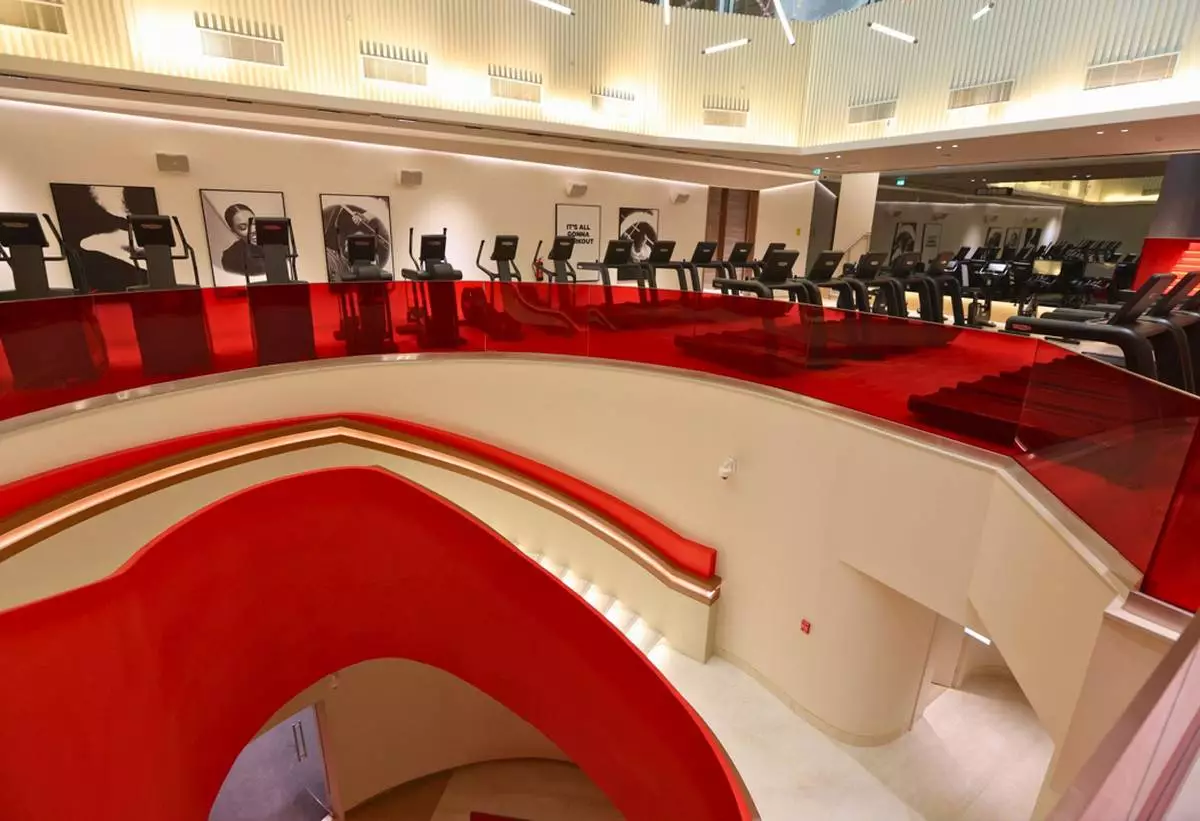
Credit: Virgin Active