Skip to Content Facebook Feature Image

In Senegal, Black surfers want to reclaim the waves despite lack of resources

News

In Senegal, Black surfers want to reclaim the waves despite lack of resources
News

News

In Senegal, Black surfers want to reclaim the waves despite lack of resources

2026-11-09 18:39 Last Updated At:18:42

DAKAR, Senegal (AP) — Ibra Samb first saw people carrying surfboards when he was a little boy, studying at a Quran school in a fishing village in Senegal. Together with friends, he hid from teachers and parents and followed the surfers — who were all white foreigners — to the beach.

“They were gliding over the waves,” said the 28-year-old professional surfer. “To us, it was incredible. Seeing them stand up on their boards, we just wanted to try it ourselves.”

More Images
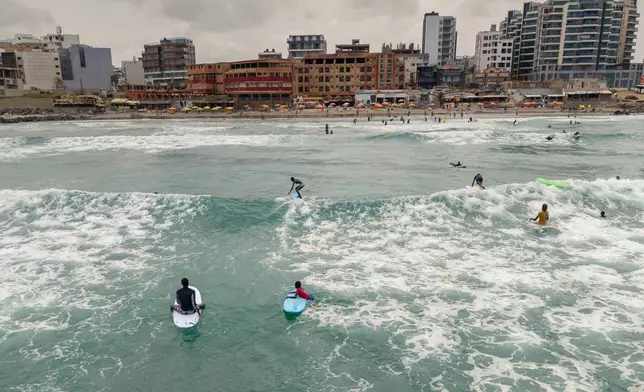
An aerial drone view shows Anda Club surfers riding waves off Virage beach in Dakar, Senegal, Sunday, Sept. 20, 2026. (AP Photo/Sylvain Cherkaoui)
An aerial drone view shows Anda Club surfers riding waves off Virage beach in Dakar, Senegal, Sunday, Sept. 20, 2026. (AP Photo/Sylvain Cherkaoui)

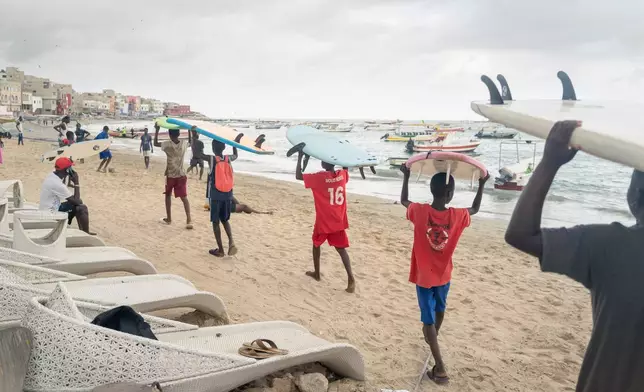
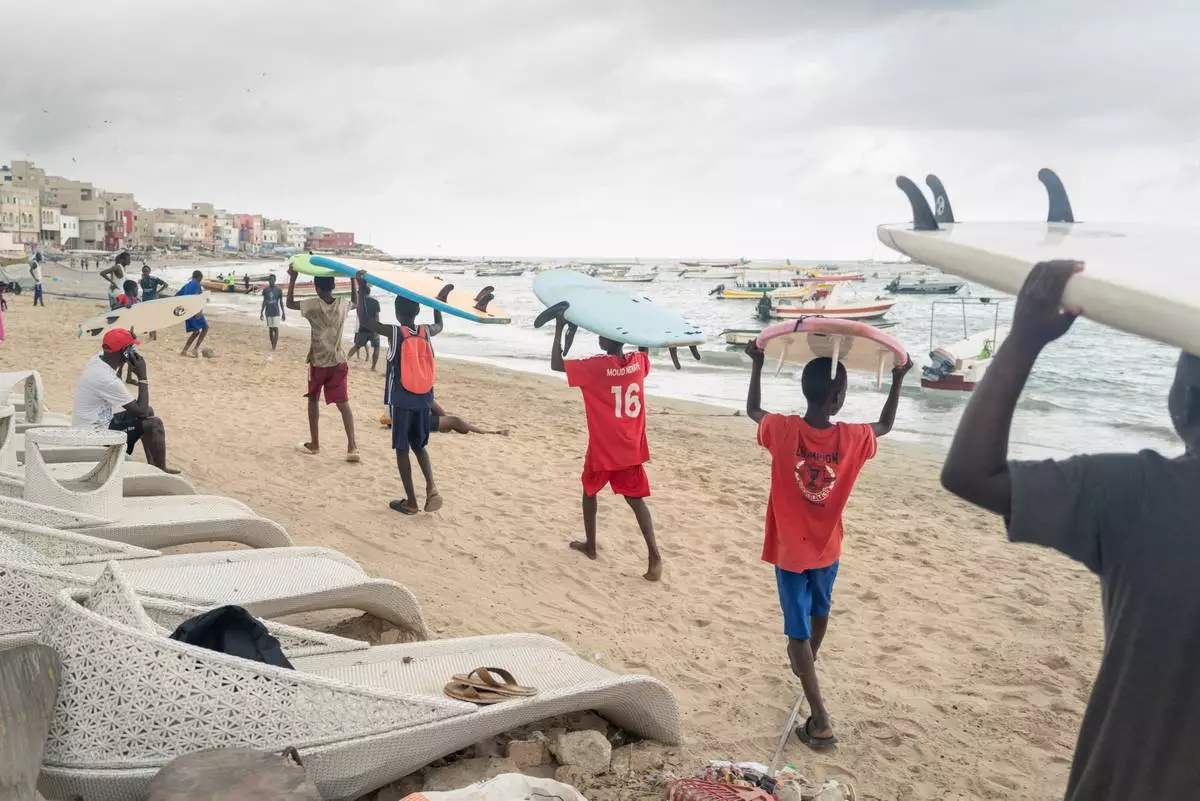
Children carry surfboards as they walk toward the water during a surfing lesson at Ngor beach in Dakar, Senegal, Sunday, Sept. 20, 2026. (AP Photo/Sylvain Cherkaoui)
Children carry surfboards as they walk toward the water during a surfing lesson at Ngor beach in Dakar, Senegal, Sunday, Sept. 20, 2026. (AP Photo/Sylvain Cherkaoui)

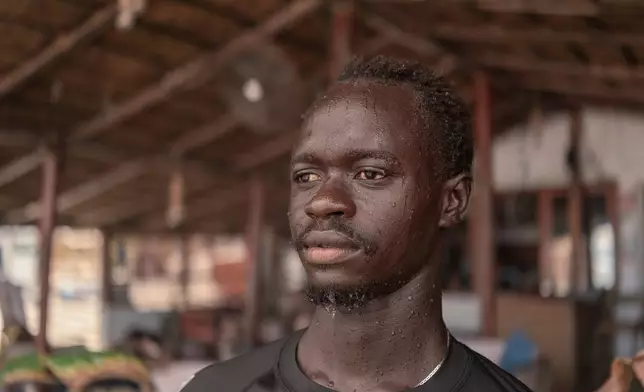
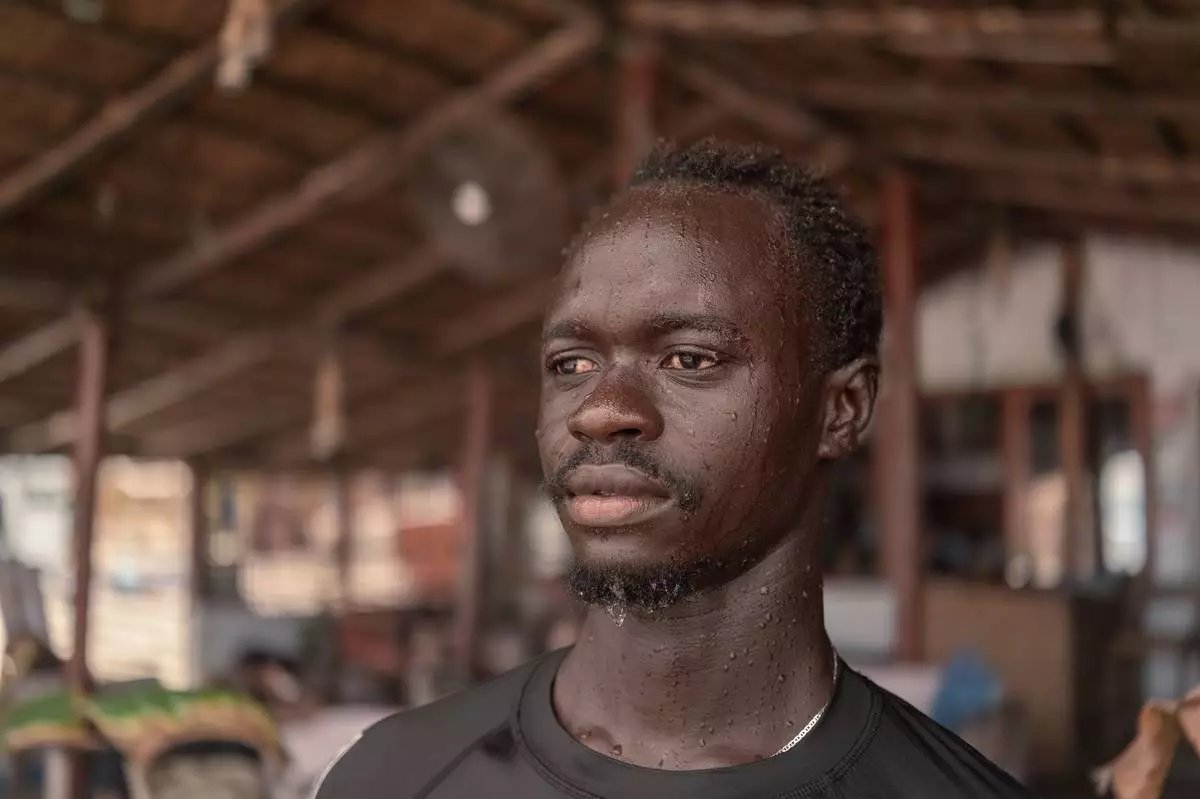
Surf instructor and Co-Founder of Anda Surf Club, Ibra Samb poses for a portrait at Virage beach in Dakar, Senegal, Sunday, Sept. 20, 2026. ( AP Photo/Sylvain Cherkaoui)
Surf instructor and Co-Founder of Anda Surf Club, Ibra Samb poses for a portrait at Virage beach in Dakar, Senegal, Sunday, Sept. 20, 2026. ( AP Photo/Sylvain Cherkaoui)

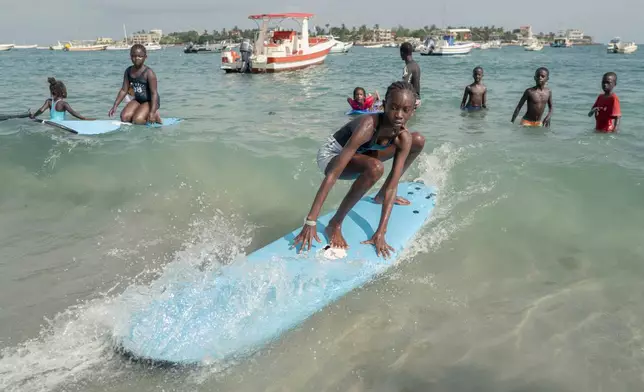
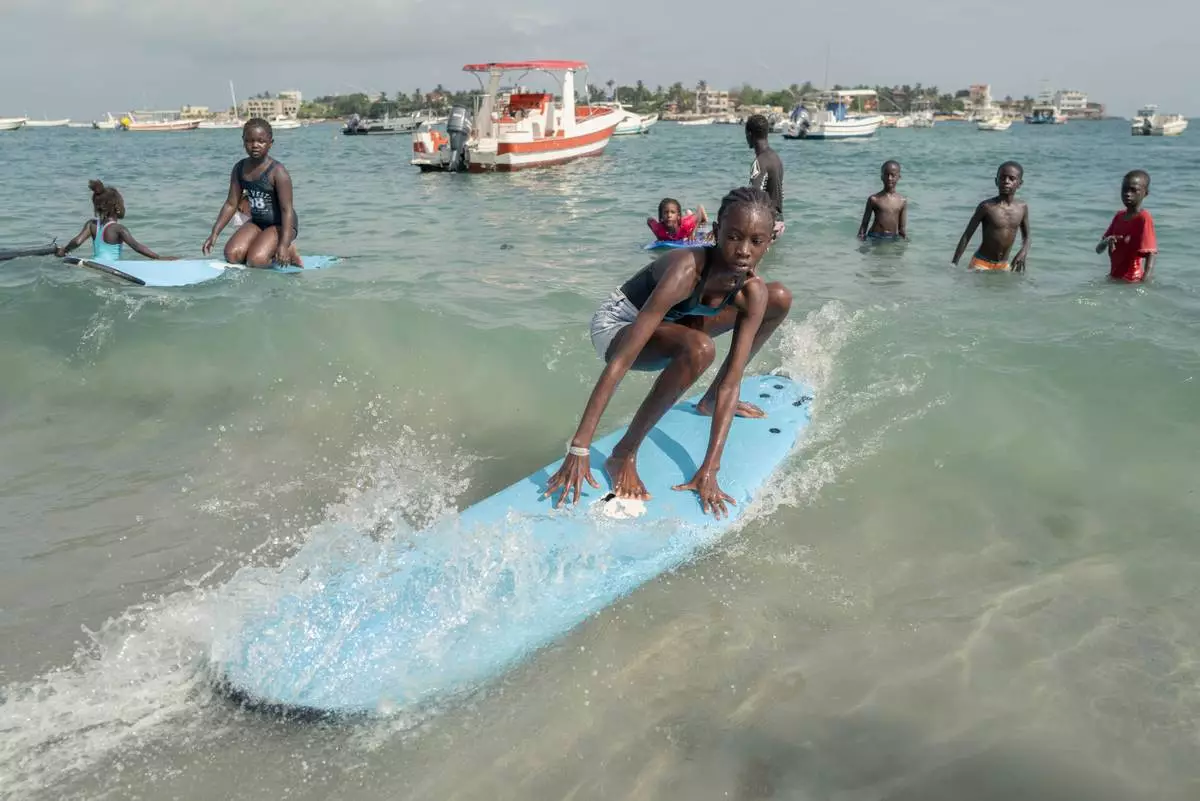
A young beginner stands up and rides a wave on a soft-top surfboard at Ngor beach in Dakar, Senegal, Sunday, Sept. 20, 2026. (AP Photo/Sylvain Cherkaoui)
A young beginner stands up and rides a wave on a soft-top surfboard at Ngor beach in Dakar, Senegal, Sunday, Sept. 20, 2026. (AP Photo/Sylvain Cherkaoui)

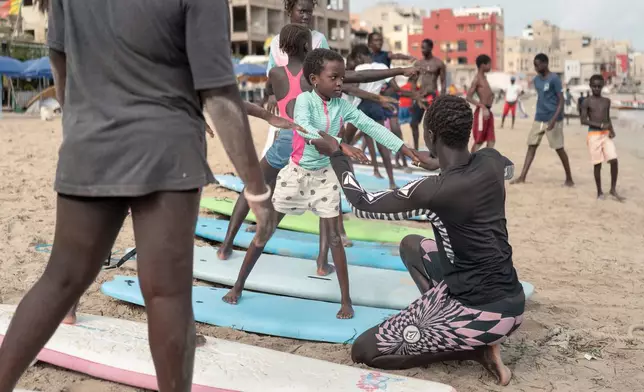
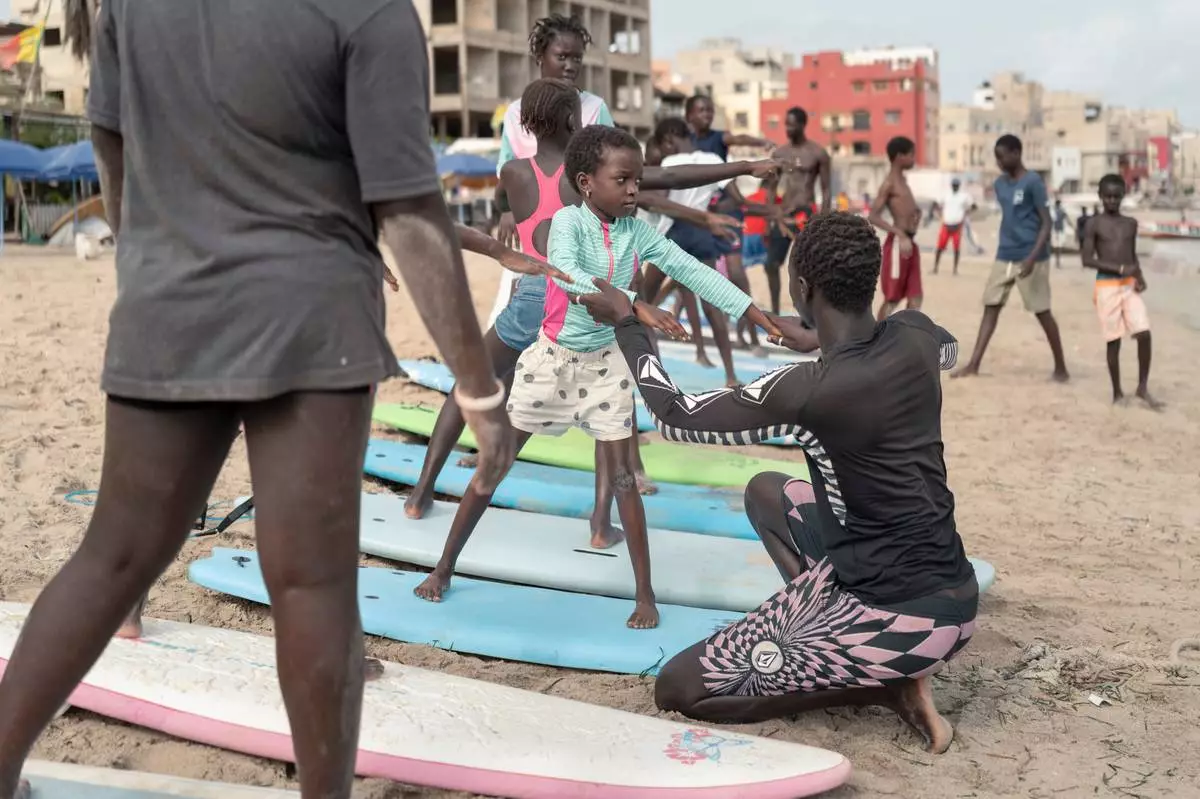
Surf coach Ibra Samb, right, co-founder of Anda Surf Club that provides local children with free surfing instructions, assists a young student practicing her pop-up stance on surfboards lined up on Ngor Beach in Dakar, Senegal, Sunday, Sept. 20, 2026. (AP Photo/Sylvain Cherkaoui)
Surf coach Ibra Samb, right, co-founder of Anda Surf Club that provides local children with free surfing instructions, assists a young student practicing her pop-up stance on surfboards lined up on Ngor Beach in Dakar, Senegal, Sunday, Sept. 20, 2026. (AP Photo/Sylvain Cherkaoui)

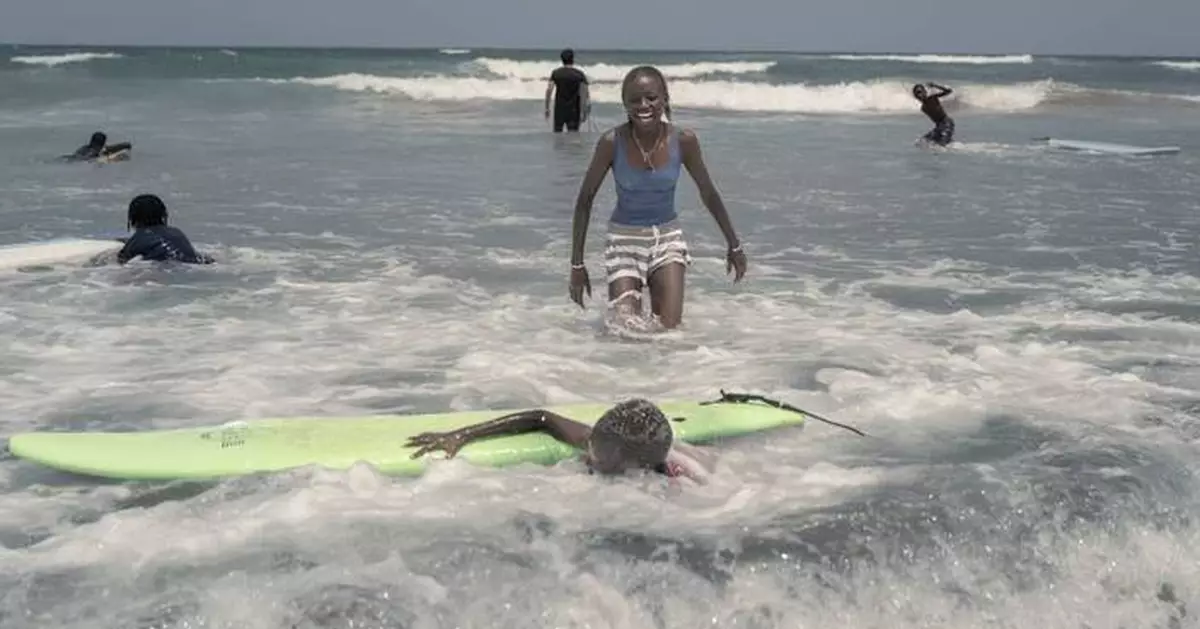
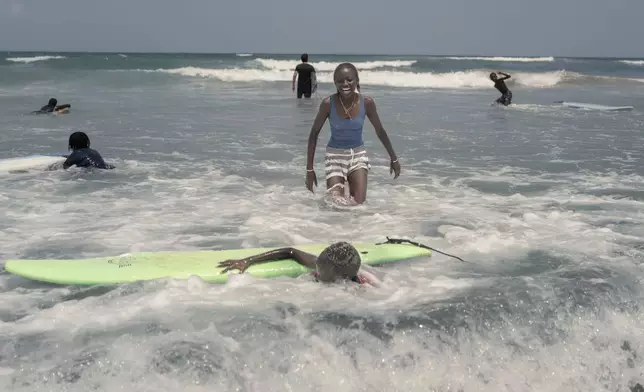
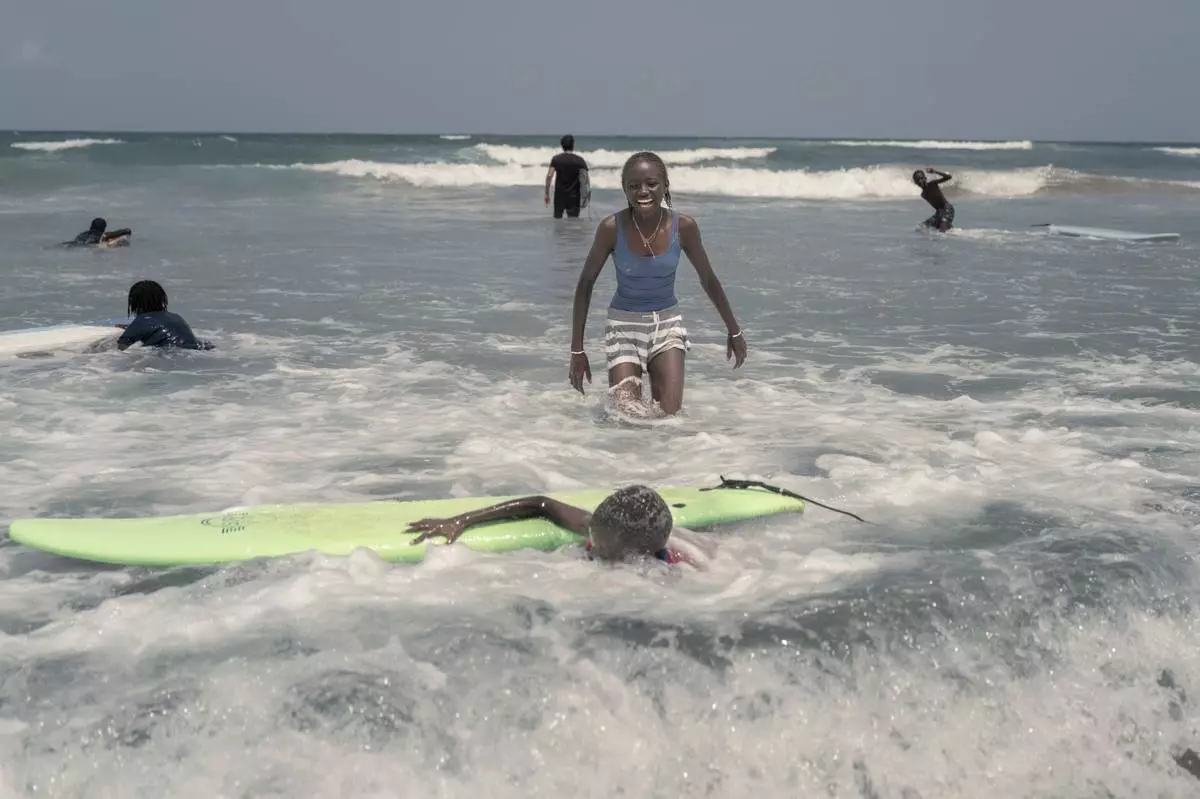
Katy Samba, a 13-year old, laughs as a young student falls into the water during a surfing lesson at Virage beach in Dakar, Senegal, Sunday, Sept. 20, 2026. ( AP Photo/Sylvain Cherkaoui)

Katy Samba, a 13-year old, laughs as a young student falls into the water during a surfing lesson at Virage beach in Dakar, Senegal, Sunday, Sept. 20, 2026. ( AP Photo/Sylvain Cherkaoui)

Samb and his friends could not afford surfboards, so they used pieces of plywood they found on the beach, leftovers from colorful pirogue fishing boats. Little did he know that surfing would eventually bring him opportunities to compete around the world, access to international sponsorships and a sense of belonging and purpose.

As the world watches Senegal host the Youth Olympic Games this month — the first Olympic event ever held in Africa — Senegalese surfers hope they can get more resources and visibility on the global surf scene to be able to fulfill their potential.

The origins of surfing can be traced back to the native populations of Peru, Polynesia and Hawaii. But today's surfing, especially professional surfing, is predominantly white.

In West Africa, a fortunate few can afford expensive equipment and training. For professionals, visas are hard to obtain and traveling is costly. Despite Africa's extraordinary coastline, African surfers remain rare at the highest level of competitive surfing.

Samb wants to change that, he said, sitting at the doorstep of a small cabin that serves as the office of Anda surf school. He founded the school last year with Cherif Fall, a fellow professional surfer and a childhood friend. Alongside paid coaching sessions, they hold free weekly classes for kids from their native Ngor village.

“My dream today is that one day I’ll wake up and see that these kids, who have progressed alongside me, have qualified for the World Tour," he said.

The Ngor fishing village, where most of the Senegalese surfers hail from, was made famous by the cult 1966 surf documentary “The Endless Summer.”

Ngor’s residents, members of the Lebou ethnic group who traditionally make a living through fishing, for centuries have had a deep relationship with the ocean, which has shaped their identity, spirituality and economy. Because of that, many kids are naturals at surfing, Samb said.

On a recent Sunday morning, on the same beach where they taught themselves how to surf on plywood, Samb, Fall and some local volunteers coached around 20 local kids, aged from 7 to 14. Boys and girls twirled in the sand, practicing the pop-up, the explosive transition from lying flat on your stomach to standing up, on boards donated by Australian surfers.

Seeing the potential opportunities, parents are eager to see their children surf. That Sunday, a father stopped by, asking whether he could sign his 2-year-old daughter up for lessons.

“Now, the whole village wants to surf,” Samb said.

Unlike in the past when girls were expected to remain indoors doing chores, their families are now much more at ease letting their daughters go out for various activities including surfing, he said. One of his female students is Katy Samba, his 13-year-old niece, who dreams of becoming a professional surfer.

When she glides over the waves, just her and her board, nothing else matters. She forgets her fears, daily struggles and social expectations.

“I feel free,” she said. “I don’t need to shout or do anything; I’m simply confident.”

Over the past two decades, surfing in Senegal has evolved from a relatively obscure pastime into a thriving ecosystem. It now includes several surf schools, camps, board repair shops and beachside bars.

But for locals, resources are still missing. There are more interested kids than there are surfboards, Samb said, and they often have to share. Kids don't have adequate clothes or wetsuits. And all teachers are volunteers, so they are limited in how many kids they can coach.

Ocean pollution is also a growing problem for the expansion of surfing in Senegal, said Babacar Thiaw, founder of Surfrider Senegal, an environmental organization.

“Senegalese surfing cannot thrive in water that makes people sick. As long as sewage and plastics continue to pour into the ocean, we are putting the health of our youth, our tourism industry and the very future of our waves at risk.”

Surfing, which made its Olympic debut at the 2020 Games in Tokyo, is one of the so-called engagement sports during the Youth Olympic Games hosted by Senegal. Although there won’t be any medal competitions held in Dakar, it puts its year-round swells in the global spotlight. Awa Sika Seck, a 19-year-old Senegalese surfing champion, carried the Youth Olympic Flame through the Ngor village.

“In the beginning, it was a disappointment,” Oumar Sèye, the head of the Senegalese Surf Federation, said about the decision to not include surfing as a competition sport in the Dakar games. “But after two days of shows, where 25 African surfers demonstrated their skills, we are very happy with the result. Everyone, in the press and on the social media, is talking about African surfing.”

Around 75% of the Senegalese population is younger than 35, according to the country’s national statistics agency. Poverty is widespread and youth unemployment stands at about 23%, with a large majority who work in the informal sector. Senegal is struggling with a cost-of-living crisis and a massive debt which has limited the government's ability to help out its citizens. There is virtually no government investment in professional surfing.

“We have the waves, we have the talent, and we have the logistics,” Sèye said. “The only thing that is missing is financial means and support from the government.”

The Olympic Committee said it has tailored its sports program “to better align it with the local context.” The engagement sports, including surfing, “focus on participation, discovery, and youth engagement.” It did not reply to follow-up questions.

The Senegalese Sports Ministry said that surfing “remains the preserve of an economic elite and tourists” and “lags behind” other sports in terms of “promotion and the number of registered members, organizational structure and athletic performance.”

“As long as those involved in the discipline offer only sporadic initiatives — lacking a genuine strategy for local integration — surfing will struggle to secure public subsidies,” the ministry said.

Samb hopes that the new generation can have easier access to the opportunities from surf. But most of all, he hopes that they will find the same inner peace he feels when he is in the water.

“I feel very happy when I’m in the water,” he said. “It’s something I can’t quite explain — it has given me something truly special.”

For more on Africa and development: https://apnews.com/hub/africa-pulse

The Associated Press receives financial support for global health and development coverage in Africa from the Gates Foundation. The AP is solely responsible for all content. Find AP’s standards for working with philanthropies, a list of supporters and funded coverage areas at AP.org.
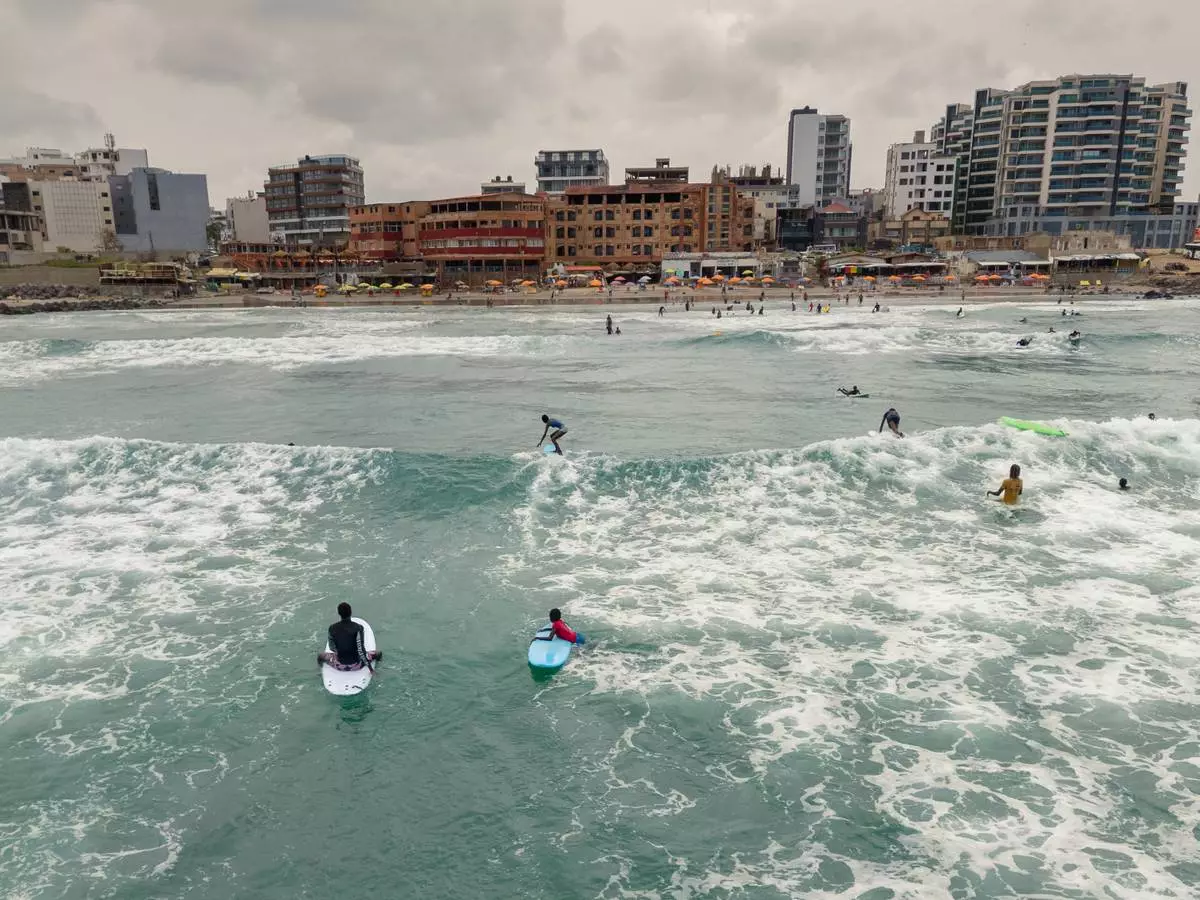
An aerial drone view shows Anda Club surfers riding waves off Virage beach in Dakar, Senegal, Sunday, Sept. 20, 2026. (AP Photo/Sylvain Cherkaoui)
An aerial drone view shows Anda Club surfers riding waves off Virage beach in Dakar, Senegal, Sunday, Sept. 20, 2026. (AP Photo/Sylvain Cherkaoui)

Children carry surfboards as they walk toward the water during a surfing lesson at Ngor beach in Dakar, Senegal, Sunday, Sept. 20, 2026. (AP Photo/Sylvain Cherkaoui)
Children carry surfboards as they walk toward the water during a surfing lesson at Ngor beach in Dakar, Senegal, Sunday, Sept. 20, 2026. (AP Photo/Sylvain Cherkaoui)

Surf instructor and Co-Founder of Anda Surf Club, Ibra Samb poses for a portrait at Virage beach in Dakar, Senegal, Sunday, Sept. 20, 2026. ( AP Photo/Sylvain Cherkaoui)
Surf instructor and Co-Founder of Anda Surf Club, Ibra Samb poses for a portrait at Virage beach in Dakar, Senegal, Sunday, Sept. 20, 2026. ( AP Photo/Sylvain Cherkaoui)

A young beginner stands up and rides a wave on a soft-top surfboard at Ngor beach in Dakar, Senegal, Sunday, Sept. 20, 2026. (AP Photo/Sylvain Cherkaoui)
A young beginner stands up and rides a wave on a soft-top surfboard at Ngor beach in Dakar, Senegal, Sunday, Sept. 20, 2026. (AP Photo/Sylvain Cherkaoui)

Surf coach Ibra Samb, right, co-founder of Anda Surf Club that provides local children with free surfing instructions, assists a young student practicing her pop-up stance on surfboards lined up on Ngor Beach in Dakar, Senegal, Sunday, Sept. 20, 2026. (AP Photo/Sylvain Cherkaoui)
Surf coach Ibra Samb, right, co-founder of Anda Surf Club that provides local children with free surfing instructions, assists a young student practicing her pop-up stance on surfboards lined up on Ngor Beach in Dakar, Senegal, Sunday, Sept. 20, 2026. (AP Photo/Sylvain Cherkaoui)

Katy Samba, a 13-year old, laughs as a young student falls into the water during a surfing lesson at Virage beach in Dakar, Senegal, Sunday, Sept. 20, 2026. ( AP Photo/Sylvain Cherkaoui)

Katy Samba, a 13-year old, laughs as a young student falls into the water during a surfing lesson at Virage beach in Dakar, Senegal, Sunday, Sept. 20, 2026. ( AP Photo/Sylvain Cherkaoui)

ANTALYA, Turkey (AP) — World leaders, delegates and climate activists on Monday kicked off talks in Turkey on curbing climate change, which in the last year has led to rising temperatures and deadly heat waves in Europe and beyond, and played a role in disasters such as the devastating floods in Nepal.

This U.N. climate summit — called the Conference of the Parties, or COP31 — comes as the war in Iran has effectively closed the Strait of Hormuz, hiking global prices of gasoline, oil and products made with them, such as fertilizers and pesticides. The disruption has pushed governments to rethink energy policies and increased investment in renewable energy sources like wind and solar.

“COP31 must supercharge solutions,” U.N. climate chief Simon Stiell said at the opening session. An estimated 68,500 people are to attend the two-week event and nearly 25,000 people will help ensure the conference goes smoothly.

Stiell said that agreeing on practical solutions, such as reducing methane emissions, can be “planetary icepacks” that can help reduce global heating. Methane stays in the atmosphere for a shorter time but warms the planet much faster than other planet-heating gases. Using renewable-powered electricity instead of oil, gas and coal can also help reduce global warming.

Delegates, meeting in the Mediterranean resort city of Antalya, will come under pressure to develop new pledges for climate action while implementing previous promises. The stakes are high: Climate scientists say global warming is likely to exceed 1.5 degrees Celsius (2.7 degrees Fahrenheit) above the preindustrial levels of the early 1800s.

Limiting temperature rise to that threshold was a goal established during the 2015 Paris Agreement. Since then, it's been a focus of international climate negotiations.

The fact that the goal is no longer realistic underscores how difficult it's been for the world to cut greenhouse gas emissions, which are released into the atmosphere when fossil fuels like oil, gas and coal are burned, leading to climate change.

“This is the first COP where it is clear beyond a reasonable doubt that the world will overshoot the 1.5-degree target,” said Turkish Environment Minister Murat Kurum. “We will not look away, and we will not lower our ambition.”

Kurum, the COP31 president, has said that rather than establishing new targets, he wants the summit to focus on turning previous climate commitments into action.

He has announced an “Action Agenda” that includes reducing methane emissions and building climate-resilient cities. There is also the aim of increasing the use of electricity — preferably from renewable energy such as solar and wind — from 21% to 35% by 2035, to reduce greenhouse emissions.

“Success begins when our decisions reach that last mile,” said Kurum. “If we are to share a future, we must share the responsibility for it.”

Delegates are also expected to discuss at the Nov. 9-20 summit how to help poorer countries pay to adapt to rising temperatures and extreme weather events, both tied to climate change, and transition away from fossil fuels.

Even as leaders delivered speeches talking about ambition and implementation, negotiators from nearly 200 countries were already wrangling in the backrooms about disagreements over funds for climate adaptation and recovery from climate disasters and other long-pending bottlenecks.

“Countries that did the least to cause this crisis shouldn’t have to borrow their way through it,” said Meena Raman from the Malaysia-based climate advocacy group Third World Network.

At the center of the disagreements are developing countries, which seek more discussions on financing for the goals agreed on at the 2015 Paris climate talks.

“After years of disappointment, developing countries want to know clearly how rich countries plan to provide the funds needed to tackle climate change,” said Iskander Erzini Vernoit, a veteran of many climate talks and advisor to African negotiators at this year’s talks.

“Agenda proposals from the 54-country African Group were backed by many developing countries but contested by rich countries from the European Union and Canada,” he said.

The last two summits, COP30 in Brazil and COP29 in Azerbaijan, came under criticism for ending with little agreement on how to reduce greenhouse emissions. The final texts of those conferences didn't even mention fuels. At COP28 in Dubai, delegates had agreed to transition away from fossil fuels.

The United States — the world’s second-largest polluter after China — is again absent from the summit.

During his first term, and again when he took office for a second time in January 2025, President Donald Trump withdrew the U.S. from climate negotiations.

“No single COP is a silver bullet that can stop climate change overnight,” said Stiell, the climate chief. “But every recent COP has made essential progress. COP31 in Antalya will, too.”

In a change from previous summits, Turkey and Australia are jointly holding this summit after the two jostled over which would be the host. As a compromise, Turkey is the official host while Australia is leading the negotiations. Both countries have come under criticism for their strong reliance on coal.

Arasu reported from Bengaluru, India.

The Associated Press’ climate and environmental coverage receives financial support from multiple private foundations. The AP is solely responsible for all content. Find AP’s standards for working with philanthropies, a list of supporters and funded coverage areas at AP.org.

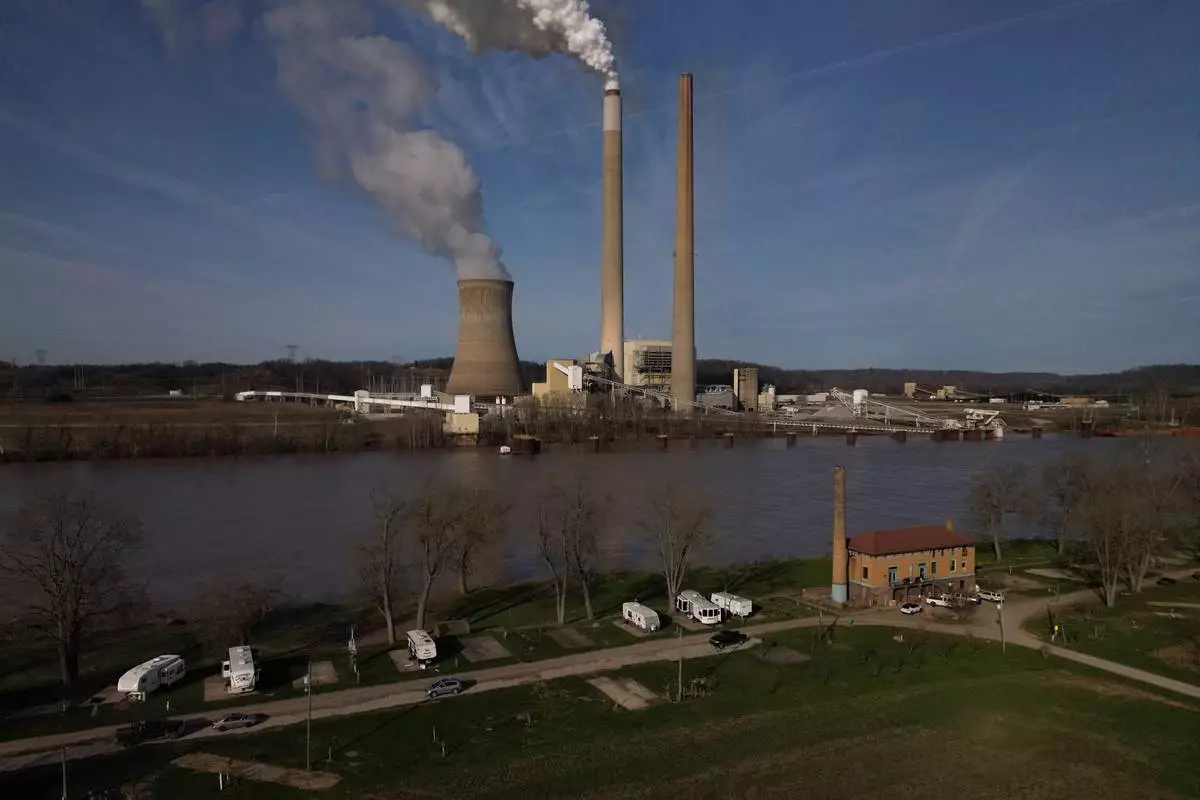
FILE - The coal-fired Mountaineer Power Plant, near New Haven, W.Va., operates across the Ohio River from the Lock 24 RV Park and Campground in Racine, Ohio, March 14, 2026. (AP Photo/Carolyn Kaster, File)

FILE - The coal-fired Mountaineer Power Plant, near New Haven, W.Va., operates across the Ohio River from the Lock 24 RV Park and Campground in Racine, Ohio, March 14, 2026. (AP Photo/Carolyn Kaster, File)

FILE - A woman uses a fan to cool off while riding a bus on a torrid day, as the National Weather forecaster issued an extreme heat code red warning for most parts of the country in Bucharest, Romania, Aug. 6, 2026. (AP Photo/Vadim Ghirda, File)

FILE - A woman uses a fan to cool off while riding a bus on a torrid day, as the National Weather forecaster issued an extreme heat code red warning for most parts of the country in Bucharest, Romania, Aug. 6, 2026. (AP Photo/Vadim Ghirda, File)

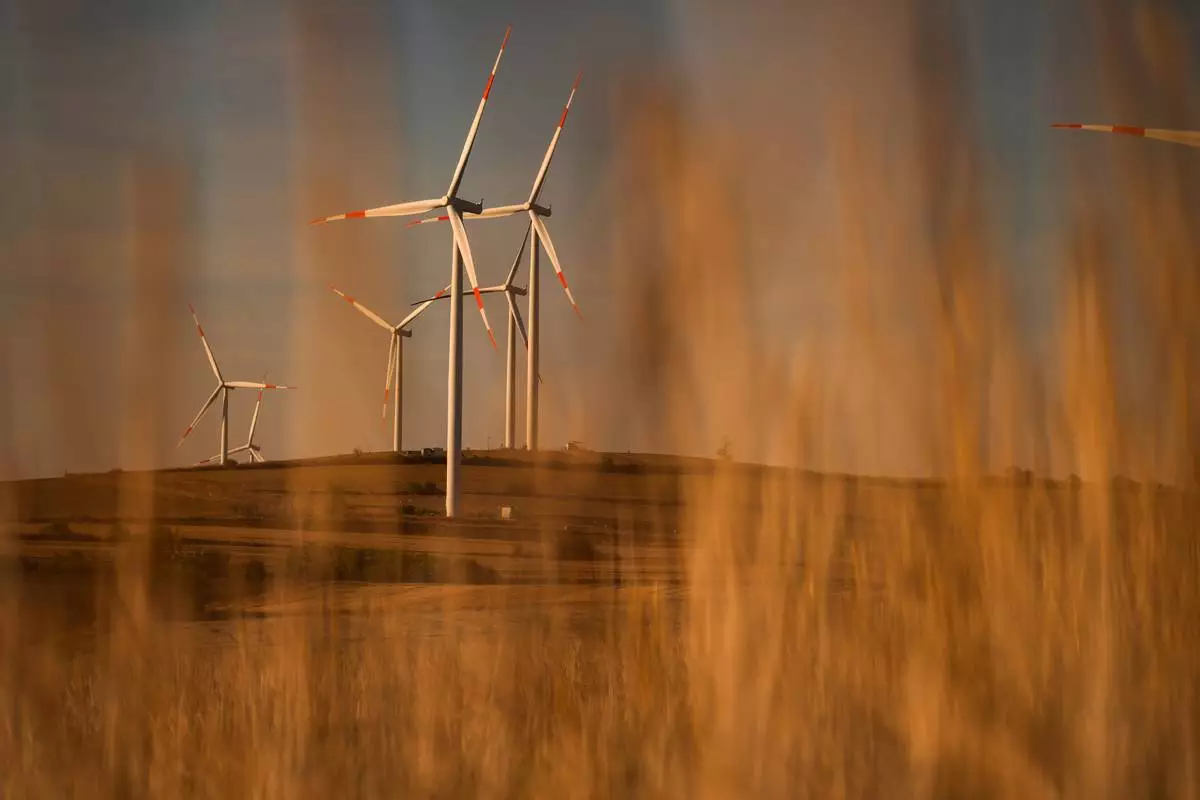
FILE - Wind turbines generate electricity in Balabanli, near Tekirdag, northwestern Turkey, Oct. 9, 2026. (AP Photo/Emrah Gurel, File)

FILE - Wind turbines generate electricity in Balabanli, near Tekirdag, northwestern Turkey, Oct. 9, 2026. (AP Photo/Emrah Gurel, File)

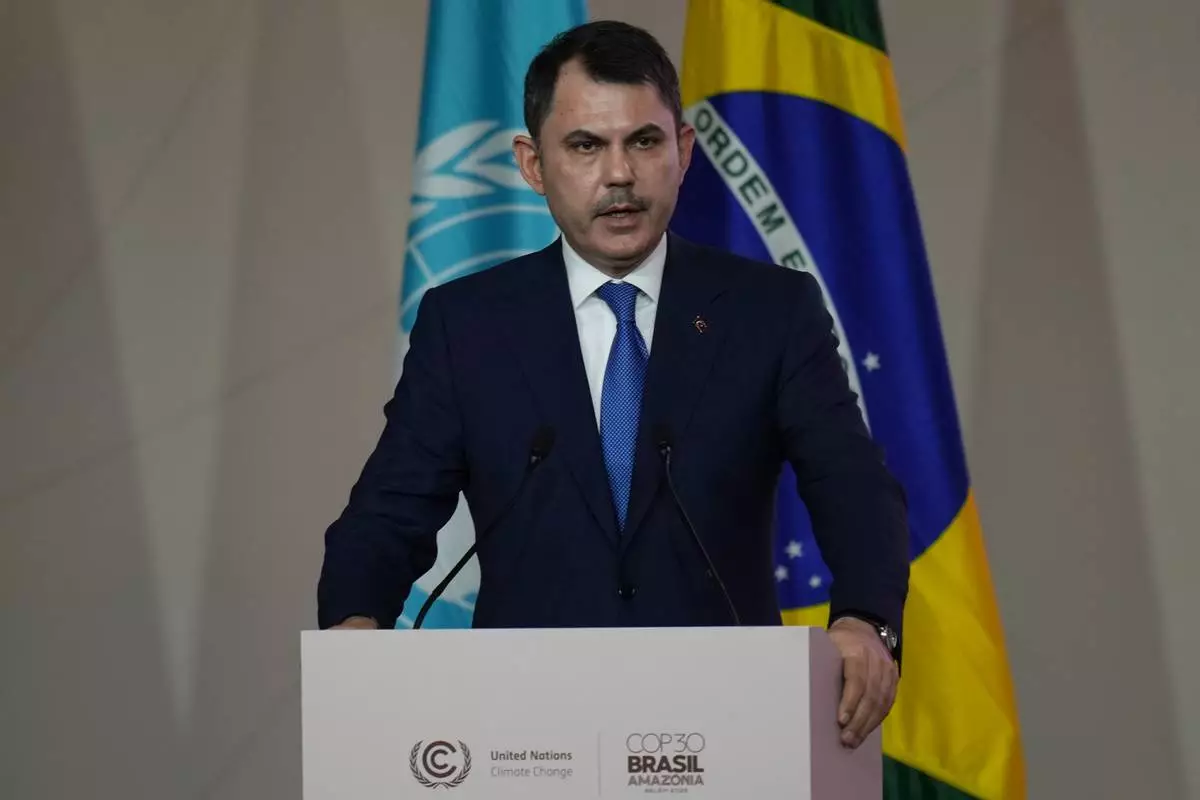
FILE - Murat Kurum, minister of environment urbanization and climate change of Turkey, speaks during a plenary session at the COP30 U.N. Climate Summit, Nov. 18, 2025, in Belem, Brazil. (AP Photo/Andre Penner, File)

FILE - Murat Kurum, minister of environment urbanization and climate change of Turkey, speaks during a plenary session at the COP30 U.N. Climate Summit, Nov. 18, 2025, in Belem, Brazil. (AP Photo/Andre Penner, File)

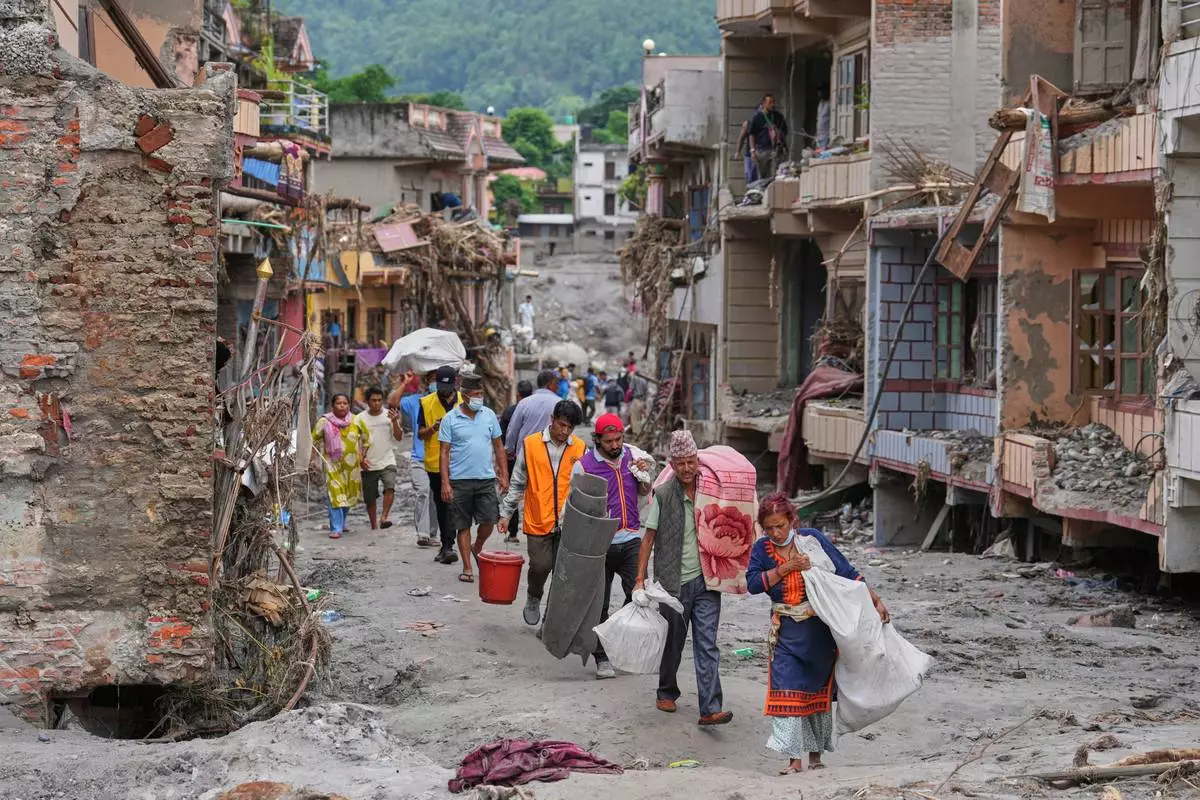
FILE - Residents carry their belongings salvaged from their damaged homes in the aftermath of flooding in Devighat, in Nepal's Nuwakot district, Aug. 29, 2026. (AP Photo/Rajesh Kumar Singh, File)

FILE - Residents carry their belongings salvaged from their damaged homes in the aftermath of flooding in Devighat, in Nepal's Nuwakot district, Aug. 29, 2026. (AP Photo/Rajesh Kumar Singh, File)

Recommended Articles