In Kunyu city, located on the southern edge of the Taklimakan Desert in northwest China's Xinjiang, the 5,000 mu (about 333 hectares) of rice has recently entered the annual harvest season, with local farmers seizing the window of fine weather to get in the crops.
These days, several large harvesters have been working in shifts across the desert rice fields. The machines can harvest and thresh in one integrated process, with processed rice immediately loaded onto trucks for transfer -- efficient, orderly mechanized operations.
"Two large harvesters work every day, harvesting 150 to 160 mu (about 10 hectares) a day. The yield is about 500 kilograms per mu (7,500 kilograms per hectare). We've calculated that, after deducting all costs, the income is about 1,000 yuan per mu (about 2,250 U.S. dollars) per hectare)," said Zhang Zhengqian, a local rice grower.
In addition, the straw left after harvesting can be processed into livestock feed, bringing an extra income of more than 100 yuan per mu (about 225 U.S. dollars per hectare).
Kunyu City lies in the desert at the northern foot of the Kunlun Mountains, where the soil is highly saline-alkaline, the land is poor and water is scarce. Since 2020, local authorities have kept organizing resources to improve the soil and reduce salinity through measures including applying more organic fertilizer, building drainage ditches and installing efficient water-saving irrigation facilities, easing water shortages and gradually turning desert wasteland into high-quality farmland.
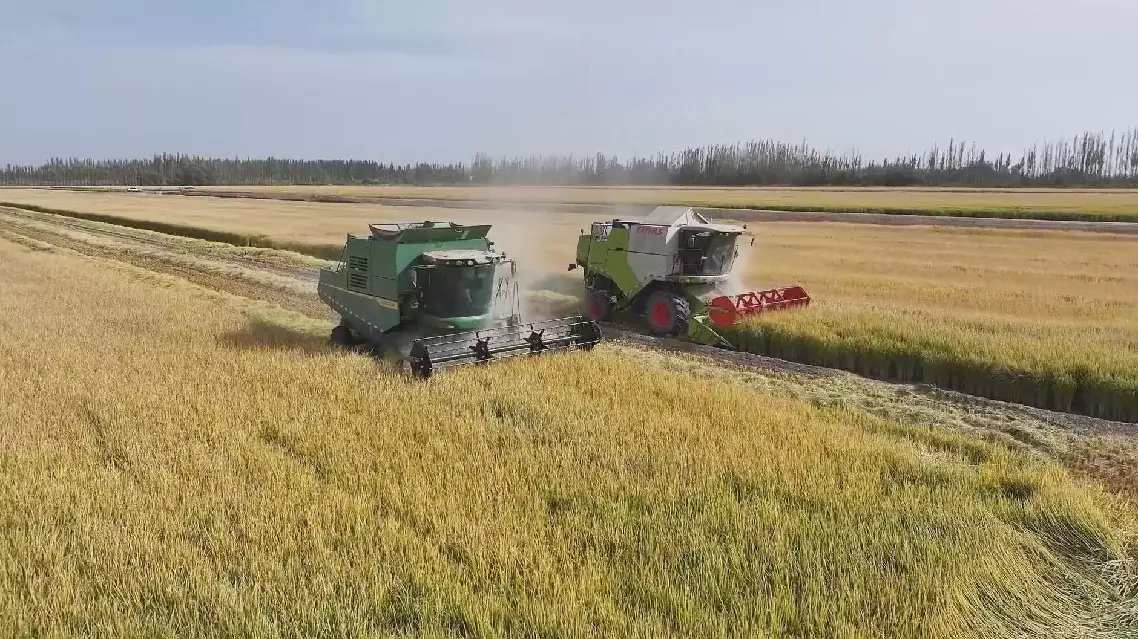
Desert-planted rice in northwest China's Xinjiang enters harvest season
Heavy rain in Gaza over the weekend killed several civilians, including an infant who drowned in flooding, the United Nations said Monday, warning that even moderate storms can have catastrophic consequences because of the lack of shelter and equipment.
The rains, which began on the evening of Nov 6, exposed the fragility of shelters, triggered widespread flooding, damaged humanitarian facilities and learning spaces, and disrupted essential services, according to the UN Office for the Coordination of Humanitarian Affairs (OCHA).
Speaking at a daily press briefing, Farhan Haq, deputy spokesman for the UN secretary-general, said that an infant reportedly drowned in the flooding and three children and at least one woman were killed when a sand dune collapsed onto their tents. Thousands of families have lost their shelters and belongings, he said.
UN humanitarian agencies and their partners have been pumping water from flooded camps, improving drainage, reinforcing displacement sites with sandbags and distributing emergency supplies. However, Haq said the response remains hampered by "far too little equipment and too few shelter materials" to meet the scale of need.
Speaking from Ramallah, Deputy Special Coordinator Ramiz Alakbarov said rain is natural, but people's vulnerability is man-made. Most people are living in worn-out tents that could not withstand what would be considered a moderate storm elsewhere, he said.
"This is, again, [as he mentioned] what would be regarded as moderate rainstorms elsewhere in the world, but because of the lack of equipment, because of the lack of resources and housing that can withstand this sort of shock, these are rainstorms that can have a catastrophic effect, including, as you just pointed out, on children," Haq said.
Alakbarov called for the urgent lifting of unnecessary restrictions and delays, including those preventing humanitarian organizations from bringing enough vacuum trucks, mobile dewatering pumps, heavy machinery, engine oil, spare parts, tents, tarpaulins, plastic sheeting, blankets and winter clothing into Gaza.
He also called for urgent humanitarian funding, without which the humanitarian community cannot buy enough supplies.
The UN also said strikes continue to hit populated areas of Gaza and cause further casualties.
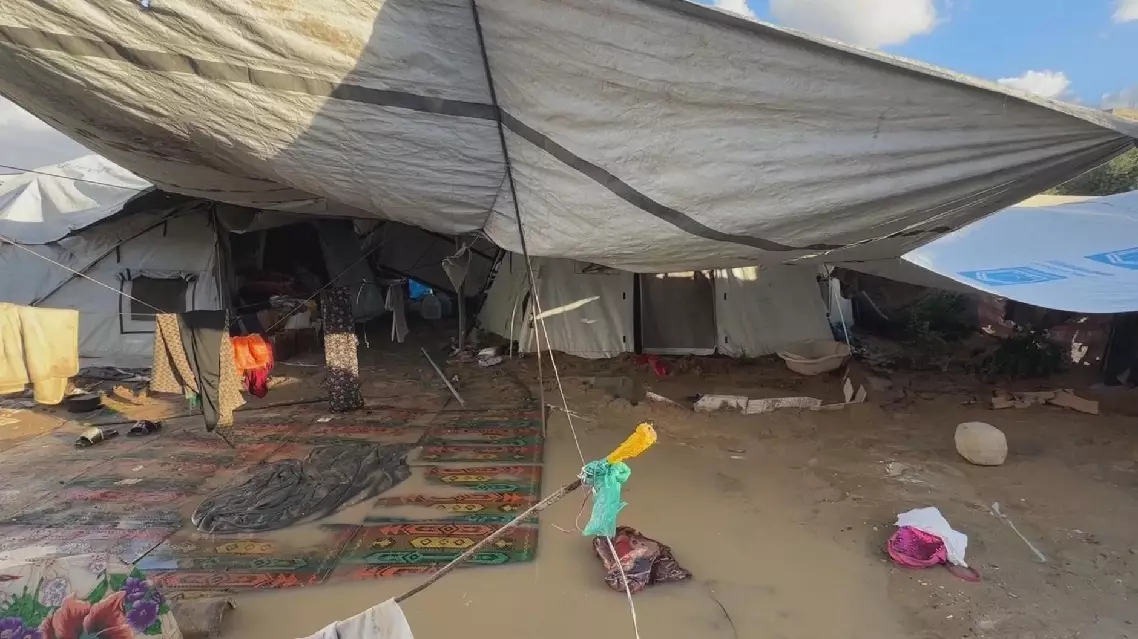
UN warns of worsening humanitarian crisis in Gaza after heavy rains