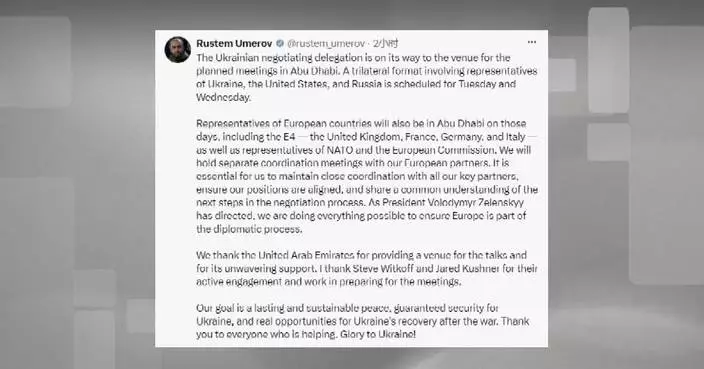
The European Union will participate in this week's Ukraine peace talks in Abu Dhabi, European Commission President Ursula von der Leyen said on Monday, while the Kremlin insisted that the negotiations would be joined by Russia, Ukraine and the United States, without European officials.
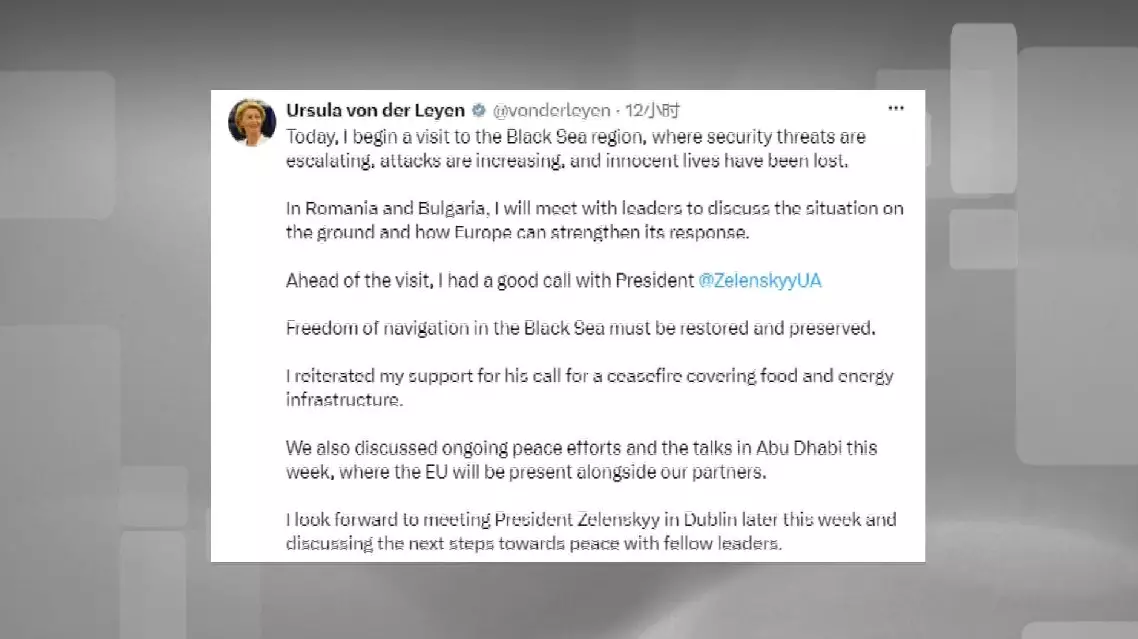
Von der Leyen said on social media X that she had a "good call" with Ukrainian President Volodymyr Zelensky ahead of the talks, adding that the EU would be present alongside its partners. Zelensky said on X that the two had coordinated their positions ahead of the meeting and were working to "ensure that the trilateral format delivered results."
However, Kremlin spokesperson Dmitry Peskov said on Monday that the talks, scheduled for Tuesday and Wednesday, would involve only Russian, Ukrainian and U.S. delegations. He noted that Ukraine and the United States each had separate channels of communication with European counterparts, according to Russia's Sputnik.
Von der Leyen also reiterated support for Zelensky's call for a ceasefire covering food and energy infrastructure and said "freedom of navigation in the Black Sea must be restored and preserved" amid growing security threats in the region.
The Abu Dhabi talks, to be mediated by the United States, are expected to focus on ending the conflict, post-war security arrangements and de-escalation.
EU, Russia differ over European participation in upcoming Ukraine talks
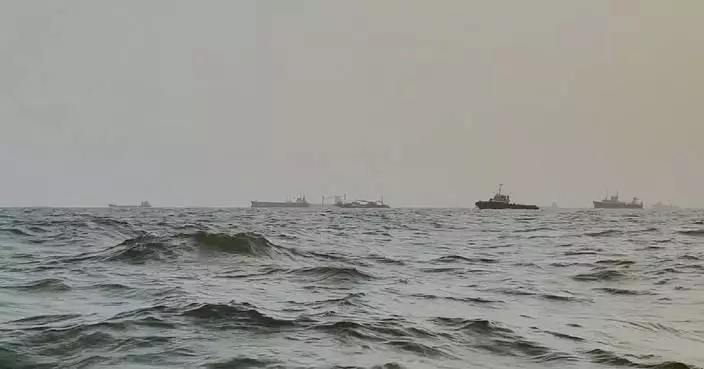
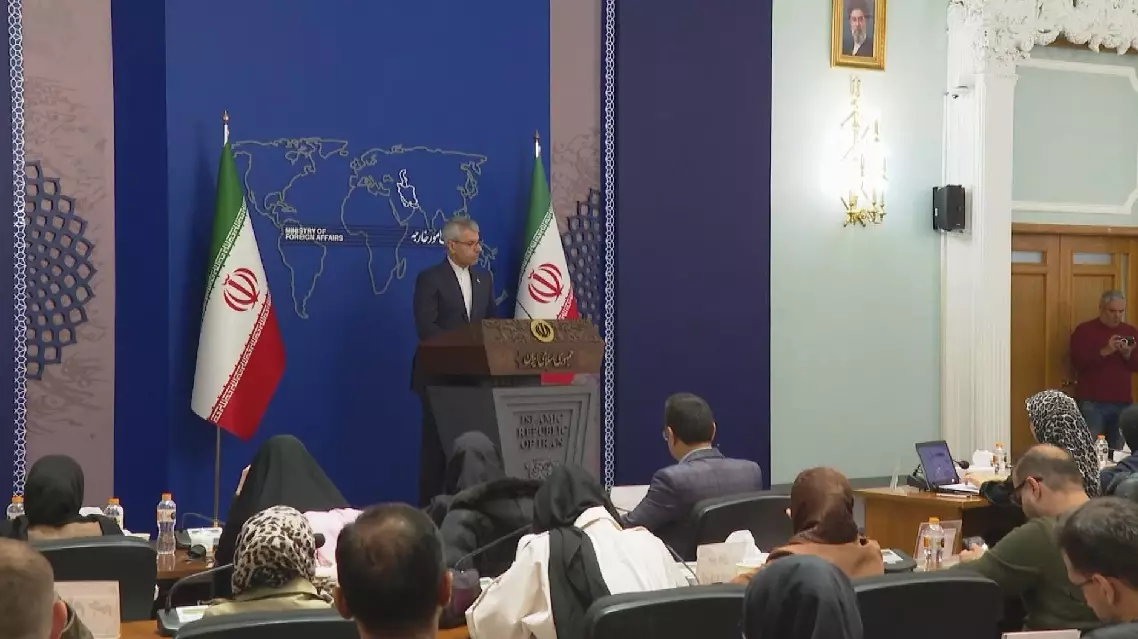
Iran's Foreign Ministry spokesman Esmaeil Baghaei said on Monday that the country's two-day plan for restoring security in the Strait of Hormuz and the Persian Gulf is still on the table, and that the United States should give it serious consideration.
He said the plan is the "most logical proposal" available, stressing that if the U.S. meets Iran's demands, the West Asia region could see a positive shift towards a more secure environment within two days.
"If the U.S. meets the demands put forward by Iran, the situation in the region could see a positive shift in as little as two days, and security in the Strait of Hormuz could also be restored. This proposal is considered the most logical solution because it not only paves the way for restoring security in the Strait of Hormuz and the Persian Gulf, but also lays a foundation for subsequent diplomatic processes," said Baghaei.
Iran conveyed a seven-day plan to the United States in September to cease hostilities and reopen the Strait of Hormuz. The country later said it was ready to shorten the plan's implementation period to two days if Washington met Tehran's conditions.
On Feb 28, Israel and the United States launched joint attacks on Tehran and other Iranian cities. Iran responded with waves of missile and drone attacks targeting Israel and U.S. bases and assets in the region, and tightened its grip on the Strait of Hormuz.
A ceasefire was agreed between the warring parties on April 8. On June 18, Iran and the United States signed a memorandum of understanding (MoU) on ending the war in the region on all fronts.
Under the MoU, the two countries were scheduled to hold negotiations within 60 days to reach a final agreement on Iran's nuclear program and the removal of sanctions. However, they failed to make sufficient progress toward a deal as tensions continued to escalate, with U.S. strikes continuing on Iran and diplomatic efforts at a standstill.
Iran says 2-day plan to reopen Hormuz Strait still on table