ANTALYA, Turkey (AP) — Countries that want to wean themselves from the fossil fuels that cause climate change will get a road map aimed at guiding them on an economy-transforming journey toward renewable energies at the U.N. climate talks Tuesday.
Brazil, which ran last year's U.N. climate talks, will launch its promised road map to “transition away from fossil fuels” during this year's talks, COP31, taking place in Turkey.
Click to Gallery
André Corrêa do Lago, COP30 president, back center, and Ana Toni, COP30 CEO, right, pose as they attend the Fossil of the Day at the COP31 U.N. Climate Summit, Monday, Nov. 9, 2026, in Antalya, Turkey. (AP Photo/Khalil Hamra)
André Corrêa do Lago, COP30 president, back center, and Ana Toni, COP30 CEO, right, pose as they attend the Fossil of the Day at the COP31 U.N. Climate Summit, Monday, Nov. 9, 2026, in Antalya, Turkey. (AP Photo/Khalil Hamra)
FILE - A tank farm is visible at the Klesch oil refinery where diesel, gasoline and heating oil are produced in Gelsenkirchen, Germany, Oct. 2, 2026. (AP Photo/Martin Meissner, File)
A demonstrator holds a sign that reads "end fossil fuels" at the COP31 U.N. Climate Summit, Monday, Nov. 9, 2026, in Antalya, Turkey. (AP Photo/Khalil Hamra)
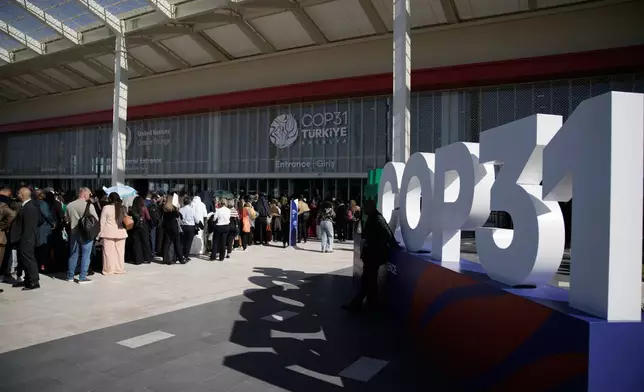
People wait in line to get into the venue for the the COP31 U.N. Climate Summit, Monday, Nov. 9, 2026, in Antalya, Turkey. (AP Photo/Khalil Hamra)
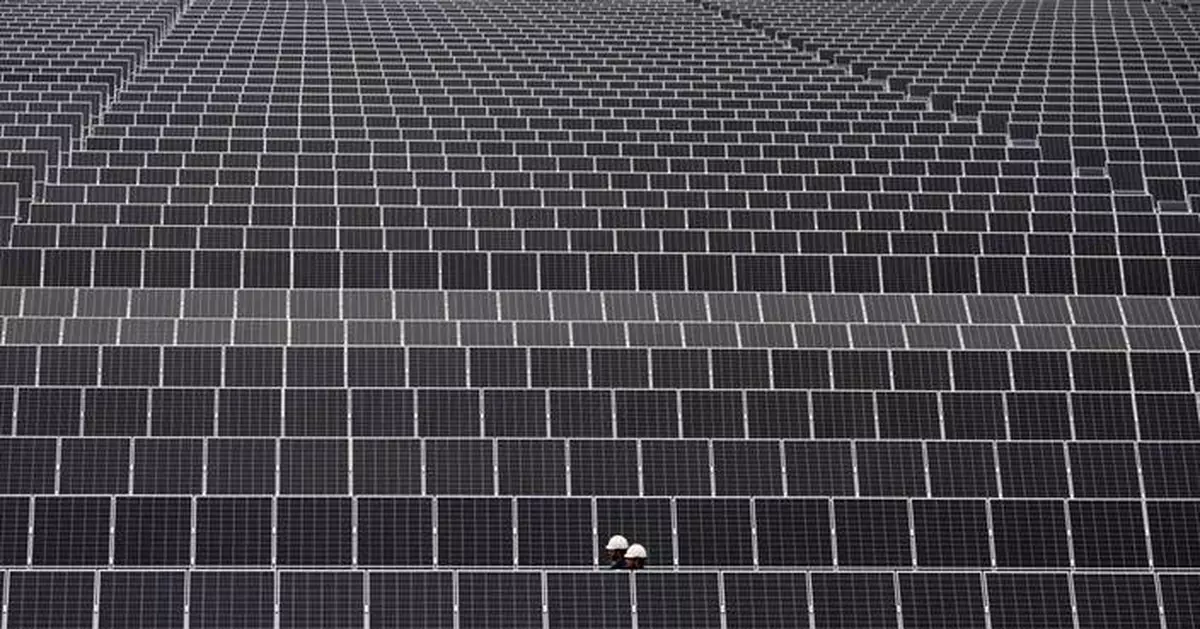
FILE - Workers walk at Kalyon Karapinar solar power plant in Karapinar, Konya province, Turkey, Oct. 14, 2026. (AP Photo/Emrah Gurel, File)
It's an intricate document designed with different “levers” for nations to use to switch from coal, oil and gas to renewable energies, such as wind and solar, which don't release heat-trapping gases that lead to global warming. In a groundbreaking agreement three years ago at climate talks, the world agreed to “transition away from fossil fuels” but didn't provide guidance or details.
That's what Brazil is hoping to provide.
“What we hope to achieve with the road map is making a big problem — that is transitioning away — translating it into smaller actionable solutions,” Brazil's Ana Toni, who was CEO of last year's talks, told The Associated Press. “What we want is to be very pragmatic, helping countries move forward.”
Because all countries are all different, the road map is differentiated so that a nation could look at different tools and make decisions about moving away from fossil fuels, Toni said.
Some people may think this is impossible, but the road map shows that it is possible and a transition to renewable energies is inevitable, she said.
“Actually many countries are doing many things already,” she added.
Toni said it was important for countries to stop building new fossil fuel power plants and infrastructure because those will be come “stranded assets.”
One of the other key “foundational” levers, she said, is getting rid of subsidies that make fossil fuels cheaper and easier.
Brazil, with major oil deposits, is a major fossil fuel exporter while most of its internal energy consumptions comes from hydropower. Toni declined to comment directly on her country's oil exports.
“We'll create a road map that is good not only for Brazil, but for the world,” Toni said.
Environmental group Climate Action Network lauded Brazil and its president Monday “for doing something that feels increasingly revolutionary at a climate summit: working out how to deliver what was agreed.”
Brazil is also presenting other “road maps” during the talks. One deals with deforestation and the other on putting details into promised $1.3 trillion in climate financial aid for poorer nations from rich ones.
“The road maps make clear that, although every country has a different starting point, all countries can start their own path,” said Stela Herschmann, international policy lead for Observatório do Clima, a network of Brazilian environmental organizations. “Brazil has demonstrated the courage and leadership to start this conversation.”
Borenstein reported from Kensington, Maryland, and Arasu reported from Bengaluru, India.
The Associated Press’ climate and environmental coverage receives financial support from multiple private foundations. AP is solely responsible for all content. Find AP’s standards for working with philanthropies, a list of supporters and funded coverage areas at AP.org.

André Corrêa do Lago, COP30 president, back center, and Ana Toni, COP30 CEO, right, pose as they attend the Fossil of the Day at the COP31 U.N. Climate Summit, Monday, Nov. 9, 2026, in Antalya, Turkey. (AP Photo/Khalil Hamra)

FILE - A tank farm is visible at the Klesch oil refinery where diesel, gasoline and heating oil are produced in Gelsenkirchen, Germany, Oct. 2, 2026. (AP Photo/Martin Meissner, File)

A demonstrator holds a sign that reads "end fossil fuels" at the COP31 U.N. Climate Summit, Monday, Nov. 9, 2026, in Antalya, Turkey. (AP Photo/Khalil Hamra)
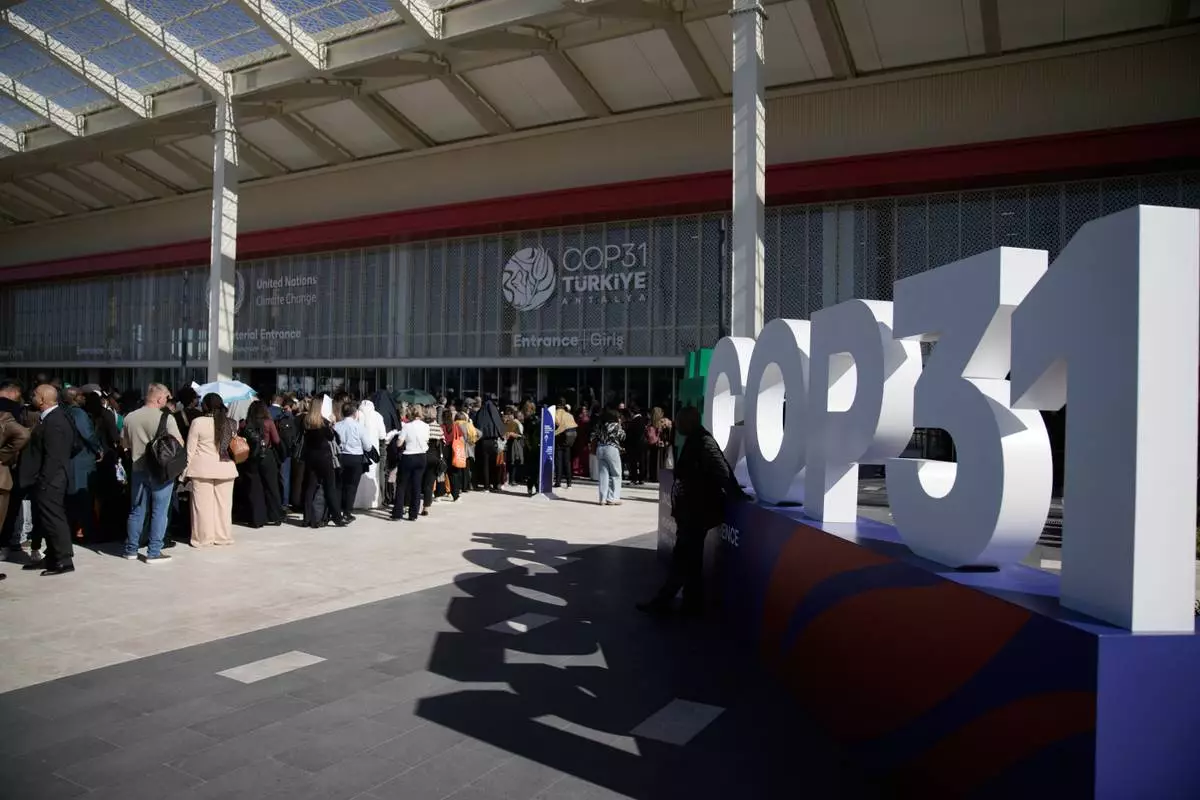
People wait in line to get into the venue for the the COP31 U.N. Climate Summit, Monday, Nov. 9, 2026, in Antalya, Turkey. (AP Photo/Khalil Hamra)
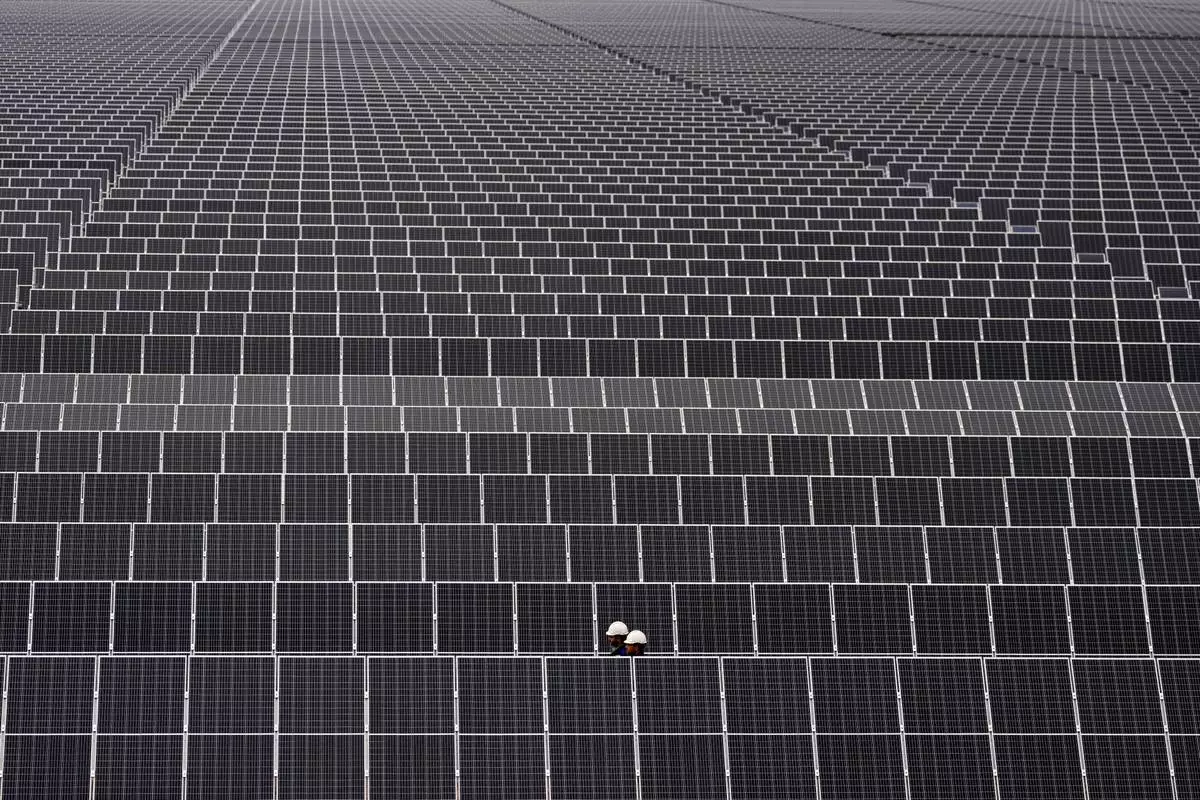
FILE - Workers walk at Kalyon Karapinar solar power plant in Karapinar, Konya province, Turkey, Oct. 14, 2026. (AP Photo/Emrah Gurel, File)
TORONTO--(BUSINESS WIRE)--Nov 9, 2026--
Today, Xandar Kardian, the radar health technology company whose FDA-cleared sensors monitor vital signs without physical contact, announced Kardian Somily, its first consumer product. Mounted on the wall above the bed, Somily uses radar, the same sensing that lets an aircraft or a self-parking car judge how far away something is and how it is moving, to read the chest through the air and through bedding while a person sleeps. It measures how far the chest rises and falls with each breath and moves with each pump of the heart, and how that movement changes across the night, without asking the person to wear, charge or remember anything.
This press release features multimedia. View the full release here: https://www.businesswire.com/news/home/20261105813797/en/
Somily is built on the same radar as Xandar Kardian's XK300, the FDA-cleared medical device that has monitored more than 49,000 people in hospitals, skilled-nursing facilities and other care settings for over five years. The XK300 is cleared in the U.S. and five other countries and grew out of research documented in 37 journal publications. While the consumer health industry spent the last five years teaching people to read more from the pulse at the wrist, Xandar Kardian spent those same years in hospitals and nursing homes learning to read the body from the chest, with nothing on the patient at all. Somily brings that measurement to the bedroom wall, for anyone.
The sensor sends a tiny radar pulse 15 million times a second and measures the returning signal as the chest moves through space, which is how it can tell deep breathing from shallow, even breathing from uneven and slow breathing from rapid. Two nights can both average 16 breaths a minute, while one was even from start to finish and the other was shallow and fast, uneven, and then settled into slow, deep breaths. After the second night, a person wakes up feeling off without knowing why, while familiar metrics may look unchanged. Somily provides a different view by showing how breathing patterns changed across the night. In the company’s clinical work, that overnight record became part of a care team's monitoring record. Somily produces it in a person's own bedroom. That variation in how a person breathes, respiratory rate variability (RRV), is the breathing equivalent of the heart rate variability (HRV) millions of people check every morning.
Heartbeat Clarity does the same for the heart. Every beat moves the chest wall by a fraction of a millimeter, and because Somily is measuring distance rather than reading a pulse downstream at the wrist, it captures how far the chest moved with each beat and how evenly the beats were spaced. That is how it shows how clearly and regularly the heartbeat came through across the night, compared with that person's usual nights. Radar reads movement and nothing else, so there is no camera and no microphone, and because it sees the whole body move, it knows when a person is awake, talking or turning over and keeps those minutes out of the resting numbers. Each morning, the XKare app compares the night with the person's own recent nights and shows what changed, whether it was the breathing, the heartbeat or sleep, and by how much. The app brings those signals together in a nightly view, showing RRV as even and regular, Heartbeat Clarity as steady, and an overall recovery summary based on the night’s breathing, heartbeat, sleep and routine.
On a morning when a person feels off and familiar metrics look unchanged, Somily can show that the breathing turned shallow after 2 a.m., or that the heartbeat came through less clearly than usual, giving the person something specific to track. Those are the changes a care team used to read on a monitoring screen. Now they are on the person's own phone.
"Everyone I meet knows their HRV. Almost nobody has heard of RRV, and breathing is the vital sign clinicians watch first," said Sam Yang, CEO and co-founder of Xandar Kardian. "People already understand the physical part. You know the difference between shallow breathing and a deep breath, and you know when your heart is pounding. Those are events at the chest. Radar sees the chest move, and once you can measure that while someone sleeps, you are looking at the body instead of a number."
Somily is also ideal for people who will not or cannot wear a tracker, seniors, anyone with limited mobility, and anyone who does not want one more device to remember and charge, because nothing has to be put on.
"Cardiologists learn what the heart is doing from the chest, not the wrist," said Dr. Clifton Watt, MD, FACC, cardiologist at UCSF. "Seeing how clearly and how regularly the heartbeat came through across a night, without a lead on the patient and without anyone in the room, is information that has lived on clinical monitoring screens. Having it night after night from someone's own bedroom is a different kind of record."
"Consumer health has become very good at giving people more numbers," Yang said. "The next step is showing people what produced them. Breathing is more than breaths per minute and a heartbeat is more than beats per minute. For five years we have measured heart rate and breathing this way in hospitals and nursing homes. Now we are bringing it into the bedroom without asking anyone to become a patient first. We think this is where health monitoring ends up, not on the body but in the room around it."
Orders are open now at kardian.com. Somily is $299, including two years of Kardian Max membership with no monthly fee, and is HSA- and FSA-eligible for qualified U.S. customers. Couples can use two sensors, one above each side of the bed. All data is stored on U.S. servers.
About Xandar Kardian
Xandar Kardian turned radar from a way to sense the world around us into a vital-sign sensor for the human body, proved it across hospitals, senior care and other care settings without contact, and is now bringing that capability into the home. Its XK300 is an FDA 510(k)-cleared Class II medical device for measuring heart rate and respiratory rate, prescribed through care providers. Kardian Somily is a separate general wellness product built on the same radar for use in the home. The company has offices in New York, Toronto and Seoul.
Heartbeat Clarity reports what the sensor measures, the way a sleep score does. It is not an FDA-cleared measurement and is intended for wellness tracking rather than diagnosis. Kardian Somily is a general wellness product, not a medical device, and is not intended to diagnose, treat, cure or prevent any disease. The XK300 does not diagnose any condition and is not an alarm for acute or life-threatening situations.
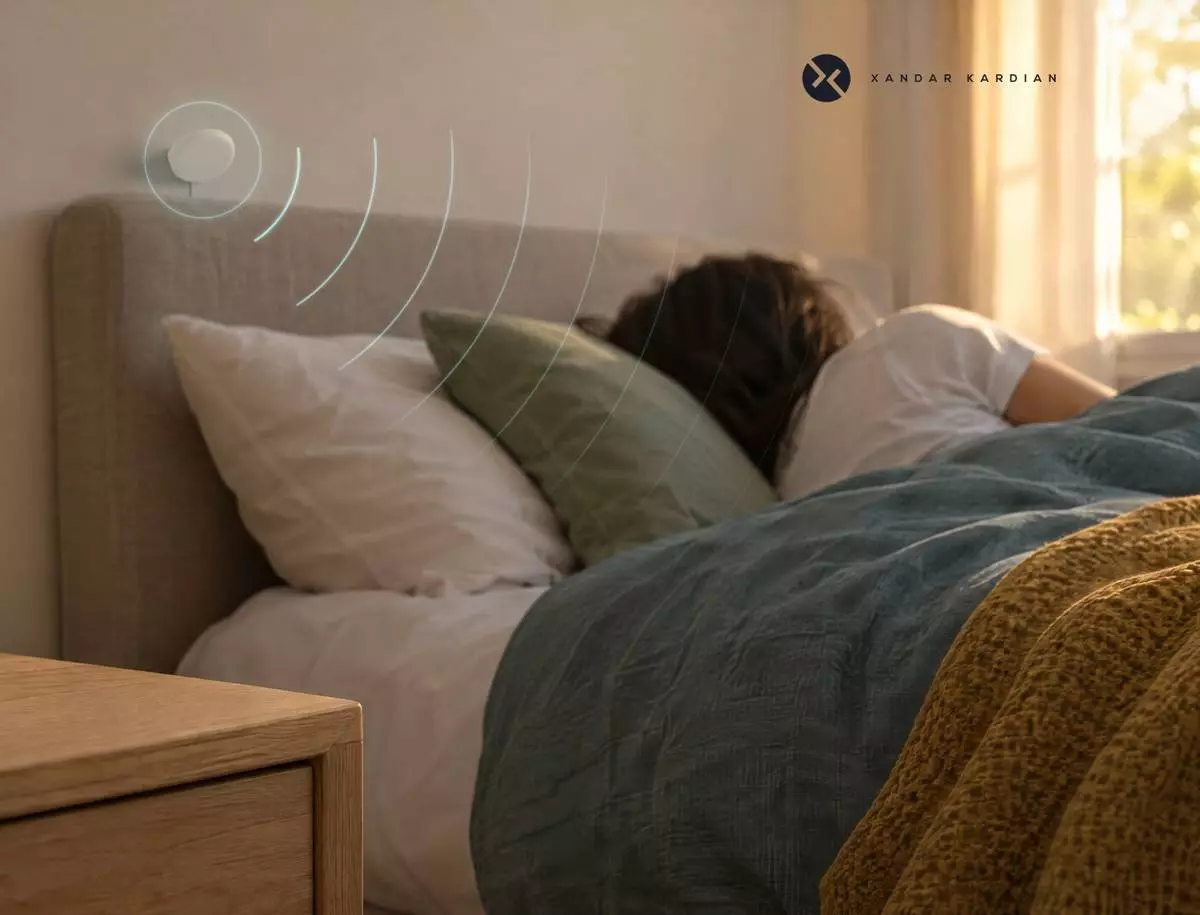
Somily by Xandar Kardian mounts on the bedroom wall and uses radar to track sleep, heart rate and breathing through bedding, without a wearable, camera or microphone.
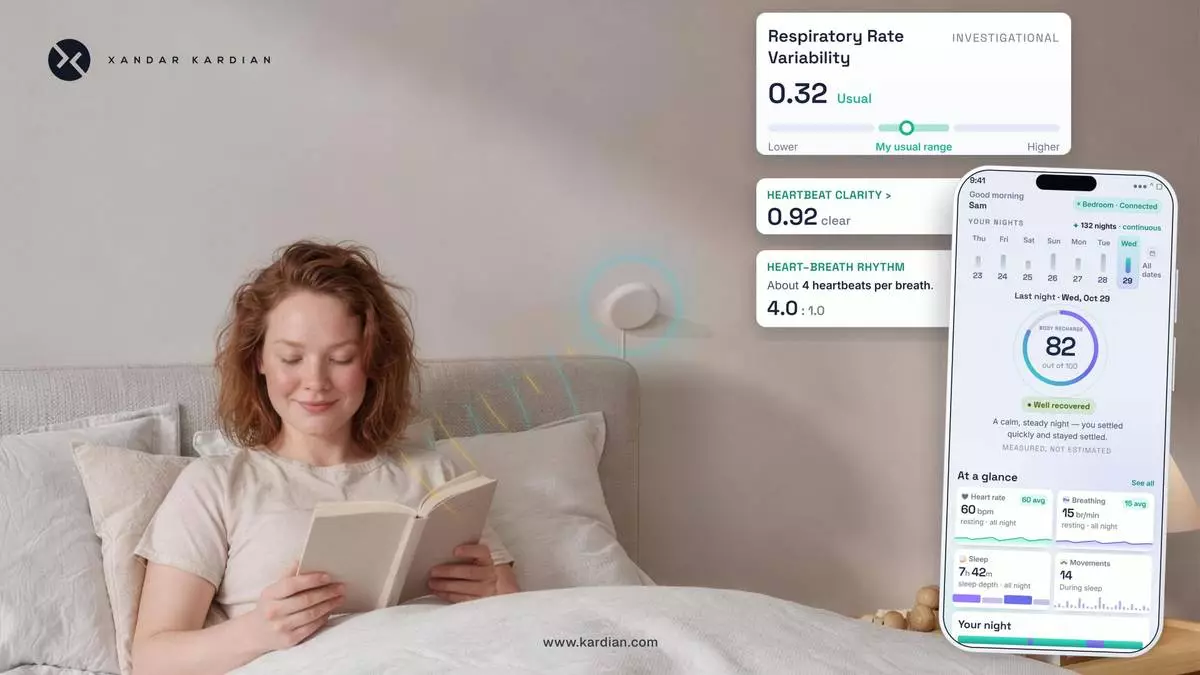
Somily by Xandar Kardian uses wall-mounted radar to track sleep, heart rate and breathing through bedding, without wearables, cameras or microphones. Actual app screens highlight Heartbeat Clarity, heart-breath rhythm and Respiratory Rate Variability (labeled “Investigational”).