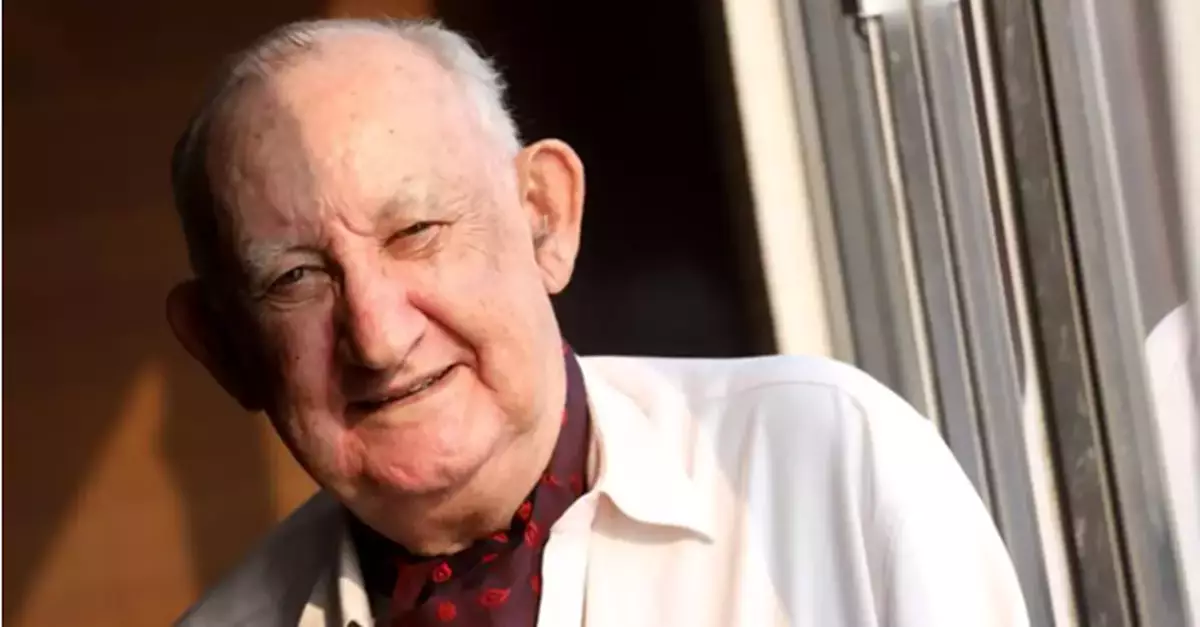
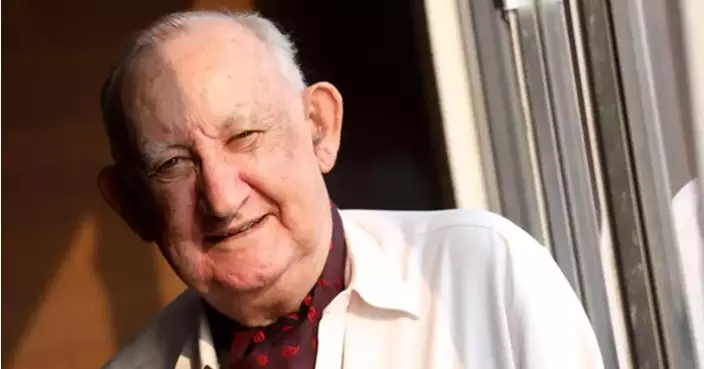
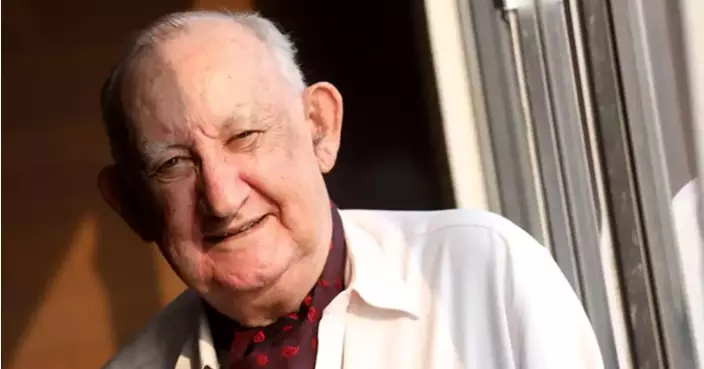
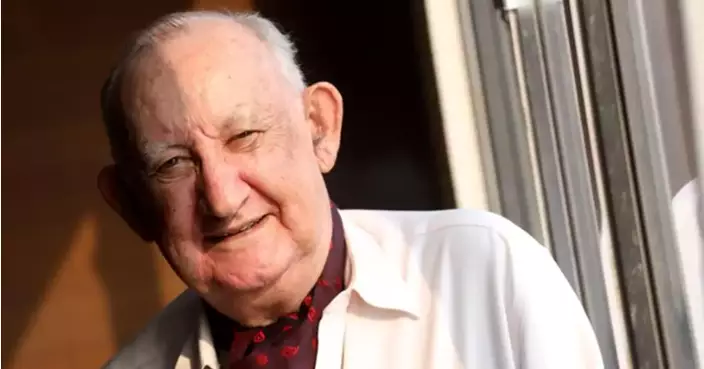
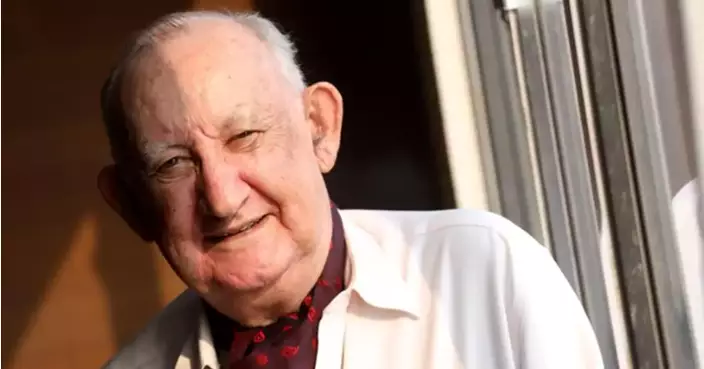
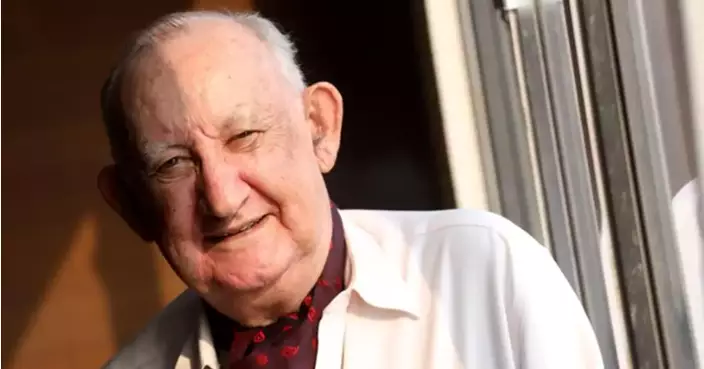
Former Hong Kong banker and now Yale University Law School lecturer, Stephen Roach is at it again: Hong Kong may not be over, but it is in tatters.
Roach made the comments on a podcast by Singapore’s Straits Times US bureau chief Bhagyashree Garekar at the end of October.
He claimed that the controversial headline in the Financial Times attributed to him in 2024 that Hong Kong was over was stronger than the arguments he made and that “no great city is never over, and that includes Hong Kong.”
He said that since the demonstrations of 2019 and 2020 and the “unfriendly takeover, if you want to call it that”, by the mainland Chinese, the character of Hong Kong has changed dramatically.
“The rule of law that many view as the most precious institution in Hong Kong has now been compromised by one of the most prominent foreign, former foreign judges of Hong Kong, characterized as ‘judicial patriotism’ and freedom of expression,” said Roach from his home in Canaan, Connecticut.
It appears that Roach was not in Hong Kong at the time of the handover in 1997, but it was anything but “unfriendly”. It was a time of jubilation.
He also says that it is “far fetched” to conclude that Hong Kong is the way it was in the past, claiming that its “just another Chinese city,” and that China was doing its best to support financial services in Hong Kong by directing capital flows into the Hong Kong market.
“But the idea of a free, vibrant, independent, Milton Friedman's favorite market based city, that view I think is in tatters,” so said the so-called world economist Roach. [World-renown economist, Nobel laureate and Hoover fellow Milton Friedman's view of Hong Kong was one of admiration and fascination. He regarded Hong Kong as a free-market utopia, where the variety of freebooting capitalism had been established.]
Of course Hong Kong is another Chinese city. That is a geographic and political fact, so why make a big deal of it. And it’s only natural that Beijing would use Hong Kong as its financial centre. In fact, regardless of what Roach teaches his students in Yale, Hong Kong is one of the world’s leading financial institutions.
Roach alluded to the world’s economic slow down to Hong Kong only because of its close collaboration with Beijing, adding that the outlook for the Chinese economy is not good.
“It's not collapsing,” he said, “but it remains stuck in a below target growth channel. And I think that spells problems ahead for Hong Kong's economy as well.”
Roach denied that he was not biased towards Hong Kong adding that there was a case to be made for Hong Kong’s historic resilience, but there is “not a good case to be made for a Hong Kong that runs against the grain of its masters from Beijing.” Why should Hong Kong run “against the grain” with Beijing? They live in harmony like a hand in glove. Beijing is the federal capital of Hong Kong and it has the respect of the majority of its people.
When Roach makes his frequent visits to Hong Kong he must be talking to those living in gilded cages. His outlook is typical of western mentality when he believes that whether it's the economy, the rule of law and the restrictions on freedom of expression and dissent as being raised in what “we call a normal discourse of democracy, those are out the window. And claim that these are good things because Hong Kong is enjoying the link to China is a real stretch from my point of view,” he concluded in his interview.
South Korean journalist Cho Yong Sung noted in the country’s AJP new agency that Roach’s claims reveal a failure to fully recognize the competitive reality of present-day Hong Kong and its historical development. Looking back at Hong Kong's history, he said that it has never existed in isolation from China. During the 1950s to 1970s, entrepreneurs and labor from the mainland laid the foundation for its manufacturing sector, and after the economic reforms, Hong Kong capital became a major beneficiary of China's growth by investing in Guangdong Province. Hong Kong's prosperity has always been closely linked to the vast market of China.
Cho added that Roach's mention of the Hong Kong National Security Law also requires a more nuanced evaluation. While many predicted a mass exodus of foreign capital upon its implementation, the reality has been different. The freedom of capital movement and the legal enforceability of contracts in Hong Kong remain intact. Most international banks and global asset management firms continue to maintain Hong Kong as a key hub.
Mark Pinkstone
** 博客文章文責自負,不代表本公司立場 **
The relationship between Hong Kong and Beijing is like a hand in glove. Hong Kong has consistently been Beijing’s largest source of overseas capital and the preferred destination for its outbound investment.
This relationship was cemented further last week when some 47 projects worth more than US$7.48 billion (HK$57.9 billion) were signed at the 29th Beijing Hong Kong Economic Cooperation Symposium in Beijing. This brought Hong Kong's cumulative investment in Beijing surpassing US$150 billion, accounting for more than 65 per cent of Beijing's total utilized overseas capital.
And the Mayor of Beijing Yin Yong expects both regions to focus on frontier fields such as artificial intelligence, biomedicine and embodied intelligence, supporting enterprises in going global, strengthening financial, trade and economic synergy, and advancing high-standard opening up of new enterprises. This, of course, would mean greater expectations for Hong Kong’s recently announced Norther Metropolis (NM) high tech development, which will occupy one third of Hong Kong’s land along the neighbouring Shenzhen boundary.
This was clearly on the mind of Hong Kong’s Chief Executive John Lee Ka-chiu when he said at the symposium that Hong Kong aims to advance two-way financial opening with Beijing to inject robust momentum into economic transformation while seeking to deepen Beijing-Hong Kong collaboration in innovation and technology to establish an international hub for high-end talent.
Indeed, the agreements and 14 thematic sessions during the summit covered high tech services, biopharmaceuticals, commercial aerospace, cultural tourism, the digital economy, modern finance and professional services.
More enterprises from the mainland have been urged to make use of Hong Kong's international professional capabilities, open capital market and roles as a super connector and super value-adder to meet the needs of their target markets and explore new business opportunities.
Already some 245 Beijing enterprises are listed in Hong Kong, with a combined market value exceeding RMB11.17 trillion (US$1.67 trillion), equivalent to 27.36 percent of Hong Kong's stock market value.
Partnerships are a two-way street. While Beijing enterprises are investing heavily in China’s south, Hong Kong entrepreneurs are spending big bucks in the northern capital, particularly in the popular upmarket district of Chaoyang.
Leading the Hong Kong push in Beijing is Swire Properties’ largest single investment in the Mainland with its flagship Taikoo Place Beijing. Upon completion, the integrated development alongside the Ba River will comprise more than 860,000 sqm of gross floor area, bringing together office, retail, hospitality, arts and culture, wellness and nature in a riverside location. Its components will include eight Grade-A office towers, an expanded premium shopping mall spanning indoor and outdoor spaces, a social and wellness hub, a new lifestyle hotel, and expansive areas for arts and culture and recreational activities.
The expanded mall will cover a combined total area of 150,000 sqm and host about 400 retail brands across three interconnected zones: Taikoo Place East, West and Central. A carefully curated mix of lifestyle, dining, leisure and experiential offerings will create an urban oasis in the fashionable district.
Also investing heavily in Beijing is the Sino Group which plans to put another RMB100 million into technology investments over the next 12 months, on top of a freshly closed RMB130 million plus bet on AI developer Moonshot AI.
The Hong Kong property group has now backed more than 30 Beijing-based companies and is accelerating a RMB100 million fund for the science and innovation sector.
Lee’s visit to the north coincided with the inauguration of the Beijing-Hong Kong international Reception Hall and the Beijing-Hong Kong Professional Services Alliance in Chaoyang district known for having the highest concentration of Hong Kong companies in the city.
The reception hall, created by the Chaoyang District Investment Promotion Center, the University of Hong Kong and others serves as a new space for regular exchanges between Beijing and Hong Kong industrial matchmaking, policy briefings, corporate roadshows and other activities.
And the Beijing-Hong Kong Professional Services Alliance aims to integrate the legal, accounting, tax, and investment and financing expertise of Beijing and Hong Kong, providing systematic support for the cross-boundary development of enterprises in both regions.
With thousands of years of culture and tradition, Beijing is China, but with modern Hong Kong characteristics in Chaoyang.