Formula 1 plans to go ahead with its season-ending races in Qatar and Abu Dhabi despite tensions in the Middle East.
The status of the two races had been in question since the Iran war forced the Bahrain Grand Prix to be moved to Malaysia and the Saudi Arabian Grand Prix to be canceled.
But F1 has now dropped plans for the Imola circuit in Italy to be a backup option for the season finale, a person with knowledge of the situation said on Tuesday.
F1 started making preparations with local authorities at Imola but has told the Italian circuit and the teams that there will be no race there, said the person, who spoke to The Associated Press on condition of anonymity because neither F1 nor the circuit announced the details publicly.
Separately, the president of F1’s governing body, the FIA, said “the countdown is on” to race in Qatar and Abu Dhabi as preparations go ahead.
“We are ready for Qatar and Abu Dhabi,” FIA President Mohammed Ben Sulayem posted on Instagram. “We are fully prepared and committed to delivering two outstanding Grand Prix weekends and a spectacular conclusion to the (F1 championship).”
Ben Sulayem, who is from the United Arab Emirates, which includes Abu Dhabi, did not give any details of the preparations or security arrangements. “We are working closely with our partners to ensure everything is in place for our drivers, teams and fans,” he added.
There are three races left: Las Vegas on Nov. 21, Qatar on Nov. 29 and Abu Dhabi on Dec. 6. Kimi Antonelli won the championship this month.
The FIA approves the F1 calendar as the series’ governing body, but it is a matter for F1 to agree on contracts and hosting agreements.
Middle East races are among the most lucrative for F1 and valuable markets for the teams and their sponsors.
F1 dragged out the decision for months, far beyond chief executive Stefano Domenicali’s earlier prediction of a mid-September call on whether to return to the Middle East.
That allowed F1 to take notes as motorbike series MotoGP — like F1, owned by Liberty Media — raced in Qatar last week. Its events went ahead as scheduled despite criticism from riders and the withdrawal of the Yamaha team.
The wait also meant F1 could monitor whether the U.S. midterm elections would be followed by more intense military action between the U.S. and Iran, which has not happened.
Williams driver Carlos Sainz Jr., director of the Grand Prix Drivers Association, expressed doubt in F1's plans to race in the Middle East.
Speaking last month ahead of the United States Grand Prix, Sainz said: “They seem very convinced that it’s going to go ahead. I think on my personal side, I’m not," adding that “we need to stay diligent, and reactive to whatever happens.”
Hours later, Williams issued a statement quoting Sainz as saying: “I want to be clear that I know the FIA and Formula 1 will put safety first and completely trust them to make the right decision. We look forward to racing in Qatar and Abu Dhabi.”
Imola would have offered a homecoming party for Antonelli, the first Italian champion in 73 years, even if wintry weather might have put a dampener on the celebrations.
His hometown of Bologna is just down the road from the circuit, which hosted the Emilia Romagna Grand Prix until last year and dropped off the schedule for 2026.
Racing there at the end of the season would have meant unusually cold weather for a Grand Prix, potentially with rain or snow.
See AP’s full auto racing coverage here
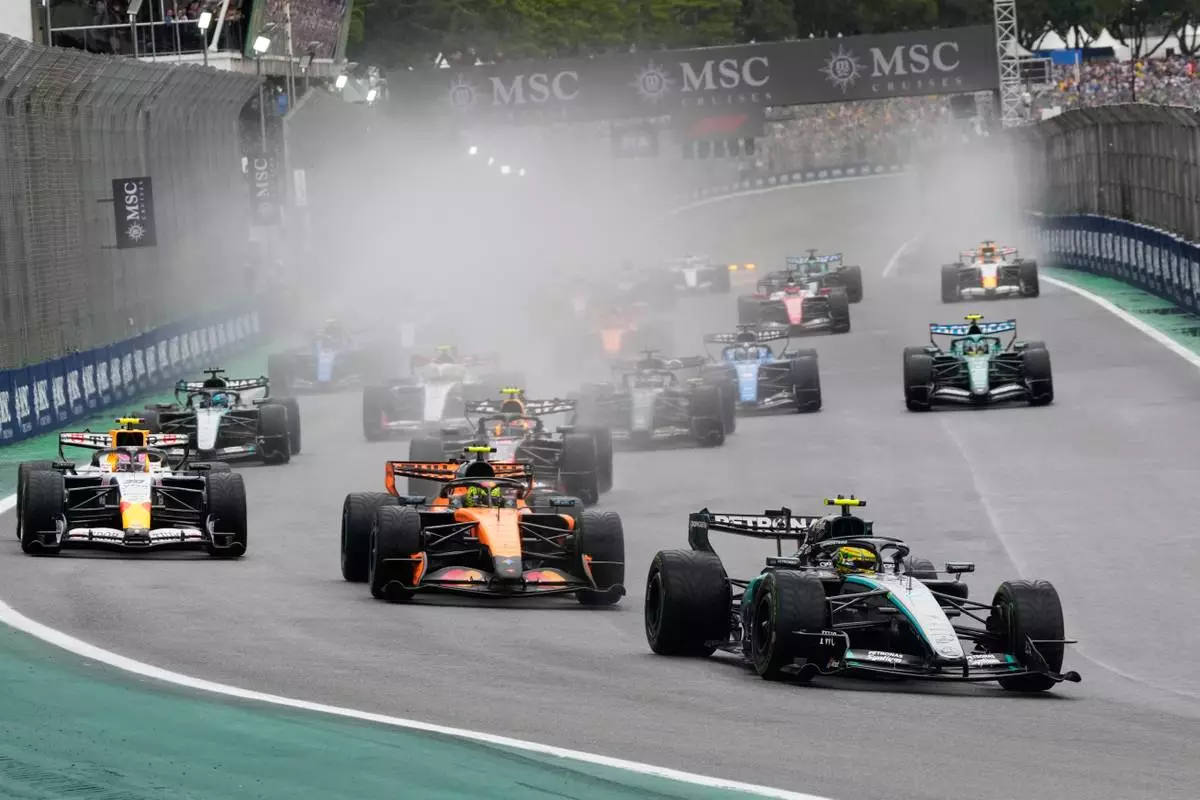
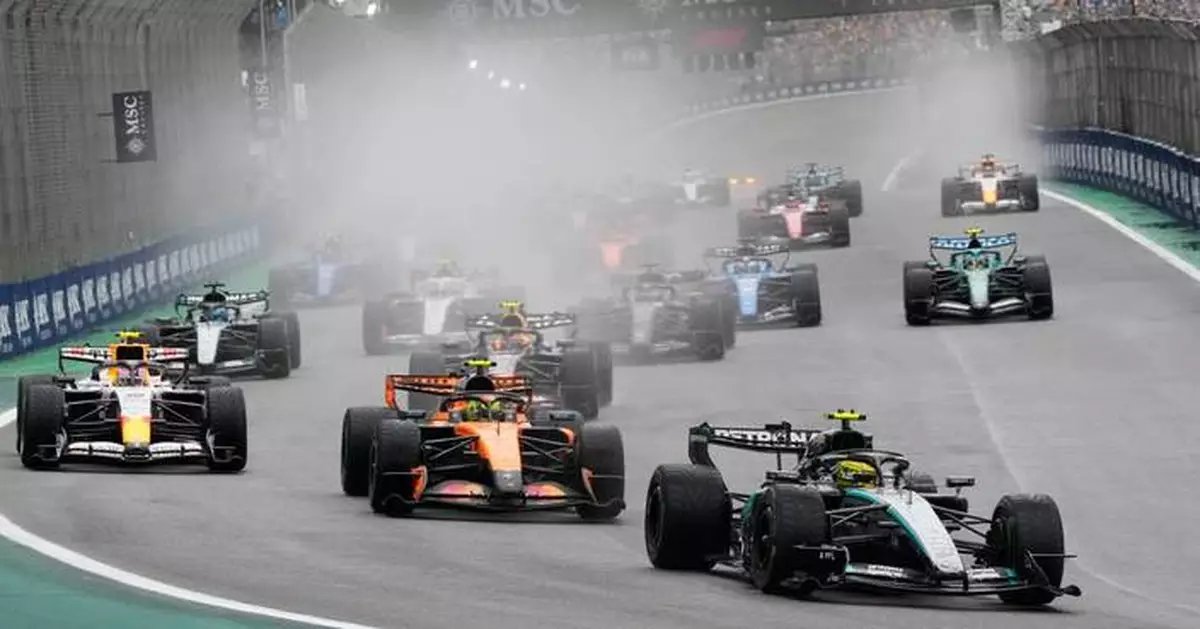
Mercedes driver Andrea Kimi Antonelli of Italy, front, leads the race after the start of the Brazilian Formula One Grand Prix in Sao Paulo, Sunday, Nov. 8, 2026. (AP Photo/Andre Penner)
GENEVA (AP) — The U.N.’s top human rights body on Tuesday postponed a regular review of the U.S. human rights record until January in hopes of persuading the Trump administration to reverse its decision to become the first government to snub the process.
The move by the Human Rights Council buys it more time to try to coax Washington to take part in the review. The council's 47 member countries adopted without a vote the decision to delay the U.S. review — amid “continued non-cooperation” with its process.
The Geneva-based council regularly examines the rights records of all 193 U.N. member states — generally about every four to five years — as part of a process known as the universal periodic review.
The administration of U.S. President Donald Trump last year pulled the U.S. out of the council, accusing it of an anti-U.S. and anti-Israel bias, and alleging that it didn't uphold the very values it promotes.
The U.S. government has drawn criticism for its policies including strong-arm deportations and targeted killings of alleged drug-runners in the Caribbean and Pacific — which the administration has said are designed to protect U.S. workers and help keep the country safe.
The European Union, a key U.S. ally, and other supporters of the review process say it's needed to keep tabs on human rights in all U.N. member states.
“The EU regrets any situation in which full engagement with the mechanism does not occur, including the decision by the United States again not to participate in their review today," Simone van der Post, a Dutch envoy speaking on behalf of EU council members, said after Tuesday's decision.
“All states are subject to the scrutiny of their human rights situation by the international community,” she added.
The U.S. State Department did not immediately respond to an emailed request for comment from The Associated Press.
The United States, under Trump, already skipped its appointment for its review a year ago. The scheduled November 2025 review was pushed back until Tuesday in hopes that the U.S. government might change its mind. It did not.
“(W)e give no credibility to the agency,” the State Department said in an emailed statement before Tuesday's decision.
“This irredeemable body makes a mockery of human rights through consistent failures to uphold its own ‘values’ as it pushes anti-American rhetoric,” the statement said, alleging the council's “persistent failure to condemn the most egregious human rights violators.”
The council requires participation of the country in question for any national review to take place.
As part of such reviews, national delegations — which at times can include a dozen officials or more — make a presentation, face questions and hear recommendations from other national envoys. It's supposed to be a sweeping and constructive process, akin to holding up a mirror to governments to improve their human rights policies.
Critics of the U.S. snub warn that the walkout could encourage other countries — many of which bristle about intense scrutiny from human rights monitors — to follow suit.
Phil Lynch, executive director of advocacy group International Service for Human Rights, said the U.S. deserves scrutiny for its recent record on “migration, LGBT rights, racial discrimination and civic freedoms, like the right to protest,” as well as wars in the Middle East and “extrajudicial executions” in the Pacific and Caribbean.
“What has Washington got to hide?” he said.
Jamil Dakwar, director of the American Civil Liberties Union's human rights program, said: “The administration is saying to the world, ‘we don’t care about whether you would review us or not, we’re going to continue to violate human rights unabashed’."
He said the ACLU and allies have called on the U.N. human rights chief to respond by presenting an update on rights in the United States early next year.
Eric Tistounet, a visiting professor at the Geneva Graduate Institute who was the council's first secretary, said the U.S. walkout could affect the credibility of the council's review system.
“If the predominant global power — which has always claimed to adhere to the human rights norms — doesn’t show up and doesn’t even justify why, then you are in big trouble," he said.
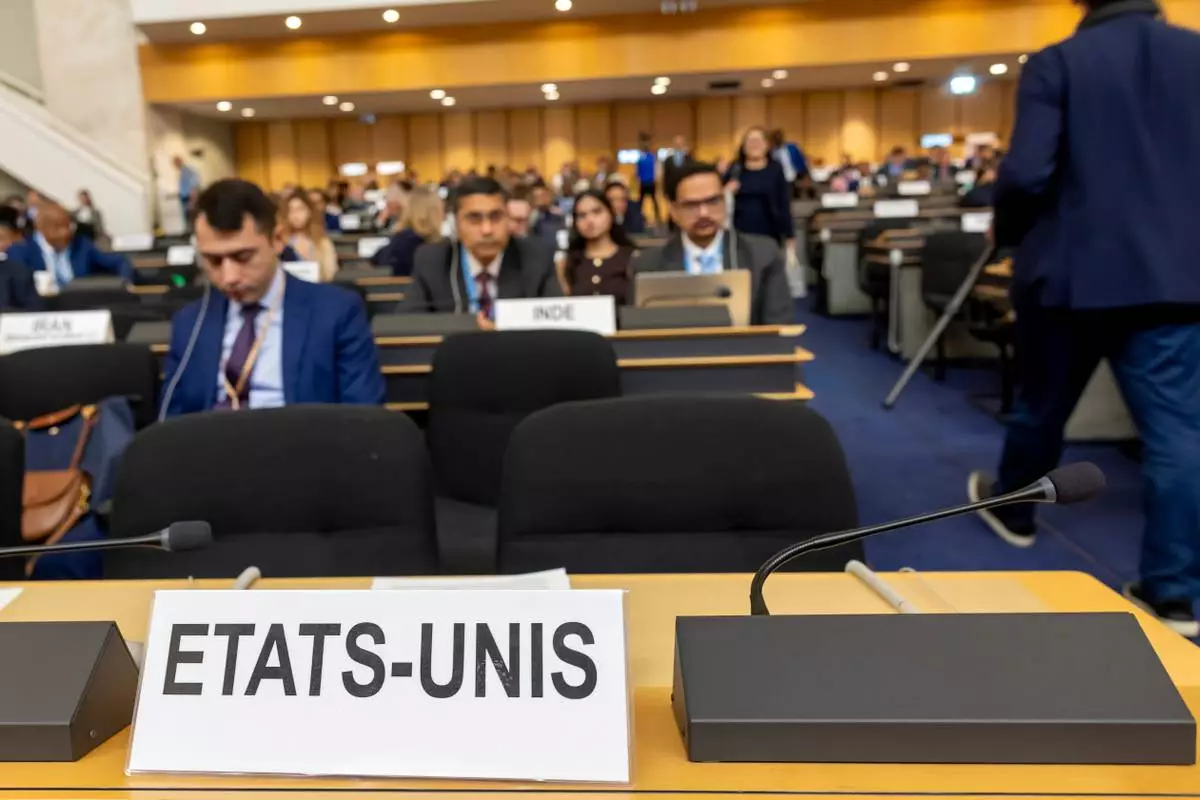
FILE - The empty seat of the U.S. delegation, during the 60th session of the Human Rights Council, at the European headquarters of the United Nations in Geneva, Switzerland, Sept. 8, 2025. (Salvatore Di Nolfi/Keystone via AP File)