Skip to Content Facebook Feature Image

South Sudan’s elections next month risk unraveling a fragile peace, envoys warn

News

South Sudan’s elections next month risk unraveling a fragile peace, envoys warn
News

News

South Sudan’s elections next month risk unraveling a fragile peace, envoys warn

2026-11-11 14:33 Last Updated At:14:40

JUBA, South Sudan (AP) — The African Union's top representative for South Sudan urged the United Nations to help ensure that a critical election in the conflict-torn East African nation next month passes peacefully and without violence.

Despite a 2018 peace agreement that ended a five-year civil war, South Sudan still sees armed fighting, violence and displacement of people — and there are concerns that elections could further unravel the fragile peace.

Jakaya Kikwete, the AU’s top envoy for South Sudan and Tanzania’s former president, made the appeal for assistance in a video call to the U.N. Security Council on Tuesday.

He pressed for security reforms and dialogue among all parties after the election to “help heal the nation.”

If the vote is not conducted properly and peacefully, "you cannot contemplate what would happen,” he said. The country could face an even “bigger political and security crisis.”

South Sudan has repeatedly delayed elections since gaining independence from Sudan in 2011. A civil war erupted in 2013 and some 400,000 people were killed before the 2018 peace agreement that brought President Salva Kiir and rival Riek Machar into an interim, power-sharing government.

Kiir dissolved the transitional government in September, removed his deputies and appointed a caretaker administration. The national legislature and state governments were also dissolved.

Machar remains under house arrest and on trial on charges that include treason over an attack on a military garrison that authorities allege he helped orchestrate. His allies deny the allegations.

Many are concerned the Dec. 22 elections may be too soon for the fragile country.

Murithi Mutiga, the International Crisis Group’s Africa director, said the rushed vote could be “a final blow” to the 2018 peace agreement and “would open the door to a return to sustained large-scale violence.”

Last month, U.N. Secretary-General António Guterres said in a report to the Security Council that the electoral framework could “alter the foundations of the transition” agreed by the peace deal’s signatories.

“This increases uncertainty at a time when confidence-building and inclusive engagement are essential to safeguard the transition and prevent wider conflict,” Guterres said.

Kiki Gbeho, the U.N.’s special envoy for South Sudan, expressed her doubts about the election.

While Kiir’s party — the Sudan People’s Liberation Movement — was conducting nationwide primaries, Gbeho added, other parties have shown “very limited electoral activity."

“These developments are creating momentum toward elections,” she said, but whether they can be held on the planned date remains uncertain, as does their inclusivity.

South Sudan’s deputy U.N. ambassador, Sabino Amaikwey, defended the Dec. 22 vote, and said it was time to stop further postponements of the election.

“Elections are not an obstacle to peace. They are an essential part of its consolidation and provide the people of South Sudan with the opportunity to determine their political leadership and future,” he said.

South Sudan’s National Elections Commission chairman, Gabriel Bol Deng, said the commission would treat all parties fairly and remain impartial, according to a statement shared with The Associated Press on Tuesday.

The commission has not announced a start date for parties to register for the elections or responded to AP questions about whether preparations for the vote can be completed before Dec. 22.

Gbeho said Machar’s party maintains that his release from house arrest remains a prerequisite for its participation in dialogue.

The humanitarian situation in South Sudan, a country with an estimated population of 12.5 million people, also continues to worsen, Gbeho said, with more people at risk of famine and 10 million people needing assistance, including an estimated 7.5 million facing food insecurity.

Lederer reported from the United Nations.
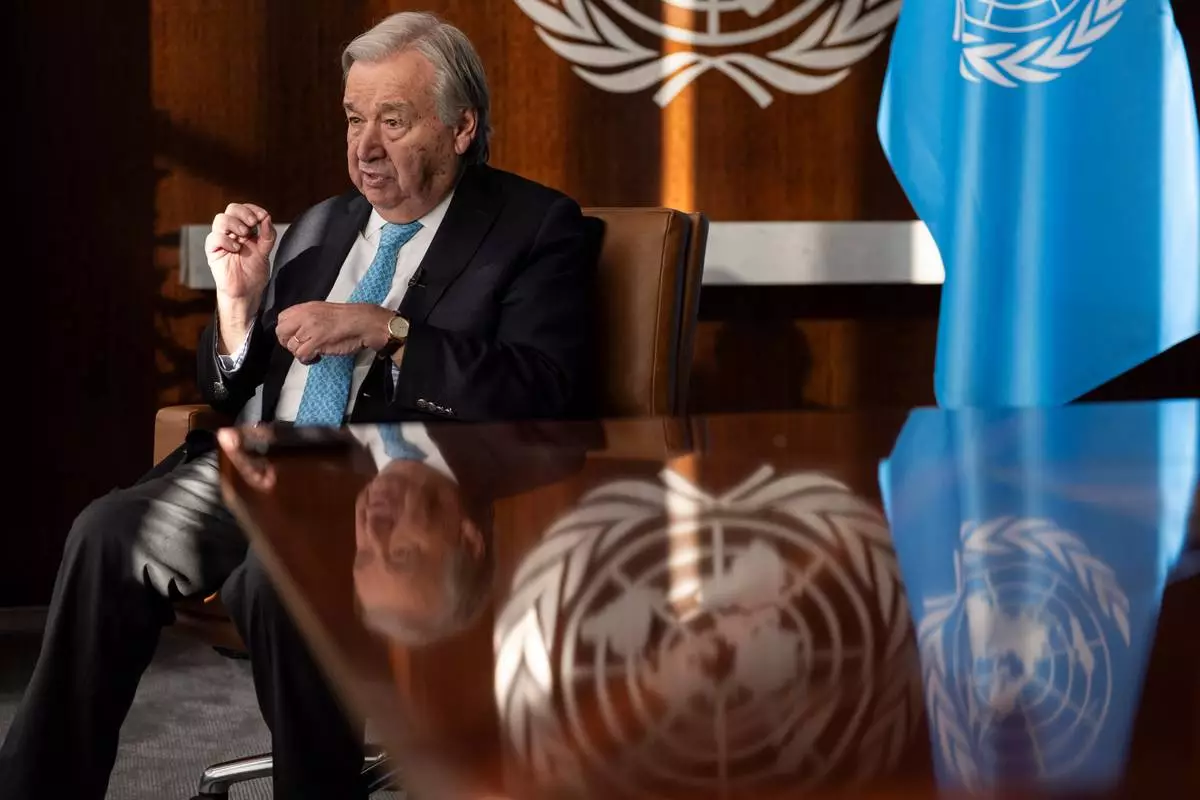
United Nations Secretary-General Antonio Guterres speaks at U.N. headquarters, Friday, Oct. 30, 2026. (AP Photo/Yuki Iwamura)
United Nations Secretary-General Antonio Guterres speaks at U.N. headquarters, Friday, Oct. 30, 2026. (AP Photo/Yuki Iwamura)

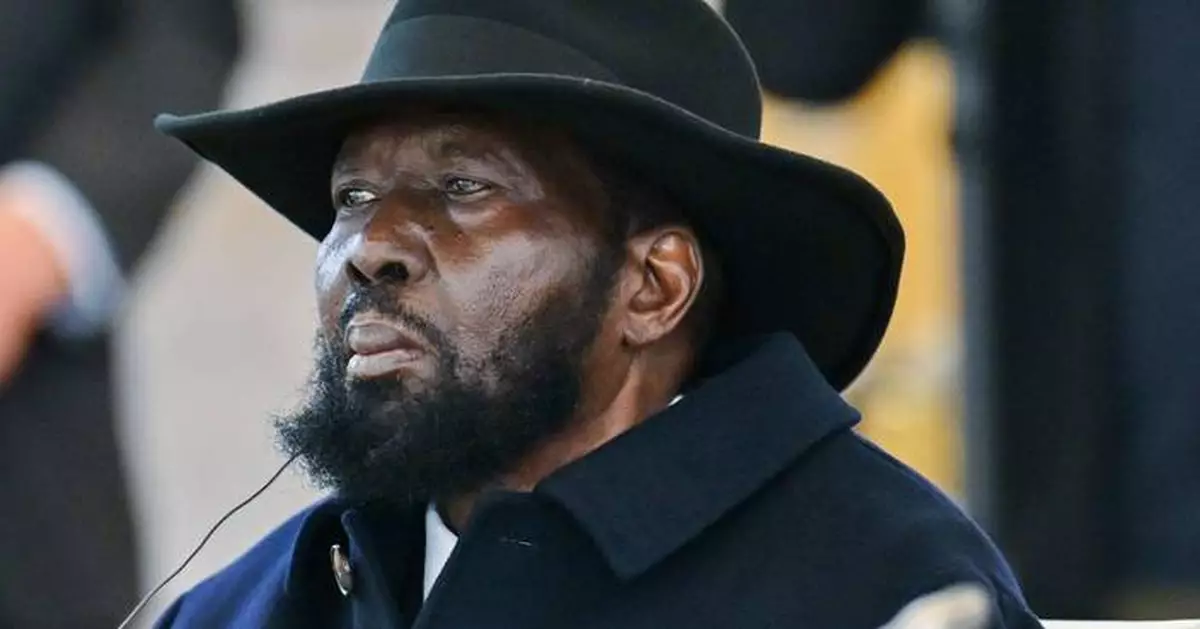
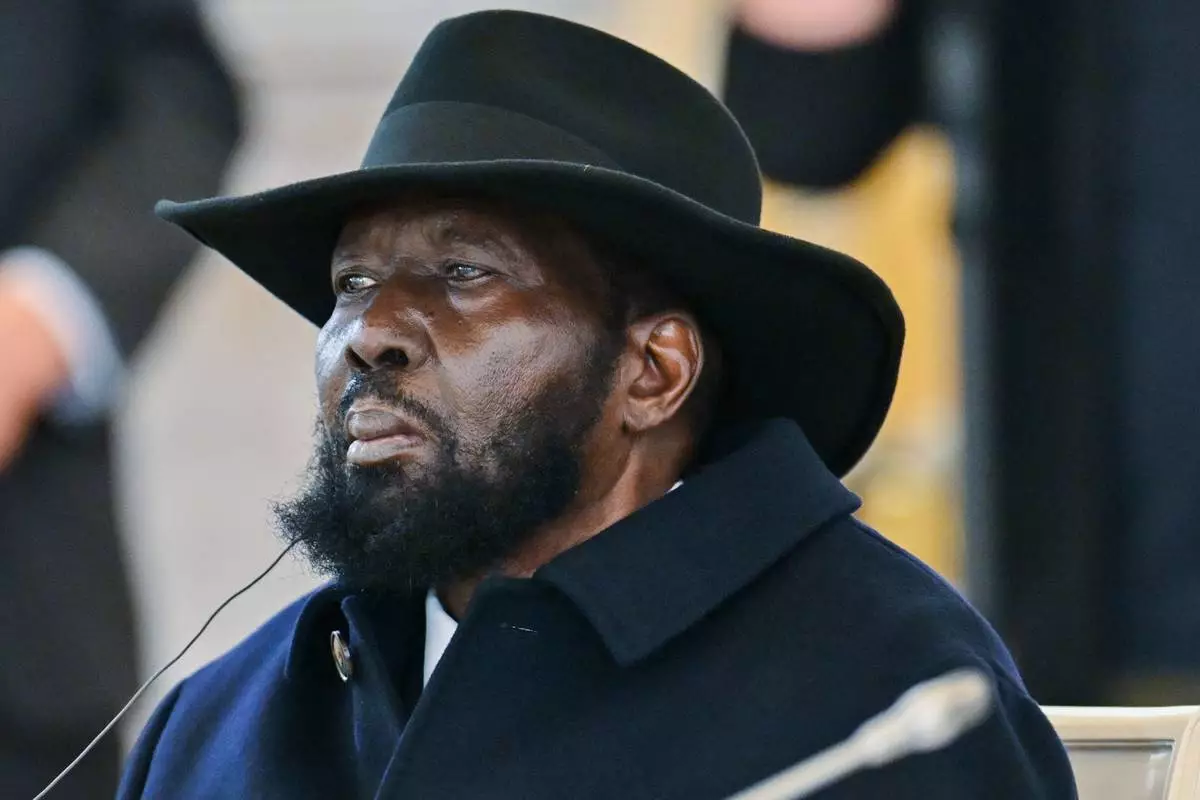
South Sudan's President Salva Kiir attends the plenary session of the Russia-Africa Summit at the Grand Kremlin Palace in Moscow, Thursday, Oct. 29, 2026. (Yuri Kochetkov/Russia-Africa Summit, Economic and Humanitarian forum host photo agency via AP)

South Sudan's President Salva Kiir attends the plenary session of the Russia-Africa Summit at the Grand Kremlin Palace in Moscow, Thursday, Oct. 29, 2026. (Yuri Kochetkov/Russia-Africa Summit, Economic and Humanitarian forum host photo agency via AP)
ABU DHABI, United Arab Emirates (AP) — Delegations from Moscow and Kyiv on Wednesday held a second straight day of U.S.-brokered talks on ways of ending the war started by Russia’s all-out invasion of Ukraine nearly five years ago.

Hopes are low for any breakthrough in the first meeting in nine months between the delegations, although U.S. officials say they are determined to revive peace efforts that so far have failed to deliver significant results.

“We are starting the second day of negotiations,” Rustem Umerov, the head of Ukraine’s Foreign Intelligence Service who leads Kyiv’s delegation in Abu Dhabi, said on social media.

The envoys met for four hours Tuesday in the capital of the United Arab Emirates, which was chosen as a neutral venue. The talks, mediated by U.S. President Donald Trump’s son-in-law Jared Kushner and envoy Steve Witkoff, were due to conclude later Wednesday.

The context of the negotiations has changed since the last meeting in February in Geneva. The Trump administration has to reckon with Democrats, who could demand more support for Ukraine, taking over the U.S. Congress in January following the U.S. midterm elections.

Also, Russia’s wartime economy is under heavy strain, and Ukraine is reeling from devastating aerial attacks on its power grid.

Umerov said that Wednesday would begin with three-way talks involving Russia, Ukraine and the United States, with Kyiv’s delegation meeting afterwards with European officials.

Moscow doesn’t want European countries, which are concerned about Russia’s conduct and broader intentions on the continent, involved in the direct negotiations. However, representatives of European governments, the European Union and NATO were in Abu Dhabi and were consulting with the Ukrainian delegation, officials said.

Ukrainian President Volodymyr Zelenskyy said Tuesday’s session was “constructive and quite substantive.”

The talks were largely about humanitarian issues, including possible prisoner exchanges and returning Ukrainian civilians in captivity, as well as children taken from the country, he said.

Security guarantees also were discussed, he said. However, Russia and Ukraine have shown no sign of a willingness to compromise on their demands.

U.S. Secretary of State Marco Rubio called the meeting “very productive,” while cautioning that a breakthrough on stopping the war will take time.

The Abu Dhabi talks are being held against the backdrop of continued fighting on the front line, where little territory has changed hands this year.

Meanwhile, both countries are battering each other with long-range missiles and drones.

Overnight, Russia struck the southern Zaporizhzhia region and the eastern city of Kharkiv, wounding seven civilians and damaging property.

Russia’s Defense Ministry said that air defenses downed 627 Ukrainian drones overnight, 150 of them over the region around St. Petersburg, according to the regional Gov. Alexander Drozdenko.

He said that the drones started a fire at the port of Ust-Luga, one of the main facilities for Russian oil exports, injuring three workers.

Follow the AP’s coverage of the war in Ukraine at https://apnews.com/hub/russia-ukraine

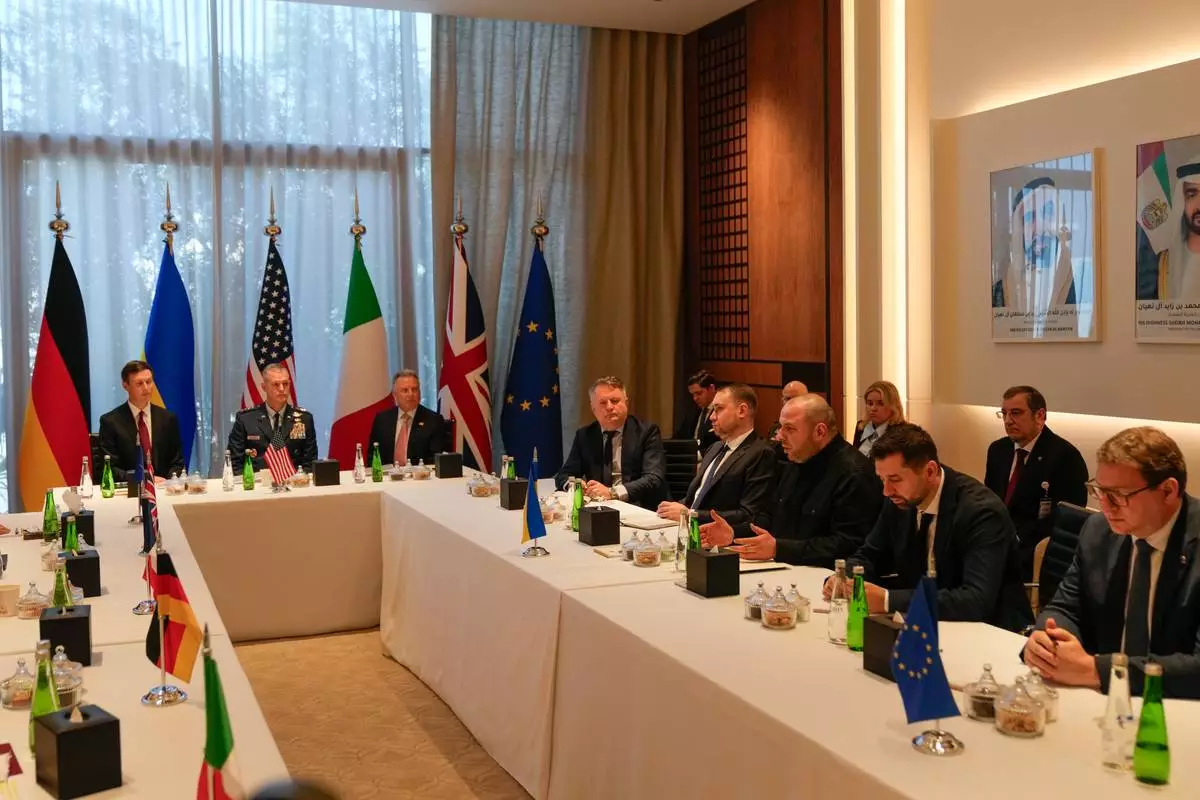
Rustem Umerov, Head of Foreign Intelligence Service of Ukraine, third from the right, speaks during the coordination meeting before the trilateral talks between Russia and Ukraine mediated by the US in Abu Dhabi, United Arab Emirates, Tuesday, Nov. 10, 2026. (AP Photo/Altaf Qadri,Pool)

Rustem Umerov, Head of Foreign Intelligence Service of Ukraine, third from the right, speaks during the coordination meeting before the trilateral talks between Russia and Ukraine mediated by the US in Abu Dhabi, United Arab Emirates, Tuesday, Nov. 10, 2026. (AP Photo/Altaf Qadri,Pool)

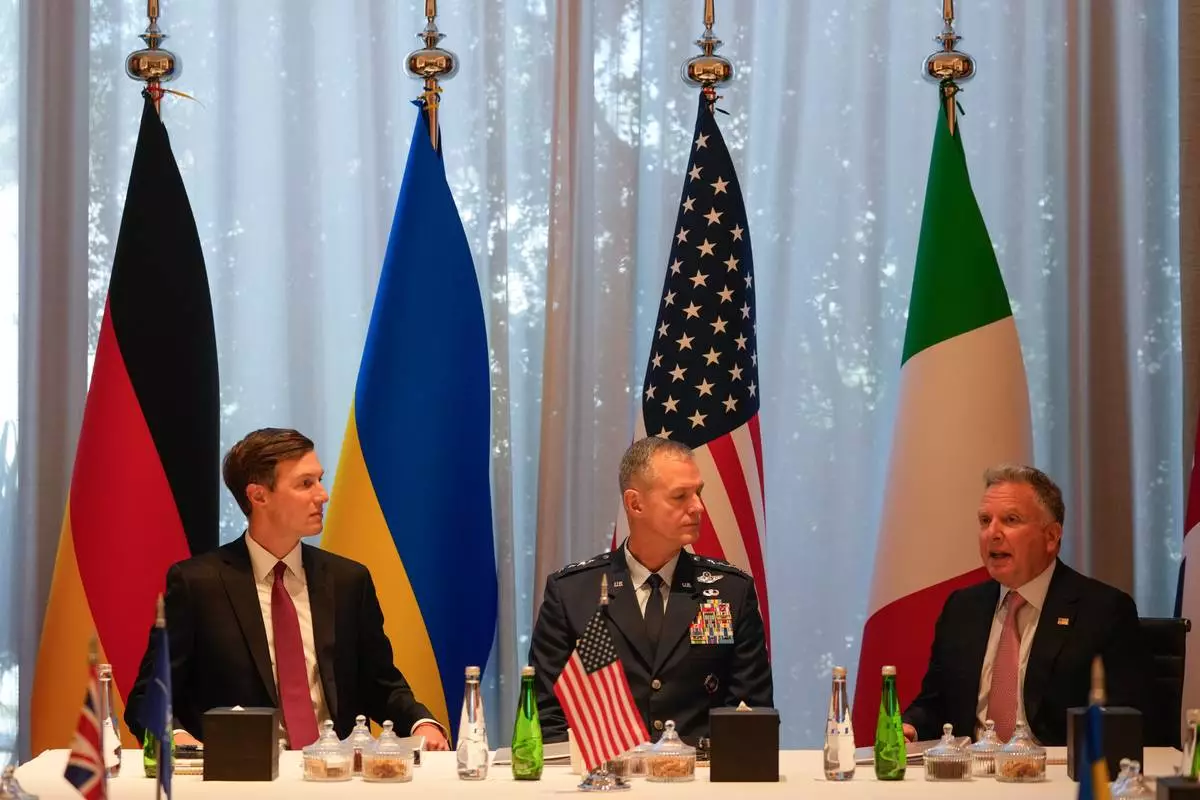
United States envoy Steve Witkoff, right, speaks during the coordination meeting before the trilateral talks between Russia and Ukraine mediated by the US in Abu Dhabi, United Arab Emirates, Tuesday, Nov. 10, 2026. (AP Photo/Altaf Qadri,Pool)

United States envoy Steve Witkoff, right, speaks during the coordination meeting before the trilateral talks between Russia and Ukraine mediated by the US in Abu Dhabi, United Arab Emirates, Tuesday, Nov. 10, 2026. (AP Photo/Altaf Qadri,Pool)

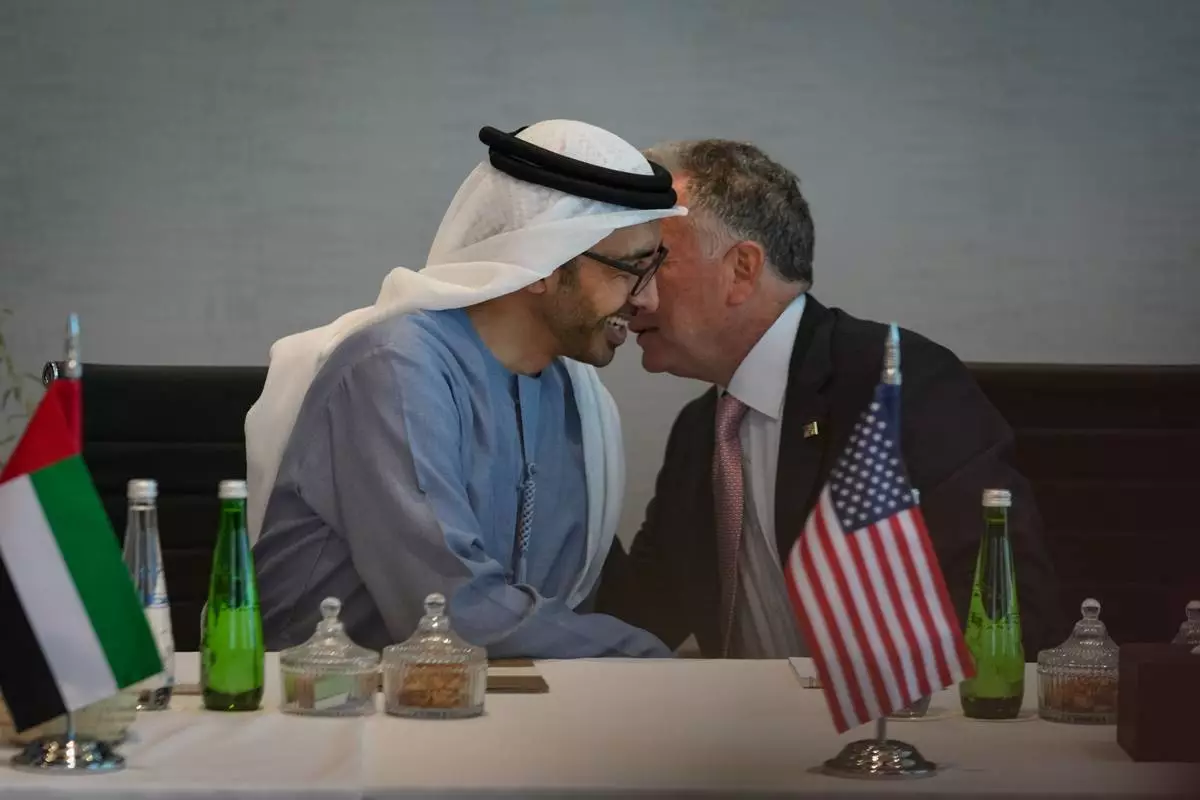
United Arab Emirates Foreign Minister Sheikh Abdullah bin Zayed Al Nahyan, left, speaks to United States envoy Steve Witkoff during the trilateral talks between Russia and Ukraine mediated by the U.S. in Abu Dhabi, United Arab Emirates, Tuesday, Nov. 10, 2026. (AP Photo/Altaf Qadri, Pool)

United Arab Emirates Foreign Minister Sheikh Abdullah bin Zayed Al Nahyan, left, speaks to United States envoy Steve Witkoff during the trilateral talks between Russia and Ukraine mediated by the U.S. in Abu Dhabi, United Arab Emirates, Tuesday, Nov. 10, 2026. (AP Photo/Altaf Qadri, Pool)

Recommended Articles