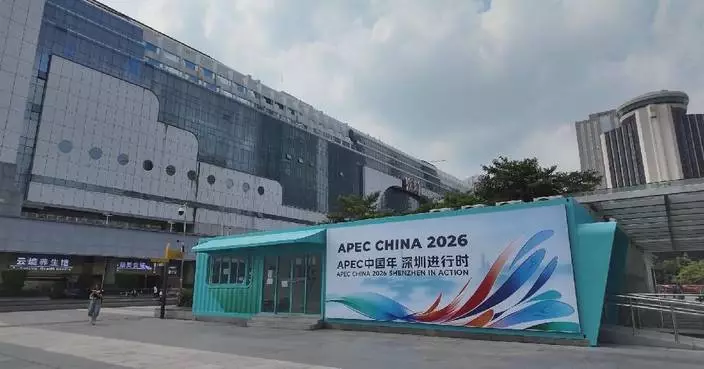
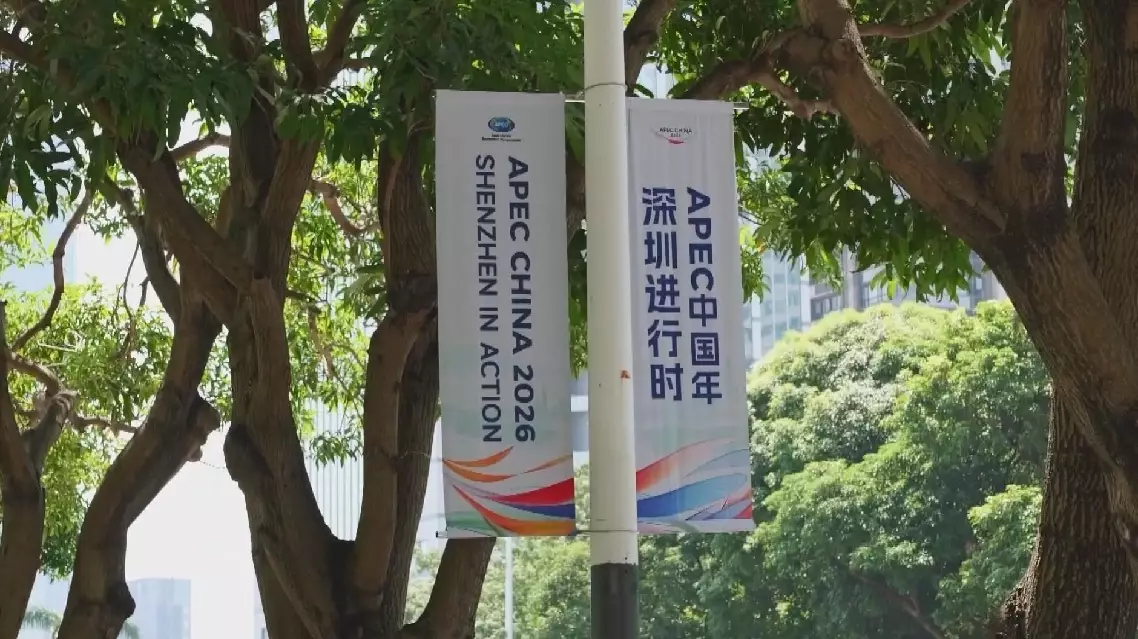
Shenzhen, a city in south China known for its technological innovation and openness to the world, is preparing to welcome guests from across the Asia-Pacific as the host of the 2026 APEC meeting by showcasing its vibrant markets, expanded global connections and the opportunities it offers to businesses from around the world.
The APEC CEO Summit 2026 is scheduled in Shenzhen, Guangdong Province, from Nov 18 to 19.
One of the city's most vibrant destinations is Huaqiangbei, one of China's best-known electronics markets.
There, buyers and shoppers speaking different languages move between stores, exploring and purchasing a wide range of Chinese-made electronic products and getting a firsthand look at the country's latest technological innovations.
The bustling market reflects Shenzhen's appeal to international buyers, with foreign visitors accounting for a notable share of its daily foot traffic.
"It receives an average of 850,000 visits a day, including more than 8,000 visits by foreign nationals. More than 70 percent of our businesses are engaged in foreign trade, and many buyers come from APEC member economies," said Chen Jiongwen, secretary of the Communist Party of China (CPC) working committee of Huaqiangbei Subdistrict.
On Nov 1, 2025, Chinese President Xi Jinping extended an invitation to the rest of the world to join Shenzhen by announcing the city as the host of the APEC CEO Summit 2026 at the APEC chairmanship handover session of the 32nd APEC Economic Leaders' Meeting in Gyeongju, the Republic of Korea (ROK).
After Shanghai in 2001 and Beijing in 2014, Shenzhen becomes the third Chinese city to host the APEC Economic Leaders' Meeting.
Over the years, APEC member economies have maintained steady growth. Together, they account for nearly 40 percent of the world's population, more than 60 percent of global economic output and nearly half of global trade.
China's engagement with the Asia-Pacific has remained a consistent part of its development vision.
"No matter what level of development it may reach, China, with its root in the Asia-Pacific, will continue to contribute to its development and prosperity," Xi said at the APEC CEO Summit in Peru's Lima, 2016.
Today, as global changes unseen in a century accelerate and international uncertainties mount, the Asia-Pacific faces growing challenges to its development.
Since 2013, Xi has attended or chaired every APEC Economic Leaders' Meetings and put forward a series of major proposals for building an Asia-Pacific community with a shared future, charting a course for regional cooperation from a strategic and long-term perspective.
Addressing the first session of the 32nd APEC Economic Leaders' Meeting under the title "Building an Inclusive Open Asia-Pacific Economy for All," Xi called on member economies to stay committed to open development, sharing opportunities and pursuing win-win cooperation.
"The rougher the seas, the more we must pull together. We should stay true to APEC's founding mission to promote economic growth and improve people's lives, and champion open development where everyone shares opportunities and emerges a winner. We should promote a universally beneficial and inclusive economic globalization, and build an Asia-Pacific community," Xi said.
"The Asia-Pacific region needs to move from a community of shared interests toward one of shared responsibilities. APEC, with its principles of multilateralism, openness and consensus through consultation, remains the region's core and irreplaceable economic cooperation mechanism," said Cao Saixian, director of the Office of the Foreign Affairs Commission of the CPC Shenzhen Municipal Committee.
Connectivity is another key element of Xi's vision for Asia-Pacific development, with an emphasis on building an open and interconnected region.
More than half of APEC member economies have participated in Belt and Road cooperation, with key projects within the framework having taken shape, helping improve regional infrastructure and connectivity.
China has also continued to host major international events, including the China International Import Expo (CIIE), the China International Supply Chain Expo, the China Import and Export Fair, known as the Canton Fair, the China International Fair for Trade in Services (CIFTS), China International Consumer Products Expo, among others.
These platforms have opened up opportunities for businesses worldwide to access the Chinese market and share in its development.
The growing exchanges are also bringing more international visitors to Shenzhen. The expansion of China's visa-free policies, together with the upcoming APEC meetings, has contributed to an increase in foreign arrivals through the city's ports, with visa-free travelers accounting for more than half of the total, according to local data.
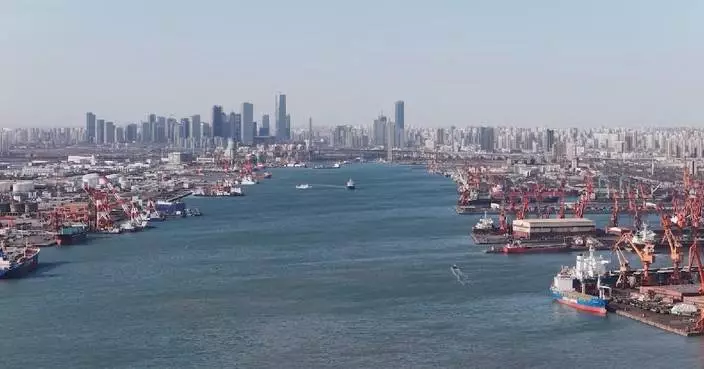
At Yantian Port, more than 100 international shipping routes operate every week, including 53 services connecting APEC members. Fourteen new routes linking the city with APEC economies have been added this year, further expanding channels for international trade.
"Products from Huaqiangbei can reach 183 countries and regions within a week, directly connecting local businesses with global supply chains," Chen said.
The growing connectivity is also reflected in Shenzhen's trade with the region. In the first eight months of this year, the city's foreign trade with other APEC member economies reached a record high for the same period, with imports exceeding exports.
"In the first eight months of this year, Shenzhen's imports and exports with other APEC member economies reached a record high for the same period, with imports exceeding exports. The increase in imports has also created more opportunities for other Asia-Pacific economies and the wider world," said Gong Xiaofeng, head of the APEC Research Institute at Shenzhen University.
The momentum extends beyond Shenzhen. In the first three quarters of this year, China's imports and exports with other APEC member economies totaled 24.07 trillion yuan (about 3.61 trillion U.S. dollars), up 23.9 percent year on year.
At the opening ceremony of the APEC CEO Summit in Beijing in November 2014, Xi highlighted the region's rich cultural heritage, strong development momentum and promising future.
"Home to ancient civilizations and emerging forces, the Asia-Pacific is a region with a long history and a splendid culture. It boasts hard-working people, beautiful scenery, strong impetus for development and a bright future," Xi said.
As Shenzhen prepares to host the APEC meetings, its bustling markets, expanding trade links and growing international exchanges offer a glimpse of the opportunities created by regional cooperation.
For China, it also stands ready to work with all parties to uphold APEC's founding mission of promoting economic growth and improving people's well-being, share opportunities through open development, pursue win-win cooperation and advance the building of an Asia-Pacific community.
Shenzhen gears up for APEC meeting with open doors, new opportunities