Serbian businesses are investing heavily in solar power, with Chinese technology at the heart of the green transition taking hold in the landlocked European country, where extreme summer heat and drought have exposed the frailties of its conventional energy system.
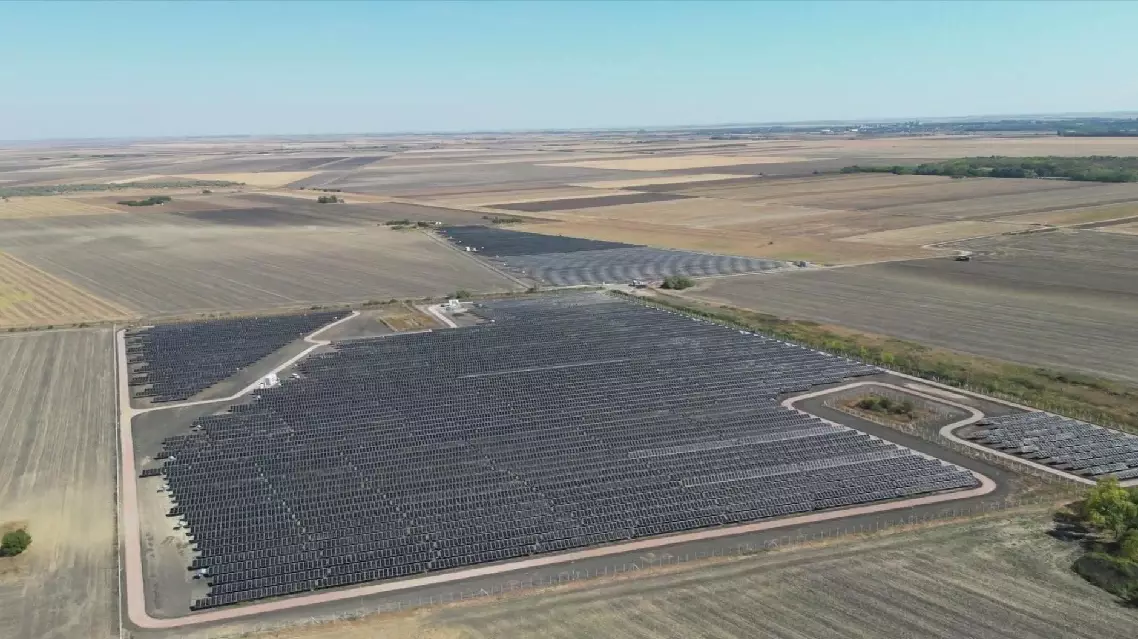
Near Mokrin, a village in northeastern Serbia, a newly completed solar farm spreads across 20,000 square meters of flat agricultural land. The facility, now in final preparations before opening, carries more than 21,000 Chinese-made solar panels, along with inverters and transformer stations from Chinese tech giant Huawei.
Its installed capacity is 14 megawatts, with almost 10 megawatts available for connection to the distribution network, while a Chinese-technology tracking system rotates the panels from east to west, following the sun to generate power more effectively throughout the day.
Nikola Grubor, deputy director of project developer MT-Komex, said the company weighed equipment from manufacturers around the world before choosing its suppliers.
"We were in a lot of discussions with different producers of equipment from the whole world. We deep-dived in all of the products that we were talking about, and in the end, what we concluded is that the Chinese companies that produce the equipment that is installed here were the best," he said.
The project illustrates how solar generation is expanding beyond small rooftop installations into larger commercial facilities, though vast tracts of land are hardly a prerequisite for companies seeking to cut their dependence on grid-purchased electricity.
At the JUB paint factory in Simanovci, another Serbian village, a 1.26-megawatt rooftop installation already supplies a substantial share of the company's electricity. Technical Director Zagorka Mikic said the investment pays off both environmentally and financially.
"We have managed to provide 50 percent of our electricity needs from our solar power plant and we are very proud of that. By doing so, we have reduced carbon dioxide emissions, the greenhouse effect, which is well known to everyone, and that is the main reason. At the same time, we have a significant economic benefit," she said.
Official data show Serbia added about 61 megawatts of solar capacity in the first half of 2026, an expansion driven largely by businesses and households that both produce and consume electricity.
Chinese solar tech powers Serbia's green energy transition