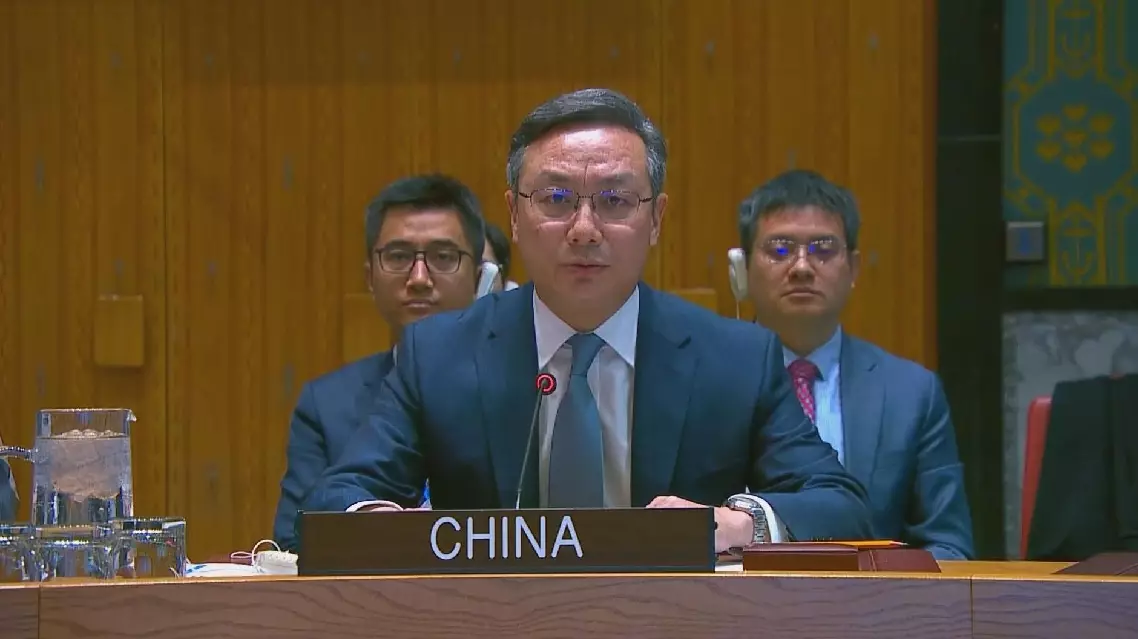
The international community should step up support for peace and development in South Sudan, including backing its elections, promoting an inclusive political process, easing the economic and humanitarian crisis, and ensuring the UN Mission in South Sudan (UNMISS) to fulfill its mandate, a Chinese envoy to the UN said on Tuesday.
Addressing the UN Security Council, Sun Lei, China's deputy permanent representative to the United Nations, said, "The general election is a long-cherished aspiration of the South Sudanese people over the 15 years since the country gained independence. China calls on all parties and ethnic groups in South Sudan to value the country's major political affairs and the people's fundamental interests, immediately cease hostilities, ease tensions, and make election-related arrangements through inclusive and friendly consultations among political parties, and try their utmost to prevent conflict and instability from arising in the election."
He said China firmly supports South Sudan in safeguarding its sovereignty, independence and territorial integrity, supports the South Sudanese people in exploring a development path suited to their national conditions, and supports all parties in maintaining close dialog and consultation, strengthening unity and cooperation, and advancing the political transition in an orderly manner, so as to achieve lasting peace, development and prosperity at an early date and contribute more to regional peace and stability.
China urges stronger support for South Sudan's peace, development
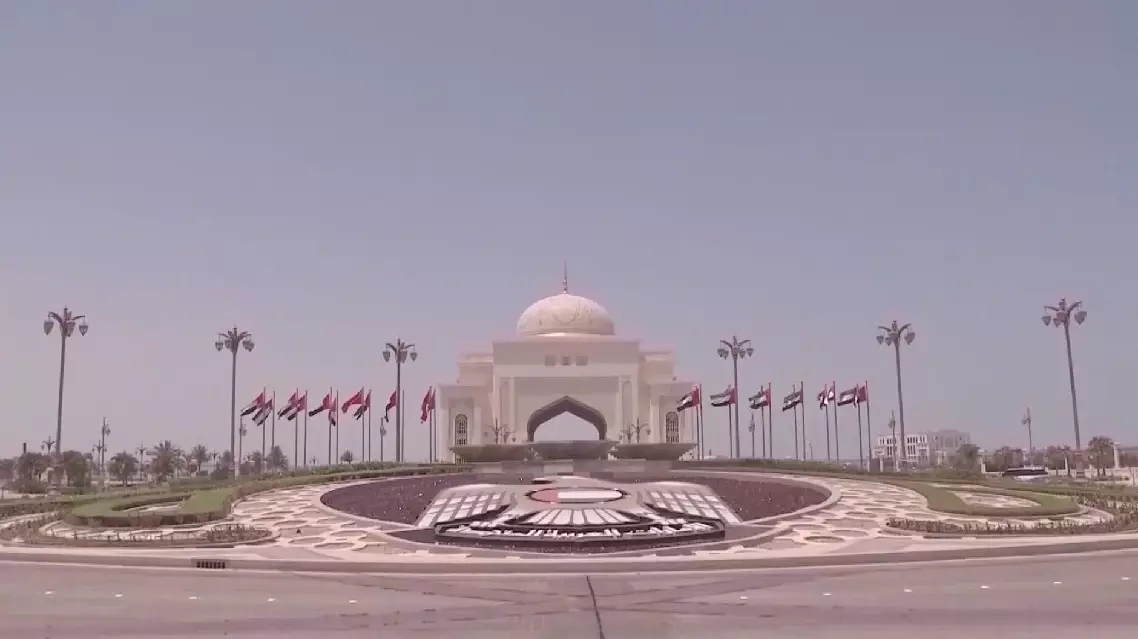
Trilateral talks between Russia, the United States and Ukraine ended on Wednesday in Abu Dhabi, with Russia and Ukraine reaching an agreement on a "large-scale" prisoner exchange.
Vladimir Medinsky, head of the Russian delegation at the talks, told a press conference that details of the exchange would be announced soon and that negotiations would continue.
He said the delegations had discussed humanitarian issues, with the future of European security being a central focus of the U.S.-mediated talks.
Medinsky added that parties had reached understandings on some issues, without providing further details.
He defended the need to discuss post-war security arrangements at the current stage of negotiations, saying the conflict in Ukraine had exposed shortcomings in Europe's security system.
Medinsky called for the establishment of a fair security framework that takes into account the interests of all countries.
Kremlin spokesman Dmitry Peskov said on Wednesday that Russian President Vladimir Putin had been continuously briefed by the Russian delegation on developments in the trilateral talks.
He said that the Russian delegation did not have any contacts with European representatives in Abu Dhabi, and such contacts had not been planned in the first place.
Meanwhile, Jared Kushner, a member of the U.S. negotiating team, told reporters that a lot of serious issues had been discussed, adding the discussions were thorough and covered all major issues.
He noted that the prisoner exchange deal was one of the positive outcomes of the negotiations, with the exact number of prisoners to be finalized on Thursday.
Kushner said the second day of discussions were "very substantive," describing the negotiations as a good first step forward.
He also said he and U.S. special envoy Steve Witkoff planned to travel to Moscow for further discussions on ending the Ukraine conflict.
Kushner noted that the two would seek progress in Moscow if Russian President Vladimir Putin agreed to U.S. demands to end the war, and would meet Ukrainian President Volodymyr Zelensky afterward.
Kushner added that Russia had its own security concerns and had been asked to put forward proposals to reduce tensions.
On the Ukrainian side, negotiator David Arakhamia, chairman of the Servant of the People parliamentary faction, a Ukrainian political party, said the Abu Dhabi talks had generated "good momentum" toward finding a solution to the conflict before the end of the year.
Rustem Umerov, head of Ukraine's Foreign Intelligence Service and a member of the Ukrainian negotiating delegation, said earlier Wednesday that the Ukrainian team planned to hold separate discussions with European partners following the trilateral session.
"The Russian-Ukrainian war has its implication on the European security structure to begin with. So having the European security structure as part of these trilateral talks is a logical process, because we cannot exclude the effects this war had on Europe's security, on Europe's economy, and it's right on the European border. And that's the whole issue. The main issue that began with is NATO being closer and Europe's security being closer to the Russian border," said Abdulaziz Al-Shehhi, a senior researcher at TRENDS Research and Advisory.
The latest round of Russia-U.S.-Ukraine trilateral talks took place in Abu Dhabi on Tuesday and Wednesday, marking the first meeting among the three countries since February. The first day's discussions lasted nearly four hours, while Wednesday's session concluded in less than two hours.
Although progress was reported on the prisoner exchange, no agreement was announced on a ceasefire, territorial disputes or long-term security guarantees.
Trilateral talks on settlement of Ukraine crisis conclude in Abu Dhabi