President Donald Trump’s administration is planning to make it harder to get food aid through the federal government’s big grocery assistance program that serves about 1 in 10 Americans.
The administration says the proposed rule would close a loophole by no longer allowing some people who receive benefits under the federal Temporary Assistance for Needy Families program to automatically qualify for the separate Supplemental Nutrition Assistance Program too.
About 6.3 million people could lose eligibility for SNAP by the 2029 fiscal year if the proposed change takes effect, according to the U.S. Department of Agriculture, which administers the program. That is on top of 5.5 million people who already have lost SNAP benefits over the past year.
The plan is laid out in a proposed rule published Tuesday on how to run SNAP, and the government is seeking public comment until next month. If it is accepted, the rule would not take full effect for about two years.
At issue are two separate federal programs. The TANF program provides federal grants to states, which set their own eligibility rules for distributing cash and other benefits to low-income families with children. The incomes of recipients vary by program and state.
Federal guidelines generally limit SNAP food benefits to those earning less than 130% of the poverty level, a little over $1,700 monthly for an individual or nearly $3,600 for a family of four. To reduce duplicative paperwork, the federal government allows people who already receive TANF benefits to automatically qualify for SNAP — though they still have to apply.
Some states have used that automatic eligibility to expand SNAP benefits to people who might not otherwise qualify. In 2009, President Barack Obama's administration encouraged states to provide people a minimal TANF-funded benefit, such as an informational pamphlet or telephone hotline, as a way of qualifying them for the food program.
Forty-one states and the District of Columbia have some form of broad-based categorical eligibility for SNAP, according to a USDA report from last year.
The first Trump administration proposed to clamp down on such tactics in 2019. But that proposal was withdrawn by President Joe Biden's administration in 2021.
The latest proposal is more sweeping and could prevent states from basing SNAP eligibility on TANF-funded benefits such as job-related counseling or one-time vouchers for vehicle repairs so that people can get to work, said David Super, a law professor at Georgetown University who has studied the food aid program.
“The administration here is basically proposing to eliminate the flexibility that Congress gave the states to serve working poor people," Super said.
Being in a household that receives SNAP benefits also makes school children eligible for free meals. The Agriculture Department says that nearly 1.8 million children would lose eligibility with their family losing SNAP — but that 97% of them would still qualify for free or reduced price school meals through another process.
But the government says some of the children would not get the lunches, even if they are eligible, if their families don't apply.
The proposal comes at a time when the number of people receiving the aid has fallen sharply — and on the heels of sweeping election gains for Democrats across the country.
“The public indicated they want their elected officials to focus on making life affordable,” the Center on Budget and Policy Priorities, a left-leaning policy research institute, said in an analysis of the proposal. “Yet the Trump Administration is doubling down on making it harder for people to feed their families.”
As of July, the Department of Agriculture, which runs SNAP, said 36 million people were receiving the aid. That was down by 13% from a year earlier. Over that time, another federal requirement expanded a work requirement to more enrollees, including those ages 55 to 64 and to parents whose youngest children are at least 14.
Trump's big 2025 tax and policy law that broadened the work requirement also requires states to start shouldering about three-fourths of the cost of running it, up from half. And they will also have to pay some of the costs of the benefits if their error rates exceed certain thresholds. Congressional Democrats are pushing for a delay in implementation of that change.
The newly proposed rule from the Trump administration "is just one of many things right now that states are grappling with that would reduce access to SNAP,” said Carolyn Vega, director of policy analysis for the advocacy group Share Our Strength.
The Center on Budget and Policy Priorities is concerned that the eligibility change may result in higher error rates for states — making them have to pay for more of the cost of benefits.
Patricia Anderson, an economics professor at Dartmouth College, said that out of the various administration efforts to reduce SNAP, “this one seems the most reasonable" because some people with higher incomes qualify through categorical eligibility.
But she said there is a different conversation that can be had about whether the SNAP eligibility guidelines are too strict.
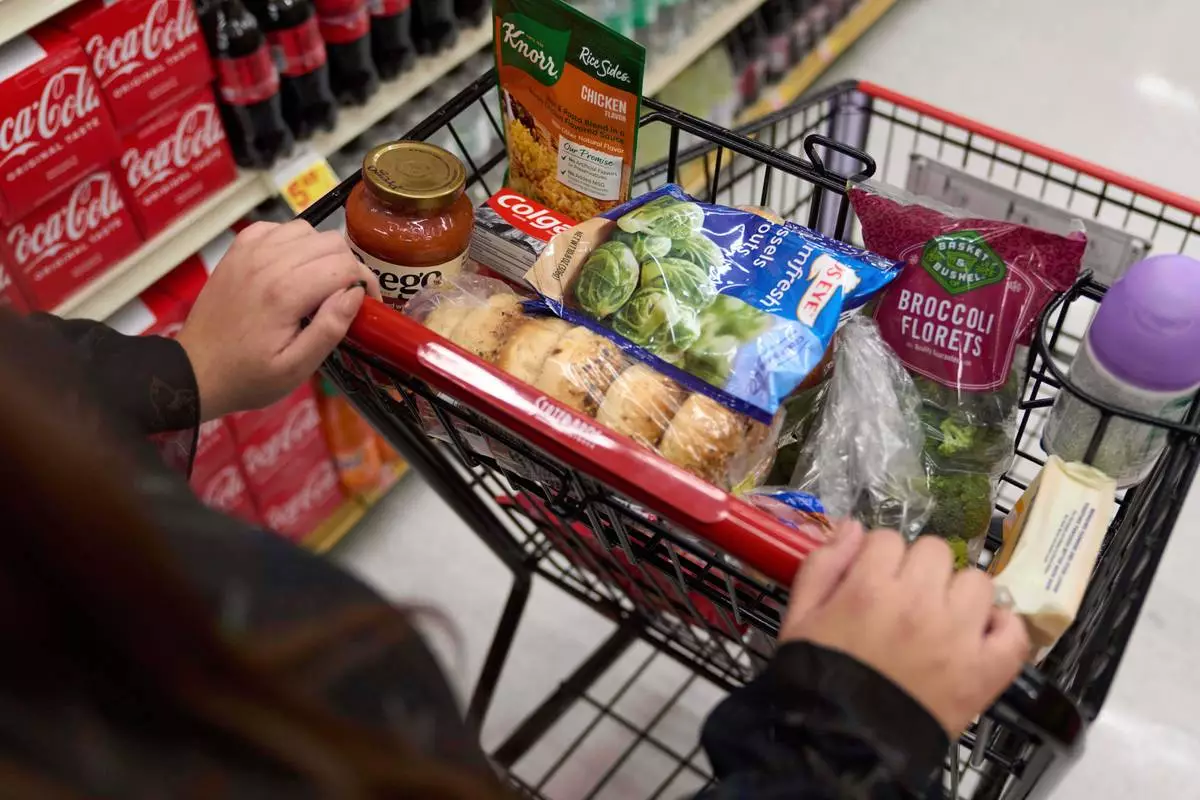
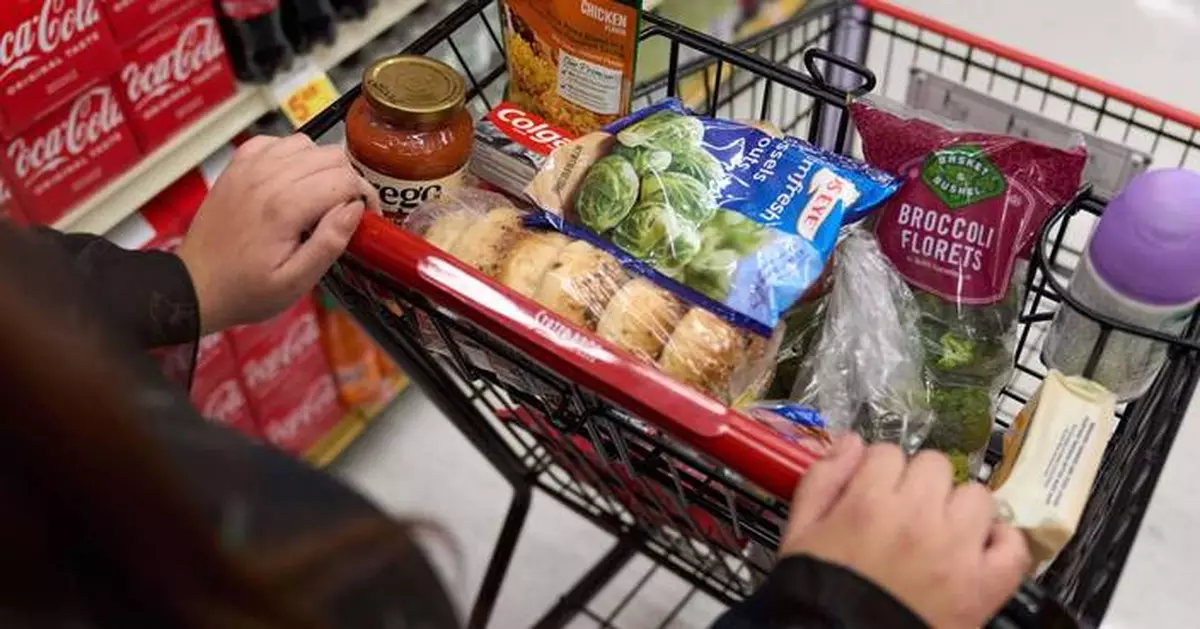
FILE - A California's SNAP benefits shopper pushes a cart through a supermarket in Bellflower, Calif., Feb. 13, 2023. (AP Photo/Allison Dinner, File)
LIMA, Peru (AP) — Pope Leo XIV arrived in his second homeland of Peru on Wednesday, returning to the place that he credits with teaching him how to be a pastor and where a nationwide party awaits to welcome their beloved “Padre Robert” home.
The visit to Peru marks the final leg of Leo’s three-nation South America tour and its emotional highlight, given the more than two decades that the former Robert Prevost spent in Peru as a missionary priest and later bishop. As a dual citizen of the United States and Peru, he’s the first pope from each country.
Leo’s charter plane touched down at a Lima-area air base, where he was being welcomed by President Keiko Fujimori.
“My heart is so excited that it makes me want to cry with joy,” said Zuly Castillo, who served as Leo’s secretary when he was bishop of the northern city of Chiclayo near the Pacific Coast. Across from her office, a life-size cardboard cutout of the pope now welcomes visitors to his former residence.
“Peru is the crown of the trip, the homecoming of the first Peruvian pope, no matter where he was born,” said Gustavo Morello, an associate professor of sociology at Boston College and the author of “Lived Religion in Latin America.”
“This is a return to his origins without any doubt,” Morello said.
In preparation for the pope’s visit, a huge 46-foot (14-meter) statue of the pontiff was unveiled in the port of El Callao. Baristas in Lima, the capital, were offering cappuccinos decorated with the image of the pope.
With hands raised and voices lifted in song, hundreds awaited the pope’s arrival in Lima in front of the presidential palace, where a stage and giant screens had been set up amid tight security.
“Long live Christ!” the crowd sang, following a Catholic choir on the stage.
“It’s so beautiful and so moving," said Anni Marino, 52, who enthusiastically joined the singing. “I hold it in my heart because he’s the representative of God.”
Popemania also hit Chiclayo. Leo is painted in colorful murals, emblazoned on T-shirts, baseball hats, and even bobblehead dolls and ice creams.
Leo will celebrate Mass in all his old stomping grounds including at the nearby sanctuary of St. Turibius of Mogrovejo in Zaña, a city that is a hub of Afro-Peruvian culture, and where the pope often visited to pray to the saint of his devotion.
Since Leo knows his adopted country so well, his speeches will be closely watched, especially one he’ll deliver from the square in front of Lima’s cathedral “on the challenges and hopes for the future of the Peruvian people.”
Peru, a nation of 34 million people, is overwhelmed by challenges, among them the looming arrival of nature’s chaotic climatic agent of El Niño, violent crime and income inequality. In 2025, 25.7% of the Peruvian population was living in monetary poverty.
“A small elite has GDP levels comparable to some U.S. states,” Morello said, adding that while the macroeconomy “is doing well, most Peruvians live in structural poverty and economic insecurity.”
“This could help build stability in the political system. Without any doubt, Peru is better now than 30 years ago, when Shining Path was still a threat,” he said about the rebel movement that terrorized Peru in the 1980s and 1990s when Leo was a young Augustinian missionary.
“His return, now as pope, inspires great hope among a large segment of Peruvian society that still perceives and feels the abandonment of the state,” said Rolando Pérez, a professor at the Pontifical Catholic University of Peru.
“Deeply etched in the public consciousness is the image of a shepherd who stood by the people, helping to bring into the public agenda their demands and their cry for justice,” he said.
The pope will honor Peru’s Indigenous peoples by traveling to Pucallpa, in Peru’s Amazon, to celebrate Mass. Illegal gold mining and the cultivation of coca leaves, the raw material used to produce cocaine, are affecting Peru’s Indigenous peoples.
“The Amazon is a place where critical issues affecting development -- such as the environmental crisis, the exclusion of Indigenous peoples, various forms of violence, and extreme poverty-- all intersect,” said Pérez.
Leo will also meet with popular groups of faithful and representatives of local traditions in Cusco — the capital of the Inca empire, an important city of Spanish colonial rule and an important cultural destination, including the nearby ruins at Machu Picchu.
The pope will celebrate Mass in Cusco’s main square, where in 1781 the Indigenous hero Túpac Amaru II was killed following the most significant rebellion against the Spanish during the colonial era.
Conservative President Fujimori came to power in July on promises of restoring order to a nation plagued by extortion and homicide, which have nearly doubled, reaching 10.7 per 100,000 inhabitants -- up from 5.8 five years ago.
Peruvians will welcome the pope at a time when many feel disappointed with authorities following a decade of political instability that has seen a revolving door of nine presidents since July 2016. Many Peruvians are also battered by rising insecurity and the increasing cost of food.
“There’s no sign of a reaction, no strategy,” from Fujimori’s government, he said.
As a result, many hope for a message from Leo that will prompt a response from those in power.
“There’s a profound sense of weariness regarding politics and corruption,” said Véronique Lecaros, head of the department of theology at the Pontifical Catholic University of Peru.
In contrast, she said the Catholic church enjoys a level of credibility that surpasses any other Peruvian institution.
Huge crowds are expected to turn out to welcome Leo home, even though Peru has seen Catholicism fall in recent years. According to the Pew Research Center, the Catholic population was at 76% in 2013-2014, but now stands at around 67%.
That stands in line with trends around the world where many continue to join the growing ranks of the religiously unaffiliated. Known as the “nones,” they identify as atheists, agnostics, spiritual but not religious, or simply, nothing in particular. But Lecaros says this doesn’t mean Peruvians have lost their faith, and most still consider themselves to be religious.
“They’ll listen to the pope, and some inspired by his example, will renew their interest in the church," she said. "In the end though, it will depend on how Catholic lay and clerical leaders choose to behave.”
Associated Press writer Franklin Briceño contributed to this report.
Associated Press religion coverage receives support through the AP’s collaboration with The Conversation US, with funding from Lilly Endowment Inc. The AP is solely responsible for this content.
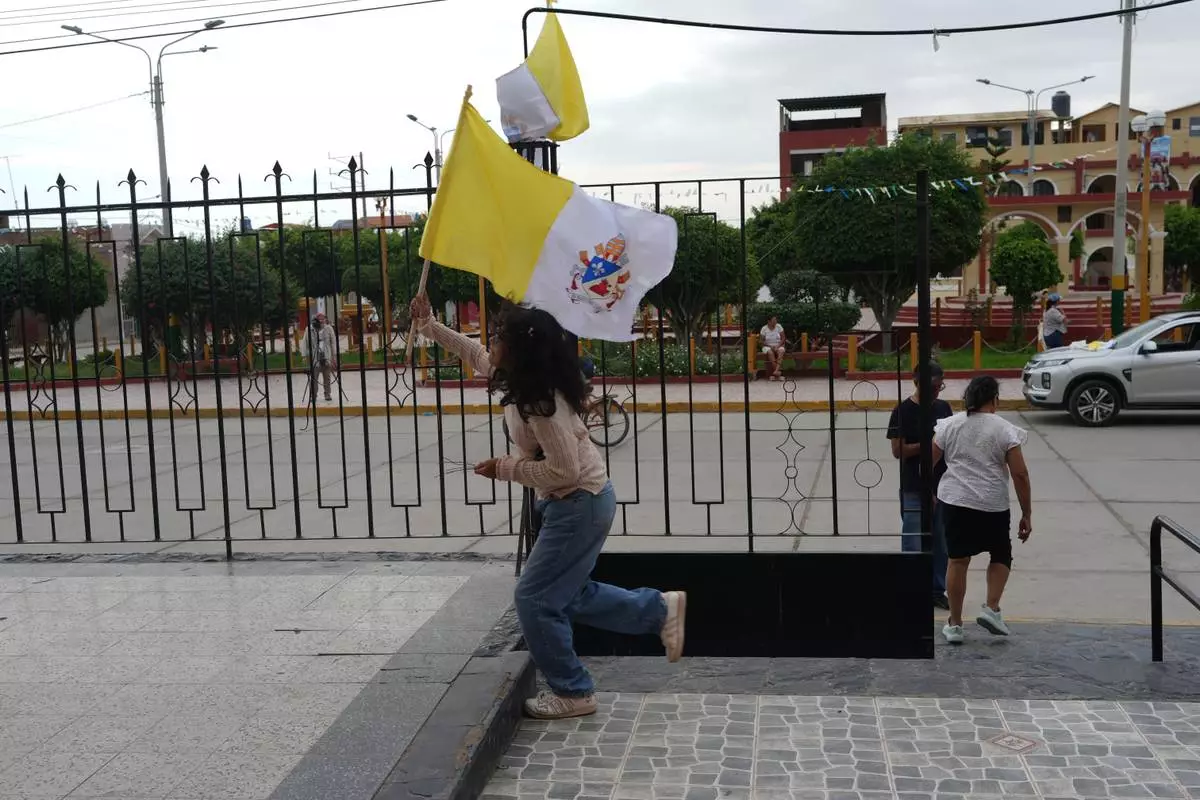
A girl runs with a Vatican City flag on the steps of the Saint Turibius of Mogrovejo Catholic church as the community prepares for the return of Pope Leo XIV to Zaña, Peru, Friday, Nov. 6, 2026. (AP Photo/Luis Andres Henao)
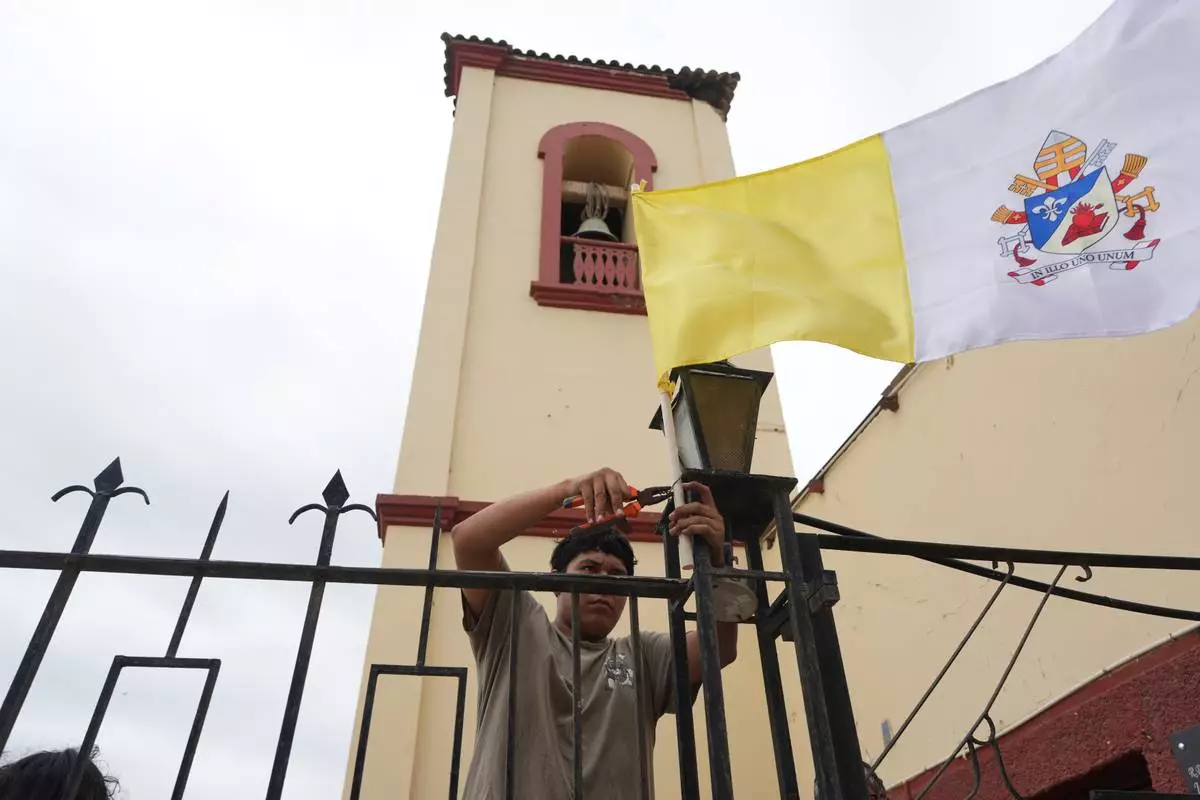
A person attaches a Vatican City flag to the railings outside Saint Turibius of Mogrovejo Catholic church ahead of Pope Leo XIV's visit on Friday, Nov. 6, 2026, in Zaña, Peru. (AP Photo/Luis Andres Henao)
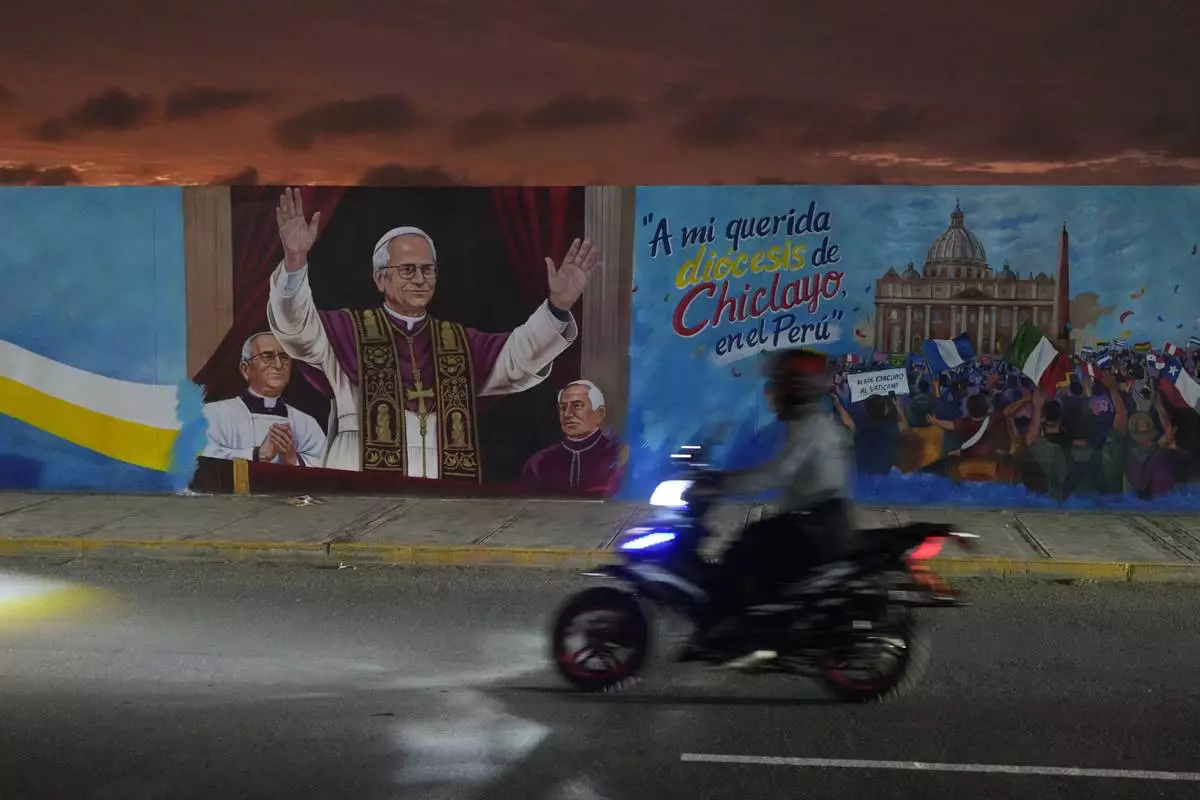
A motorcyclist drives past a mural of Pope Leo XIV in the city of Chiclayo, Peru, Saturday, Nov. 7, 2026. (AP Photo/Luis Andres Henao)