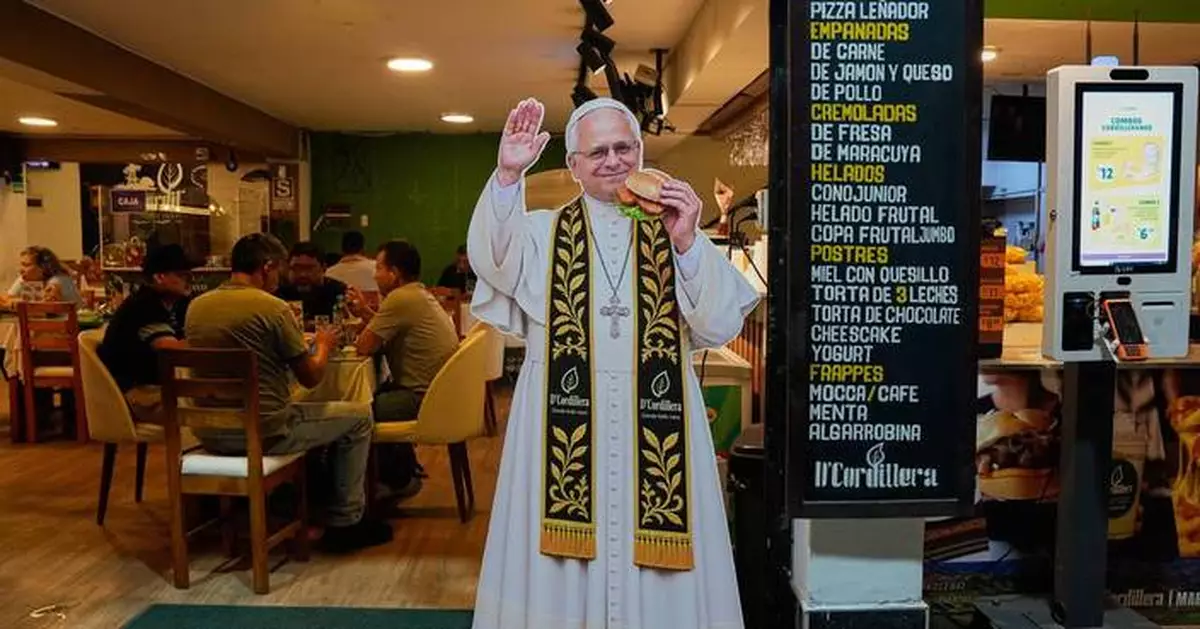
CHICLAYO, Peru (AP) — Pope Leo XIV seems omnipresent in Chiclayo. His image is painted in colorful murals, emblazoned on baseball hats and bobbleheads, and celebrated with signs across this city in northern Peru that read: “Welcome home.”
Lima is the culinary epicenter of South America. Cusco is the historic capital of the Inca empire and the gateway to Machu Picchu. But Chiclayo has a special claim as home to the Peruvian American pope, who returns there on Friday.
Click to Gallery
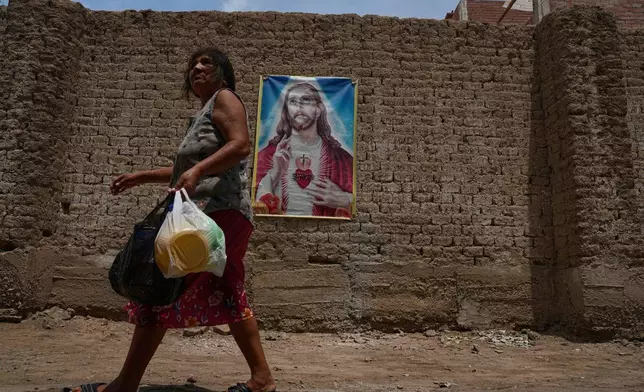
A woman arrives to the Leo XIV soup kitchen to pick up lunch in Chiclayo, Peru, where Pope Leo XIV served as bishop, ahead of his return to the country, Friday, Nov. 6, 2026. (AP Photo/Martin Mejia)
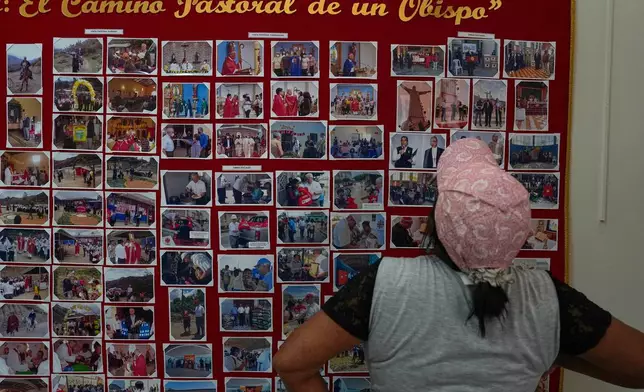
Rosa Chavez looks at photos of Pope Leo XIV from his time as bishop of Chiclayo at the apostolic nunciature where he is scheduled to stay during his visit to Chiclayo, Peru, Thursday, Nov. 5, 2026. (AP Photo/Martin Mejia)
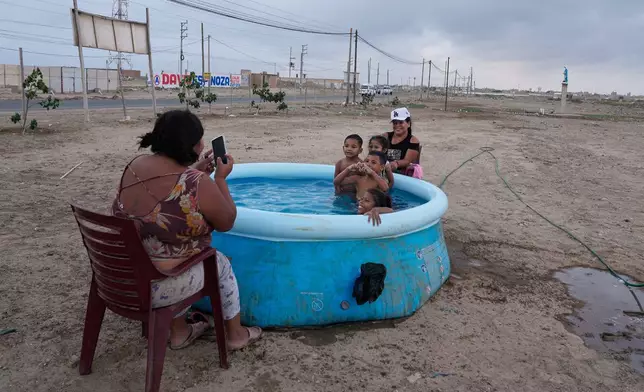
Children cool off in an inflatable pool outside the Villa San Vicente de Paul migrant shelter, once run by Pope Leo XIV when he was Bishop Robert Prevost, in Chiclayo, Peru, Thursday, Nov. 5, 2026. (AP Photo/Martin Mejia)
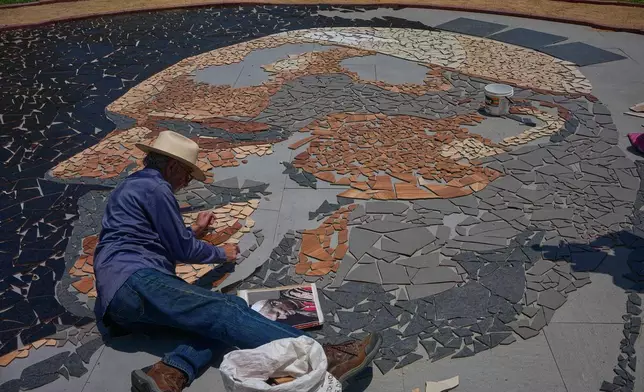
U.S. artist Stan Herd works on a mosaic depicting Pope Leo XIV in Chiclayo, Peru, where the pontiff served as bishop, Sunday, Nov. 8, 2026. (AP Photo/Martin Mejia)
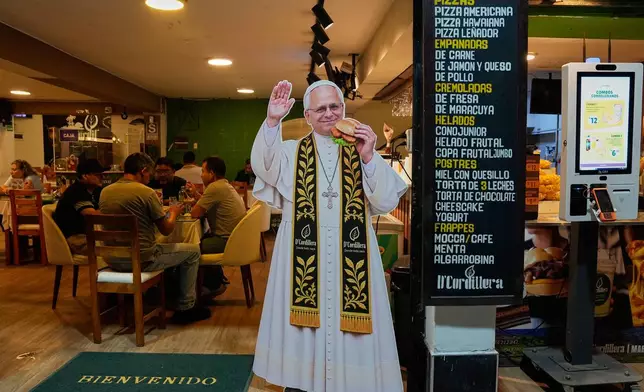
A cutout of Pope Leo XIV is displayed outside a restaurant in Chiclayo, Peru, where the pontiff served as bishop, Friday, Nov. 6, 2026. (AP Photo/Martin Mejia)
The first U.S.-born pontiff, Leo spent about two decades in Peru as a missionary and church leader, obtaining Peruvian citizenship shortly before he served as bishop of Chiclayo from 2015 to 2023. He remains beloved here for championing social justice issues and for his closeness to the people, especially the poor.
Many remember how the bishop — then known as Robert Prevost — led the life-saving purchase of oxygen production plants during the COVID-19 pandemic; how he waded through mud after torrential rains to bring help to the needy; how he celebrated Mass at the local prison. Others recall how he’d drive his pickup truck to remote villages to hand out blankets and sing Christmas songs, and his love of regional dishes like duck with rice and goat stew.
In his first words as the leader of 1.4 billion Catholics, Pope Leo gave a special shoutout in Spanish to his “beloved Diocese of Chiclayo” from the balcony of St. Peter’s Basilica. His return reaffirms his affection for Chiclayo's churches, schools and sanctuaries and is widely viewed as the emotional highlight of his South American trip.
“People aren’t saying: ‘The pope is Peruvian.’ They’re saying, ’The pope is Chiclayano!’” said the Rev. Jasson Sempertegui, who was his secretary when he led the diocese. “In Chiclayo we like to say: ‘The pope is returning home.’”
It is, Sempertegui said, the most important moment in Chiclayo’s history since it was settled in the 16th century by Spanish Franciscan priests as an Indigenous village about 13 kilometers (8 miles) from the Pacific Ocean.
Chiclayo and its people, he said, might have been more influential to the pope than his native Chicago and the Vatican.
The torrent of crises he confronted in Chiclayo — including the COVID pandemic, assisting newly arrived Venezuelan migrants, and the devastating floods — helped form his pastoral identity.
“He’s Chiclayano because he faced the biggest challenges of his pastoral life here,” Sempertegui said. “This helped him to connect with people’s pain.”
During his time in the city, Leo often repeated a joke: “Chicago, Chiclayo, what difference is there? Only one letter.”
A city of about 700,000 people, Chiclayo is the commercial hub of Peru’s northern Pacific coast, with highways linking it to the Andes and the Amazon region. Chiclayanos take pride in the city's nickname, “Capital of Friendship,” and its proximity to major archeological sites.
“Before, we were an unnoticed, low-profile city," said Zuly Castillo, who worked for Leo when he was bishop. Across from her office, a life-size cardboard cutout of the pope now welcomes visitors to his former residence. "Now we see that he has given us so much — and we have become known worldwide.”
In Chiclayo, the pope would wake before dawn to pray, then walk to the cathedral in the city center. He listened to confession and was moved by stories of adversity in a city where 20% of residents live in poverty.
He became known as an efficient problem solver, even fixing diocesan cars with YouTube tutorials. He learned local jargon and humor, and sometimes invited priests to join him for a lunch of his lomo saltado (Peru’s classic beef and tomato stir-fry) or ceviche (raw fish marinated in lime juice).
In the breaks between prayers, theology classes and chores, the aspiring priests at the city’s seminary of Santo Toribio de Mogrovejo remembered how Leo would visit them — offering encouragement, sharing a meal, playing tennis.
The Rev. Marcos Ballena, a seminary leader, recalled the glee of seminarians watching TV in the common room when Cardinal Prevost was elected pope. “Everyone jumped as if they had won a World Cup!”
Seminarian Jose Miguel Teran agreed: “There are some funny videos where we’re all euphoric ... and even more when he said, ‘My beloved diocese of Chiclayo’, we understood very clearly that this is his home, and we feel him as part of our family."
Darwin Sanchez first met Leo while serving as an altar boy. Soon, he’ll have the honor to carry the miter that Leo will wear when celebrating Masses.
“In our youth ministries, with the altar boys there’s a surging interest in the vocation because the pope is deemed to be Chiclayano," Sanchez said.
On his breaks in Chiclayo, he liked to watch his beloved Chicago White Sox' baseball games and binge-watch American TV series, like “24” and “Prison Break.”
In the working-class neighborhood of San Antonio, people remember him sharing a meal with the needy at a soup kitchen that he inaugurated.
“He told immigrants at the time that we welcomed vulnerable people,” said Daria Chavarry, a volunteer at a soup kitchen that has been renamed “Papa Leon XIV.”
After a meal near a large poster of the pope, 78-year-old Maria Teresa Santa Cruz said she paid 25 soles (about $3) in three installments to buy a T-shirt of Leo.
“I bought it because we have one more representative here on Earth,” she said about Leo’s mission to protect the dignity of the poor.
Leo helped deliver donations in 2017 when hundreds lost their homes as rivers overflooded. He also welcomed Venezuelan migrants escaping their country’s political and economic crises and oversaw construction of a temporary shelter and 13 homes.
“This is the place that he gave us for us to build a home again,” said Betania Marina Rodriguez, who worked closely with Leo on projects and lives in one of the homes.
She recalled how Leo delivered live chickens to her home during the COVID pandemic, to share with other migrants.
“In him we saw the feeling of hope,” Rodriguez said. “He always said that human dignity has no borders.”
Rocio Zeña lost her home to flooding in 2023 and remembers fondly how Leo took off his priestly robes and waded through the mud in rubber boots to reach the needy.
“He was the first person who came with help and cared about us when everything was flooded and the water reached our necks,” said Zeña. “It’s surreal to think that the person who’s been there for you is now the pope – the most important person on Earth after God.”
He grew so fond of Chiclayo that he hoped to stay put “and even to be buried alongside the diocese’s other bishops,” Daniel Burke and Scott Detrow write in their book, “American Pope.”
But then Pope Francis asked him to return to Rome for an important Vatican job. He teared up in his final Mass with his parishioners.
Prisoners at Chiclayo penitentiary gathered at the carpentry workshop to carve a papal staff before his visit — their gift to the missionary who visited them to celebrate Mass and who became the pope.
“There’s so much joy over his visit,” said the Rev. Elmer Uchofen, the prison chaplain. “We knew he’d come back; Chiclayo is in his heart.”
Associated Press religion coverage receives support through the AP’s collaboration with The Conversation US, with funding from Lilly Endowment Inc. The AP is solely responsible for this content.
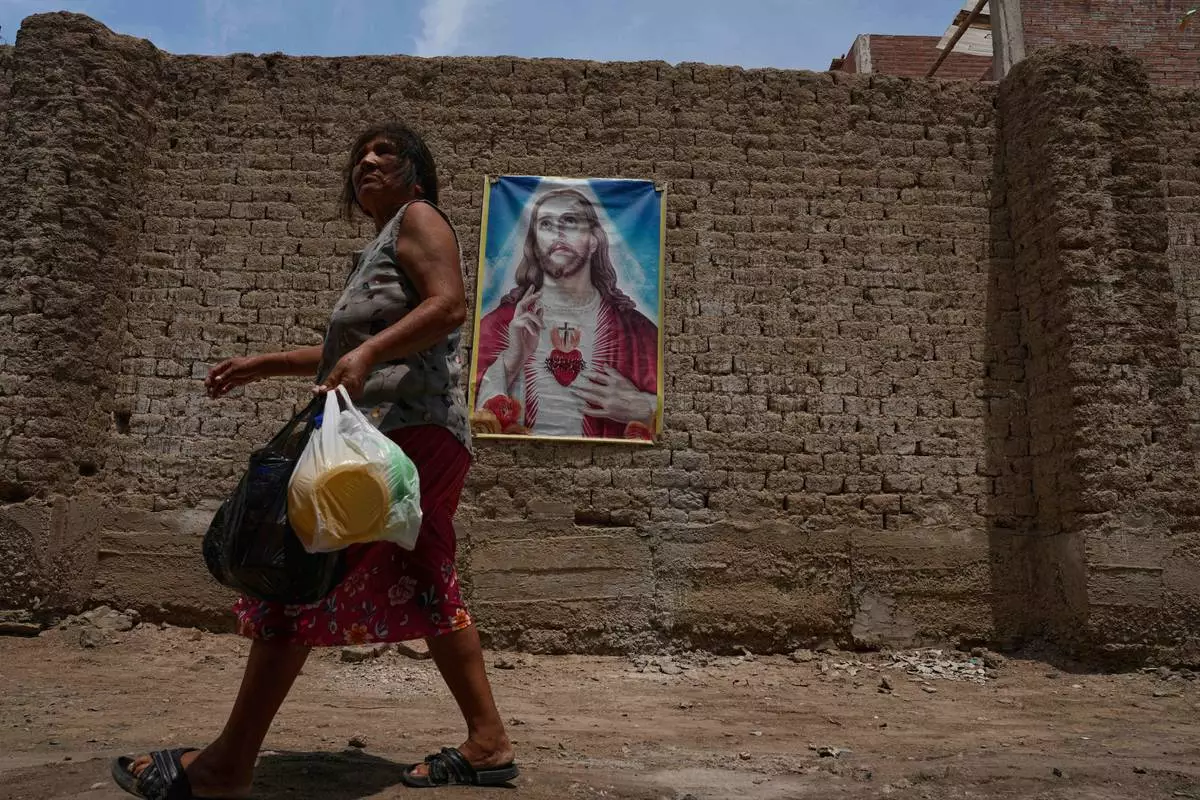
A woman arrives to the Leo XIV soup kitchen to pick up lunch in Chiclayo, Peru, where Pope Leo XIV served as bishop, ahead of his return to the country, Friday, Nov. 6, 2026. (AP Photo/Martin Mejia)
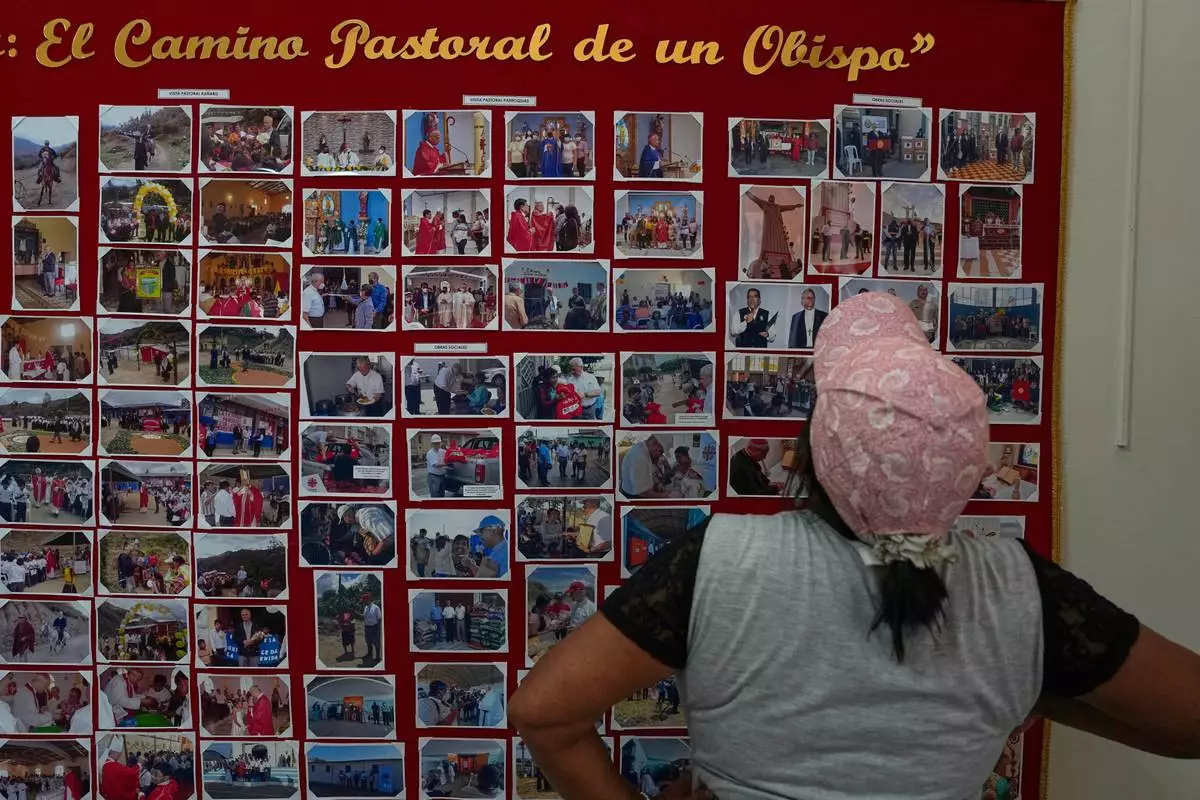
Rosa Chavez looks at photos of Pope Leo XIV from his time as bishop of Chiclayo at the apostolic nunciature where he is scheduled to stay during his visit to Chiclayo, Peru, Thursday, Nov. 5, 2026. (AP Photo/Martin Mejia)
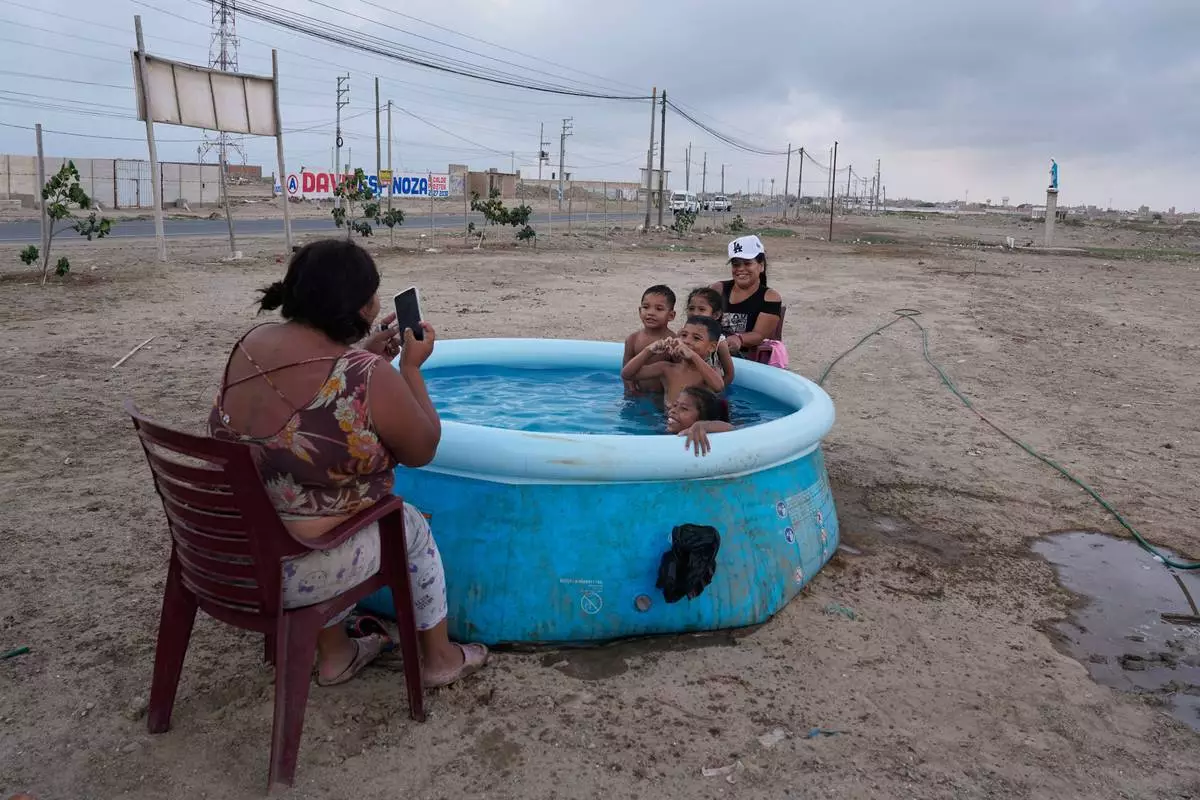
Children cool off in an inflatable pool outside the Villa San Vicente de Paul migrant shelter, once run by Pope Leo XIV when he was Bishop Robert Prevost, in Chiclayo, Peru, Thursday, Nov. 5, 2026. (AP Photo/Martin Mejia)
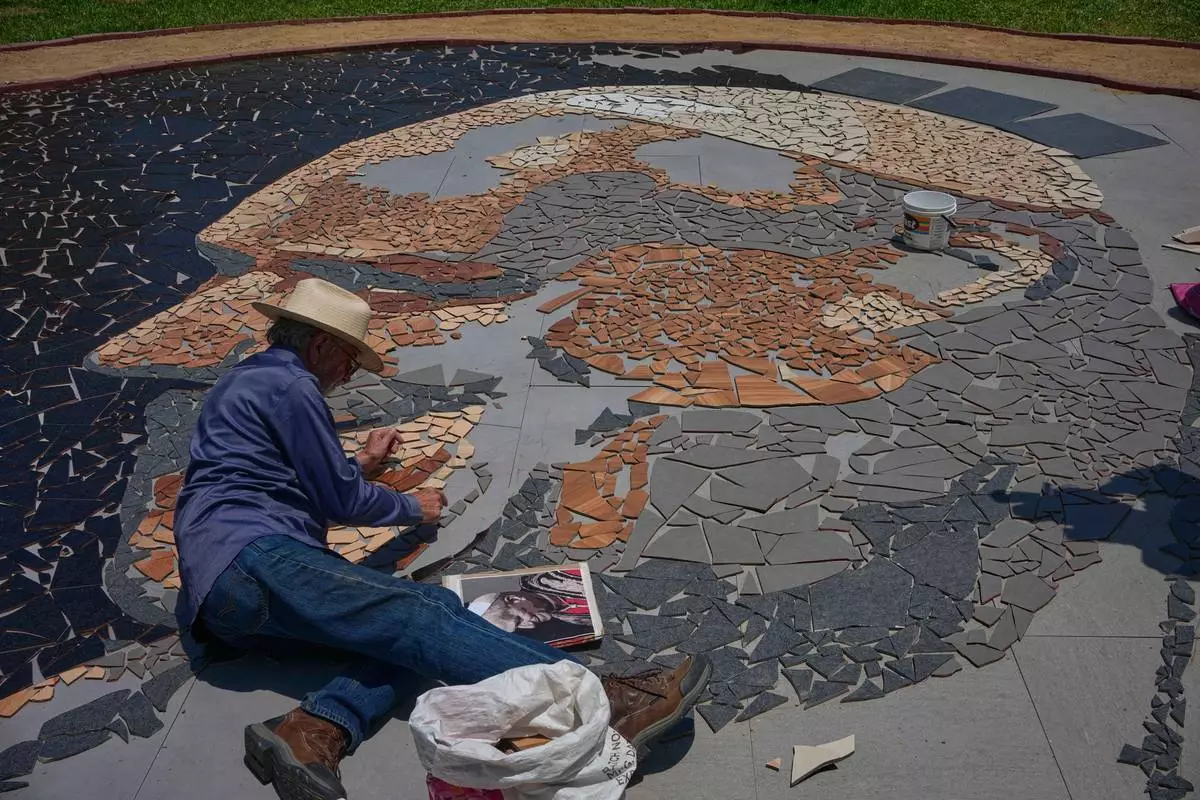
U.S. artist Stan Herd works on a mosaic depicting Pope Leo XIV in Chiclayo, Peru, where the pontiff served as bishop, Sunday, Nov. 8, 2026. (AP Photo/Martin Mejia)
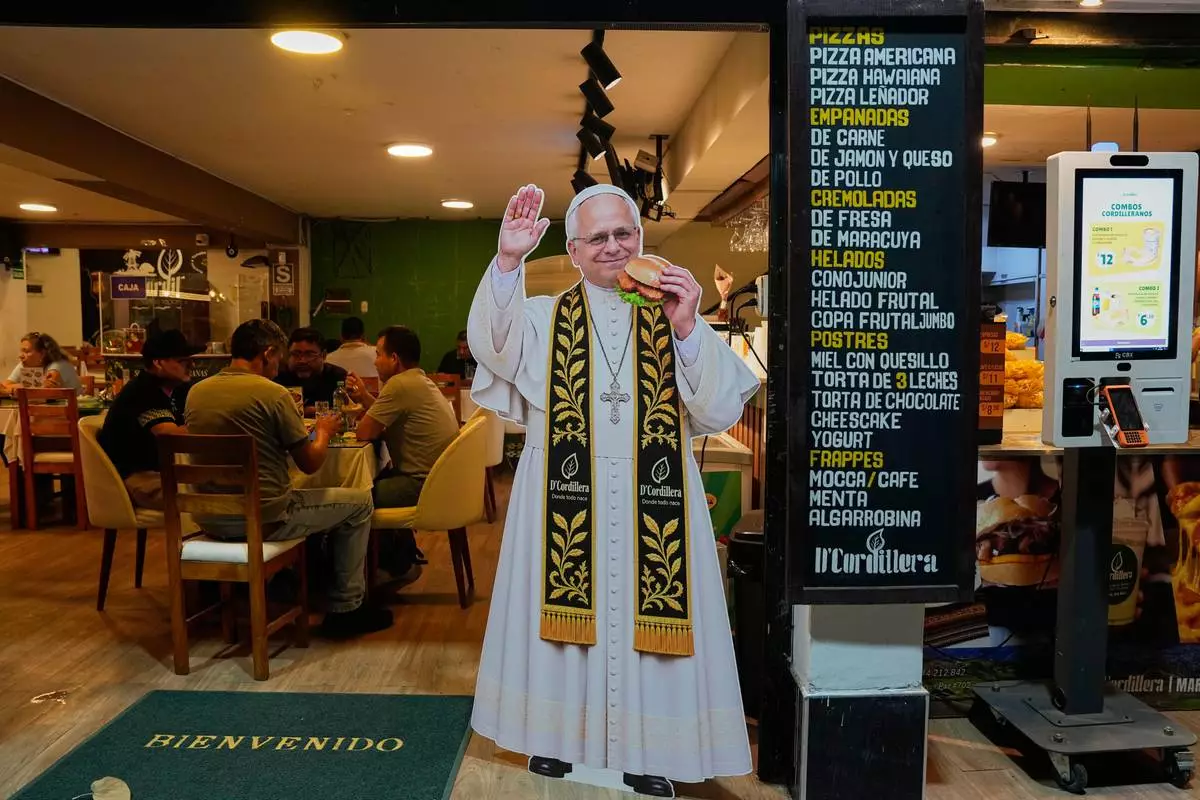
A cutout of Pope Leo XIV is displayed outside a restaurant in Chiclayo, Peru, where the pontiff served as bishop, Friday, Nov. 6, 2026. (AP Photo/Martin Mejia)