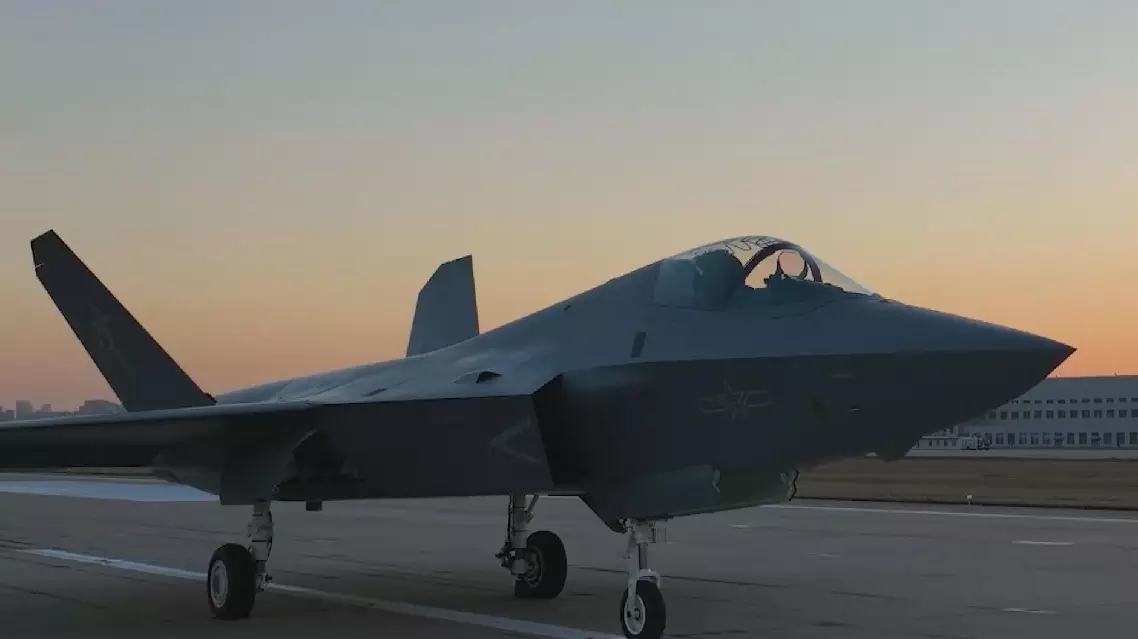
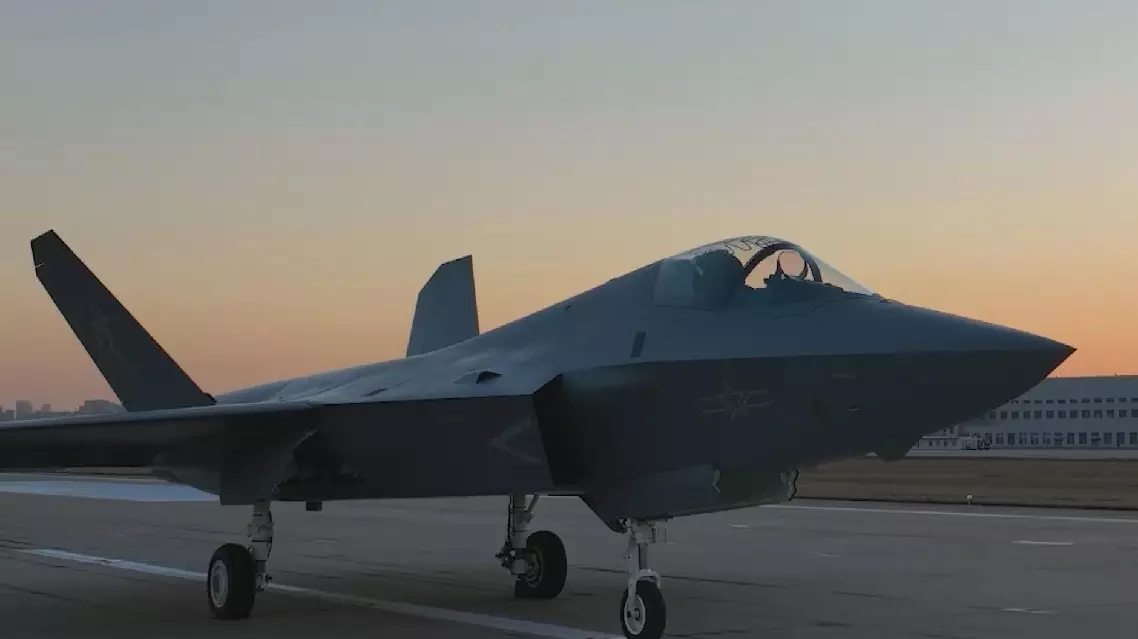
China's J-35A stealth fighter has boosted the country's fifth-generation air combat strength since its public debut two years ago.
Wednesday marks the second anniversary of the official public debut of the J-35A, China's domestically developed medium-sized stealth multirole fighter.
On Nov. 12, 2024, the jet roared across the sky at the China International Aviation and Aerospace Exhibition, drawing spectators' attention with its striking shock diamonds.
Its debut, together with the J-20 stealth fighter, ushered in the era of dual stealth fighters for the Chinese People's Liberation Army (PLA) Air Force.
The J-35A, a single-seat, twin-engine jet with the official codename Yunlong (Cloud Dragon), features low observability and good flight performance. It is also a scalable component of China's stealth and anti-stealth combat system.
Primarily designed for air superiority missions, it is also capable of strike operations against surface targets, delivering outstanding overall combat effectiveness.
To enhance its stealth capability, the J-35A adopts an integrated low-observability design rather than relying solely on radar-absorbent coatings. Its canopy is coated with a conductive stealth film to suppress radar return signals, ensuring multi-aspect stealth performance.
In terms of avionics and situational awareness, the J-35A is fitted with a new-generation active electronically scanned array (AESA) radar, offering longer detection range and a limited capability to detect stealth targets. An electro-optical sensor window under the nose provides electro-optical detection. The full suite supports sensor fusion and links with the helmet-mounted display system. It can network and coordinate with the J-20 and unmanned aerial vehicles via high-speed data links.
"In terms of weapon compatibility, the J-35A has an internal weapons bay. In stealth mode, it can carry medium-range air-to-air missiles and short-range dogfight missiles. The wings also have hardpoints for external ordnance, allowing it to carry air-to-ground and anti-ship munitions in non-stealth configuration," said military commentator Shao Yongling.
While the J-20 is a heavy, high-end stealth fighter with relatively high unit costs, the medium-sized J-35A features controllable costs and strong mass-production potential. Together, the two aircraft form a high-low mix stealth fighter system, enabling China's fifth-generation jet fleet to become a scalable air combat force.
China's J-35A stealth fighter strengthens fifth-gen air power since debut two years ago
China's J-35A stealth fighter strengthens fifth-gen air power since debut two years ago