WASHINGTON (AP) — Middle-aged men should undergo regular screening for prostate cancer, the American Cancer Society said Thursday in a major change to its guidelines.
The screening involves a simple blood test, and men at average risk of getting prostate cancer should get that PSA test every two years between the ages of 50 and 69, the cancer society advised.
Men at high risk, including Black men and those with a strong family history of prostate cancer, should get yearly PSA checks and start earlier, at age 45.
Thursday’s guideline update marks a shift in thinking about routine blood tests for PSA, or prostate-specific antigen.
Since 2010, the cancer society has recommended that men at average risk talk with their doctors about whether to get regular PSA tests. That’s a protein produced by both normal and cancerous prostate cells, meaning a high level might signal a tumor but also could be from a benign enlarged prostate or be a temporary spike from vigorous exercise.
Widespread PSA testing in the past was blamed for overtreatment of slow-growing tumors and unnecessary follow-up testing in men who turned out to not have cancer.
The updated advice comes after advances in understanding PSA's benefits and how to reduce potential harms, according to the cancer society. That includes steps such as repeating a PSA test to be sure it’s really high or adding an MRI scan to help identify who needs a biopsy.
How long should men continue screening? Starting at 70, men should talk with their doctors about whether it’s beneficial to continue the routine PSA checks, the guideline says. But it discourages screening for men 80 and older and those of any age who aren’t expected to live another 10 years because of other health problems.
Prostate cancer is one of the most common cancers in men. The cancer society estimates more than 333,000 men in the U.S. will be diagnosed with prostate cancer in 2026, and about 36,000 will die of it.
The Associated Press’ health and science coverage receives financial support from the AP Fund for Journalism and private foundations. AP is solely responsible for all content. Find AP’s standards for working with philanthropies, a list of supporters and funded coverage areas at AP.org

FILE - This 1974 microscope image made available by the Centers for Disease Control and Prevention shows changes in cells indicative of adenocarcinoma of the prostate. (Dr. Edwin P. Ewing, Jr./CDC via AP)
An Israeli airstrike hit one of the main hospitals still operating in the Gaza Strip on Thursday, killing six people and injuring at least 28 more.
In Iran, a body of clerics said it was necessary to consider withdrawing the country from a treaty meant to prevent the spread of nuclear weapons. And in France, authorities barred an Israeli politician from entering the country because of his work as a prominent settler leader in the occupied West Bank.
Here is the latest news from the Middle East on Thursday. Read our full coverage here.
An Israeli airstrike hit one of the main hospitals still operating in the Gaza Strip on Thursday, killing six people including a surgeon and a 13-year-old boy, Gaza’s Health Ministry said.
The Israeli military said the strike on Nasser Hospital in southern Gaza targeted a Hamas commander and other militants, without providing evidence. The commander it identified was not among the dead.
The strike hit the hospital’s surgical wing, the ministry and witnesses said. At least 28 people were wounded.
Israeli forces have previously targeted the Nasser Hospital, including an attack in 2025 that killed five journalists — among them Mariam Dagga, who worked for The Associated Press.
The six were among 10 Palestinians killed in four Israeli strikes on Thursday. Health officials reported strikes on two cars in Deir al-Balah and Gaza City and a building in Jabaliya. The Israeli military said the strikes had targeted militants.
Israel’s strikes on Gaza have continued despite a ceasefire deal with Hamas in October 2025. They have killed more than 1,600 Palestinians, bringing the total death toll of the conflict to over 74,600.
Iran’s Assembly of Experts said Thursday that considering withdrawing from the Nuclear Nonproliferation Treaty is an “unavoidable necessity,” given recent repeated threats against the country, state TV reported.
The statement by the assembly, which is a clerical body responsible for appointing and overseeing Iran’s supreme leader, added to growing calls within Iran’s political establishment to reconsider the country’s longstanding nuclear policies.
Iran has enriched uranium to near weapons-grade levels, but insists its program is only for civilian purposes. It has said nuclear weapons have no place in its military doctrine and the late Supreme Leader Ayatollah Ali Khamenei declared them forbidden under Islam.
Yossi Dagan, a prominent Israeli settler in the occupied West Bank, said authorities denied him permission to enter France after he flew to Charles de Gaulle International Airport.
The incident happened last week but was made public Wednesday. France’s Foreign Ministry confirmed Dagan was “subject to an administrative ban from the territory due to his active role in implementing the settlement policy in the West Bank.”
Dagan, who heads one of six Israeli regional councils in the West Bank, said he was undeterred by France’s actions and remained proud to “build the historic homeland of the Jewish people.”
Israel’s Foreign Ministry called the decision by France “completely unacceptable.”
Israeli settlements in the occupied West Bank are considered illegal and an obstacle to peace by most of the international community. France was one of several European countries this year to step up restrictions on Israeli settlers and settlements.
The British military reported at least two tankers were struck by projectiles in recent days while traversing contested waters near Iran.
The United Kingdom Maritime Trade Operations Center, an agency that monitors maritime safety, said one of the tankers was struck Wednesday on the Strait of Hormuz, northwest of Ras al-Khaimah. The agency reported the crew evacuated safely and no casualties were reported.
In another incident from Tuesday, the UKMTO said a tanker was struck by a projectile in the Persian Gulf. Multiple casualties were taken ashore for medical assistance while the remaining crew was safe and accounted for, the agency said.
The UKMTO didn’t provide more information on the victims or identify the tankers involved in either attack.
This report will be updated throughout the day as new developments emerge.
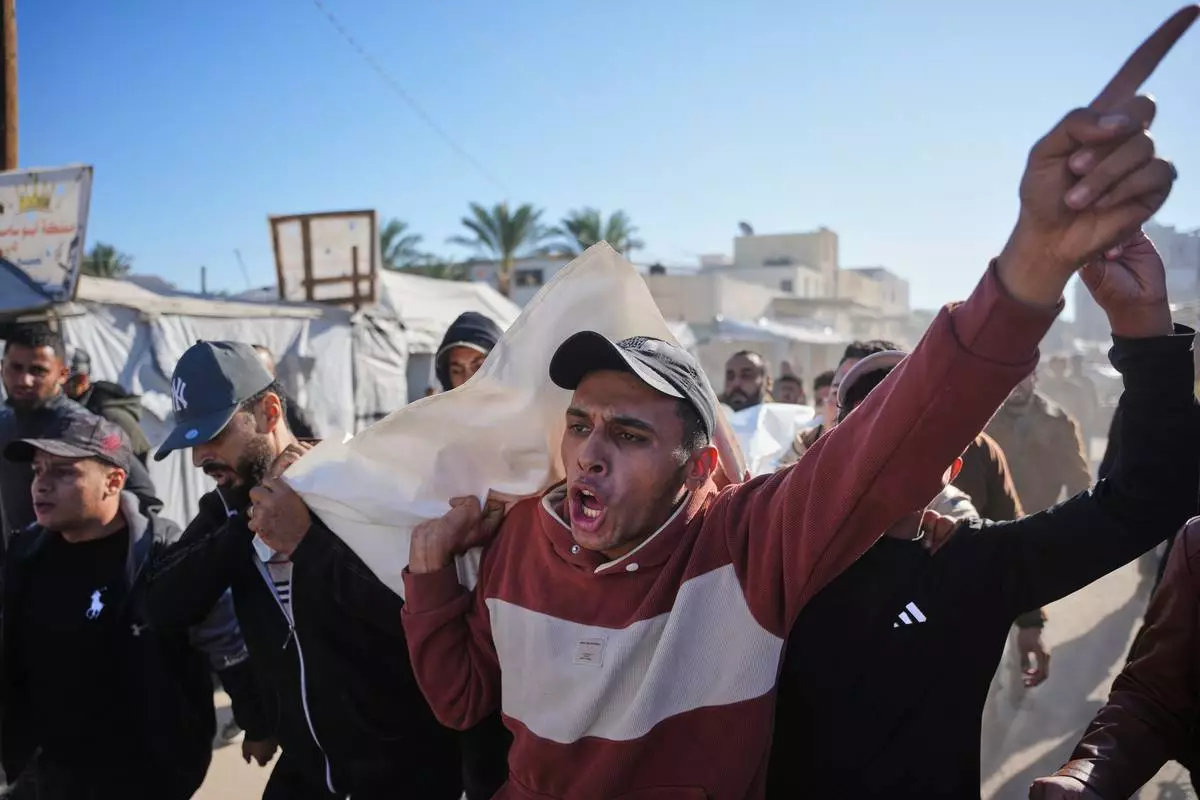
Mourners carry the bodies of Palestinians killed in an Israeli airstrike on Nasser Hospital in Khan Younis, Gaza Strip, Thursday, Nov. 12, 2026. (AP Photo/Abdel Kareem Hana)
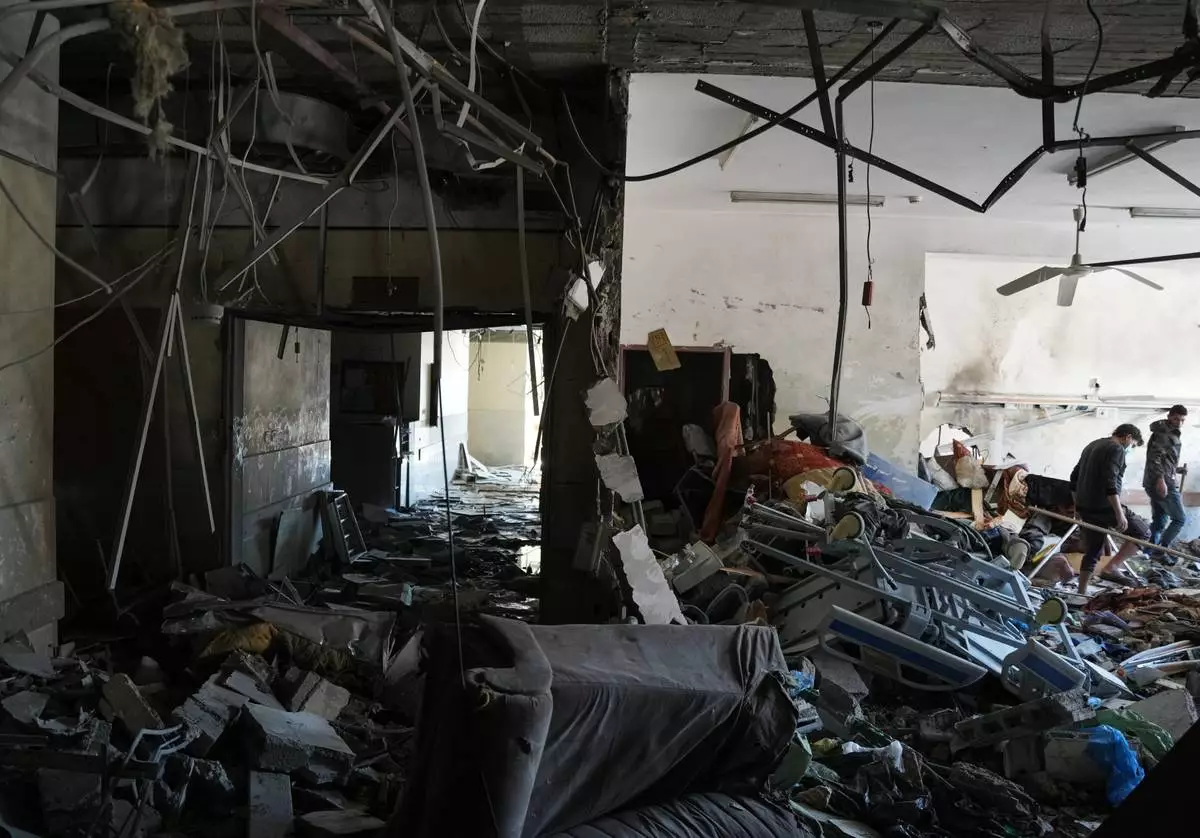
People inspect damage to Nasser Hospital after it was hit by an Israeli airstrike overnight in Khan Younis, Gaza Strip, Thursday, Nov. 12, 2026. (AP Photo/Abdel Kareem Hana)
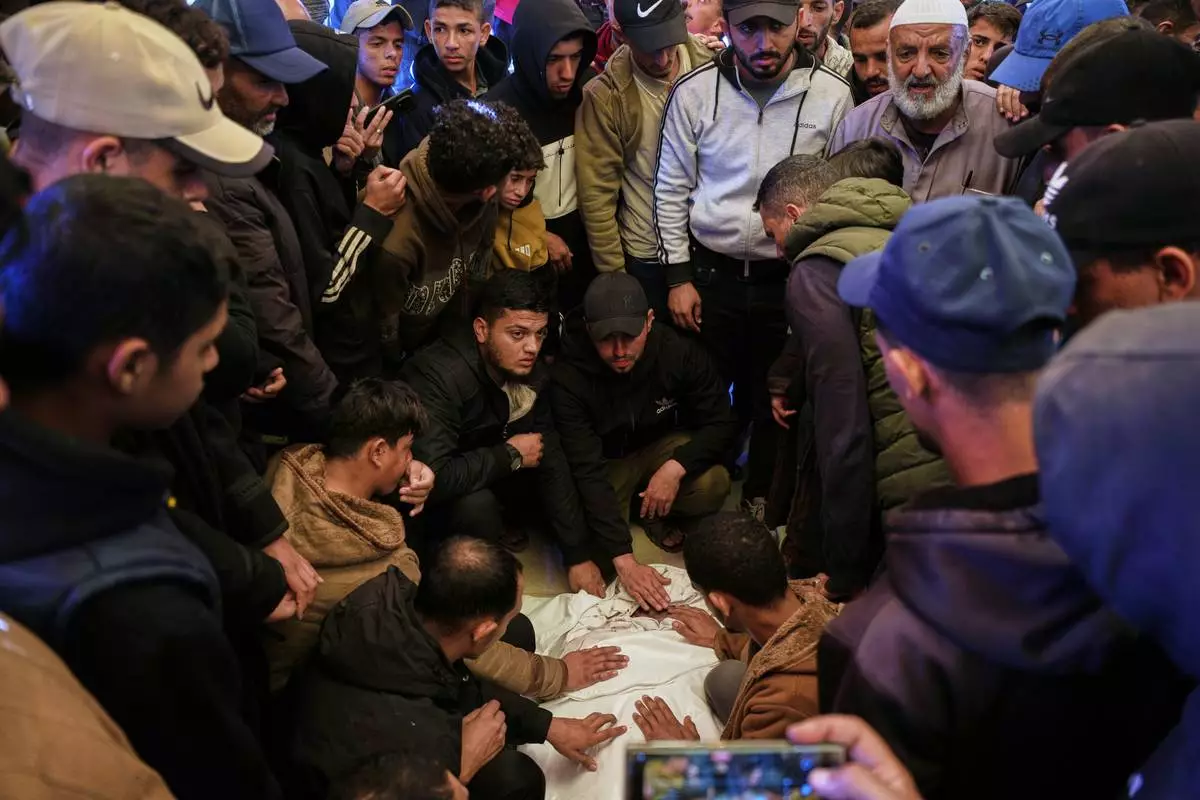
Mourners attend the funeral of Khalid Abu Anza, 53, who was killed in an overnight Israeli airstrike on Nasser Hospital, in Khan Younis, Gaza Strip, Thursday, Nov. 12, 2026. (AP Photo/Abdel Kareem Hana)
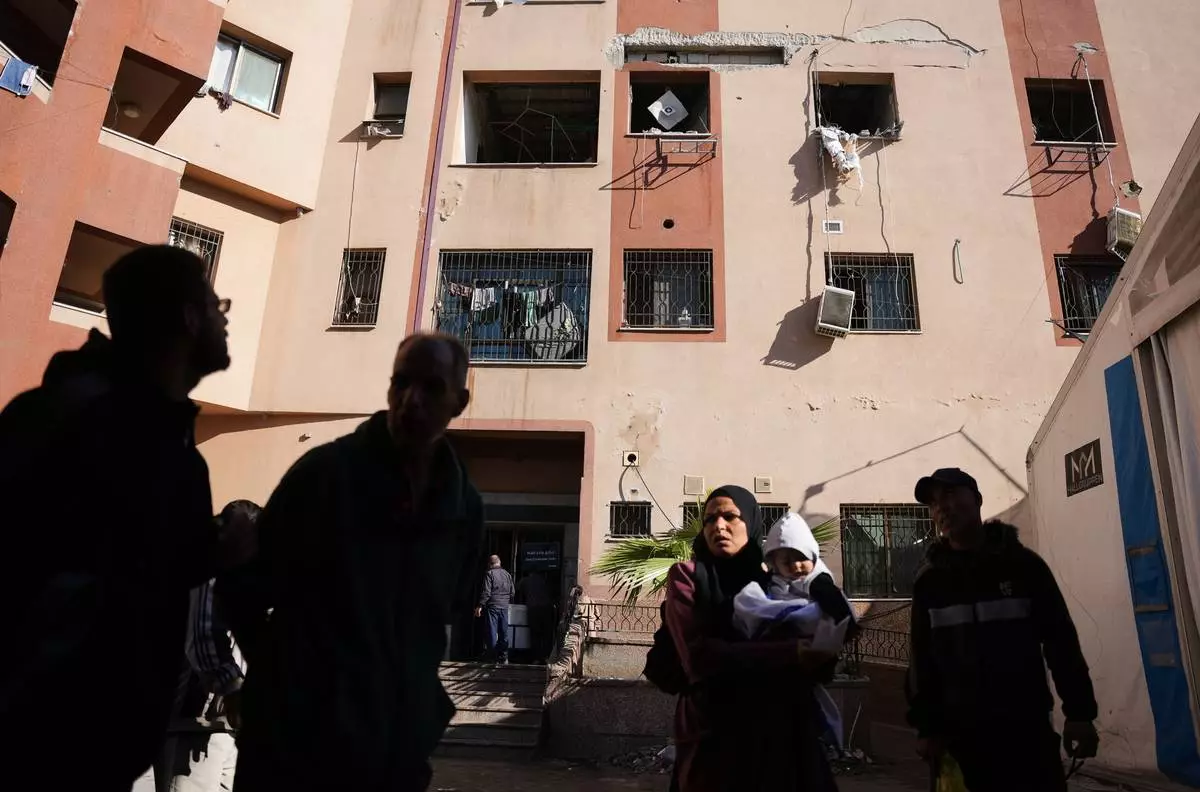
People walk at Nasser Hospital after it was hit by an Israeli airstrike overnight in Khan Younis, Gaza Strip, Thursday, Nov. 12, 2026. (AP Photo/Abdel Kareem Hana)