Skip to Content Facebook Feature Image

Charity-run kitchens in Havana feed a growing number of Cubans as crisis deepens

News

Charity-run kitchens in Havana feed a growing number of Cubans as crisis deepens
News

News

Charity-run kitchens in Havana feed a growing number of Cubans as crisis deepens

2026-11-13 18:04 Last Updated At:18:15

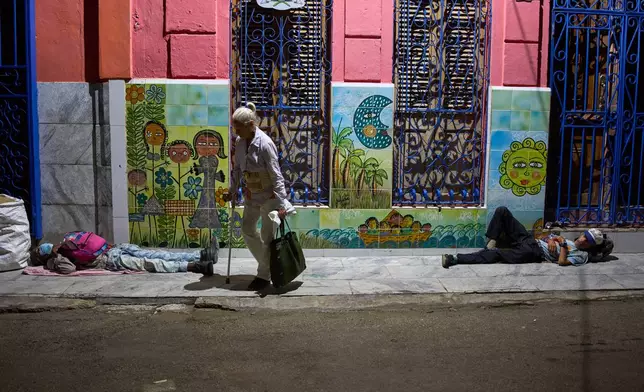
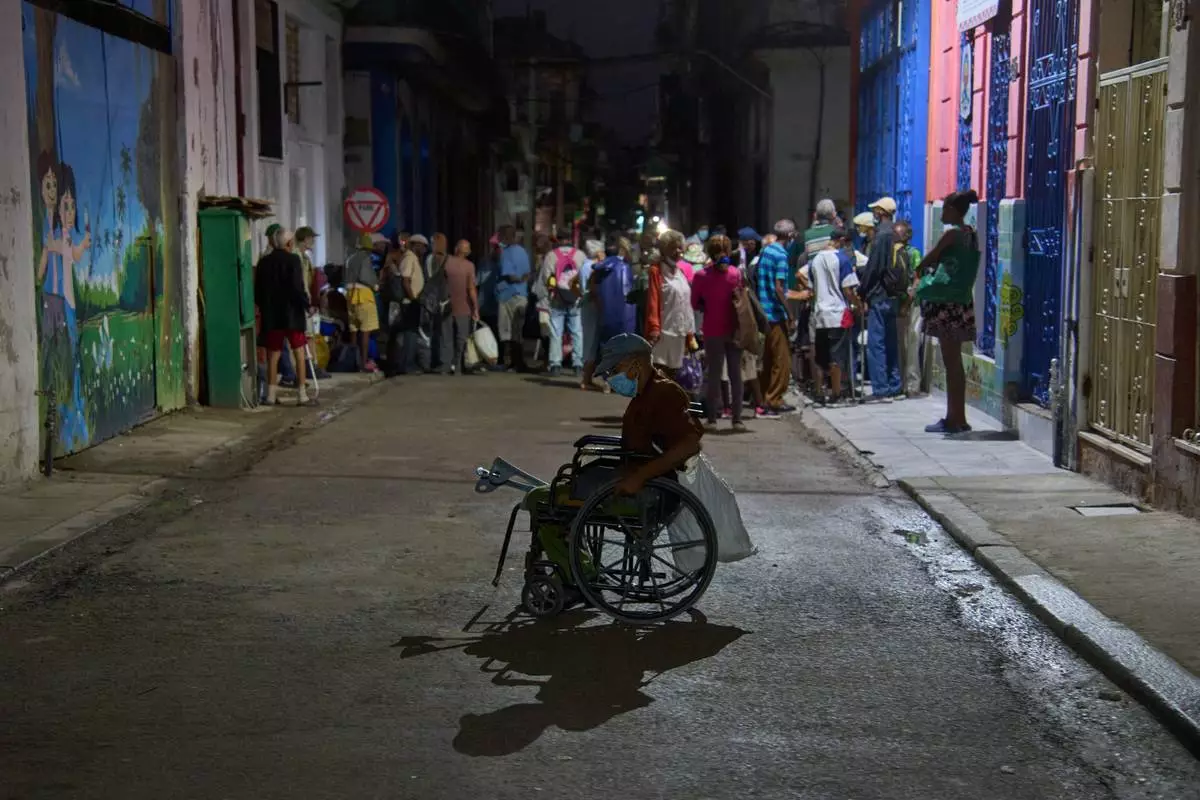
HAVANA (AP) — Every night, hundreds of people line up outside a charity-run food pantry in the heart of Havana, some sleeping on the sidewalk as they wait for what may be their only meal of the day.

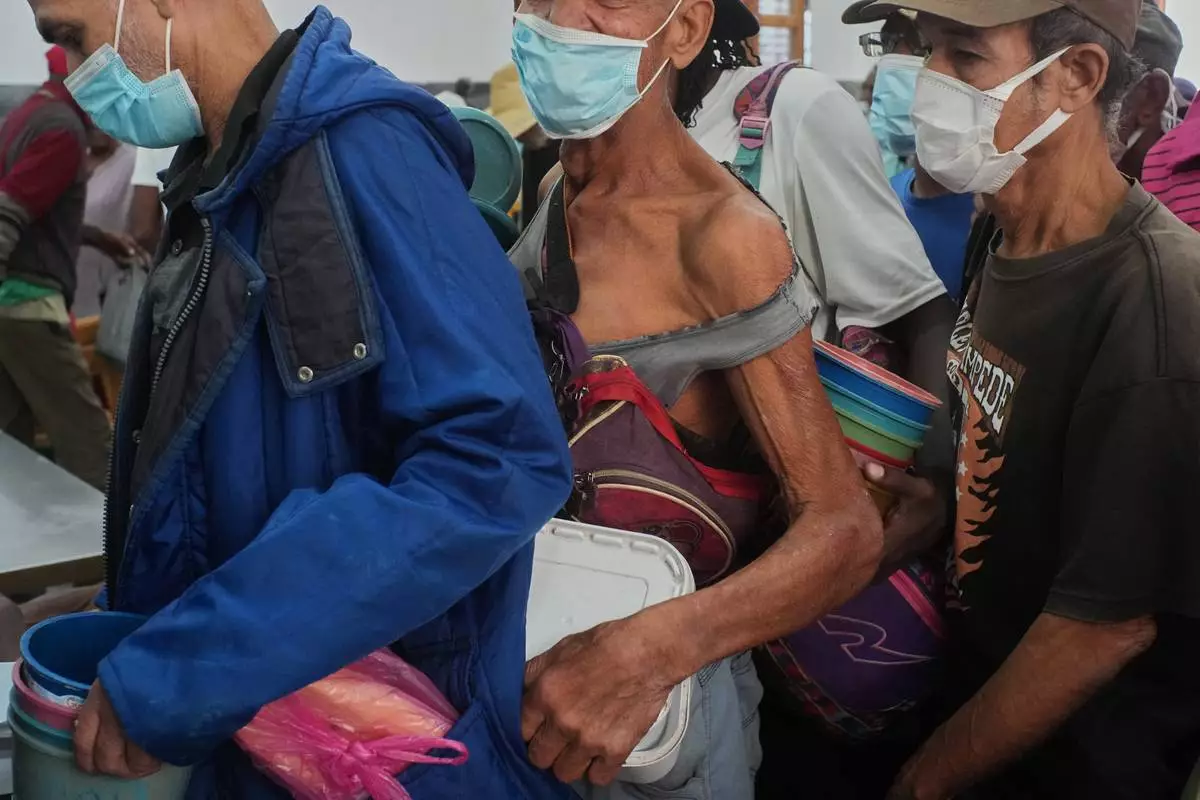
When the doors open at 7 a.m., people hurry inside carrying numbered plastic containers. With so many mouths to feed, volunteers follow a carefully organized routine: They wash the containers, call out the numbers and hand out portions of food.

More Images
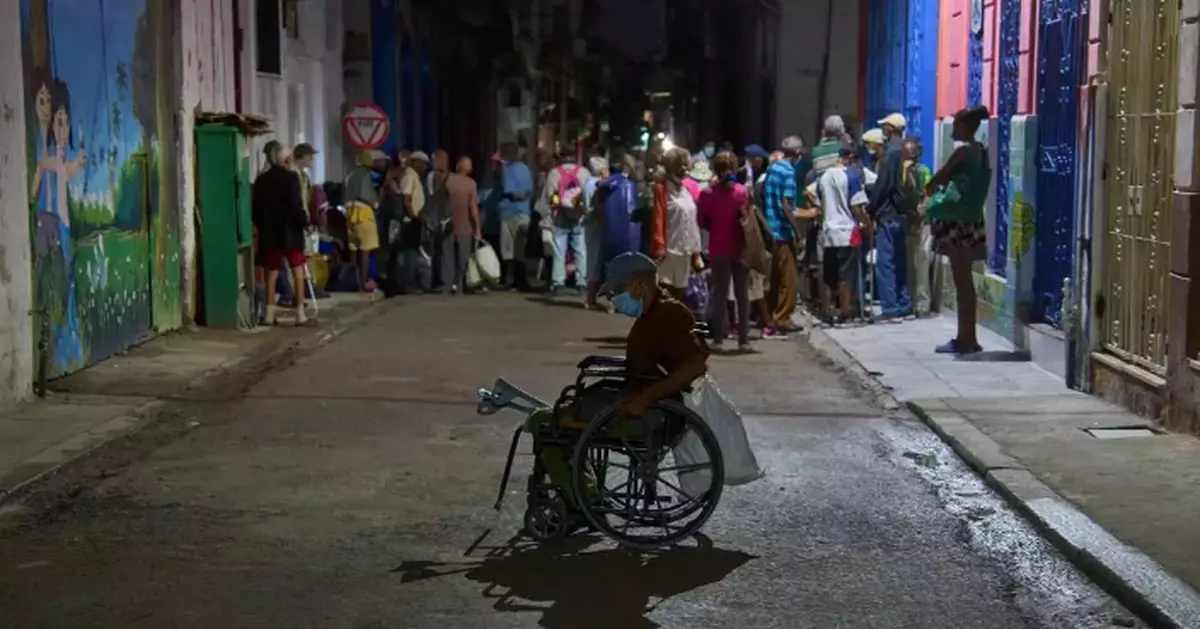
People sleep outside the charity-run Quisicuaba Association community kitchen to secure their place in line for a free hot meal in Havana, Cuba, Wednesday, Oct. 28, 2026. (AP Photo/Ramon Espinosa)
People sleep outside the charity-run Quisicuaba Association community kitchen to secure their place in line for a free hot meal in Havana, Cuba, Wednesday, Oct. 28, 2026. (AP Photo/Ramon Espinosa)

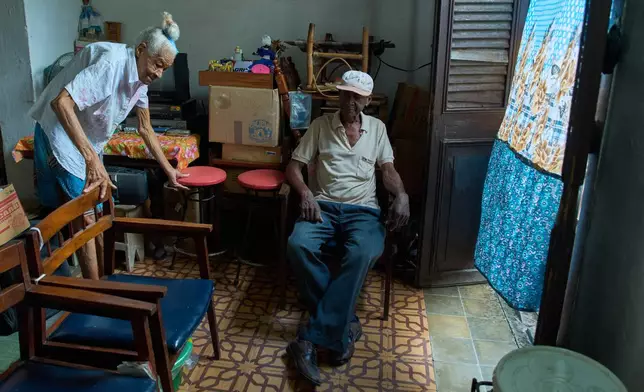
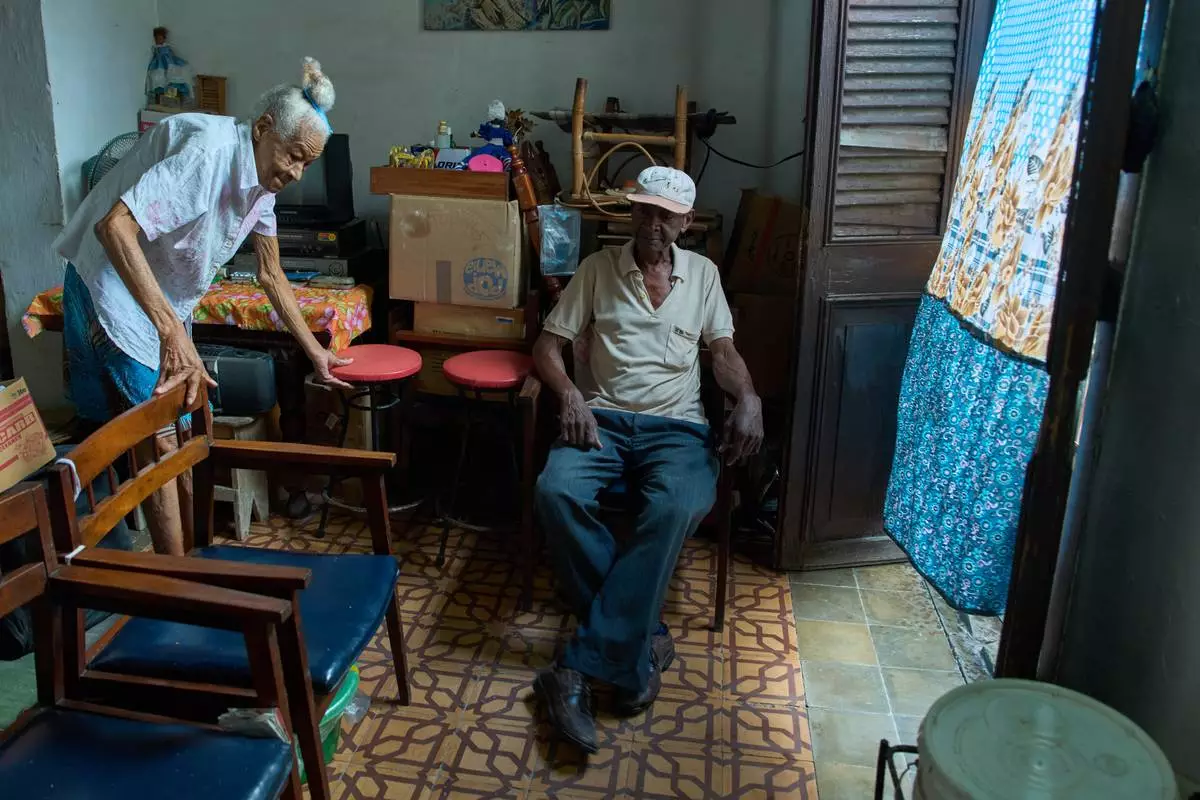
Fernando Fernández, a 71-year-old retiree, rests beside his wife, Josefa Sánchez, after arriving home with bags of free food he received from the charity-run Quisicuaba Association community kitchen, where he spent the night waiting in line. in Havana, Cuba, Tuesday, Oct. 27, 2026. (AP Photo/Ramon Espinosa)

Fernando Fernández, a 71-year-old retiree, rests beside his wife, Josefa Sánchez, after arriving home with bags of free food he received from the charity-run Quisicuaba Association community kitchen, where he spent the night waiting in line. in Havana, Cuba, Tuesday, Oct. 27, 2026. (AP Photo/Ramon Espinosa)

Fernando Fernández, a 71-year-old retiree, arrives home carrying bags of free food he received from the charity-run community kitchen Quisicuaba Association, where he spent the night waiting in line in Havana, Cuba, Tuesday, Oct. 27, 2026. (AP Photo/Ramon Espinosa)
Fernando Fernández, a 71-year-old retiree, arrives home carrying bags of free food he received from the charity-run community kitchen Quisicuaba Association, where he spent the night waiting in line in Havana, Cuba, Tuesday, Oct. 27, 2026. (AP Photo/Ramon Espinosa)

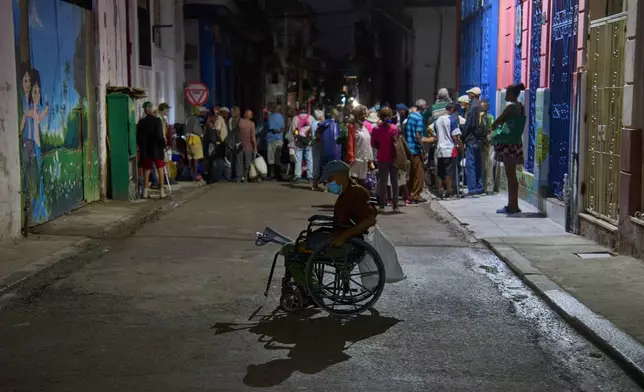
People gather outside the charity-run Quisicuaba Association community kitchen before sunrise to receive a free hot meal in Havana, Wednesday, Oct. 28, 2026. (AP Photo/Ramon Espinosa)
People gather outside the charity-run Quisicuaba Association community kitchen before sunrise to receive a free hot meal in Havana, Wednesday, Oct. 28, 2026. (AP Photo/Ramon Espinosa)

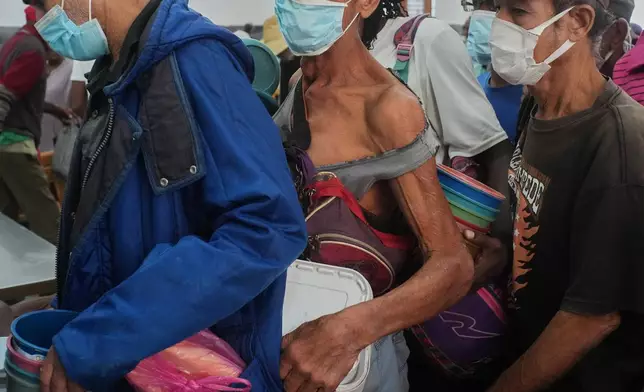
People wait to receive a hot meal at the Quisicuaba Association charity-run community kitchen in Havana, Tuesday, Oct. 27, 2026. (AP Photo/Ramon Espinosa)

People wait to receive a hot meal at the Quisicuaba Association charity-run community kitchen in Havana, Tuesday, Oct. 27, 2026. (AP Photo/Ramon Espinosa)

“We’re having a really rough time,” said Fernando Fernández, a 71-year-old retiree who regularly visits the Asociación Quisicuaba, a group that runs a community kitchen in Havana. “I have to arrive in the early morning. Sometimes I even have to get in line the day before.”

Fernández, a former cook and security guard, is among a growing number of Cubans struggling to feed themselves as the country’s prolonged economic crisis deepens, worsened by U.S. energy restrictions, inflation and dwindling government resources.

As the state struggles to provide subsidized food, charity-run kitchens and food pantries have become a lifeline for vulnerable Cubans, including retired doctors, teachers and former government workers. Supported by religious groups, international aid organizations and the United Nations, they provide what for many is their only reliable hot meal.

Centers such as Quisicuaba, often housed in religious buildings or affiliated with faith-based groups, have proliferated across the island in recent years.

Fernández, a former caretaker, once visited the soup kitchen with his 80-year-old wife, Josefa, but now goes alone because she is ill. The couple survives on her monthly pension of 3,200 Cuban pesos, a little more than $3, and assistance from Quisicuaba.

On a recent morning, Marelys Ponce, a 34-year-old single mother, joined the line with two of her children. Her other three attend school, where they typically receive lunch.

“I started coming here a little over a month ago because the situation is bad, and I don’t have the means to feed them,” she said, gesturing toward her children. “At least with this, they get something to eat.”

Alongside Ponce and Fernández were men and women from a wide range of professions. Few were homeless. Most had long work histories or were still employed, but told the AP that their earnings were no longer enough to live on.

Inside a vast kitchen equipped with more than 20 giant cauldrons, volunteers at Quisicuaba prepare a mixture of rice, eggs and pasta, sometimes with a little chicken, and pour chocolate milk into bottles. At 7 a.m., the doors open and distribution begins.

The religious organization, supported by United Nations agencies and European aid groups, has identified about 12,500 vulnerable people in Havana.

“You only need to walk through the streets of Havana and Cuba to see a new dimension of vulnerability,” Enrique Alemán, a physician and president of Quisicuaba, told The Associated Press.

For decades, Cuba’s socialist system provided free education, healthcare and subsidized food, with most people employed by the state. Living standards were often modest, but basic needs — including food — were largely met.

“We don’t see illiterate people here or other forms of marginalization, but people who are products of Cuban society facing particularly vulnerable circumstances,” Alemán said, pointing to growing financial, food and healthcare insecurity among families.

The U.S. energy squeeze has severely disrupted life on the island, while tourism, once a major source of revenue, has declined sharply.

Meanwhile, private businesses have expanded, widening the divide between entrepreneurs, higher-paid workers and Cubans receiving money from abroad, and state employees, retirees and others struggling to make ends meet.

Private markets now offer imported goods that were scarce just a few years ago, but prices are beyond the reach of many Cubans. A carton of eggs costs 3,200 Cuban pesos, roughly a retiree’s monthly pension, while a bottle of cooking oil costs 2,700 pesos, or a bit less than $3.

A doctor’s monthly salary can reach 15,000 pesos, equivalent to about $18. Inflation, which reached 28% in September from a year earlier, has further eroded purchasing power.

Luis Carlos Battista, a Cuban American lawyer and analyst based in Spain, said growing poverty stems from domestic and external factors, including rising global food prices, the collapse of tourism during the COVID-19 pandemic and the impact of U.S. energy restrictions on food production.

Cuba previously spent about $2 billion annually on food imports to support its rationing system, which provided households with staples including rice, beans, powdered milk, chicken, cooking oil and eggs.

But authorities acknowledge that the economic crisis has left the government unable to maintain those imports, resulting in delayed or missing subsidized food rations.

“While official rhetoric speaks of advancing toward socialism, a growing part of daily life operates under an increasingly individual logic,” researcher Lisbeth Moya González wrote in a recent essay published by La Joven Cuba, a prominent critical online platform.

She said families increasingly must rely on private markets, remittances or community support to obtain what the state once guaranteed for all.
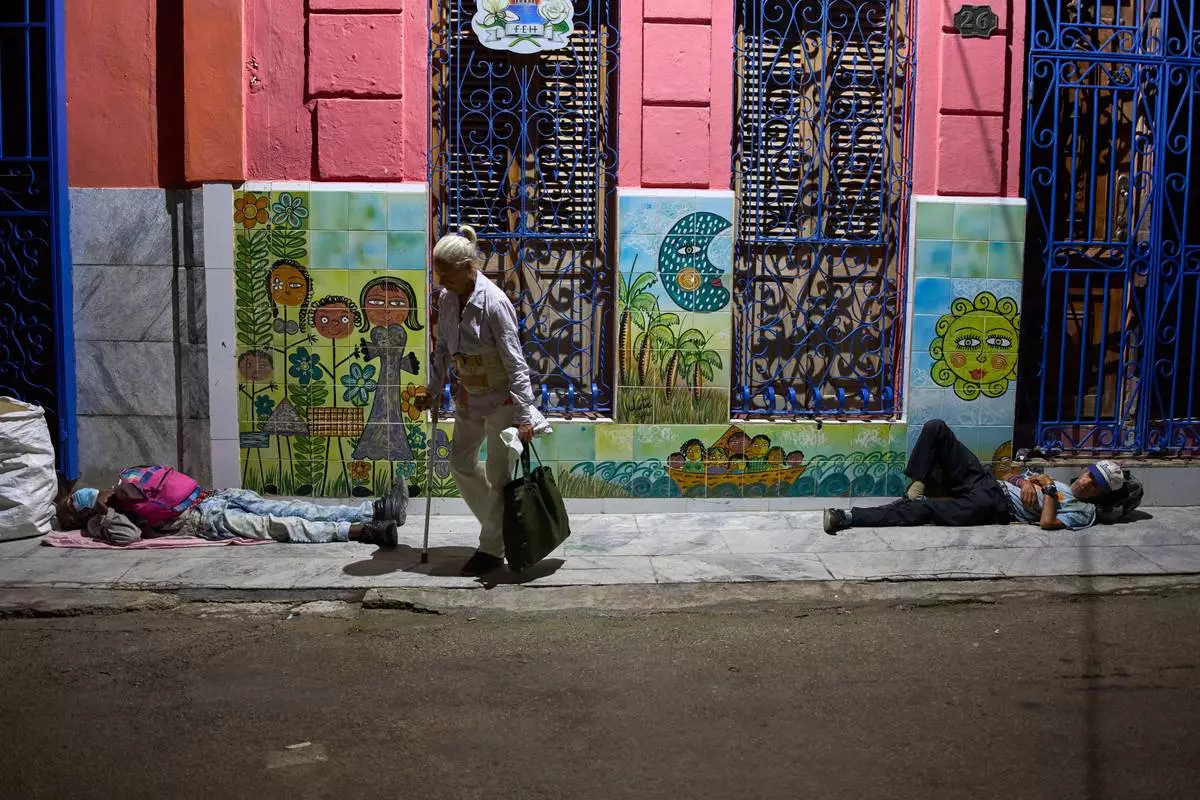
People sleep outside the charity-run Quisicuaba Association community kitchen to secure their place in line for a free hot meal in Havana, Cuba, Wednesday, Oct. 28, 2026. (AP Photo/Ramon Espinosa)
People sleep outside the charity-run Quisicuaba Association community kitchen to secure their place in line for a free hot meal in Havana, Cuba, Wednesday, Oct. 28, 2026. (AP Photo/Ramon Espinosa)

Fernando Fernández, a 71-year-old retiree, rests beside his wife, Josefa Sánchez, after arriving home with bags of free food he received from the charity-run Quisicuaba Association community kitchen, where he spent the night waiting in line. in Havana, Cuba, Tuesday, Oct. 27, 2026. (AP Photo/Ramon Espinosa)

Fernando Fernández, a 71-year-old retiree, rests beside his wife, Josefa Sánchez, after arriving home with bags of free food he received from the charity-run Quisicuaba Association community kitchen, where he spent the night waiting in line. in Havana, Cuba, Tuesday, Oct. 27, 2026. (AP Photo/Ramon Espinosa)

Fernando Fernández, a 71-year-old retiree, arrives home carrying bags of free food he received from the charity-run community kitchen Quisicuaba Association, where he spent the night waiting in line in Havana, Cuba, Tuesday, Oct. 27, 2026. (AP Photo/Ramon Espinosa)
Fernando Fernández, a 71-year-old retiree, arrives home carrying bags of free food he received from the charity-run community kitchen Quisicuaba Association, where he spent the night waiting in line in Havana, Cuba, Tuesday, Oct. 27, 2026. (AP Photo/Ramon Espinosa)

People gather outside the charity-run Quisicuaba Association community kitchen before sunrise to receive a free hot meal in Havana, Wednesday, Oct. 28, 2026. (AP Photo/Ramon Espinosa)
People gather outside the charity-run Quisicuaba Association community kitchen before sunrise to receive a free hot meal in Havana, Wednesday, Oct. 28, 2026. (AP Photo/Ramon Espinosa)

People wait to receive a hot meal at the Quisicuaba Association charity-run community kitchen in Havana, Tuesday, Oct. 27, 2026. (AP Photo/Ramon Espinosa)

People wait to receive a hot meal at the Quisicuaba Association charity-run community kitchen in Havana, Tuesday, Oct. 27, 2026. (AP Photo/Ramon Espinosa)
SIMON'S TOWN, South Africa (AP) — The divisions over baboons run deep in Simon's Town, where their defenders and haters have clashed on social media and sometimes in real life for years.

Sleepy Simon’s Town in South Africa and its population of around 8,000 are riled up about whether to share their coastal town with two troops of chacma baboons that have invaded from the lower slopes behind Cape Town's famous Table Mountain, which many of the city’s suburbs push up against. Roughly 60 baboons have moved in on a semi-permanent basis — in town by day, and back to the hills to sleep at night.

The situation in Simon’s Town has become untenable, said Gregg Oelofse, a city environmental official and a member of Cape Town’s baboon unit.

And so the city has settled on a solution after years of fierce debate. The two Simon’s Town troops will be moved to enclosures between around 2 and 3.5 hectares (5 and 8.6 acres) in size, where they will be contained by electric fences.

The males will be neutered, ensuring the troops die out in 20 to 30 years because they can’t breed.

“Baboons and people don’t do well when they’re forced to live together,” Oelofse said. “They do well when they live adjacent to each other.” He said moving the baboons to the “semiwild” enclosures was the best of limited options. The other would be to cull them.

While some Simon’s Town residents seek peaceful baboon-human coexistence on the streets, and welcome them, the reality is that baboons are not good neighbors, and others want them out.

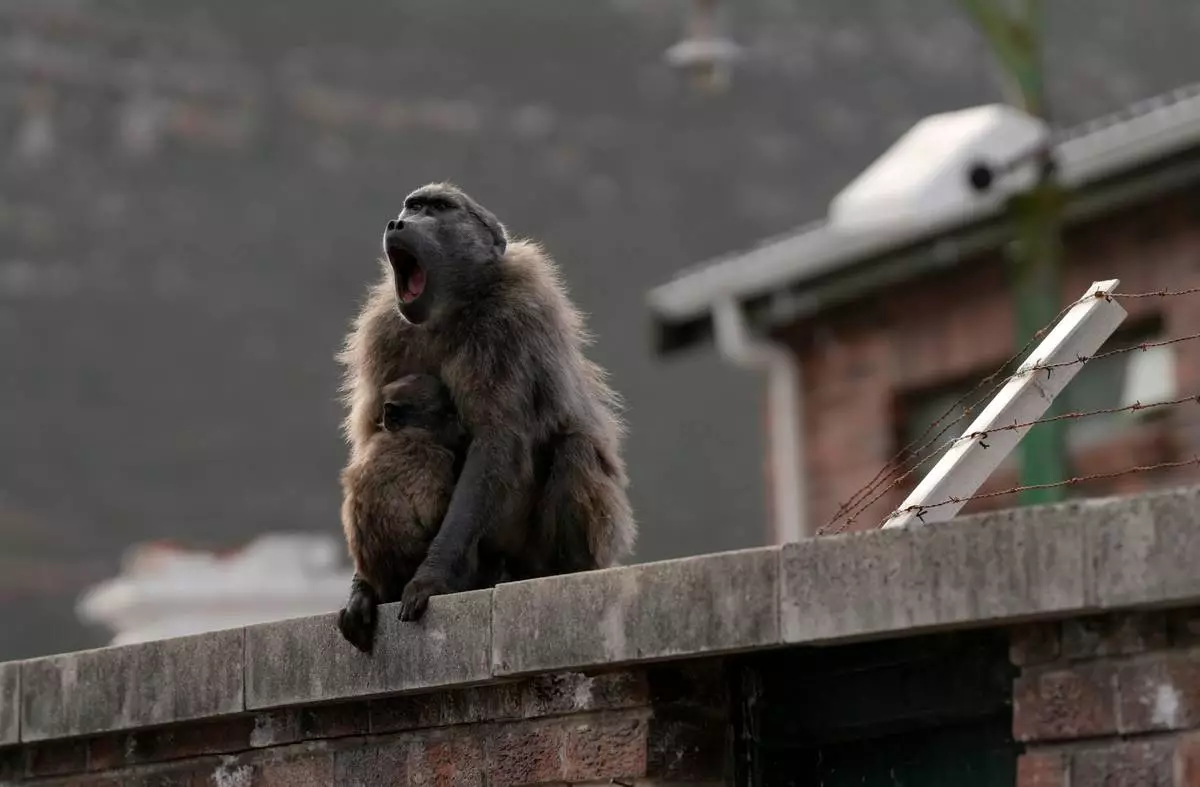
The smart but troublesome animals climb buildings, smash windows, break into homes to steal food and fight with dogs. They rummage through trash cans, flinging trash about.

Simon's Town deploys “baboon monitors” to manage its primate problems. They sometimes shoot baboons with propellants from paintball guns or use “bear bangers” — non-lethal cartridges that make a gunshot-like noise — to scare them away.

The tactics anger baboon defenders, though the city says it prevents a more lethal response by frustrated residents with pellet guns.

The recent decision has deepened the baboon divide, and baboon-supporting residents and animal activists have protested at the site of the enclosures, some holding homemade effigies of baboons in jail cells. They have promised to peacefully stop the relocation.

“I'm totally against them being caged, vasectomized and confined for the rest of their lives,” said resident Shirley Windell. “I believe that they were here first and yes, you know, we have a place here as well. However, coexistence is required.”

She blamed the city for not enforcing better food waste management, which draws the baboons. Activists worry the baboons will hurt or kill themselves trying to escape from the enclosures.

The battle over baboons goes well beyond Simon's Town. Many other suburbs on the peninsula south of Cape Town have similar conflicts. The city says there are around a dozen troops and nearly 500 baboons impinging on urban areas. The atmosphere is tense.

In one suburb, residents used sticks and pepper spray to chase off baboons, sparking a clash with animal activists. In another, a woman won a protection order against a baboon activist over false accusations that she killed a baboon. An especially troublesome baboon identified as a ringleader in home raids was removed from one area, causing a public outcry.

Human-wildlife conflict is common in Africa, but usually in a rural setting where farmers fight off animals that destroy their crops or kill their livestock. Cape Town is one of the last major cities in the world with free-ranging baboons, Oelofse said.

In Simon's Town, Oelofse said residents on opposite sides of the debate have vandalized each other's cars with battery acid. Resident Peter Willis had to organize mediation sessions for the “warring parties” in an attempt to stop the town from fracturing in its battle over baboons after the social media debate got out of control.

The city has banned baboon walking tours run by a wildlife advocacy group and discourages the filming of baboons to defuse public tensions. Feeding baboons in Cape Town is strictly prohibited.

But Oelofse insisted there's no conservation value in keeping them in Simon's Town. They live on human junk food, get hit by vehicles, mauled by dogs and die by consuming rat poison, and effectively they're no longer wild, he said.

“They'll come sit on your table if you're eating outdoors and that's not normal behavior for a baboon,” Oelofse said, adding they take tiles off roofs to break into houses through the ceiling, or smash windows and force open doors.

“These are all learned housebreaking techniques,” he said. “We have a situation where we see no value for baboons, no value for people.”

Willis has been on the sharp end of baboon break-ins at his home. Once, baboons got in while he and his wife were away and broke jars, left paw prints all over the walls and ceilings, tore down the curtains and “ran amok,” he said.

Another time he came face-to-face with a large male baboon sitting on his kitchen counter. The baboon opened the fridge, Willis threw a tin at it and it ran out, snatching a bag of biscuits on the way.

Willis agrees with the plan for the Simon's Town troops after 15 years of having to be on guard. Baboons in urban areas simply don't work, he said. “I think the baboons are going to have a perfectly good end to life.”

But primatologist David Gaynor, who lives in the nearby suburb of Scarborough, has urged the city to employ another solution: a fence that stops baboons entering Simon's Town but doesn't completely enclose them. The city plans fencing like that in other suburbs but says it won't work for Simon's Town.

Gaynor said Table Mountain is a national park and while it's unique in that it spills over into parts of a city, it's a conservation area first and saving baboons and biodiversity should be the priority.

“They've been here for 2 million years interacting with the environment,” Gaynor said. “Surely we can't be so arrogant.”

Imray reported from Cape Town, South Africa.

AP Africa news: https://apnews.com/hub/africa

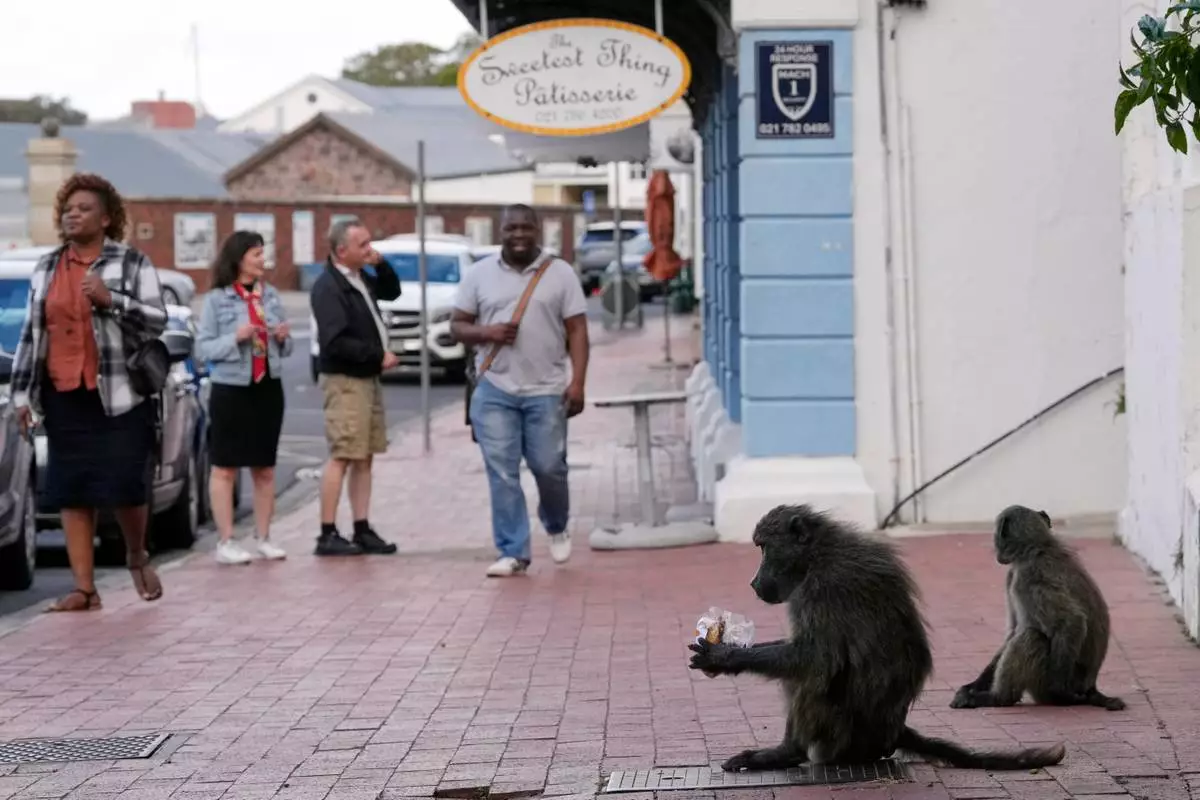
Baboons sit on a street in Simon's Town near Cape Town, South Africa, Thursday, Nov. 5, 2026. (AP Photo/Nardus Engelbrecht)

Baboons sit on a street in Simon's Town near Cape Town, South Africa, Thursday, Nov. 5, 2026. (AP Photo/Nardus Engelbrecht)

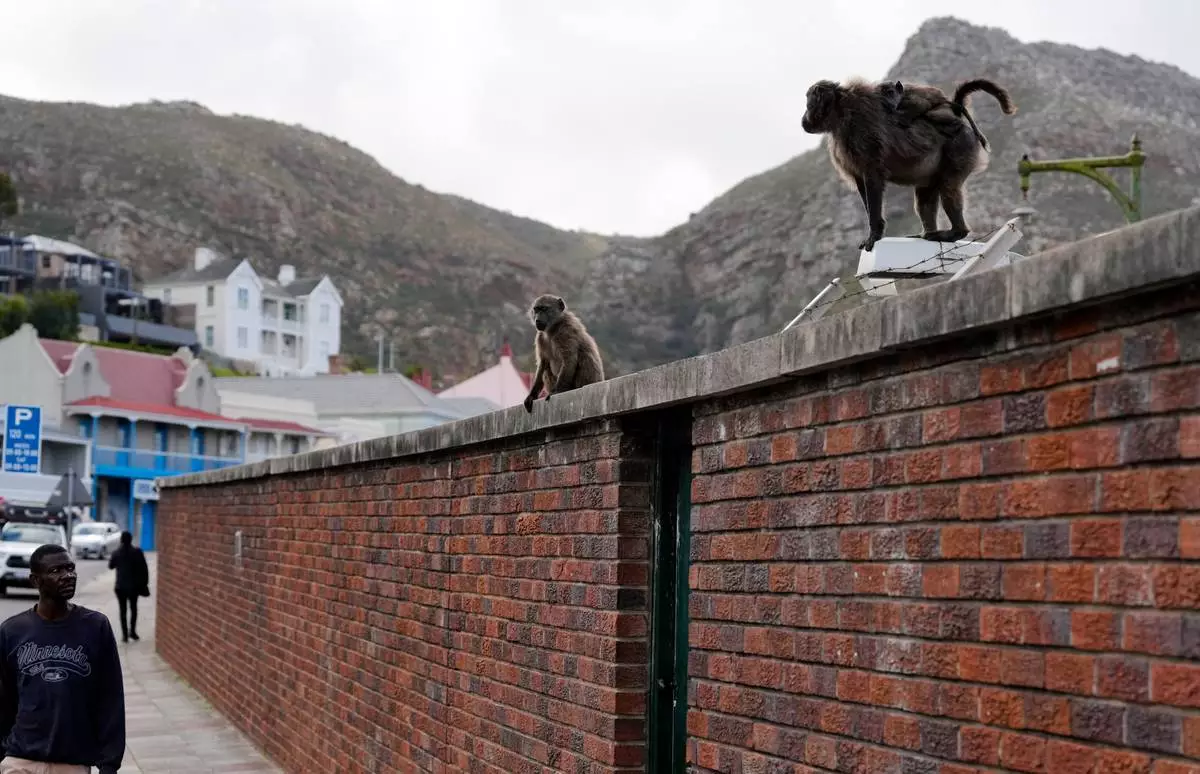
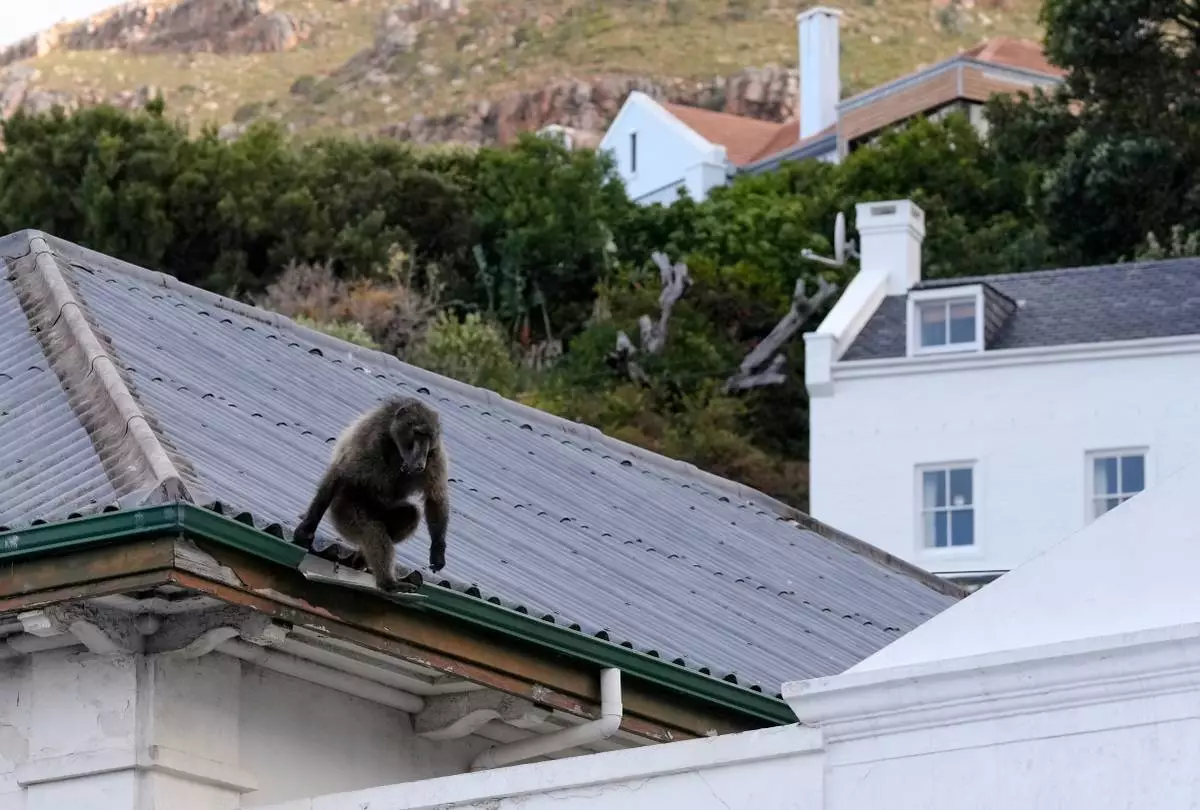
Baboons climb on roofs in Simon's Town near Cape Town, South Africa, Thursday, Nov. 5, 2026. (AP Photo/Nardus Engelbrecht)

Baboons climb on roofs in Simon's Town near Cape Town, South Africa, Thursday, Nov. 5, 2026. (AP Photo/Nardus Engelbrecht)

A view of the Urban Wildlife Centre where the baboons from Simon's Town will be relocated in Kogelfontein near Cape Town, South Africa, Thursday, Nov. 5, 2026. (AP Photo/Nardus Engelbrecht)

A view of the Urban Wildlife Centre where the baboons from Simon's Town will be relocated in Kogelfontein near Cape Town, South Africa, Thursday, Nov. 5, 2026. (AP Photo/Nardus Engelbrecht)

Baboon sits on a wall in Simon's Town near Cape Town, South Africa, Thursday, Nov. 5, 2026. (AP Photo/Nardus Engelbrecht)

Baboon sits on a wall in Simon's Town near Cape Town, South Africa, Thursday, Nov. 5, 2026. (AP Photo/Nardus Engelbrecht)

A man looks at baboons in Simon's Town near Cape Town, South Africa, Thursday, Nov. 5, 2026. (AP Photo/Nardus Engelbrecht)

A man looks at baboons in Simon's Town near Cape Town, South Africa, Thursday, Nov. 5, 2026. (AP Photo/Nardus Engelbrecht)

Recommended Articles