The Gulf Cooperation Council's (GCC) decision to establish a new joint military headquarters in Kuwait marks a critical political and strategic shift toward unified regional self-defense, local security analysts said on Thursday.
Defense ministers of the GCC countries on Tuesday approved the establishment of the GCC Unified Military Command in Kuwait amid heightened regional security tensions.
The decision was made during the 23rd meeting of the GCC Joint Defense Council, held Tuesday in Bahrain's capital Manama, according to a statement by the GCC General Secretariat.
The move follows Iranian attacks on Gulf states and a decision made by GCC leaders in April to expand joint military cooperation after the U.S.-Israel war on Iran broke out.
Regional analysts emphasized that the initiative sends a strong political message of solidarity across the bloc while addressing immediate security vulnerabilities along the northern Persian Gulf.
"It is primarily a political decision more than it is a military decision. It hints that Gulf Cooperation Council countries will defend one another, unlike the time when they were all under missile attacks. The GCC didn't respond to them; instead they had various stances. We won't allow militias to cross borders. What's happening in Iraq will remain a national issue. That's why we established this new security institution: so we can have a rapid response," said Fahed Alshelaimi, chairman of the Gulf Security and Peace Forum.
Political analyst Ali Alzakari noted that Kuwait's proximity to potential regional flashpoints makes the new headquarters vital for defensive readiness.
"The location is extremely sensitive. Kuwait was exposed to many dangers; it is on an important frontline for the Arab Gulf countries. It neighbors Iran, Iraq and groups affiliated to Iran in Iraq. Any danger could erupt from that direction. The new command is to increase preparedness for self-defense. GCC countries are not aggressors," he said.
While the GCC has not yet disclosed the size or exact mandate of the new command -- leaving it unclear whether the force will possess an autonomous decision-making mechanism or function strictly for military coordination -- the move brings a joint defense presence closer to potential threats.
The Kuwait headquarters builds upon decades of gradual defense integration among GCC nations, which signed a joint defense agreement in 2000 and established a joint military command in Riyadh by 2019.
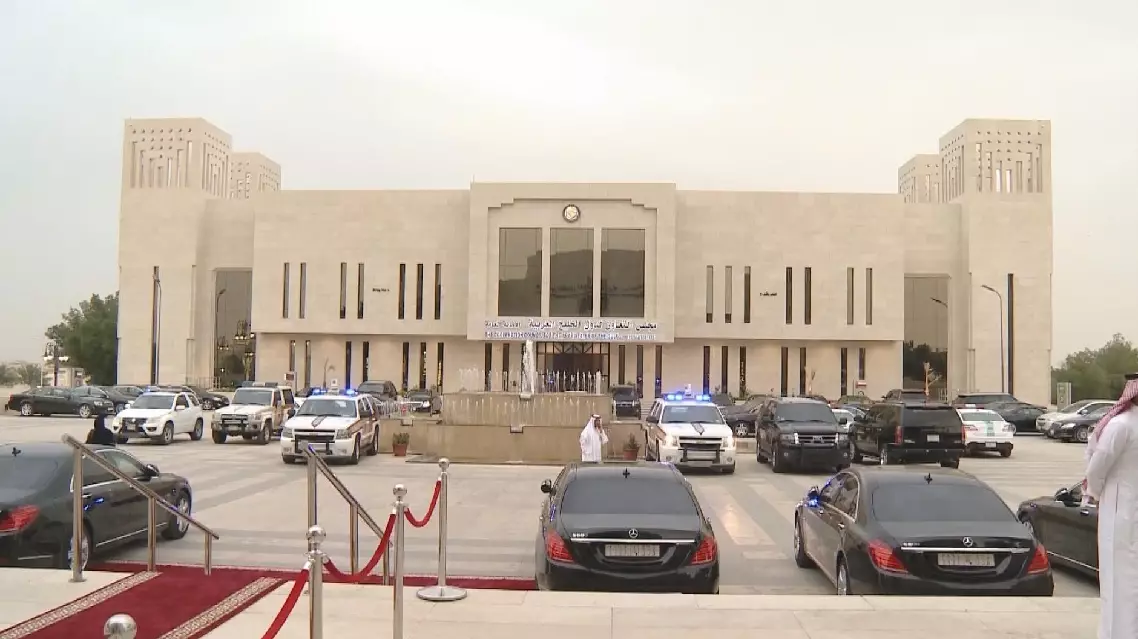
Experts on Gulf states' new joint military command in Kuwait
A young Canadian man's tea-drinking habit has sparked a deep interest in Chinese culture, leading him from academic research to learning Mandarin, reading Tang poetry and traveling to China.
Gareth grew up with childhood memories of Toronto's Chinatown, one the biggest Chinatowns in North America.
The initial exposure to Chinese culture he gained from spending time there in his early years would later form a foundation for a life-changing pursuit, which began with a cup of tea.
"As a child, my impression of China was very surface level. I guess from going to Chinatown, I was familiar with the food and the smells and the sights, but I didn't really understand the culture on a deeper level. Chinatown was part of my upbringing, but I hadn't engaged with Chinese culture fully or more deeply until later. The moment I was introduced to Chinese tea culture was about five years ago, through my roommate in first year university. After trying different Chinese teas, I thought, the taste is so different," said Gareth.
The more the young man learned about Chinese tea, the more he was drawn to the craftsmanship and history behind it.
"As tea became part of my everyday life, drinking it every day, it definitely makes me slow down, paying attention to the water, the leaves, the timing, the taste. It gives you an opportunity to reflect. For me, Chinese tea is more than just a drink, it's a means to connect production, farming, geography, etc. and spend time talking with people and to slow down," he said.
Gareth turned that interest into academic research, looking at how tea production is linked to regions and climate.
"About two years ago, I would say tea became more than just personal interest, but sort of reached into academic territory because I found myself spending so much time reading about tea anyway in my own free time. I figured I might as well research this formally. And so I wrote a research paper under one of my supervisors about two years ago, sort of focusing on the different production methods and regions of tea and how the climate is linked into that. There's sort of that climate influence where the tea is affected by if it's rained, if it hasn't rained, or the total precipitation for the year, temperature swings," said the tea enthusiast.
Driven by a love of tea that deepened his scholarship of Chinese culture, Gareth saw learning Chinese as a powerful gateway to broadening his studies, and once he could read the language, Tang poetry drew him in with its rhythm and imagery.
"After I started learning Mandarin, I became more interested in poetry. I started with Tang poetry, and although I'm still learning Mandarin, I really find it interesting how so much rhyme and meter and imagery can all be combined into such a short poem. I think both poetry and tea force me to slow down and take a minute to reflect not only on myself, but on my surroundings and what's going on in my life and the world at that moment," said Gareth.
Last autumn, Gareth had an opportunity to visit China. He saw the landscapes of south China's Guangxi Zhuang Autonomous Region and experienced the warmth of the local people's hospitality.
Now, he hopes to go to southwest China's Yunnan Province to see firsthand how tea is cultivated, and to help more of his fellow Canadians experience China for themselves.
"For me, China started with a cup of tea, but since then it's become much more. It's an integral part of my life that I'll always continue to learn about for myself. But I think I'd like to expand that into the broader community here in Toronto, in Canada so that more Canadians can experience China for themselves. For me, China started with a cup of tea, but since then it's become much, much more than that," he said.
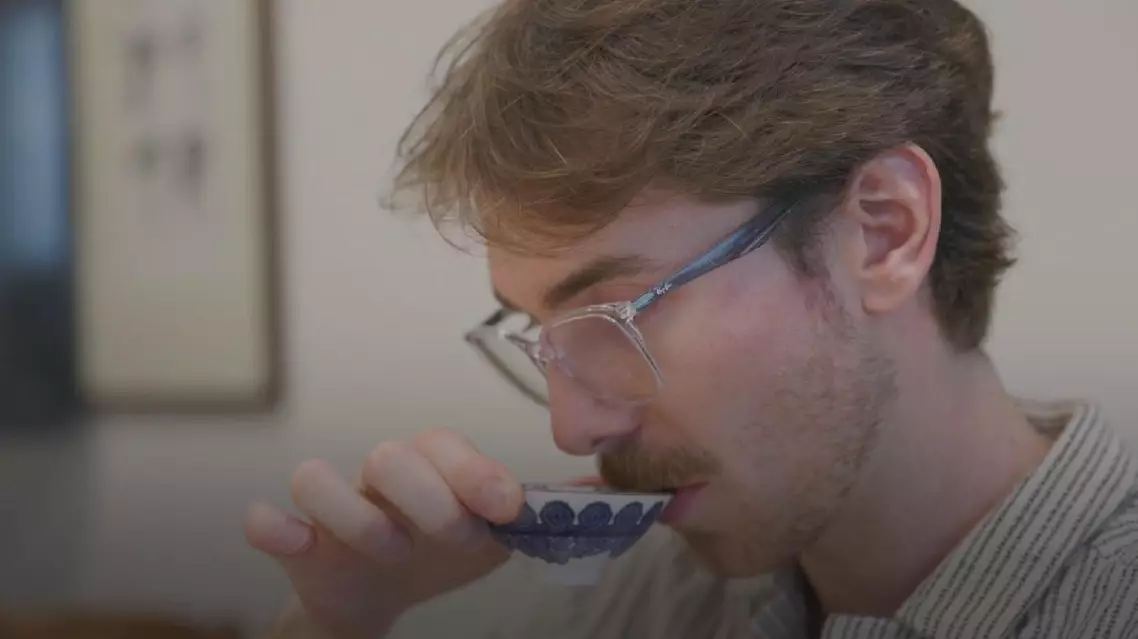
Cup of tea sparks Canadian youth's studious journey into Chinese culture