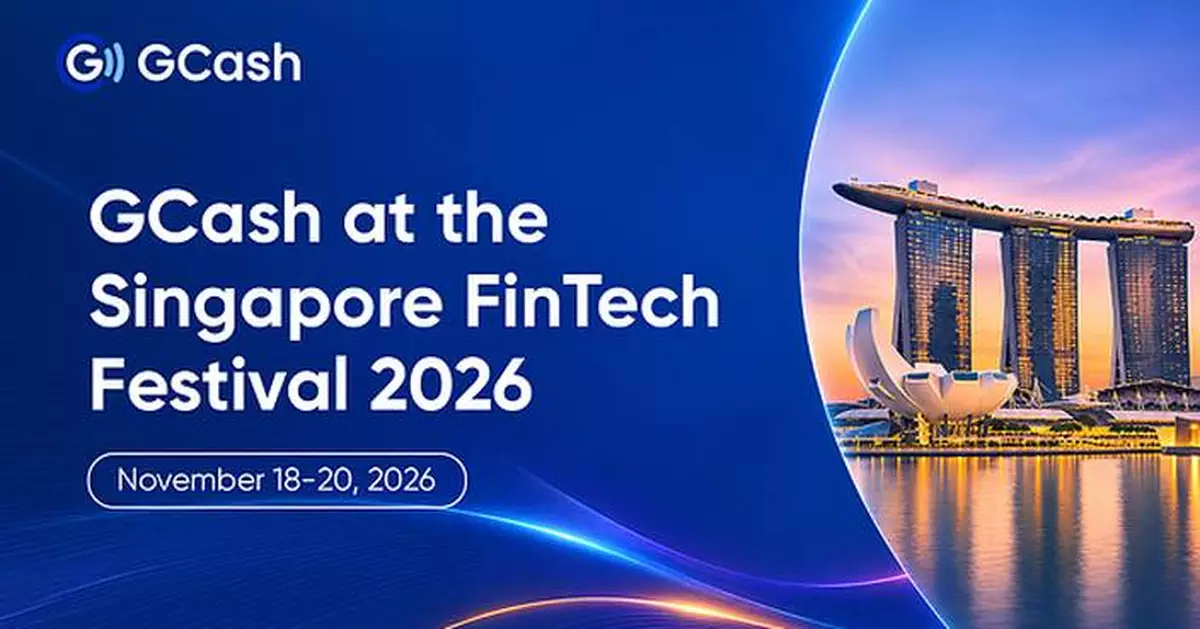
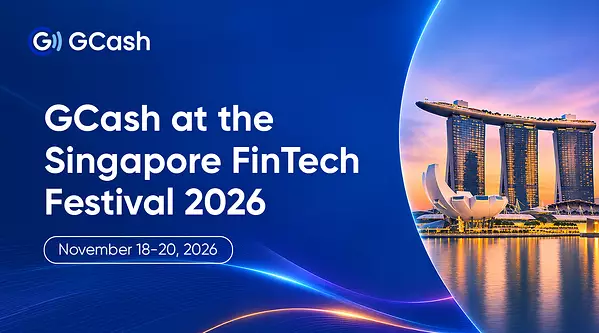
SINGAPORE, Nov. 13, 2026 /PRNewswire/ -- For the fourth consecutive year, Philippine fintech leader GCash is returning to the Singapore Fintech Festival (SFF) 2026 following its historic $966-million (₱60.9-billion) initial public offering (IPO).
Now a publicly listed company, GCash parent Mynt brings the Philippine fintech industry's growth story to the global stage, demonstrating how homegrown innovation can expand financial inclusion and make financial services more accessible to millions of Filipinos.
For GCash, this reflects how a technology designed around people's everyday needs can help transform the financial landscape in the Philippines and even abroad.
Key leaders of the Philippines' leading finance super app will join panel sessions, sharing insights and experiences that have shaped the growth of GCash and the broader Philippine fintech landscape. Participating leaders include Tony Isidro, President and CEO of Fuse Financing, Inc., the lending arm of GCash, Winsley Bangit, the Head of New Businesses at Mynt, the parent company of GCash, and Michelle Fernandez, GCash Head of Corporate Sustainability and Communications.
Mynt's IPO, the biggest in Philippine corporate history, marks an important milestone for the country's capital market. It creates an opportunity for more Filipinos, including first-time investors, to participate in the growth of a homegrown tech company through the public markets.
"Digital financial access should not be a privilege reserved for a limited few. Technology can help make financial services more inclusive, accessible, relevant, and responsive to the realities of everyday Filipinos," Mynt President and CEO Martha Sazon shared.
Isidro, for his part, will speak at the Global SME Forum Roundtable where he will discuss how digital ecosystems can translate customer and transaction activity into accessible, scalable credit products
Bangit will also join a fireside chat with the Securities and Exchange Commission to discuss emerging trends in investing. The session will highlight how progressive regulation, meaningful industry collaboration, and fintech innovation are unlocking greater access to instruments like bonds, funds, and stocks for more Filipinos, making diverse investing more affordable while strengthening consumer protection.
Meanwhile, Fernandez will take part in the "Sustainability-Linked Finance for MSMEs" panel to discuss GCash initiatives that promote sustainable practices among MSMEs. One of these is Project Sirius MSME Scorecard, which makes sustainability reporting more straightforward, and helps MSMEs qualify for sustainability-linked financing.
GCash will showcase Filipino fintech innovations at its booth at the Singapore Expo Hall 2, featuring demonstrations of key app services and AI-powered technologies that enhance security, service and financial education.
SFF, the largest gathering of fintech players, will take place on November 18 to 20 at the Singapore Expo, with the theme "The Coming Rewiring of the Financial System: New Risks. New Rules. New Growth." The event will bring together leading fintech companies, investors, payment network operators, central banks, government representatives, and other industry stakeholders.
** This press release is distributed by PR Newswire through automated distribution system, for which the client assumes full responsibility. **
From homegrown startup to biggest PH IPO: Mynt banners growth story at world's biggest fintech stage
JOHANNESBURG, Nov. 13, 2026 /PRNewswire/ -- As distribution network services grew increasingly complex, Cemig's distribution devices relied primarily on leased public networks for data backhaul. However, this model presented significant risks.
- Coverage gaps: Carrier network coverage in Brazil stands at only about 50%. A large number of distribution devices in remote, uninhabited areas remained in communication dead zones for extended periods. When faults occurred, personnel had to drive long distances for repairs and routine inspections, severely hampering operational efficiency.
- Lack of reliability: The public network SLA was not designed for power grid operations. During the rainy season, severe weather frequently caused base station outages or microwave link interruptions, and the connectivity rate of distribution devices plummeted from 90% to around 60%. When communications were disrupted, remote control commands could not reach or be executed on the devices, forcing personnel to travel to sites for manual operations. This severely delayed power restoration, undermined supply reliability, and caused significant economic losses.
Solution
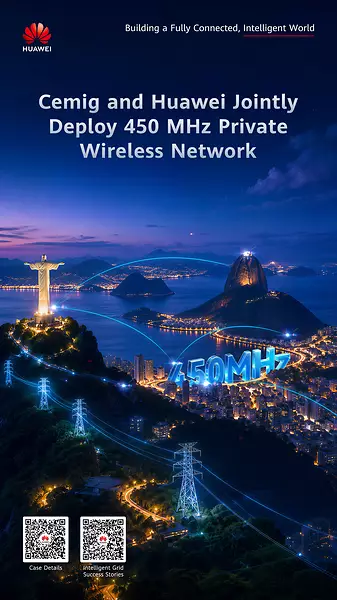
To address these challenges, Cemig conducted multiple rounds of technical evaluation and global use case research, ultimately selecting Huawei as its strategic partner to jointly deploy the first commercial 450 MHz private wireless network for the power sector in Latin America.
Application Outcome
After field testing, the customer gained firsthand experience of the benefits delivered by the private wireless network, strengthening their confidence in distribution grid modernization and raising high expectations for the future energy transition: "Huawei submitted the best proposal during the bidding process, offering a solution that not only meets our current distribution grid modernization requirements but also scales for future renewable energy integration. Huawei has extensive experience in the energy industry. With Huawei's private network solution, Cemig will secure a high-quality private communications network. For Cemig, this partnership goes far beyond technology; it is crucial to our future business growth."
1. Improved power supply reliability
The private wireless network lifted distribution terminal connectivity to 99% and communication reliability to 99.99%, significantly improving Cemig's power distribution service levels.
2. Mitigated business risks
The private wireless network can significantly improve line losses, SAIDI, and SAIFI, thereby helping Cemig avoid regulatory penalties.
3. Assured investment returns
The private wireless network greatly enhances power services, ensuring Cemig meets ANEEL's regulatory requirements and secures favorable investment returns.
4. Expanded core production applications
As the foundational communications backbone for power production operations, the private wireless network delivers reliable last-mile connectivity for today's distribution automation. Furthermore, it supports future core applications, such as massive smart meter integration, rapid distributed PV adoption, and complex microgrid management, driving the transition from traditional load-based power generation to dynamic interaction across source, grid, load, and storage.
For more details, please visit: https://e.huawei.com/en/case-studies/industries/grid/202611-cemig-450-mhz
** This press release is distributed by PR Newswire through automated distribution system, for which the client assumes full responsibility. **
Cemig and Huawei Jointly Deploy 450 MHz Private Wireless Network