DENVER--(BUSINESS WIRE)--Nov 13, 2026--
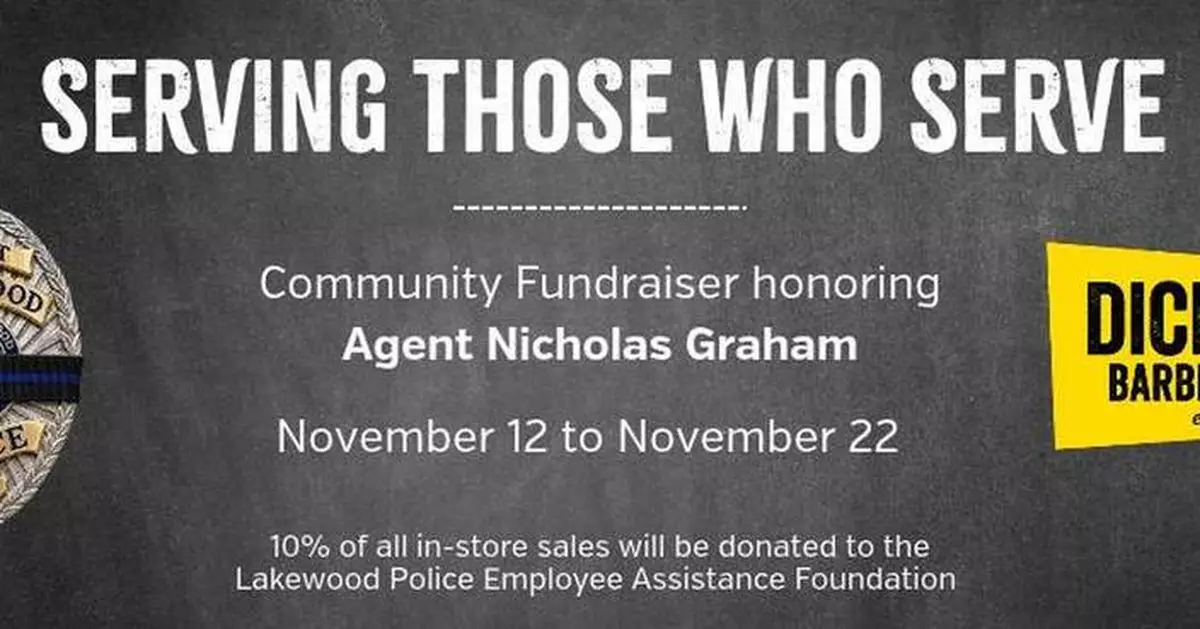
In a show of support for the brave personnel who serve their communities, Dickey’s Barbecue Pit in Lakewood is launching a 10-day fundraiser honoring fallen Lakewood Police Agent Nicholas Graham and supporting the families of those impacted by the Nov. 5 line-of-duty shooting.
This press release features multimedia. View the full release here: https://www.businesswire.com/news/home/20261113795017/en/
From Thursday, Nov. 12 through Sunday, Nov. 22, Dickey’s Barbecue Pit at 1509 Wadsworth Blvd. will donate 10% of all in-store sales to the Lakewood Police Employee Assistance Foundation. The fundraiser will also give active law enforcement officers an opportunity to make an even greater impact as officers who visit the restaurant and mention the fundraiser will have 100% of their bill donated to the foundation.
The fundraiser will benefit the Lakewood Police Employee Assistance Foundation, which supports the families and colleagues of Lakewood police personnel. The foundation is the designated organization supporting fallen Lakewood Police Agent Nicholas Graham’s family and the three additional agents wounded in the Nov. 5 shooting.
In addition to the restaurant’s sales donations, community members can contribute directly through additional donation options at checkout by designating a specific amount.
“During moments like this, it’s important for communities to come together and support the people who dedicate their lives to protecting us,” said Ian Ruppel, Dickey’s Lakewood Franchise Owner. “Every donation made during this fundraiser is an opportunity to stand behind the Lakewood Police Department and the families and colleagues of those who serve. We encourage our neighbors to join us in showing their support.”
KEY DETAILS
WHAT: Dickey’s Barbecue Pit 10-day fundraiser honoring fallen Lakewood Police Agent Nicholas Graham and benefiting the Lakewood Police Employee Assistance Foundation.
DATE: Thursday, Nov. 12 through Sunday, Nov. 22
TIME: 11 a.m. to 9 p.m.
WHERE: Dickey’s Barbecue Pit, 1509 Wadsworth Blvd., Lakewood, CO 80214
CONTACT: Greer Martin, Greer@greermartinpr.com
To learn more, follow Dickey’s on Facebook, Instagram. Download the Dickey’s Barbecue Pit app from the Apple App Store or Google Play.
About Dickey’s Barbecue Restaurants, Inc.
Dickey's Barbecue Restaurants, Inc., the world’s largest barbecue concept, was founded in 1941 by World War I Veteran, Travis Dickey. For the past 85 years, Dickey’s Barbecue Pit has served millions of guests Legit. Texas. Barbecue.™ alongside their iconic Big Yellow Cup. The Dallas-based, family-founded barbecue franchise serves slow-smoked meats and home-style sides with 'No B.S. (Bad Stuff)' included for dine-in, drive-thru (select locations) and pick-up ‘Cue the catering experts at Dickey’s by dialing the Catering Hotline at +1-866-227-2328 or visiting Dickey’s website to order or get a quote. For more information, visit www.dickeys.com.
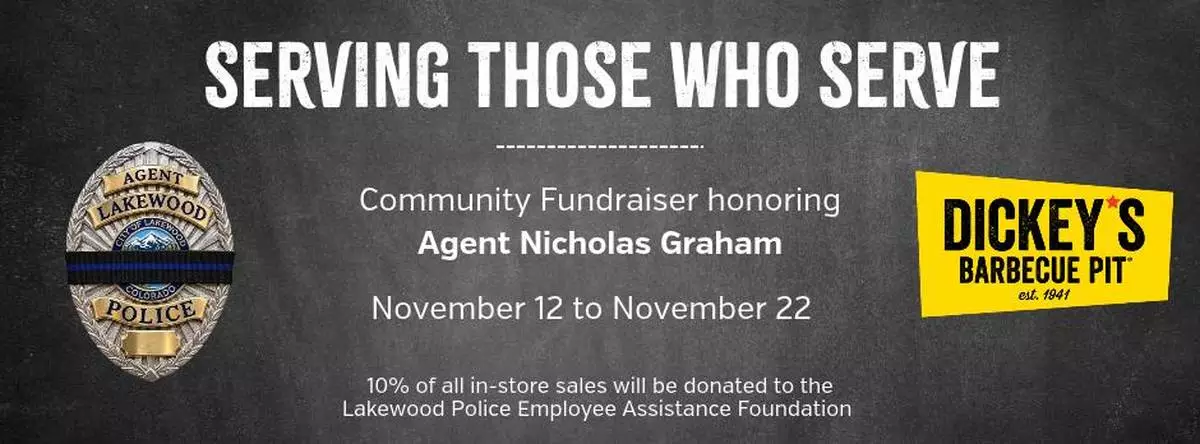
Dickey’s Barbecue Pit is partnering with the Lakewood community to honor Agent Nicholas Graham through a “Serving Those Who Serve” fundraiser benefiting the Lakewood Police Employee Assistance Foundation. From November 12–22, 10% of all in-store sales at the participating Dickey’s restaurant will be donated to the foundation in support of local law enforcement.
DODGE CITY, Kan. (AP) — Jose Del Real looked over the crowd from the stage in a park, at hundreds of his neighbors with furious signs tucked under their arms, voicing their anger at immigration agents who had descended on their town and started rounding up their friends and family. His daughters, in the front row, were crying.
Del Real, an Army veteran who served two tours in Iraq, hadn’t voted in a decade. He thought it wouldn’t matter in this ruby red corner of Kansas. But the midterm election was weeks away. He draped an American flag over his shoulders, put on his Iraq veteran cap and ended his speech with a message: “None of this matters if you do not vote. Let’s go vote.”
They did. This county and two of its neighbors in southwestern Kansas, Republican strongholds where a steady stream of immigrants have settled over the decades to work at feed lots and slaughterhouses, swung wildly to the left. The shift helped elect a Democratic U.S. senator from Kansas for the first time in nearly a century, signaling the limits of President Donald Trump’s aggressive deportation agenda.
Since Democrats won back control of Congress in a decisive rebuke to Republicans, Trump has sent mixed messages about how he plans to handle immigration enforcement going forward. He suggested that his approach to deportations was too harsh but also named hard-liner Stephen Miller as his new White House chief of staff. Both parties will be recalibrating their approach ahead of the next presidential campaign.
Here in Kansas, late September raids ignited a maelstrom of rage, turning many who had been apathetic, like Del Real, into determined voters.
Masked officers in tactical gear banged on doors before dawn. They stopped cars in the middle of intersections. Businesses shuttered. Families feared leaving their houses. Children stopped going to school. Some livestreamed themselves being detained. One man pleaded “God help me” in Spanish, his hands shaking, as he asked anyone watching to let his family know.
The resistance came not only from Democrats or the Latino population, which has grown to about two-thirds of Dodge City. Kansas' embattled Republican senator, Roger Marshall, who would lose his reelection bid to Adam Hamilton, issued a statement pleading with the administration to consult local officials before launching raids.
Del Real regrets he didn't vote in 2024, when Trump roared back into office pledging mass deportations.
“We had to see it in front of us,” Del Real said. “I had to see it in the flesh.”
The gates leading into Dodge City boast that it's the “Queen of the Cowtowns.” Its main street is named after the classic Western set here, "Gunsmoke." Murals celebrating cowboy history mix with evidence of a changing culture: storefronts showcasing quinceañera dresses, Mexican bakeries, city signs printed in both Spanish and English.
Del Real’s family came from Mexico when he was a kindergartner. Like most here, they came to work. The area — Dodge City and the region's other hubs, Garden City and Liberal — is known as the Golden Triangle of Meatpacking, responsible for about a quarter of the U.S. beef supply.
Some here thought their importance to the nation’s food might spare them from the administration’s deportation campaigns, said Amy Soberanes, a 25-year-old local organizer.
Soberanes, the daughter of Mexican immigrants, said she and others tried for years to get people — particularly their young, Latino neighbors — engaged.
But, from rural Kansas, immigration raids in places like Minneapolis and Chicago felt abstract.
Then they saw their own streets in social media videos.
People were furious, said Soberanes, who worried the daily protests could get out of hand. They told people not to slash tires or break windows, to store up their anger and take it out on Election Day.
“We’ll see them at the ballot box,” she recalls repeating.
Her phone rang and rang. People she’d hassled to vote for years asked: How do I register?
“If ICE hadn’t come, we would still be red, 100%,” she said. “And so I thank Donald Trump for sending immigration here.”
No one knew immigration officers were coming.
Dodge City Commissioner Rick Sowers said he and other city officials found out just like everyone else, through social media or masses of unmarked trucks on their neighbors’ lawns.
They scrambled to get answers from the federal government – who they were looking for, who was in charge, how long they would stay – and never did.
The Trump administration issued statements naming five “heinous criminals” they said had been arrested. But the Wichita Eagle dug into that claim and found none of those people were actually apprehended during the surge: Four had been deported months before and the fifth was already in prison, the newspaper found.
The agency said it detained 104 people from southwest Kansas.
Local officials have still never seen a list, Sowers said.
Local Republican Chairman Scott Fischer, who describes himself as a supporter of strong borders, was surprised by the operation’s intensity.
“There was a little showmanship,” he said. “I don’t know why it was like that.”
He said he still considers the county red — it voted, narrowly, for Republican gubernatorial candidate Ty Masterson. The Associated Press called that race Thursday: Masterson lost to Democrat Cindy Holscher.
But some Dodge City Republicans abandoned the party in the U.S. Senate race.
Dr. Russell Arben Fox, political science professor at Friends University in Wichita, said swings as dramatic as that one couldn't have happened without some white, moderate Republicans changing their minds.
More than half of Kansas voters in the Senate race disapprove of how ICE is handling its job, according to The AP Voter Poll, a survey of more than 100,000 midterm voters. That’s consistent with the 61% of voters who say this nationally.
Most of the Latino immigrants here are hard-working, family-oriented, faithful people – a perfect fit for conservative Kansas values, Fischer said, so local Republicans tend to have a nuanced view on immigration.
Some public officials have for years begged the federal government for reforms to provide a pathway for these workers who run the region’s economy.
“In general terms, mass deportation is not practical,” Fischer said. “When we say send them all home, what does that mean? Who is them?”
To many here, “them” this time meant relatives and friends. In this small town, nearly everybody is connected to everybody else, so they did what they could to help.
Oscar Soto delivered food to people afraid to leave home during the deportation raids.
He started calling it “the black week,” after the black plague. That’s what it felt like to him, a pestilence that arrived suddenly.
His mother came here from Mexico, he said, and though she is here legally, she was terrified.
“It seemed unreal,” he said. “It was stuff that’s never been seen here, and it was day after day after day.”
He works at a family-owned grocery, and strung a garland of flags from around the world above the counter when it opened. Most customers are from Mexico and Guatemala, he said, but he wanted to signal that the store was for everyone.
Then he hung a big American flag from the ceiling. It means to him that anyone, from anywhere, can come here, work hard and build a life, free from fear.
That belief in the American dream was shaken for him when ICE arrived.
So he registered to vote for the first time at age 39.
He stood in line to cast his ballot, amazed by how many young, Latino voters were waiting along with him.
AP writers Nicholas Riccardi in Denver and Linley Sanders in Washington contributed.
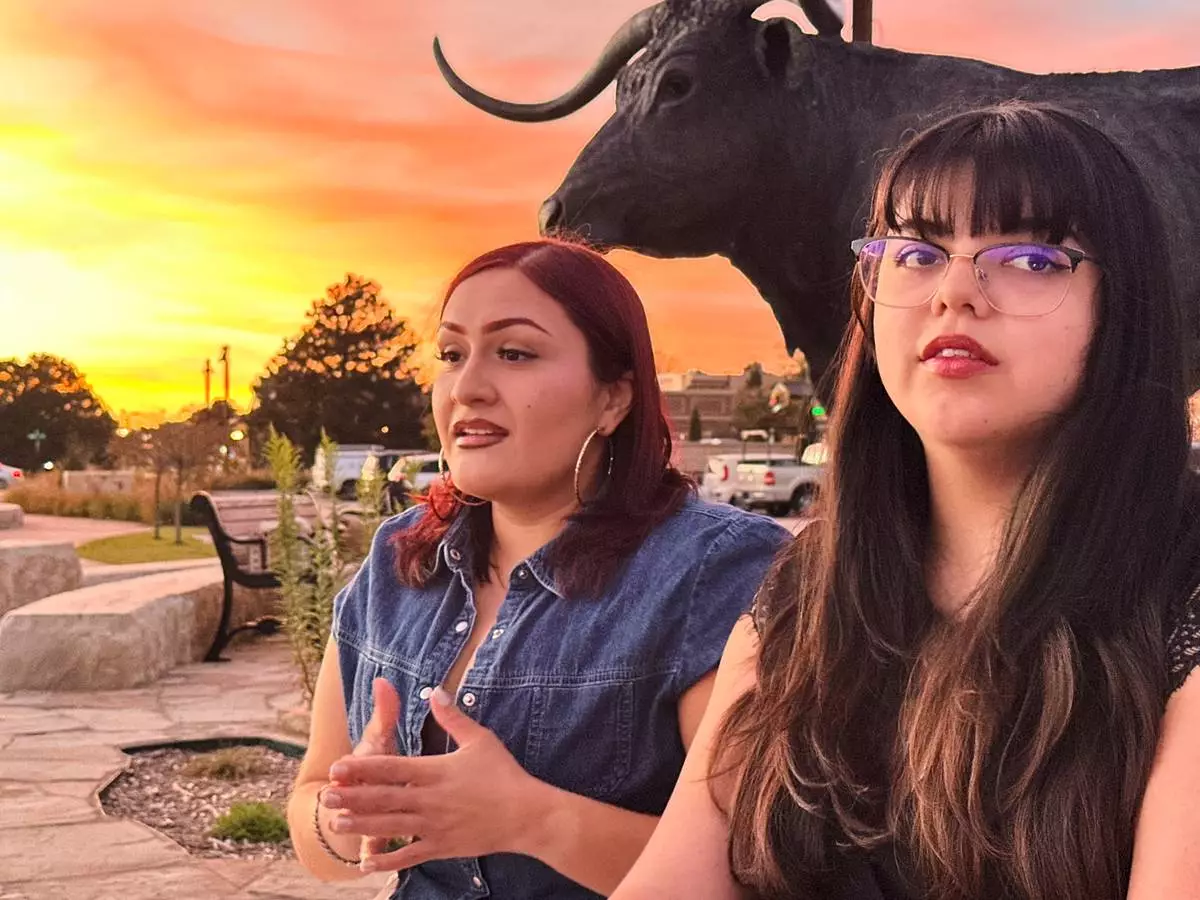
Community organizers Amy Soberanes, left, and Angelica Plata sit near the site of immigration enforcement protests in Dodge City, Kan., on Wednesday, Nov. 11, 2026. (AP Photo/Nick Ingram) Photo made with a smartphone.
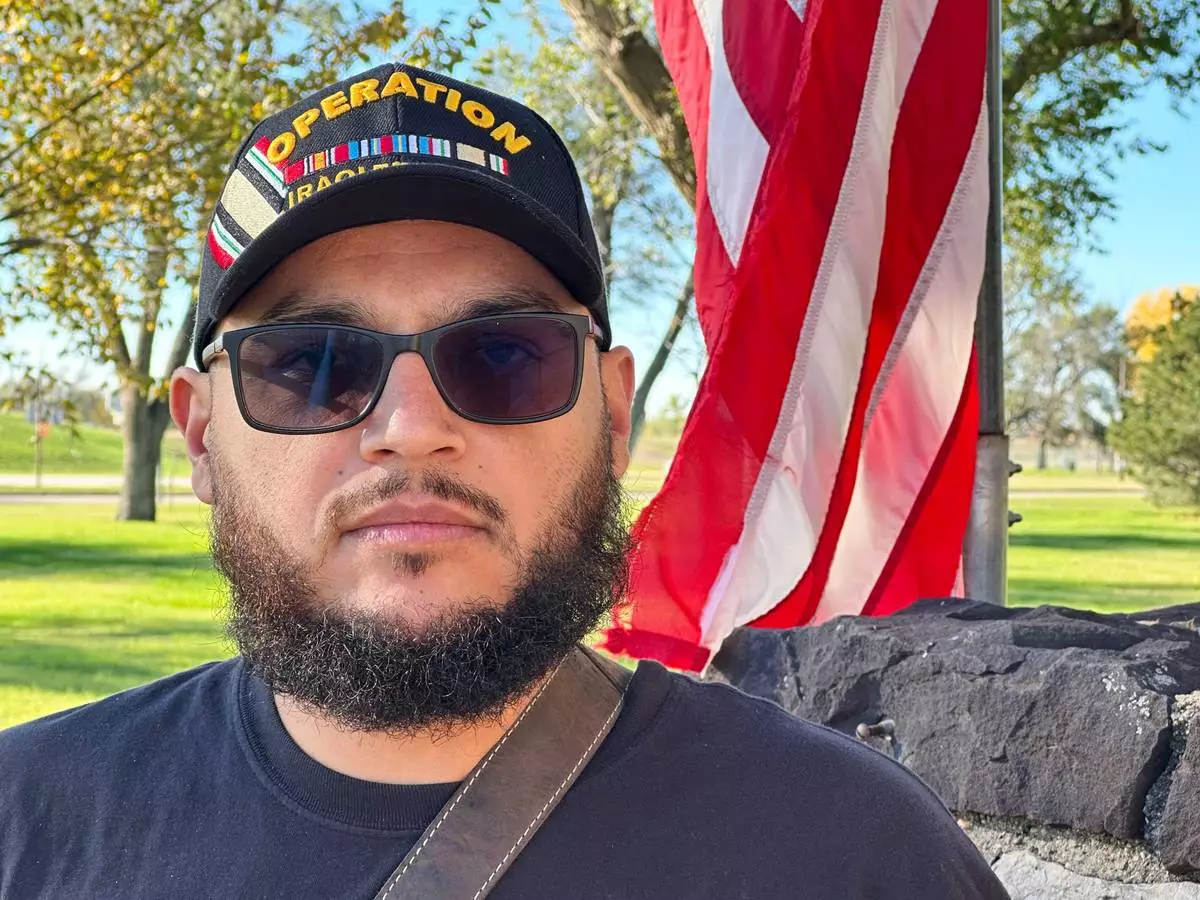
Jose Del Real, a U.S. Army Veteran, poses for a photo in Dodge City, Kan., on Wednesday, Nov. 11, 2026. (AP Photo/Nick Ingram) Photo made with a smartphone.
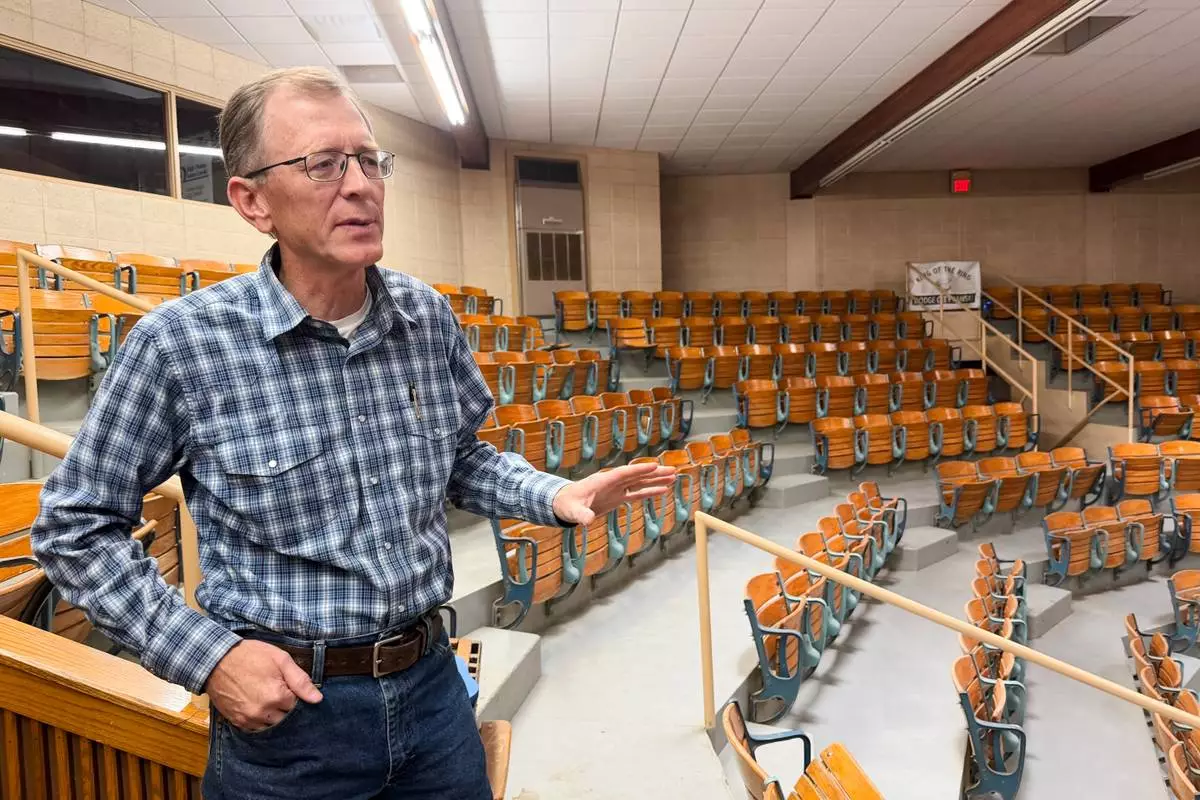
GOP leader Scott Fischer talks about the meatpacking industry at a cattle auction facility in Dodge City, Kan., on Tuesday, Nov. 10, 2026. (AP Photo/Claire Galofaro) Photo made with a smartphone.
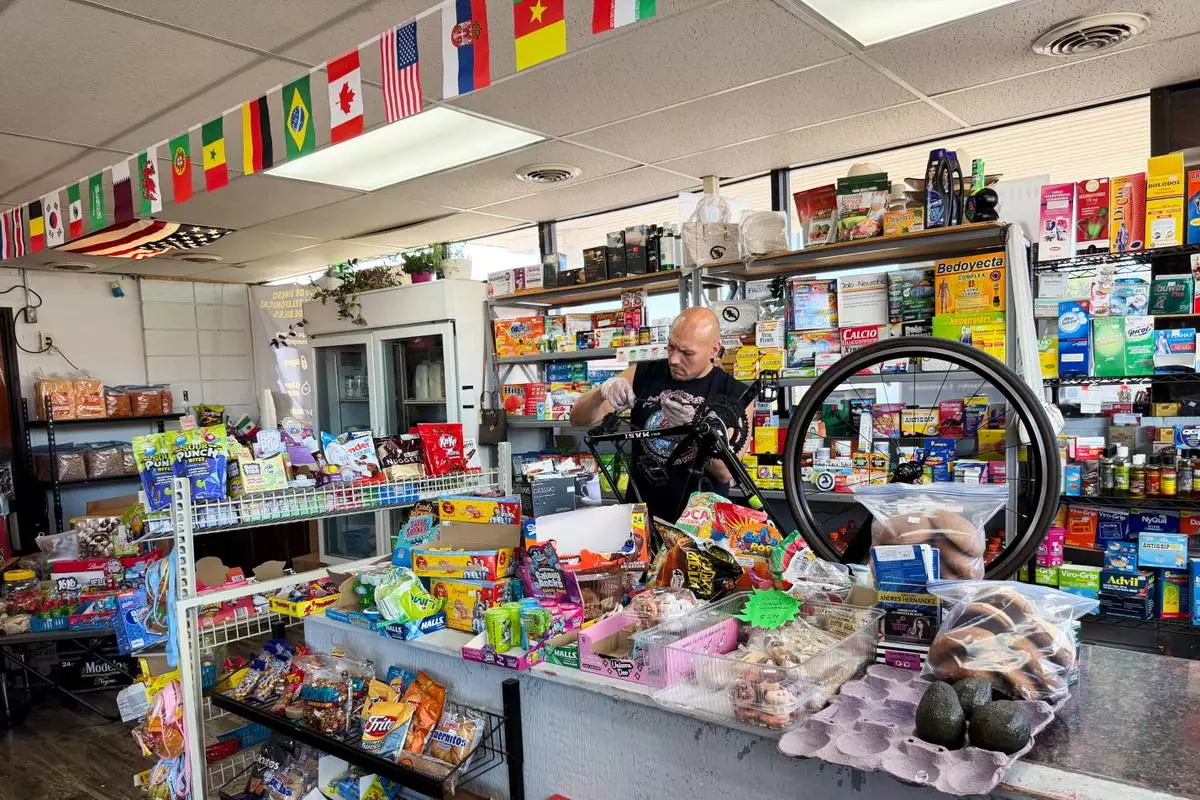
Oscar Soto works in his family-owned grocery story in Dodge City, Kan., on Tuesday, Nov. 10, 2026. (AP Photo/Claire Galofaro) Photo made with a smartphone.
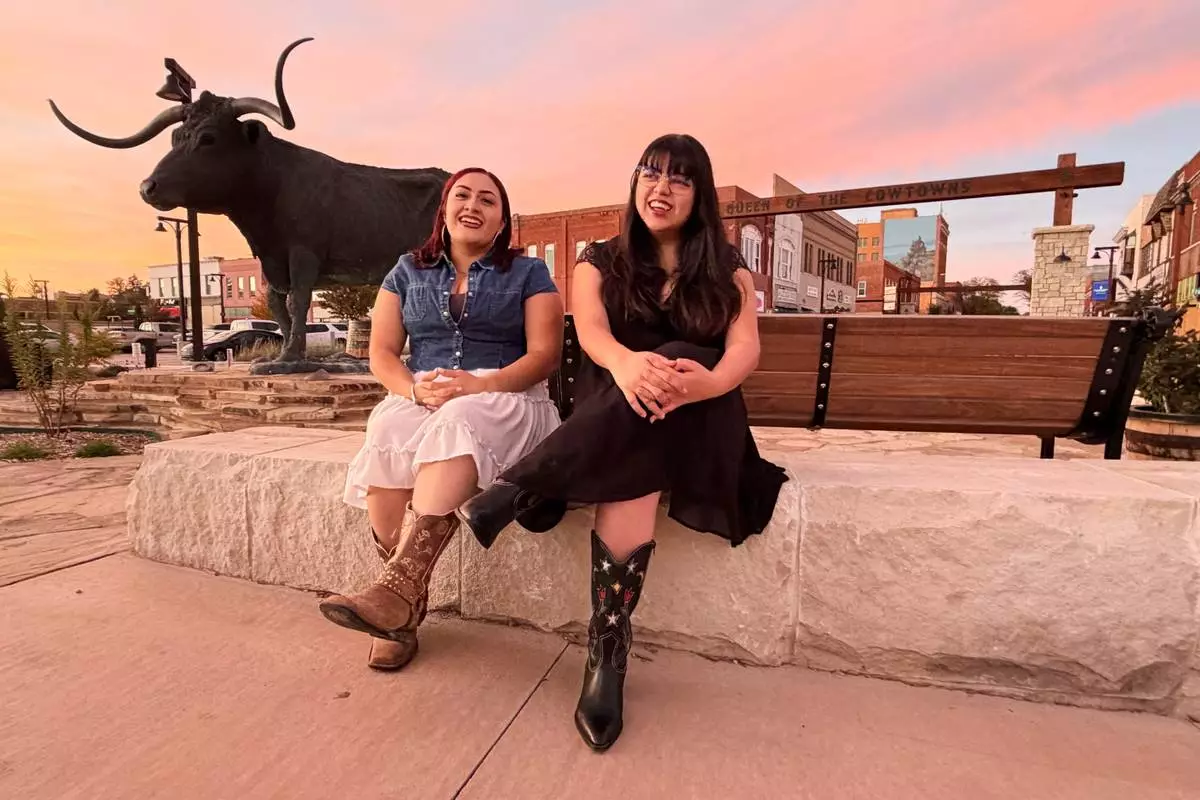
Community organizers Amy Soberanes, left, and Angelica Plata sit near the site of immigration enforcement protests in Dodge City, Kan., on Wednesday, Nov. 11, 2026. (AP Photo/Claire Galofaro) Photo made with a smartphone.