KRIVA PALANKA, North Macedonia (AP) — They descend from the surrounding hills, mostly at night, chomping their way through gardens and crops to satiate their hunger.
For years, residents of Kriva Palanka, a farming town of about 19,000 people in northeastern North Macedonia, have struggled with a herd of roaming cattle that has grown to more than 1,000 animals, destroying property and threatening their livelihood.
Click to Gallery
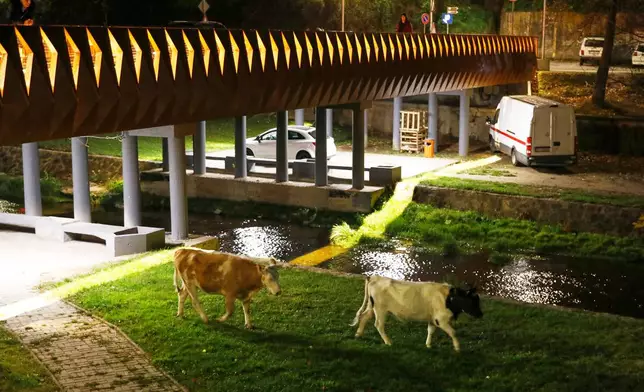
Cows pass under a bridge while roaming through the town of Kriva Palanka, North Macedonia, on Thursday, Nov. 12, 2026. (AP Photo/Boris Grdanoski)
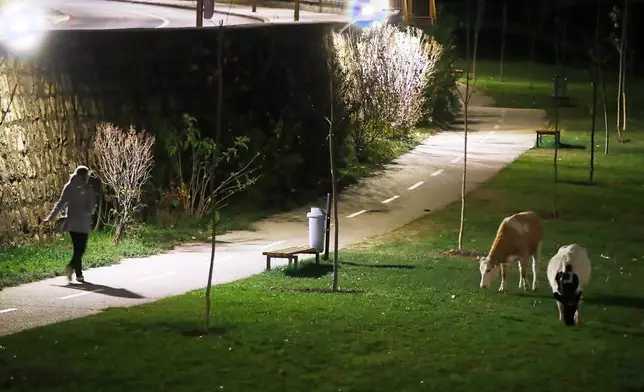
A woman passes by roaming cows grazing in a recreation area in the town of Kriva Palanka, North Macedonia, on Thursday, Nov. 12, 2026. (AP Photo/Boris Grdanoski)
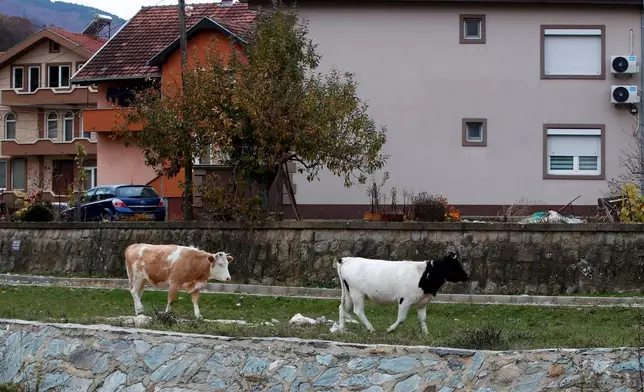
Cows roam in the town of Kriva Palanka, North Macedonia, on Thursday, Nov. 12, 2026. (AP Photo/Boris Grdanoski)
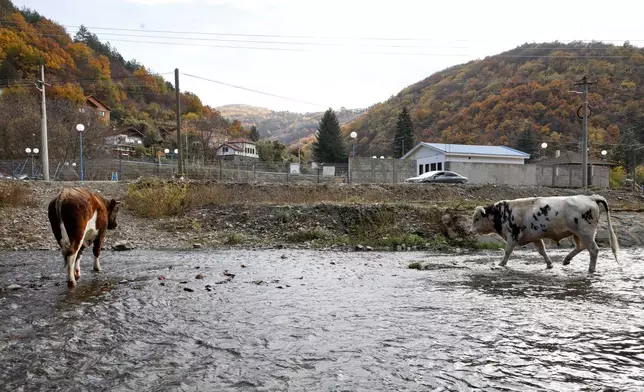
Cows cross a river while roaming in the town of Kriva Palanka, North Macedonia, on Thursday, Nov. 12, 2026. (AP Photo/Boris Grdanoski)
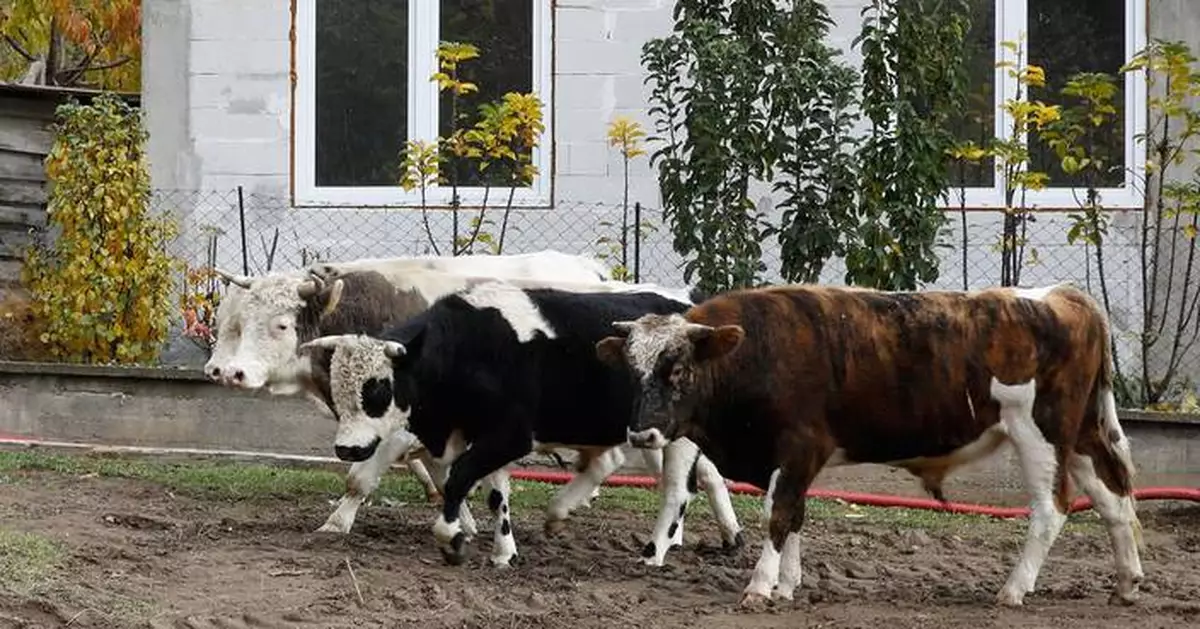
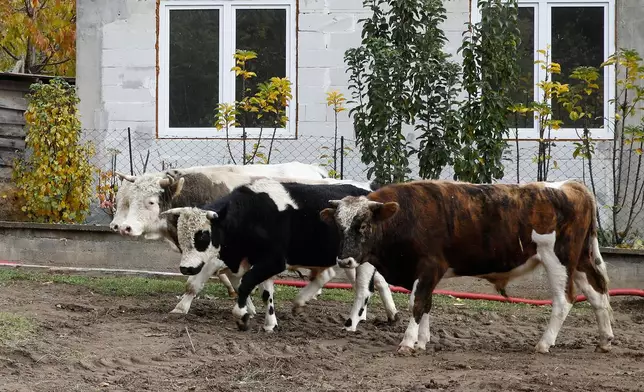
Bulls and cows roam in the town of Kriva Palanka, North Macedonia, on Thursday, Nov. 12, 2026. (AP Photo/Boris Grdanoski)
It's not just crops. The wandering cows pose a serious risk to the town's water supply and to drivers on a road that leads to neighboring Bulgaria, residents say.
Many fault the country's bureaucratic maze for failing to enforce a 2024 Food and Veterinary Agency order to seize the herd from their three owners.
And even when authorities took legal action against one of the owners, bureaucratic failures derailed the case and allowed the owner to walk free, Kriva Palanka Mayor Sashko Mitovski said.
Mitovski said residents have had enough and are staging protests to urge authorities to take action.
He is asking the conservative government of Prime Minister Hristijan Mickoski to declare a 30-day state of emergency in the municipality for authorities to resolve the bovine problem once and for all.
“The number of cattle has increased from 400 four years ago to more than 1,000 today,” Mitovski told The Associated Press.
“We convened a crisis management headquarters because we concluded that, for years, none of the responsible institutions had shown either the willingness, commitment or capacity and resources to resolve the problem.”
Pensioner Lazo Stamenkovski, 71, who lives on the town's outskirts, said the cattle have destroyed more than 150 trees in his orchard.
“They constantly destroy the produce in my garden, wander onto the highway and endanger traffic safety on the road leading to Bulgaria," Stamenkovski told the AP.
Several residents of a neighborhood on the town's outskirts said the animals were not to blame, but the system was. They said some angry residents have beaten the cows and in some cases even slaughtered them.
“The government is responsible for everything that is happening to us. Not just this government, but all previous governments as well,” Venka Nikolovska, 59, a housewife from Kriva Palanka, told the AP. “We are all suffering — both people and animals.”
Despite their frustration, residents haven’t lost their sense of humor.
One man standing on the bridge over the Kriva Reka river that runs through the town said that the cows had gorged on the flowers in his backyard.
“Next time, I’ll prepare a flower salad and invite the cows to a party,” he said.
Mitovski said the cows roam freely through 34 surrounding villages and he blamed the Food and Veterinary Agency for not enforcing its own order to seize the cattle from its three owners.
"Since 2024, the herd has been the property of the Food and Veterinary Agency. The absurdity is that the agency issued the seizure order but has failed to enforce it,” he said, adding that the municipality has no legal authority to intervene.
The mayor said some cattle died near the town's main water sources last year, potentially poisoning the supply. He again faulted the Food and Veterinary Agency for failing to take action.
A government spokesperson did not immediately respond to an AP request for comment Friday evening.
One of the cattle owners was charged and detained last year for obstructing an agency operation to seize the animals. But Mitovski said the owner was released from custody after an agency inspector testified in court that he hadn't obstructed the attempted seizure.
“What I am saying is that this is an interconnected system involving serious wrongdoing by numerous people, and it is difficult to determine where it ends,” Mitovski said.
He said a government declaration of a temporary state of emergency would provide authorities with the money and resources needed to resolve the problem permanently.
Based on current livestock market prices, the value of the herd is estimated at between 360,000 and 570,000 euros ($385,000 to $610,000).
Some residents point out that the government could put the cattle up for sale at an affordable price so people could buy them and take care of them.
That could help many in the country of 1.8 million people, at least one-third of whom live in poverty.
“North Macedonia imports meat, milk, vegetables and fruit, while 1,000 cows roam unchecked across the country and destroy the farms,” Nikolovska said. “It makes no sense.”
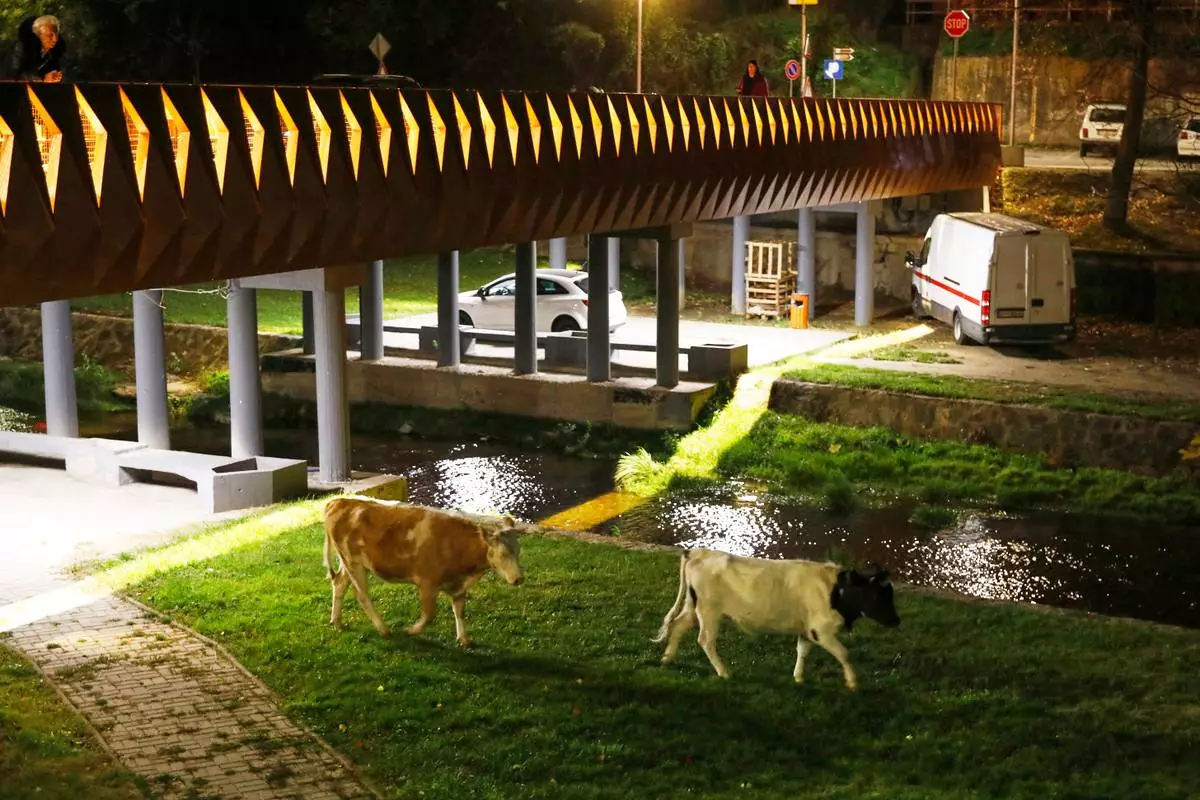
Cows pass under a bridge while roaming through the town of Kriva Palanka, North Macedonia, on Thursday, Nov. 12, 2026. (AP Photo/Boris Grdanoski)
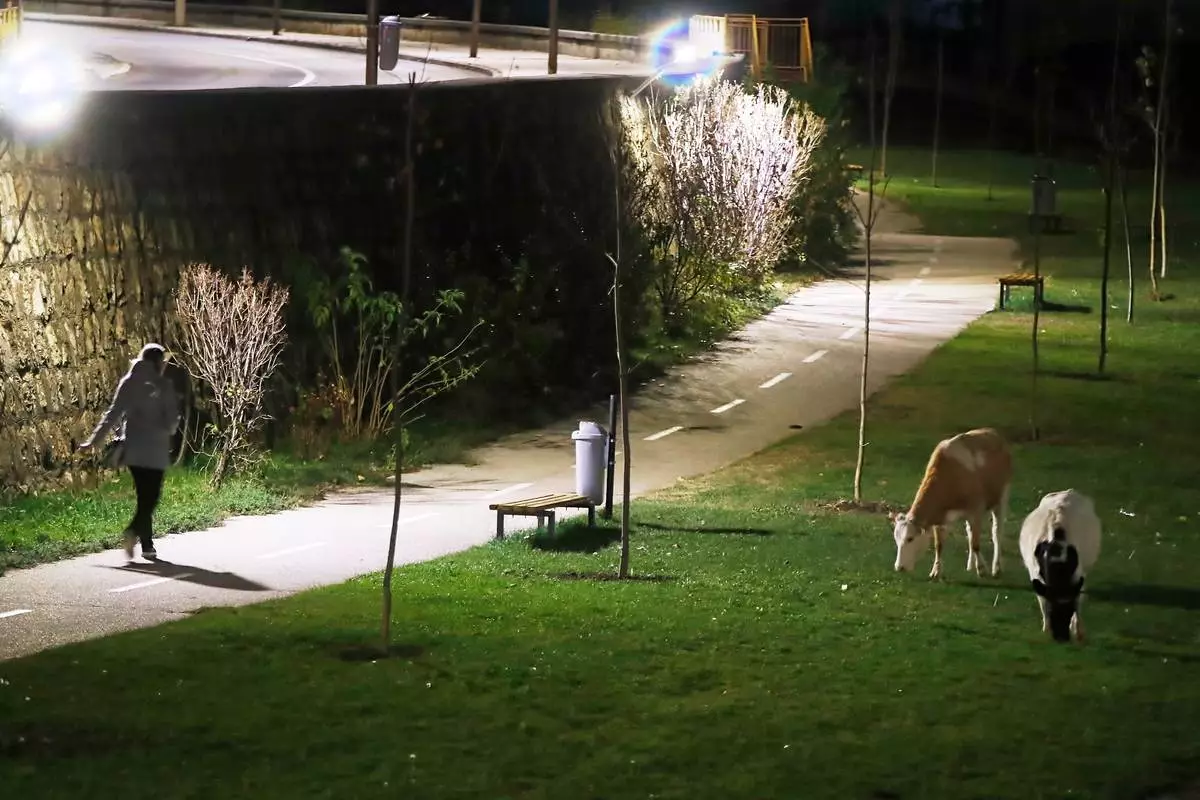
A woman passes by roaming cows grazing in a recreation area in the town of Kriva Palanka, North Macedonia, on Thursday, Nov. 12, 2026. (AP Photo/Boris Grdanoski)
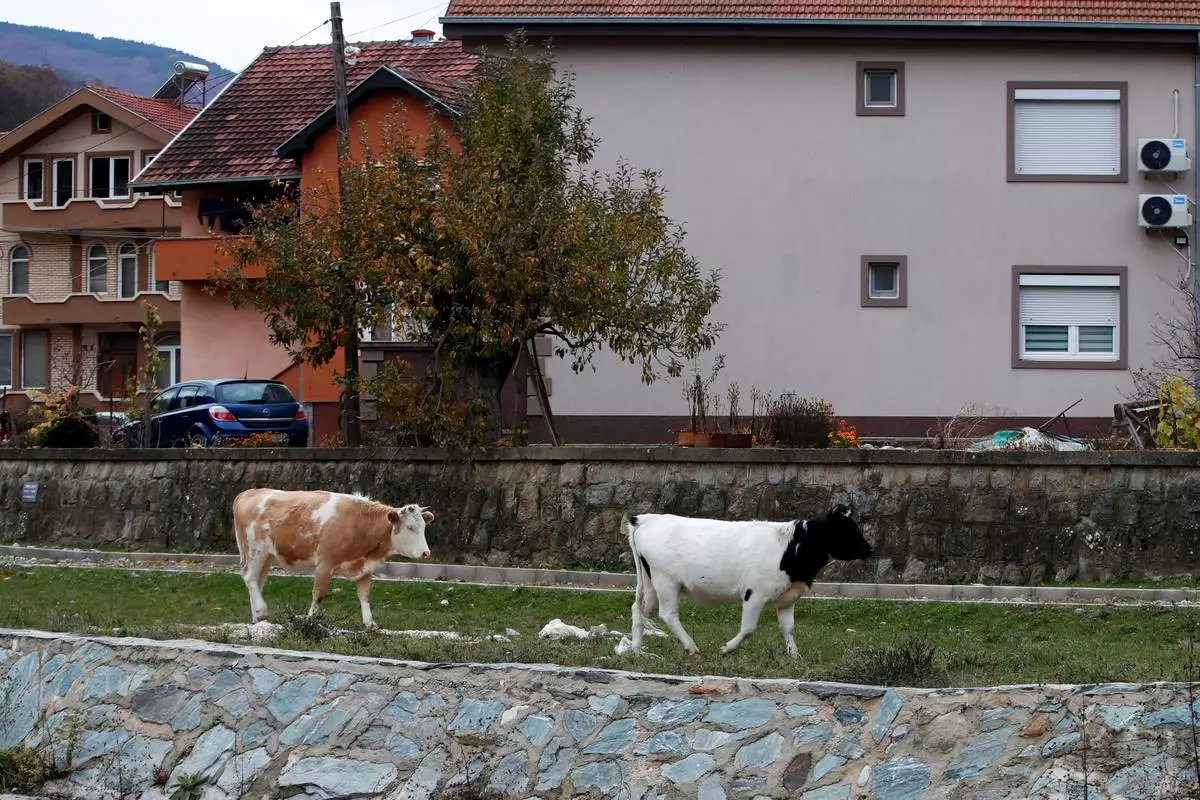
Cows roam in the town of Kriva Palanka, North Macedonia, on Thursday, Nov. 12, 2026. (AP Photo/Boris Grdanoski)
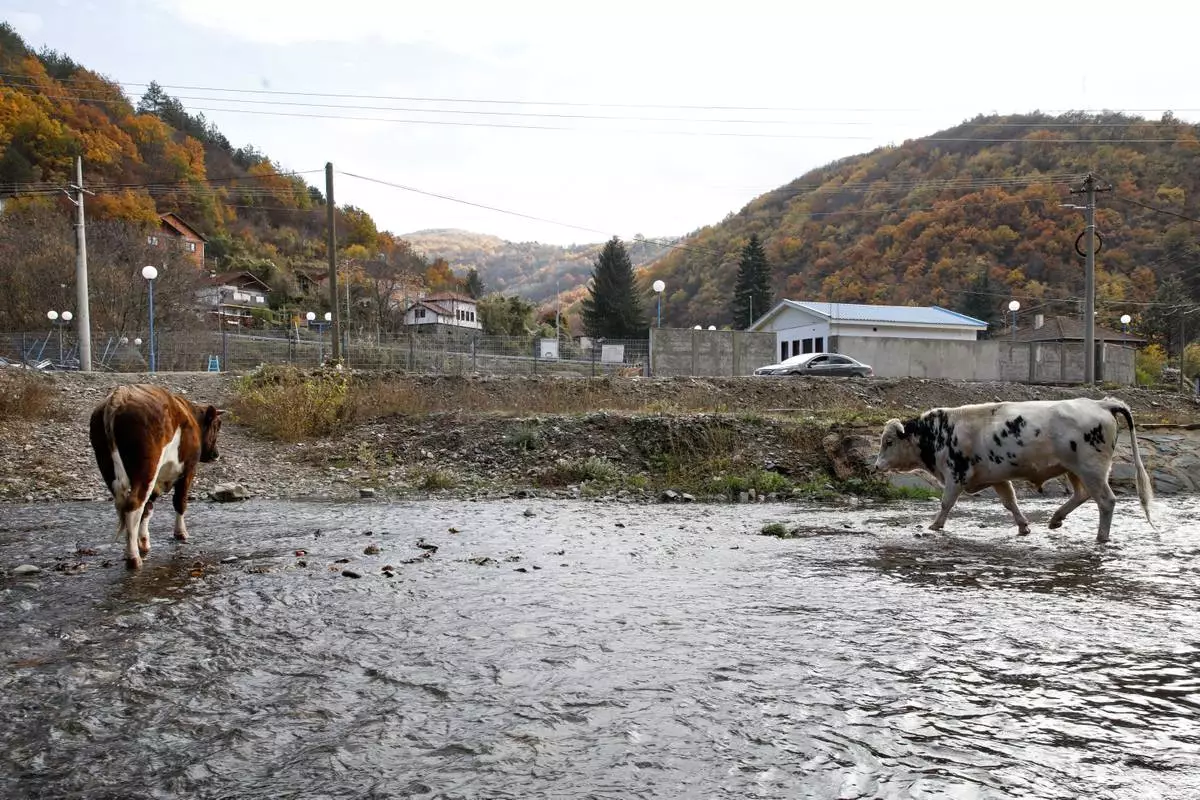
Cows cross a river while roaming in the town of Kriva Palanka, North Macedonia, on Thursday, Nov. 12, 2026. (AP Photo/Boris Grdanoski)
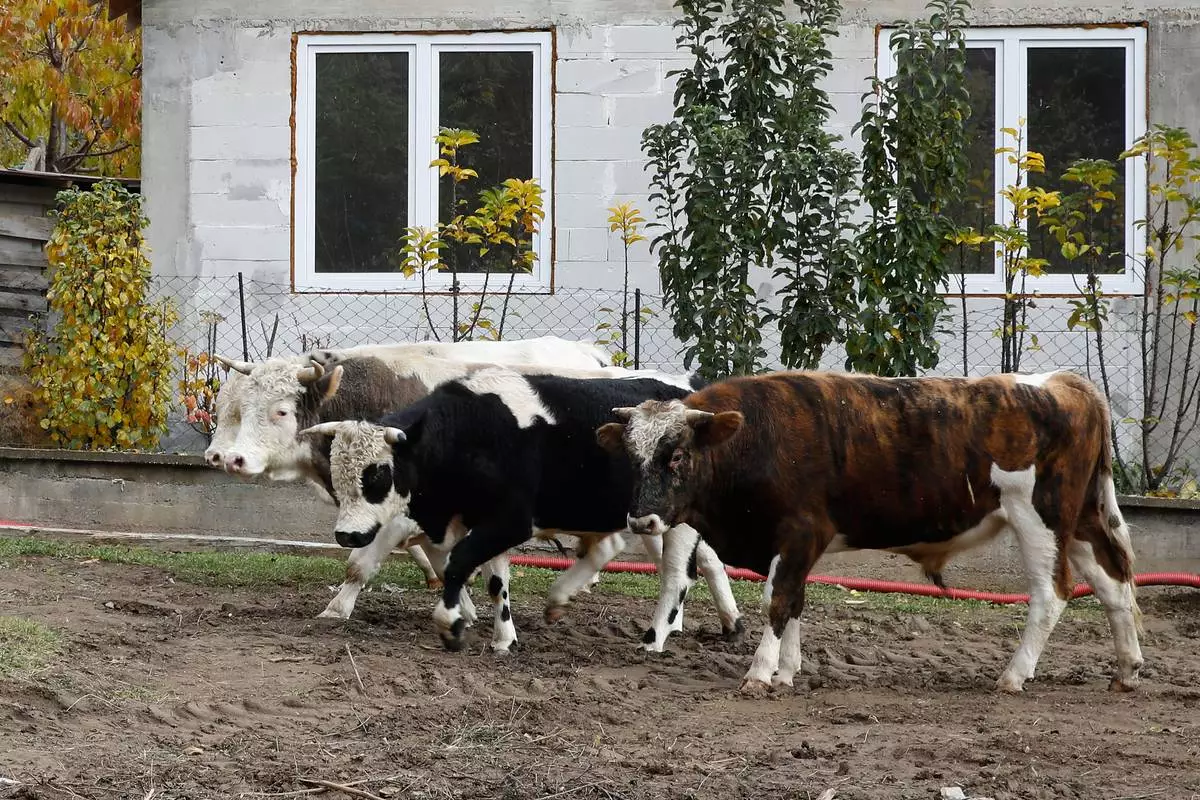
Bulls and cows roam in the town of Kriva Palanka, North Macedonia, on Thursday, Nov. 12, 2026. (AP Photo/Boris Grdanoski)
CHICLAYO, Peru (AP) — Pope Leo XIV returned Friday to his beloved former diocese of Chiclayo in an emotional homecoming that underscored his love for his Peruvian flock and their pride that their shepherd now runs the Catholic Church.
The pontiff, known here as “Padre Roberto,” arrived at Chiclayo’s airport on the Pacific coast and immediately headed to a vast, dusty field near the beach outside Chiclayo for his first Mass on Peruvian soil. Church officials estimated 1 million people could turn out.
Residents of Chiclayo cheered wildly when Leo arrived and looped through the crowd in his popemobile, under a scorching sun and temperatures of 31 C ( 87 F).
Chiclayo, population 700,000, is the commercial hub of Peru’s northern Pacific coast. But much of the world heard about it on the night of Leo’s election, May 8, 2025, when he gave Chiclayo a shoutout, in Spanish, from the loggia of St. Peter’s Basilica.
And on Friday, Chiclayo welcomed its former shepherd home.
"I’m elated. He has decided to return to Chiclayo and we have him here, with us -- home,” said Julie Albujar, who woke before dawn with her sister to travel to the Mass site. Their children, who were confirmed by the pope when he was bishop, were tasked with taking the collection at Friday's Mass. “This a party and it’s a sign of our faith and our love for the pope.”
The former Robert Prevost spent two decades as a missionary priest and bishop in Peru and credits the place and its people with teaching him how to be a shepherd. Pope Francis sent the Chicago-born Augustinian to take over as bishop of Chiclayo in 2014 and he stayed until Francis summoned him to Rome in 2023 to run the Vatican's bishops' office.
In hindsight, the 2023 transfer to Rome signaled that Francis saw in Prevost a potential successor, since the job is one of the most important in the church and would give Prevost the Vatican experience that many consider necessary to be a viable contender for the papacy.
But Prevost's heart is in Chiclayo, where he remains beloved for championing social justice issues and for his closeness to the people, especially poor people, during times of crisis. And he had quite a few during his tenure: COVID-19, devastating floods, and a surge of Venezuelan migrants as the humanitarian situation worsened there in 2018.
“I’m so glad he’s returning,” said Rolando Antonio Mendoza, who was selling posters bearing the pope’s image in front of the cathedral where Leo used to celebrate Mass. “Even though he’s now Pope Leo XIV, he hasn’t forgotten about his homeland.”
Nearby, the El Trebol restaurant proudly calls itself the restaurant of the pope and his image is displayed in framed photos of Prevost riding a horse, wading through the mud in rubber boots and celebrating his birthday with a cake.
A sign on his favorite table — No. 3 — with a view of the cathedral reads: “mesa bendita” – Spanish for blessed table. Like many other places around the city, the restaurant sells “Papaletas” or “Pop(e)sicles" with Leo's image in white chocolate.
Just a few steps from the restaurant, a life-size cardboard cutout of the pope now welcomes visitors to his former residence at the diocese, where an exhibit displays the amaranth purple, scarlet and white zucchettos, or skullcaps, that he wore as bishop, cardinal and now pope.
“I feel so happy about my work because the pope is Chiclayano,” said Cynthia Charrary, who was sweeping the streets near the city’s main square ahead of Leo’s arrival. “We want our city to be cleaner than ever.”
Ever since Leo touched down on Peruvian soil on Wednesday, the world has seen a very different pope.
Normally reserved and placid, the 71-year-old Leo has seemed at turns positively giddy and overwhelmed with emotion to the point of tears.
That was certainly the case on Thursday night when some 60,000 young Peruvians sang for him in the Lima stadium. It was also the case when he sang the national anthem at the presidential palace upon his arrival on Wednesday.
Leo has also sung along with popular songs and hymns, tapping his fingers to the beat on an armchair.
On other occasions, he has shown himself so relaxed and comfortable as to joke about his health. Speaking to Peruvian bishops, he joked about how some “doubting Thomases” didn’t think he’d make it because of his recent lung cancer surgery.
After the Mass, Leo's other main events of the day include a meeting with Chiclayo clergy and seminarians and a speech to the Catholic university where he served as chancellor during his years as bishop. The university is named for the 16th-century first archbishop of Lima, St. Turibius de Mogrovejo.
Leo is particularly devoted to Mogrovejo and in many ways modeled his ministry on his.
Mogrovejo is revered for having traveled long distances on horseback to be with his flock and for having defended the rights of Indigenous and enslaved peoples. He studied Quechua and Aymara and oversaw the printing of church teaching in these Indigenous languages, because he believed the faith had to be transmitted in a language people could understand.
The Rev. John Lydon, an Augustinian who lived with Leo in Peru for over 10 years, says his commitment to Peruvians, human rights and involving the lay faithful in the running of church initiatives was born during his stints first as a young missionary priest in Chulucanas, then Trujillo and finally as bishop in Chiclayo.
Lydon recalled that Leo first arrived in Peru in the mid-1980s and saw the period of the Shining Path terror campaign and the later crackdown by the authoritarian Fujimori regime. In the late 1990s, then-Rev. Prevost led a campaign to collect signatures to commemorate the 50th anniversary of the Universal Declaration of Human Rights.
“These are the kind of things that just mark his identity,” Lydon recalled.
———
Associated Press writer Mauricio Savarese contributed to this report from Lima.
Associated Press religion coverage receives support through the AP’s collaboration with The Conversation US, with funding from Lilly Endowment Inc. The AP is solely responsible for this content.
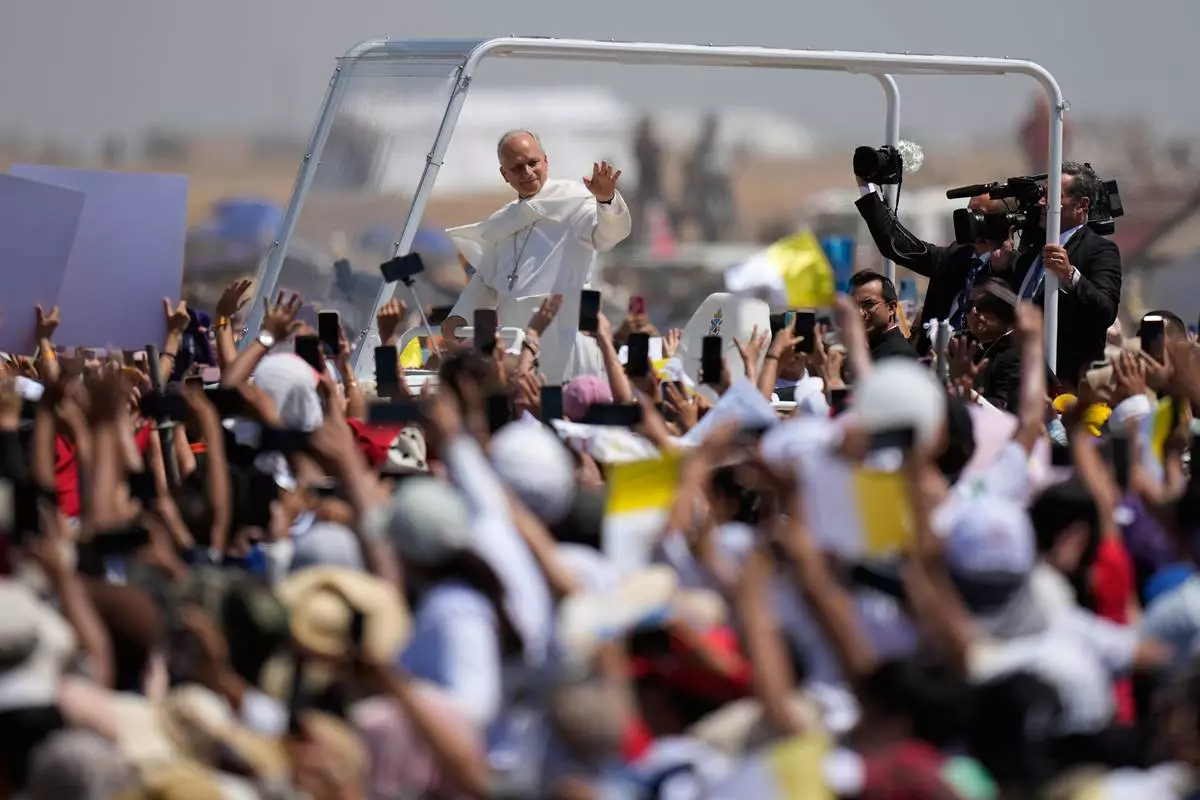
Pope Leo XIV arrives to preside over Mass in Pampas de Pimentel, near Chiclayo, Peru, Friday, Nov. 13, 2026. (AP Photo/Silvia Izquierdo)
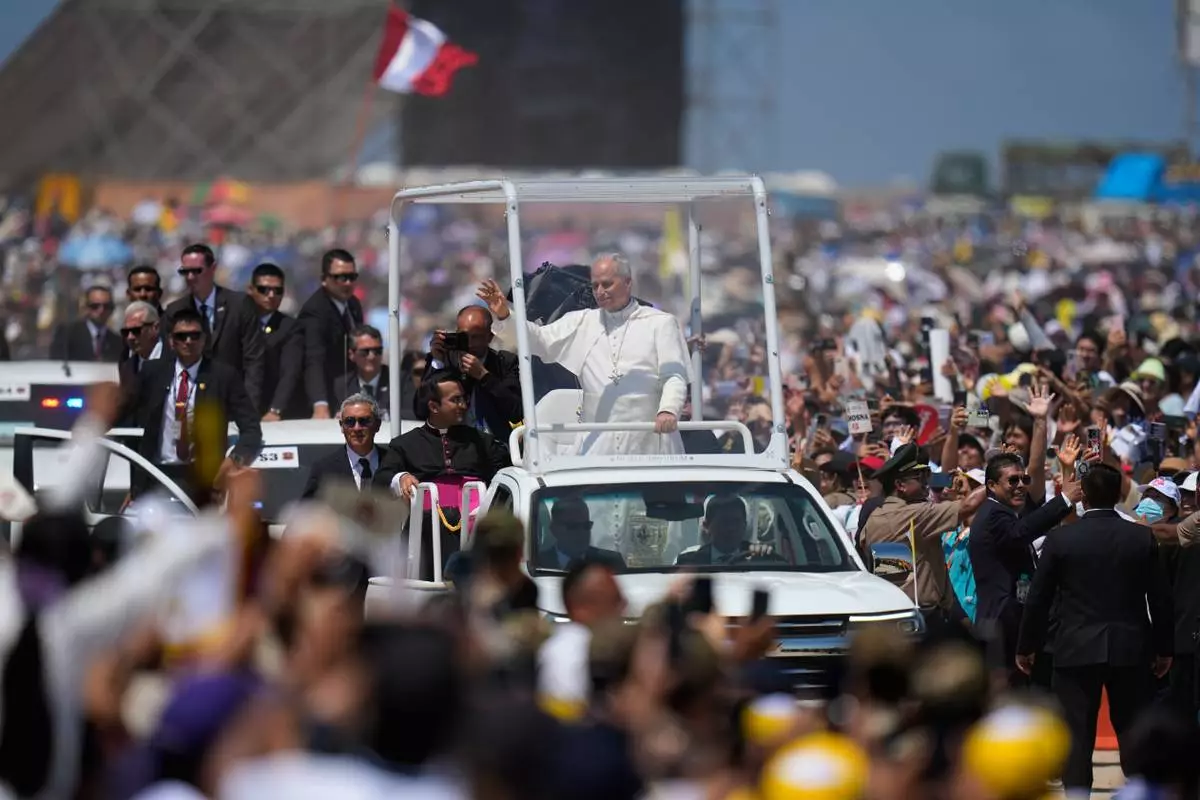
Pope Leo XIV arrives to preside over Mass in Pampas de Pimentel, near Chiclayo, Peru, Friday, Nov. 13, 2026. (AP Photo/Silvia Izquierdo)
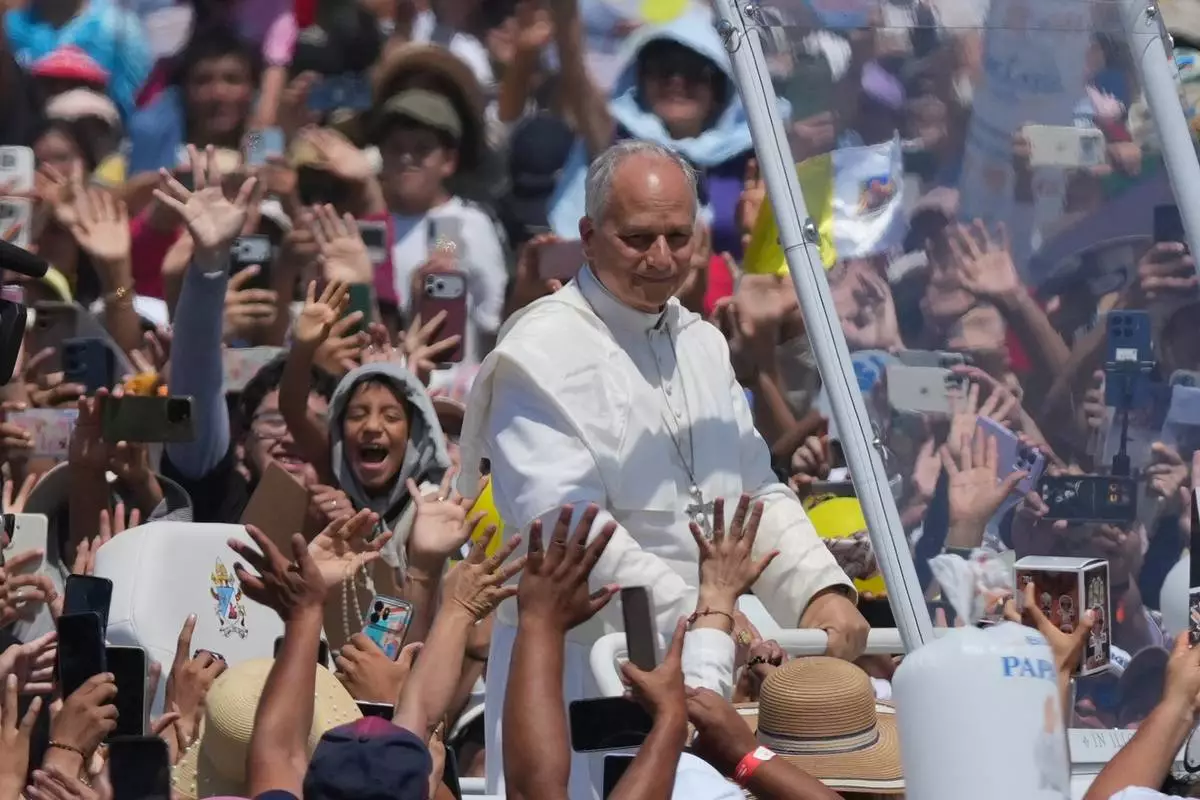
Pope Leo XIV arrives to preside over Mass at an open space near the Pampas de Pimentel in Pimentel, Peru, on the eighth day of his twelve-day apostolic journey to South America, Friday, Nov. 13, 2026. (AP Photo/Andrew Medichini)
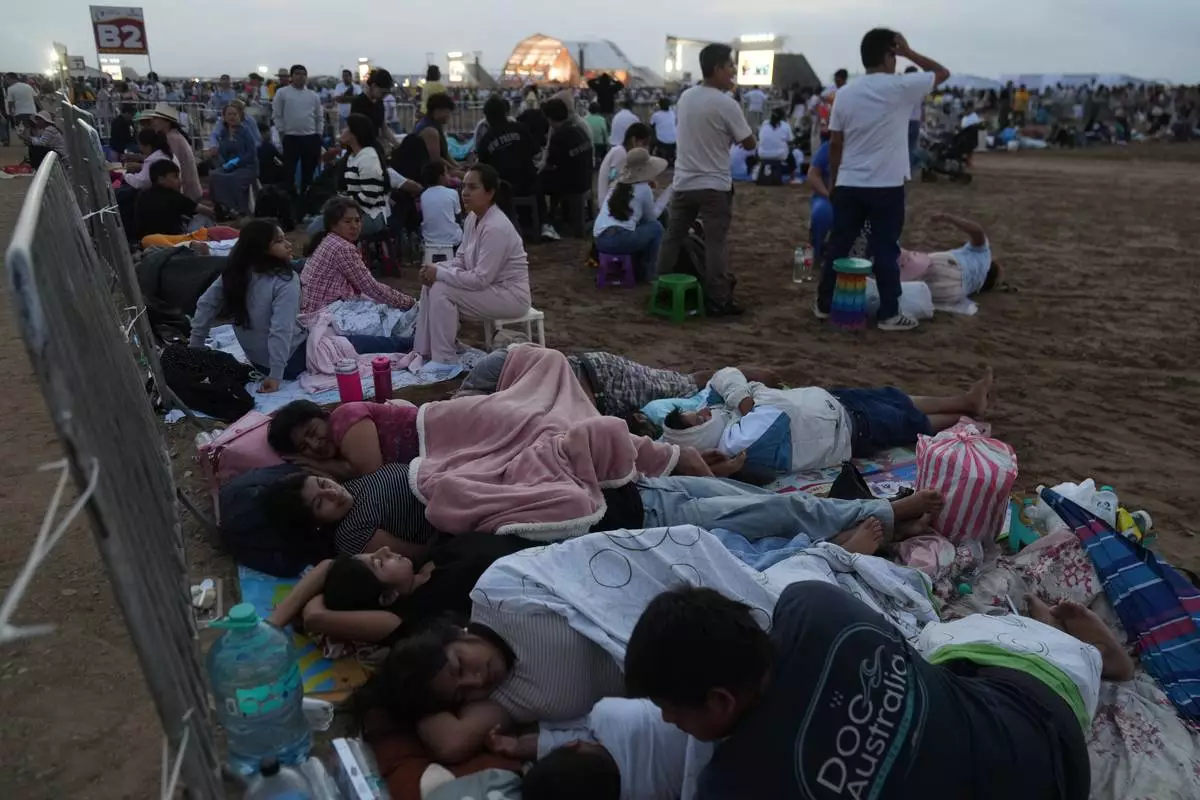
The faithful await a Mass celebrated by Pope Leo XIV after spending the night at Pampas de Pimentel, near Chiclayo, Peru, Friday, Nov. 13, 2026. (AP Photo/Rodrigo Abd)
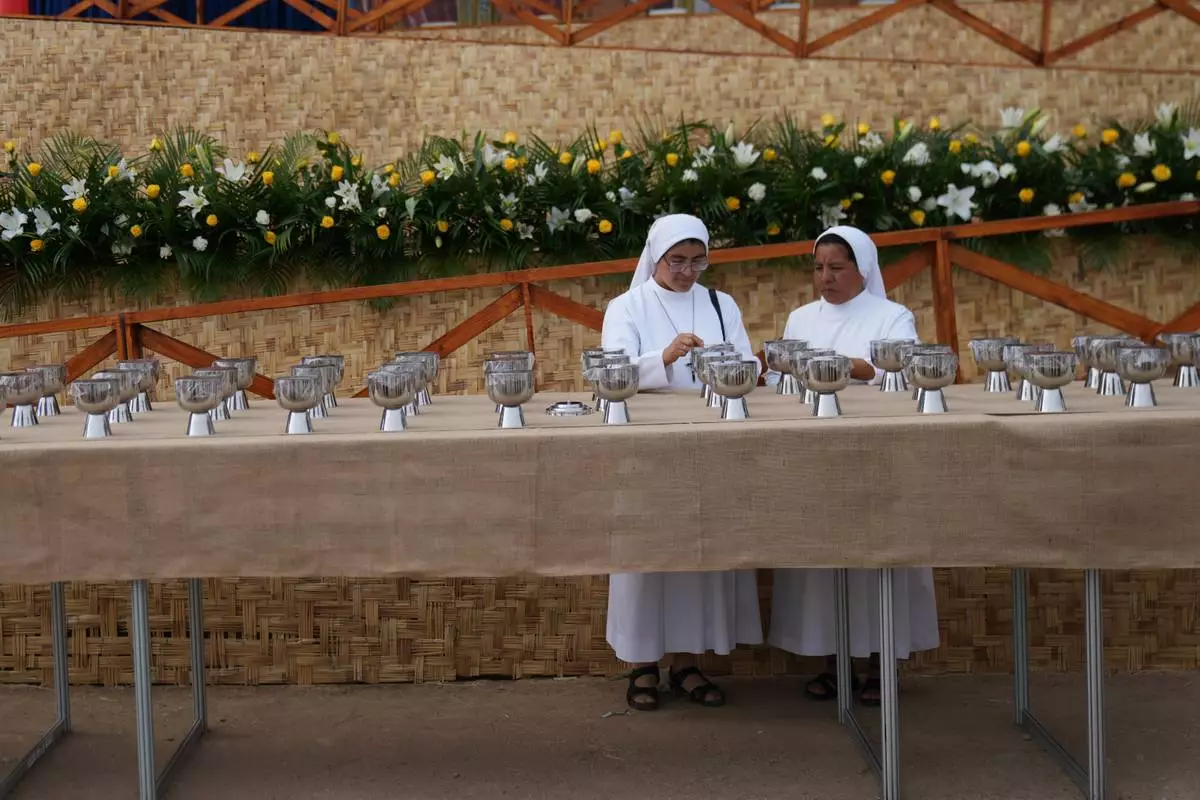
Nuns prepare ciboria containing Communion wafers ahead of a Mass celebrated by Pope Leo XIV in Pampas de Pimentel, near Chiclayo, Peru, Friday, Nov. 13, 2026. (AP Photo/Rodrigo Abd)
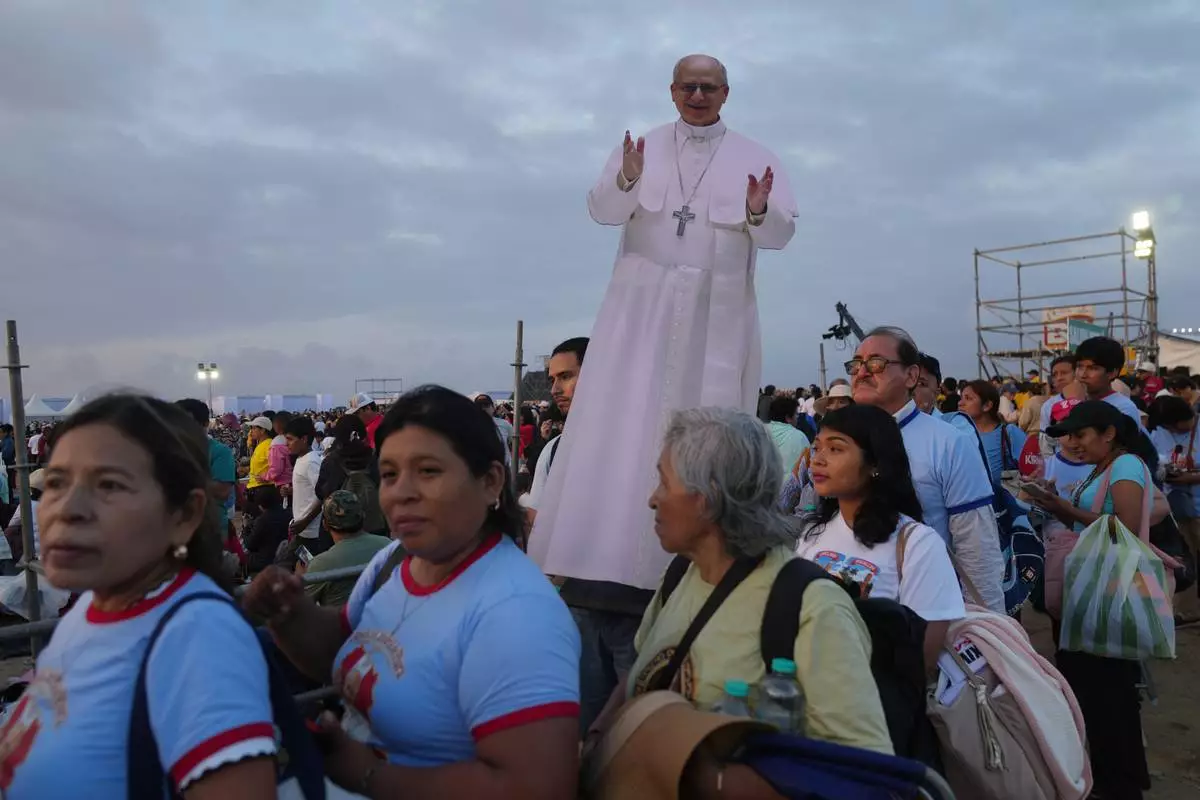
The faithful await a Mass celebrated by Pope Leo XIV after spending the night at Pampas de Pimentel, near Chiclayo, Peru, Friday, Nov. 13, 2026. (AP Photo/Rodrigo Abd)
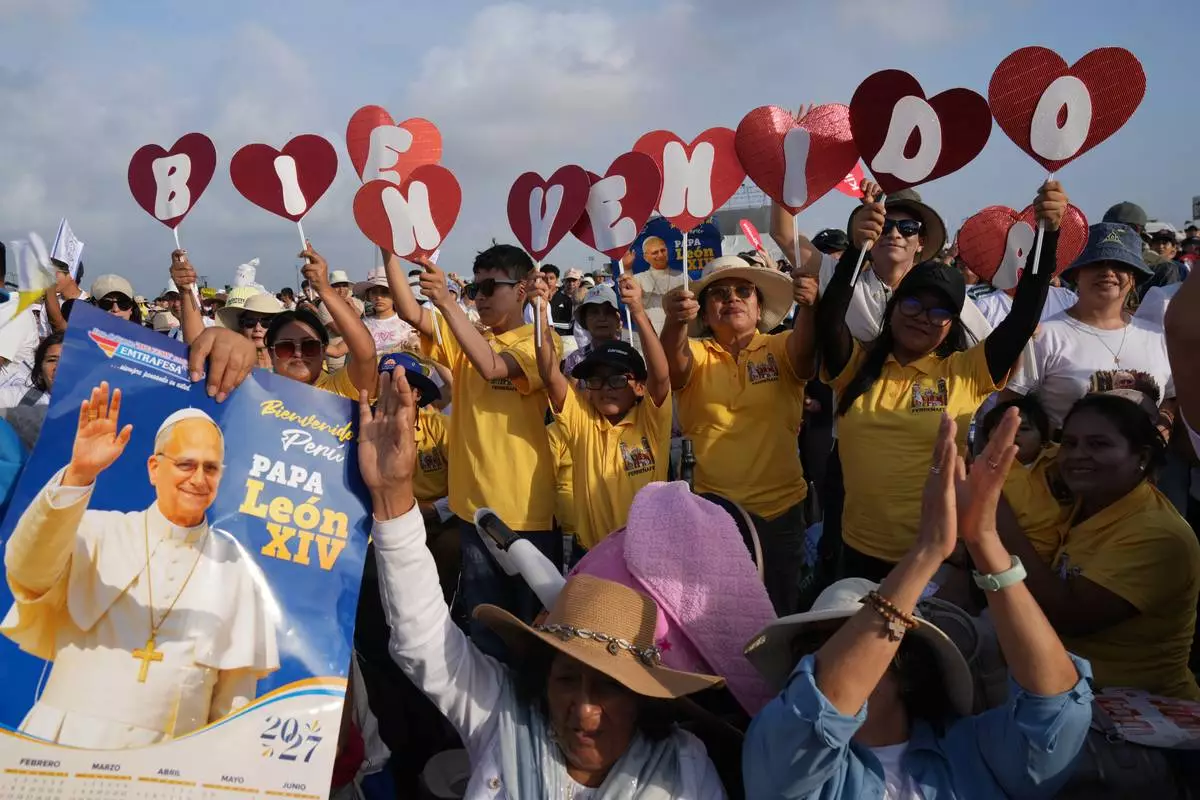
The faithful hold letters spelling the Spanish word for "Welcome" ahead of a Mass celebrated by Pope Leo XIV in Pampas de Pimentel, near Chiclayo, Peru, Friday, Nov. 13, 2026. (AP Photo/Rodrigo Abd)
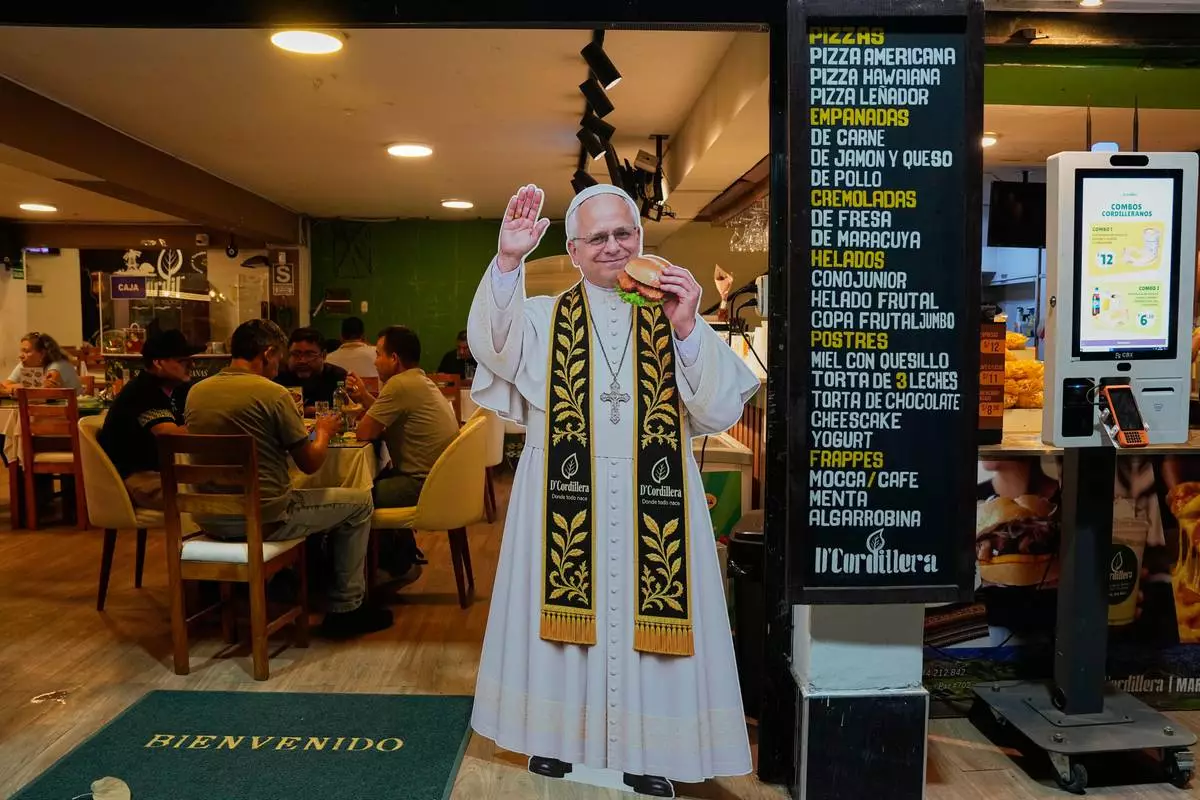
A cutout of Pope Leo XIV is displayed outside a restaurant in Chiclayo, Peru, where the pontiff served as bishop, Friday, Nov. 6, 2026. (AP Photo/Martin Mejia)
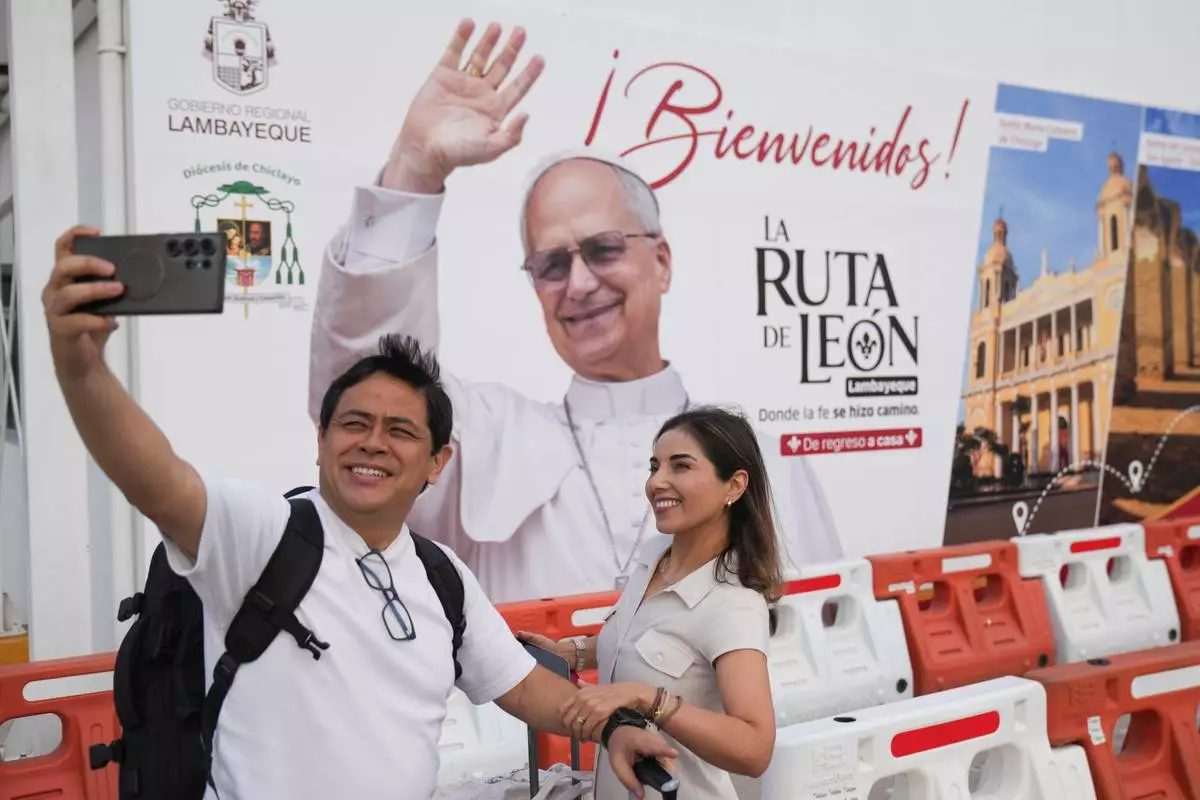
People take a selfie with a sign of Pope Leo XIV in Chiclayo, Peru, Thursday, Nov. 12, 2026. (AP Photo/Rodrigo Abd)
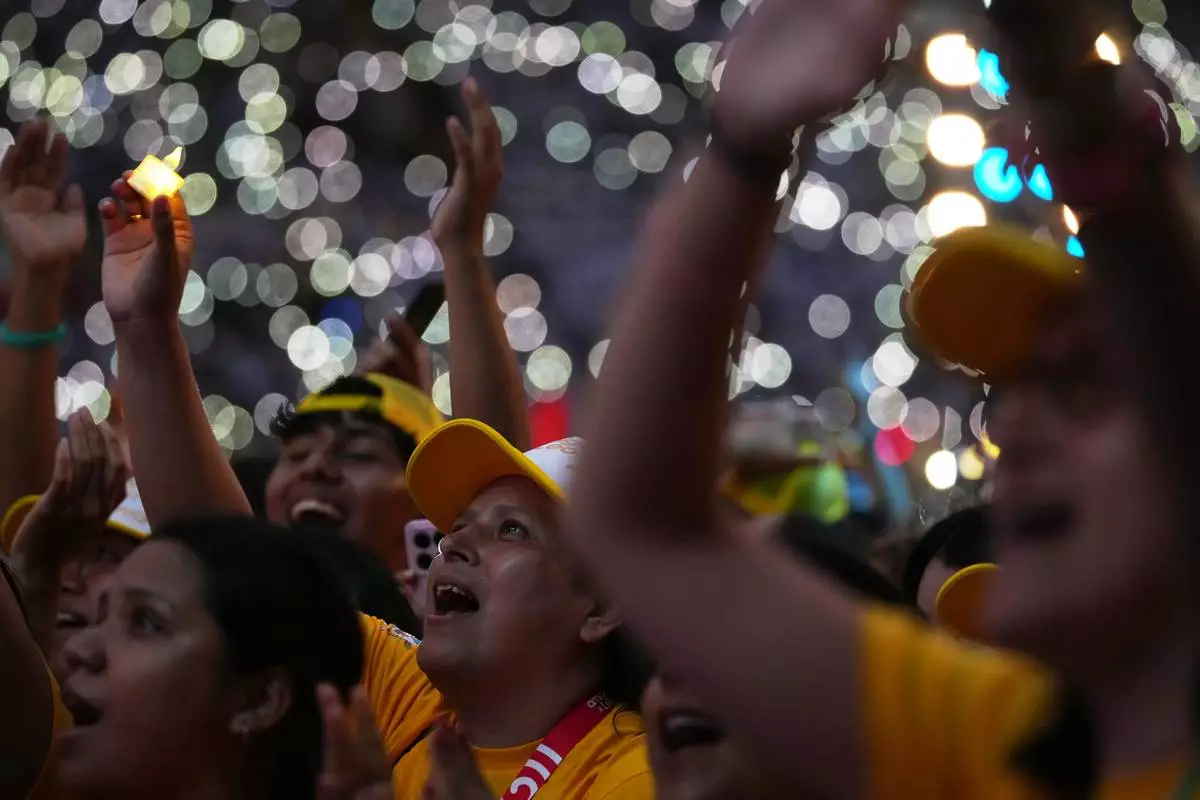
Faithful cheer during a prayer vigil led by Pope Leo XIV at the National Stadium in Lima, on the seventh day of his twelve-day apostolic journey to South America, Thursday, Nov. 12, 2026. (AP Photo/Andrew Medichini)
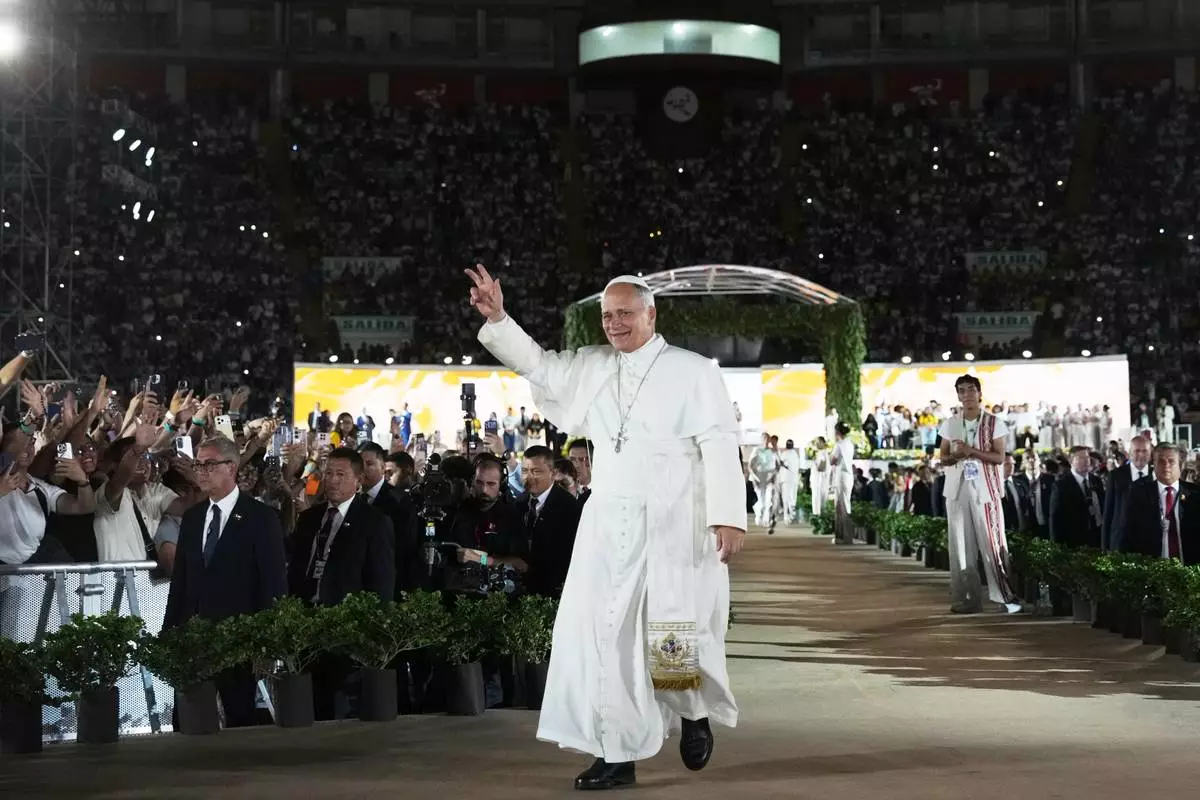
Pope Leo XIV leaves at the end of a prayer vigil at the National Stadium in Lima, on the seventh day of his twelve-day apostolic journey to South America, Thursday, Nov. 12, 2026. (AP Photo/Andrew Medichini)
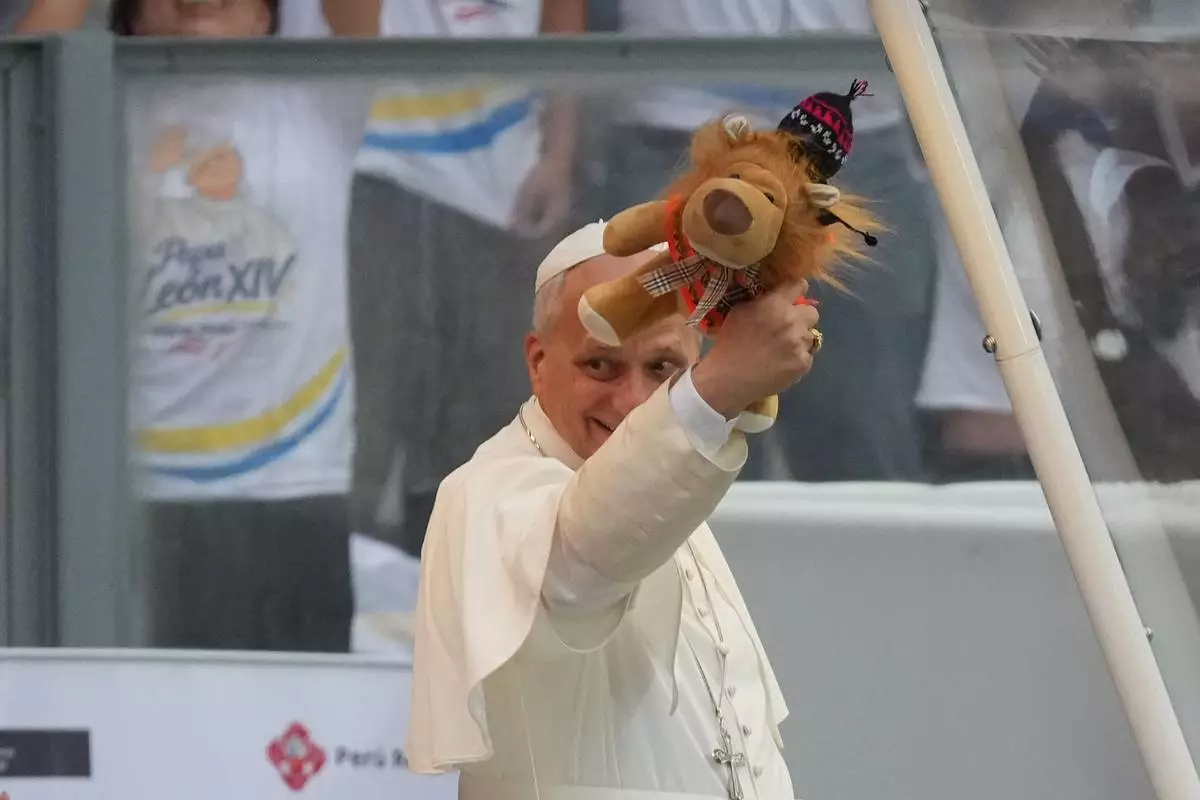
Pope Leo XIV catches a stuffed lion as he arrives to lead a prayer vigil at the National Stadium in Lima, on the seventh day of his twelve-day apostolic journey to South America, Thursday, Nov. 12, 2026. (AP Photo/Andrew Medichini)