PARIS (AP) — France upset world champion South Africa 21-19 in a thriller between the Nations Championship rugby leaders that exceeded the hype on Friday night.
The Springboks started the match as the overwhelming favorite — unbeaten in the new competition, unbeaten against France at its national stadium for 21 years — but never led an epic heavyweight showdown.
Click to Gallery
Antoine Dupont of France cheers supporters at the end of the Nations Championship rugby match between France and South Africa, in Saint Denis, Friday, Nov. 13, 2026. (AP Photo/Teresa Suarez)
Aaron Grandidier-Nkanang of France, left, and Ethan Hooker of South Africa, challenge for the ball during the Nations Championship rugby match between France and South Africa, in Saint Denis, Friday, Nov. 13, 2026. (AP Photo/Teresa Suarez)
Maxime Lucu of France reacts at the end of the Nations Championship rugby match between France and South Africa, in Saint Denis, Friday, Nov. 13, 2026. (AP Photo/Teresa Suarez)
Antoine Dupont of France kicks the ball during the Nations Championship rugby match between France and South Africa, in Saint Denis, Friday, Nov. 13, 2026. (AP Photo/Teresa Suarez)
Louis Bielle-Biarrey of France, center, fights for the ball with South Africa's Lood de Jager, left, and Kurt-Lee Arendse during the Nations Championship rugby match between France and South Africa, in Saint Denis, Friday, Nov. 13, 2026. (AP Photo/Teresa Suarez)
Superbly conducted by halves Antoine Dupont and Maxime Lucu — tagged “icons" by coach Fabien Galthié — a heavily depleted France shot out to 14-0 and 21-7 by halftime and held on without scoring in a nerve-shredding second half despite three yellow cards and an outclassed scrum.
“It was a huge game for us, with all the yellows we got over the line,” captain Dupont said. He started a test at flyhalf for the first time but played mostly at scrumhalf. "We only had one training session and what was the best combination for us. I'm happy it worked out.”
The match was considered a potential preview of the final at Twickenham in two weeks, but while Six Nations champion France looks set to get there representing the northern hemisphere, South Africa may not make it.
The Springboks will be overtaken atop the southern hemisphere standings and lose its No. 1 world ranking if undefeated New Zealand beats Wales on Saturday, as expected.
The Springboks closed to 21-14 with 14 men with 30 minutes to go, revving up their power game for a grandstand finish.
France was bleeding penalties, nine in the scrum alone, but its scrambling defense roused a packed Stade de France.
South Africa’s Pieter-Steph du Toit was held up over the tryline while Lucu, France's goalkicker with a staggering 87% success rate, ramped up the tension when he missed a routine penalty attempt that would have given France a 10-point lead.
Springboks hooker Malcolm Marx inevitably scored from a rolling maul but Manie Libbok, on for Sacha Feinberg-Mngomezulu, botched the conversion attempt that would have tied the score with eight minutes left.
The Boks had one last chance in the last minute but Louis Bielle-Biarrey stopped the charge, Dupont jumped on the loose ball and Lucu kicked it into touch to end a gripping match.
The drama began before kickoff. South Africa coach Rassie Erasmus flipped his front rows, sending his original starters to the bench and vice versa, as he did against New Zealand in August in Cape Town.
Meanwhile France, already down to its sixth tighthead prop and fifth flyhalf, also made a late change after Julien Marchand, its best scrummaging hooker, was hurt in the warmups and replaced by Peato Mauvaka, who started his 50th test.
The commotion transferred into a frantic start. France waived a kickable penalty in the second minute and Lucu kicked the ball dead. South Africa popped the France front row in the first scrum, and when France had an attacking lineout South Africa stole the ball.
The first turning point was a yellow card for South Africa lock Lood de Jager, a year after he was red-carded against France in a game the Boks still won.
France struck immediately. Center Kalvin Gourgues made the initial break and, after 16 phases, winger Aaron Grandidier-Nkanang dived in from a Lucu cut-out pass.
Then it was 14-0 after a pass bounced off Gourgues' face and fullback Théo Atissogbe was fastest to the loose ball behind the posts.
Hooker Jan-Hendrik Wessels finished a lineout drive try to get South Africa started but France hit back when Dupont supported a Mauvaka break and grubbered toward the left corner flag for Bielle-Biarrey to charge on to.
The original Springboks front row was sent on in the 35th minute but South Africa butchered the end of the half.
A penalty kick was kicked dead then a try by winger Kurt-Lee Arendse was rubbed out because he was offside.
France started the second half a man down after a sin-bin for Lucu, but South Africa also went to 14 when No. 8 Jasper Wiese was yellow-carded for a dangerous clearout. The yellow was upgraded to a 20-minute red card.
Lucu was replaced in the sin-bin by Grandidier-Nkanang and France freshened up with five replacements, but South Africa reeled off training ground moves to earn a converted try by Cobus Reinach, and looked like it was going to grind down France yet again.
See AP’s full rugby coverage here

Antoine Dupont of France cheers supporters at the end of the Nations Championship rugby match between France and South Africa, in Saint Denis, Friday, Nov. 13, 2026. (AP Photo/Teresa Suarez)

Aaron Grandidier-Nkanang of France, left, and Ethan Hooker of South Africa, challenge for the ball during the Nations Championship rugby match between France and South Africa, in Saint Denis, Friday, Nov. 13, 2026. (AP Photo/Teresa Suarez)

Maxime Lucu of France reacts at the end of the Nations Championship rugby match between France and South Africa, in Saint Denis, Friday, Nov. 13, 2026. (AP Photo/Teresa Suarez)

Antoine Dupont of France kicks the ball during the Nations Championship rugby match between France and South Africa, in Saint Denis, Friday, Nov. 13, 2026. (AP Photo/Teresa Suarez)

Louis Bielle-Biarrey of France, center, fights for the ball with South Africa's Lood de Jager, left, and Kurt-Lee Arendse during the Nations Championship rugby match between France and South Africa, in Saint Denis, Friday, Nov. 13, 2026. (AP Photo/Teresa Suarez)
The Federal Aviation Administration grounded all flights nationwide Friday afternoon due to communications problems at regional air traffic control centers, an FAA notice said.
The ground stop was being imposed “due to extraordinary circumstances and for reasons of safety,” according to the notice.
Transportation Secretary Sean Duffy said a communications issue was affecting the regional air traffic control centers that direct planes between airports nationwide. He said FAA technicians are investigating.
This is the first nationwide ground stop since January 2023 when a key FAA computer system malfunctioned. Before that the last time had been after the Sept. 11, 2001 attacks.
Secretary of Homeland Security Markwayne Mullin said there was no indication yet that “this was a nefarious attack against us. It’s just a telecommunications outage.”
Here is the latest:
The communications problems that led to the nationwide halt to flights don’t appear to be linked to the FAA’s new AI-powered system the agency is rolling out to help predict problems in the sky.
Homeland Security Secretary Markwayne Mullin said there’s no indication yet that the problems are linked to the new computer system or any kind of terrorist attack.
The FAA’s SMART system is based in a single location near Washington, D.C., where a team of experts analyzes flight schedules, weather forecasts and hundreds of other streams of data. Then that office sends recommendations to the FAA’s command center that relays them to controllers across the country for consideration.
The company that designed the system, ASI, said “the current ground stop is not based on or a result of the SMART system, any product of ASI or our integration with FAA and ATC.”
Travelers just passing through security at Chicago O’Hare Airport learned about the ground stop when they gazed up at screens that showed flight delays across the board.
Some called friends or family members, debating whether to stay the night in Chicago or find another way to their destinations.
Amber McQuilkin sat on a bench nearby, disappointed that she might miss a trip with friends to New York for the League of Legends world finals. Her friends, she said, had already arrived there.
“There’s not really any information being passed to me,” said the Seattle software engineer, who took a week of vacation for the trip. “I contemplated just abandoning the flight and driving, but then the more I thought about it, the more I’m like, that would be miserable.”
Austin Curtis and his wife were rethinking their trip from South Bend, Indiana, to a friend’s baby shower in Denver after getting delayed during a layover in Chicago.
Their Denver flight had returned to the gate after taxiing out at O’Hare International Airport.
“We did see them taking luggage off our plane and others, so we’re assuming it’s going to be a pretty substantial delay,” Curtis said.
They were unsure whether to get a hotel room or keep waiting out the delay at the airport. With care already in place for their two young children at home, they might stay the weekend in Chicago, he said.
“We might just make the most of it,” Curtis said.
Aviation professor Skip Bailey said the reason they teach them that is so they will be prepared if the radio on their plane malfunctions. He said no one expects air traffic controllers nationwide to lose the ability to communicate.
Pilots are expected to maintain the headings and vectors that controllers gave them before the problem. And then if the outage continues, they revert to following their filed flight plan. Pilots may also be able to communicate with each other over the radio even if they can’t talk to controllers. And airliners have their own radar systems.
“It’s not mass chaos out there. There’s plenty of ways to try to communicate,” said Bailey, who teaches at the University of Nebraska at Omaha’s aviation institute. “But not letting anybody take off again obviously is extremely important because we don’t want to put more aircraft into a system that’s already having an issue.”
Jeff Dubner was still waiting to disembark his plane an hour and a half after leaving the gate at Los Angeles International Airport.
His Alaska Airlines flight to Washington, D.C., was already half an hour late and was taxiing to the runway when the plane came to a halt.
Dubner heard about the nationwide ground stop from somebody behind him, he said by phone from the tarmac.
“It’s frustrating. This certainly sounds like it’s going to be more than the usual run of the mill delay. I look forward to finding out why,” said Dubner, a Washington, D.C., attorney.
But passengers were taking things in stride. Even a baby near him had calmed down, Dubner said.
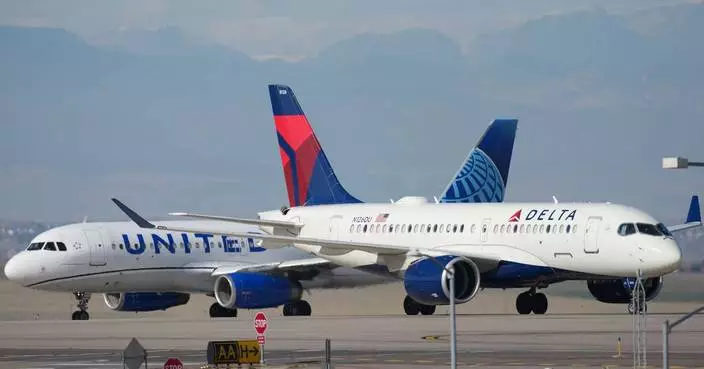
Both airlines said in statements on X that flights already in the air will continue.
United Airlines said while domestic flights will not depart, “international departures are being managed on a case-by-case basis by the FAA.”
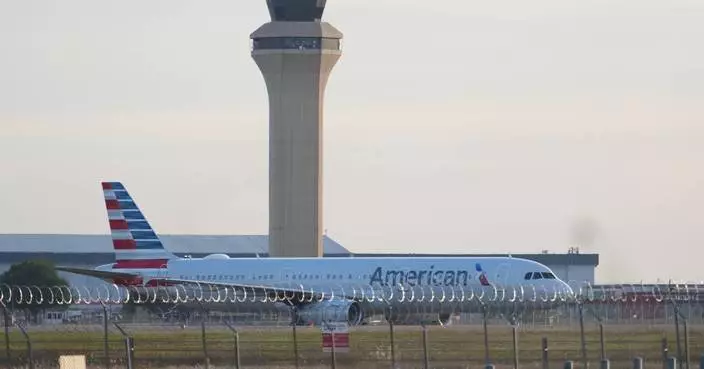
American Airlines said it expects disruptions for the rest of the day.
“It will be all hands on deck across American to get customers on their way as soon as possible when the FAA lifts this nationwide ground stop,” the airline said.
A Delta passenger flying from Detroit to Fort Lauderdale recorded video of the captain explaining the ground stop during a midair announcement.
He tells passengers that other planes will be unable to depart, but they are still on track to land at their destination within the hour, according to footage shared with The Associated Press by passenger Andrew Gillfillan.
A photo also taken by Gillfillan shows rows of passengers watching live broadcasts about the ground stop on their seatback televisions.
Sean Carey was waiting for his flight at Chicago O’Hare Airport when his grandparents and other family members called and texted him from Las Vegas to let him know about the ground stop. He was planning to travel there for a family wedding.
“I’m surprised the airport’s not in more disarray,” he said.
If he can’t get on a flight for the wedding Saturday, he only hopes he gets a refund and plans to visit another time.
“I hope everyone gets home safely and gets to where they need to go safely,” he said.
Mullin said communication systems had been affected, triggering the nationwide ground stop, but he provided few other details. He said officials continue to investigate the causes.
They are able to communicate “at certain levels,” he said. “But it’s overwhelmed some of the systems we have.”
Mullin said flights are continuing to land during the stoppage and that, for now, officials are working to “make sure” that “we get the flights down and then we get a normal operations back up.”
Mullin said it’s not yet known what caused the communications outages, but “we’re gonna find out what happened.”
He added that he’s not going to make assumptions and encouraged others to do the same.
Asked if there may be a connection to Thursday’s Microsoft outage, Mullin said officials are not ruling anything out.
Officials are dealing with midair flights on a case by case basis and working to help them land safely, he added.
“There is no indication — and we had no reason to believe that — as of right now, that this was a threat to the United States,” Mullin said.
“This was a telecommunication outage,” Mullin told reporters outside the White House.
He said details were still emerging, but that the president had been briefed.
Mullin said the immediate priority was ensuring that planes still in the air would be landing safely, but that there was no clear information on how long the stoppage might last.
He also downplayed comparisons to the Sept. 11 attacks of 2001, saying, “This isn’t the same comparison to 9/11. That’s a road I won’t go down.”
The federal agency said on social media that there has been a temporary telecommunications outage.
All flights have been accounted for and international flights will be “handled on a case by case basis,” the agency said.
“There was no indication as of yet this was a nefarious attack against us,” said U.S. Secretary of Homeland Security Markwayne Mullin.
All flights in the air are accounted for, he said during a news conference, adding that the public has no reason to be afraid.
The FAA’s ground stop order runs through at least 11 p.m. ET Friday.
Passengers on an American Airlines flight from Wichita to Chicago on Friday afternoon received text messages explaining the problem as “air traffic conditions in Chicago.”
The plane sat on the runway for about an hour before the captain announced the air traffic problem seemed to be nationwide, and the plane would return to the gate.
Passengers deboarded and the airline said no one would be rebooked for at least an hour.
Former United Airlines pilot and aviation expert Steve Arroyo said the problem appeared similar to a regional air traffic control communication outage in September that snarled hundreds of flights across the Northeast, except this time on a nationwide scale.
Arroyo said it could be linked to the outdated technology used by air traffic controllers.
“If you don’t have that ability, whether it’s because the old wires that they have are just run down or for whatever reason, you’ve got to stop airplanes on the ground,” said Arroyo. “And not put them in the air where you’re going to risk not being able to communicate with them.”
A key FAA computer system malfunctioned, temporarily grounding all flights nationwide and touched off a cascading air traffic jam.
Before that the last time had been after the Sept. 11, 2001, attacks.
The Federal Aviation Administration grounded all flights nationwide Friday afternoon because of communications problems at regional air traffic control centers.
The FAA notice said the ground stop was being imposed “due to extraordinary circumstances and for reasons of safety.”
Transportation Secretary Sean Duffy said there is a communications issue affecting the 22 regional air traffic control centers that direct planes en route between airports nationwide. He said FAA technicians are investigating.
This is the first nationwide ground stop since January 2023, when a key FAA computer system malfunctioned. Before that the last time had been after the Sept. 11, 2001, attacks.
▶ Read more
FILE - A Federal Aviation Administration logo is displayed in the tower at John F. Kennedy International Airport in New York, March 16, 2017. (AP Photo/Seth Wenig, File)