Business representatives across the Asia-Pacific worked with openness, connectivity and synergy to achieve common ground on proposals to strengthen regional connectivity and cooperate on quantum technology, Zeng Qi, a Chinese member of the APEC Business Advisory Council (ABAC), told China Global Television Network (CGTN).
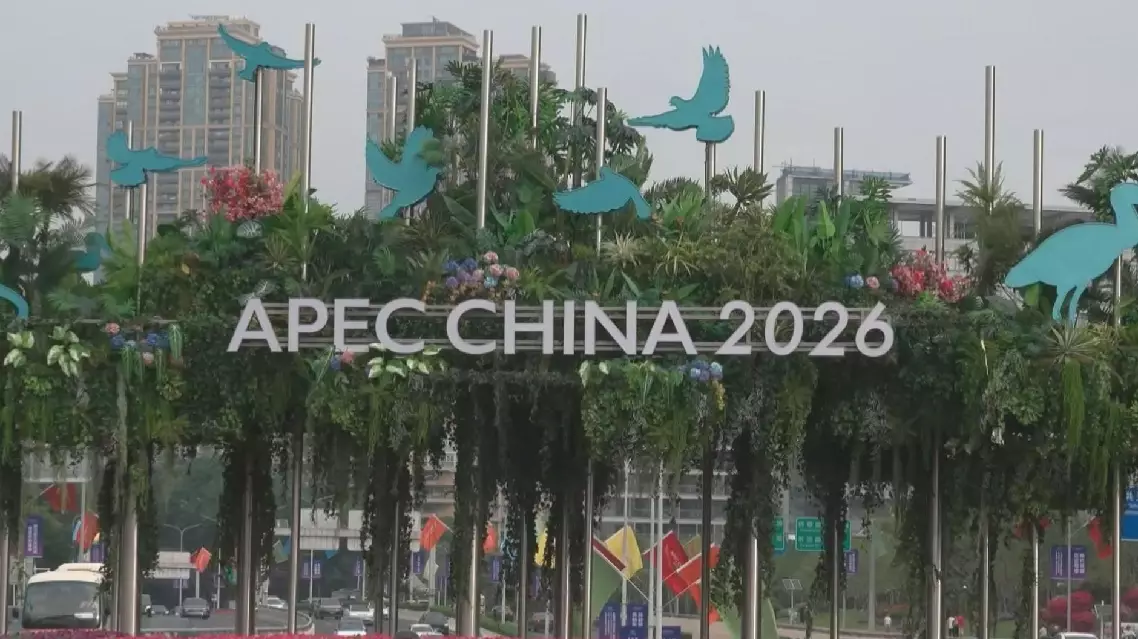
The council gathered in south China's Shenzhen for its final meeting of the year from Saturday to Monday, ahead of the APEC Economic Leaders' Meeting on Nov 18 and 19.
ABAC develops recommendations from business representatives across APEC's 21 member economies. Zeng, vice president of CITIC Group, chairs the Connectivity Working Group.
Zeng said 19 representatives submitted 60 proposals to the Connectivity Working Group she chairs. Many of their ideas will be included in the council's final letter to APEC leaders and are reflected in the planned Shenzhen Initiative.
"As we discussed the proposals, I felt that business representatives across APEC member economies fully showed openness, connectivity and synergy. Our working group looked at three forms of connectivity. The first is physical connectivity, including infrastructure and other links between places. The second is institutional connectivity: how recognizing each other's systems and arrangements can help the regional economy grow. The third is people-to-people connectivity. Cultural exchanges, closer personal ties and greater mutual understanding can, in turn, strengthen economic links. Having taken part in those discussions, I was struck by the practical way ABAC members sought common ground while respecting their differences," she said.
That search for common ground shapes how proposals are developed, Zeng explained. Members revise their ideas over successive meetings before settling on recommendations.
"Every representative brings proposals to each working group meeting. Many begin with issues raised by several members, with new suggestions added along the way. We refine the proposals over three meetings before they take final shape. My impression is that proposals grounded in shared interests and aimed at prosperity across the Asia-Pacific ultimately gain support," she said.
Zeng pointed to quantum technology as an example of an issue that attracted interest beyond the working group where it was first raised.
"What struck me even more was the desire across the economies to use technological innovation and share its benefits to help build a community with a shared future for mankind. Quantum technology is one example. It began as a topic in a single working group. But when it was first presented, representatives from all the economies showed strong interest and wanted to take part, contributing the talent, technology and ideas they could offer. Every working group put forward its views, and eventually we produced a dedicated statement for APEC leaders," Zeng said.
APEC business proposals formulated through openness, connectivity and synergy: Chinese delegate