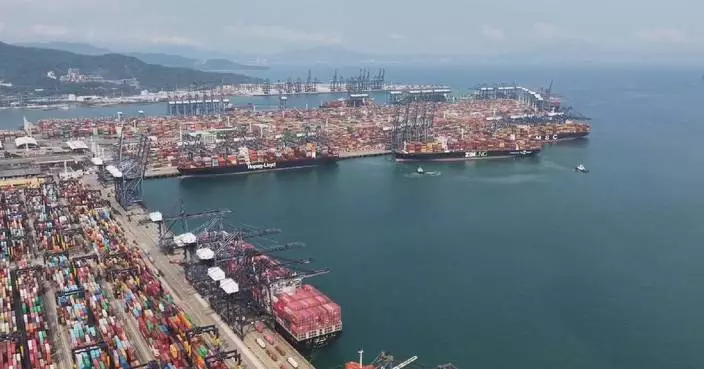
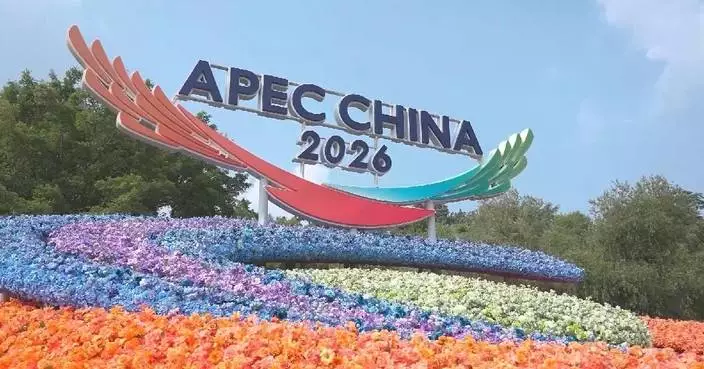
As China prepares to host the APEC meeting for the third time, a Norwegian scholar has laid out how China consistently promotes Asia-Pacific regional cooperation through pragmatic actions.
The 33rd APEC Economic Leaders' Meeting will take place in China's Shenzhen City from November 18 to 19. The country previously hosted the gatherings in Shanghai in 2001 and Beijing in 2014.
Carl Fey, professor at the Department of Strategy and Entrepreneurship of BI Norwegian Business School and a visiting scholar at Harvard University, said that each time China served as the host for APEC meetings, it has consistently advanced Asia-Pacific regional cooperation through pragmatic actions.
"In general, China has made a very important role in hosting APEC. And some examples of what China has already done in the 2026 is, for example, to develop an agreement at the Digital Artificial Intelligence Ministerial meeting in Chengdu that members would collaborate on exploring different uses for AI in manufacturing, agriculture and services. Over recent years, Shenzhen has moved from being an innovative city to part of what is now considered by the World Intellectual Property Organization the largest innovation cluster by size. Thus, Shenzhen is an ideal location," said Fey.
Working with other member economies under the theme of "Building an Asia-Pacific Community to Prosper Together," China has focused on the three priorities of openness, innovation and cooperation, and hosted more than 300 meetings and events across the country during the year.
Fey said these priority areas are highly aligned with the development aspirations of Asia-Pacific economies and are of great significance for promoting shared prosperity in the region.
"Innovation is definitely a key engine of growth, and thus it's important to explore different ways to facilitate innovation, something the Greater Bay Area has done particularly well. It's more efficient, after all, when different countries or regions specialize in different areas and then trade with other partner countries. What one should specialize in depends on the natural resources and capabilities that the country or city or region has," Fey said.
The scholar emphasized that APEC has also been a valuable platform for promoting freer trade between members, with China leading the way in this regard.
"China has been helping APEC to progress towards the free trade area of the Asia Pacific. It has encouraged APEC's 21 members to organize voluntarily cooperation within the region. APEC is not a top-down organization where members are forced to comply. Instead, they are encouraged to comply," he said.
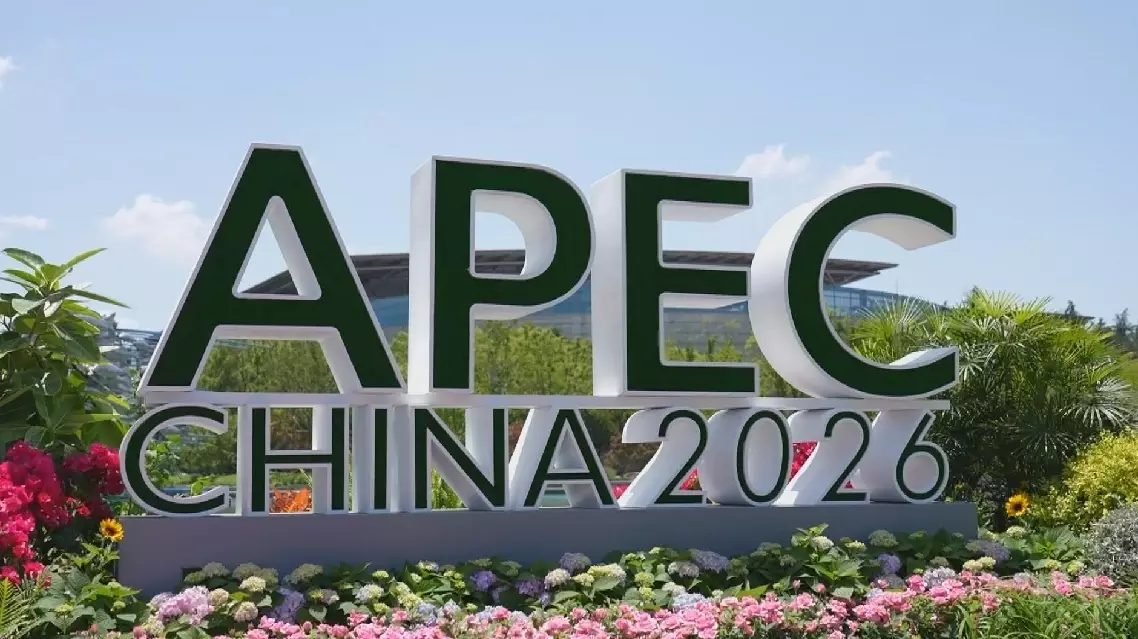
China's pragmatic actions boost Asia-Pacific cooperation: Norwegian scholar