HARARE, Zimbabwe (AP) — The electric vehicle revolution in Zimbabwe began on rural dirt paths. Three-wheeled vehicles carried cabbages to markets, women farmers to their fields and patients to clinics in communities where transport has long been scarce.
For farmer Agefi Mutambo, the owner of an electric three-wheeler since 2021, it has transformed her business and family.
Click to Gallery
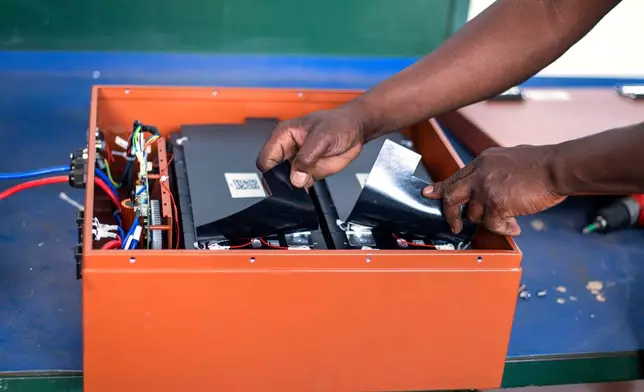
A worker shows a lithium-ion battery that is used to power tricycles at the Mobility for Africa assembly plant in Harare, Zimbabwe, Wednesday, Oct. 7, 2026. (AP Photo/Aaron Ufumeli)
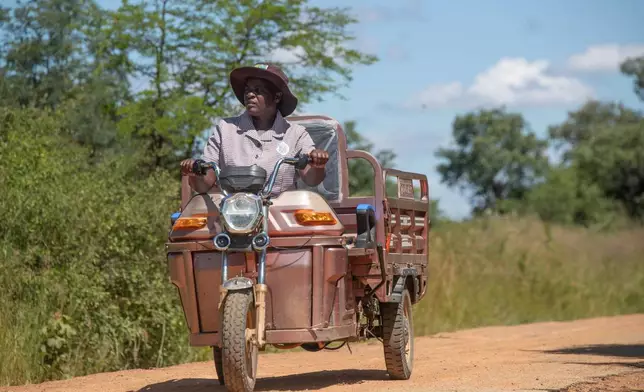
FILE - Josephine Nyevhe, a volunteer village health worker, conducts weekly visits on her electric tricycle in Hwedza, Zimbabwe, Thursday, March 6, 2025. (AP Photo/Aaron Ufumeli, File)
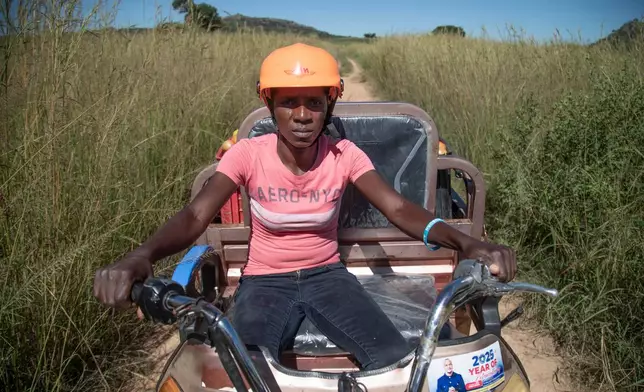
FILE - Anna Bhobho delivers tomatoes to a marketplace on her electric tricycle in Hwedza, Zimbabwe, Thursday, March 6 2025. (AP Photo/Aaron Ufumeli, File)
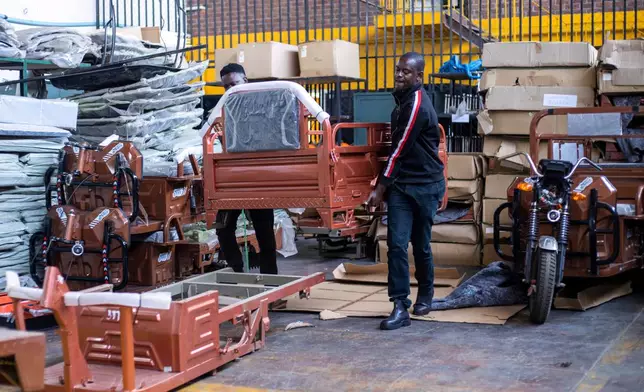
Workers assemble a lithium-ion battery-powered tricycle at the Mobility for Africa assembly plant in Harare, Zimbabwe, Wednesday, Oct. 7, 2026. (AP Photo/Aaron Ufumeli)
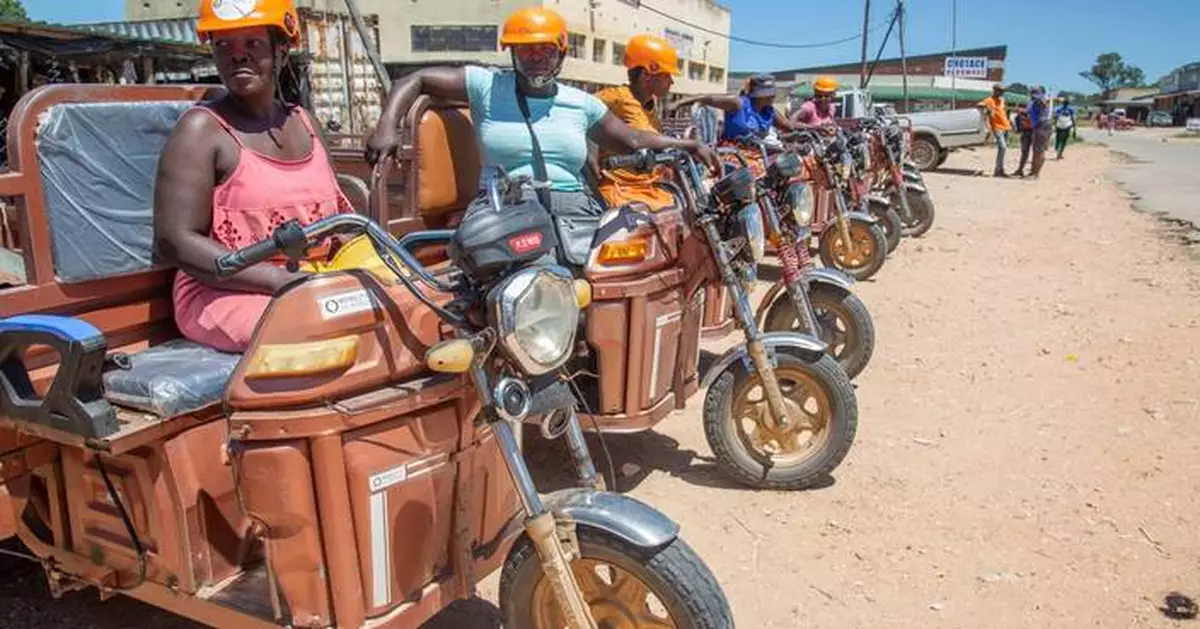
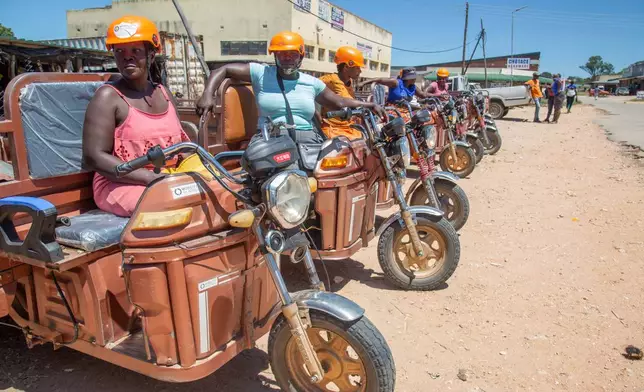
FILE - Women sit on three-wheeler tricycles waiting for clients at a marketplace in Hwedza, Zimbabwe, Thursday, March 6, 2025. (AP Photo/Aaron Ufumeli, File)
Before, she walked seven to 10 kilometers (4.3 to 6.2 miles) balancing a 20-kilogram (44-pound) bucket of tomatoes on her head that she sold for $6.
“The money wasn't even enough for food. I would do a single trip a day, arrive at the market late and the produce would no longer be as fresh,” the 56-year-old said.
Now she makes two to three deliveries a week transporting 300 kilograms (661 pounds) of produce on each trip, grossing roughly $80 a trip supplying schools and clinics. She also ferries neighbors to hospital, sometimes at midnight for a woman in labor.
“When my battery is low, I simply swap it for $4, and I am back on the road,” she said.
Mutambo is among dozens of rural women entrepreneurs in Zimbabwe whose lives have been transformed by electric tricycles introduced by local social enterprise Mobility for Africa in 2019.
The company introduced the solar-charged tricycles, powered by lithium-ion batteries, mainly for rural women, under a lease-to-own scheme costing about $30 a week. Called “Hamba,” meaning “go” in the local Ndebele language, the vehicles can carry loads of over 400 kilograms (880 pounds) and travel about 100 kilometers (62 miles) on a single charge. Solar-powered charging stations and swappable batteries allow drivers to exchange depleted batteries rather than wait for them to recharge.
Across parts of Africa, motorcycles and three-wheelers are emerging as a route to electric mobility, particularly in rural communities long overlooked by conventional mobility businesses. While electric cars gain ground in wealthier markets, these smaller vehicles can operate with less extensive and expensive charging infrastructure, offering a potentially cheaper leapfrog to electrification for the continent of 1.5 billion people.
Despite holding vast reserves of critical minerals used in electric vehicle batteries, Africa remains a minor player in the global EV market.
Africa sold about 25,000 electric cars in 2025, concentrated in Egypt, Morocco and South Africa, compared with more than 20 million worldwide, according to the International Energy Agency’s Global EV Outlook 2026.
In 2026, the United Nations Economic Commission for Africa identified unreliable electricity infrastructure, limited technical capacity and weak regulation as barriers to adoption.
But the market for small electric vehicles that are relevant to everyday transport, deliveries and commerce is growing, said Hezbon Mose, an e-mobility expert. Africa’s transition is largely centered on income-earning motorcycles and three-wheelers, with Ethiopia an exception because of its car-focused policies, he said.
While two-wheelers remain dominant, a three-wheeler market is emerging. In Kenya, annual electric three-wheeler registrations rose from 39 in 2023 to 517 in 2025, reaching 1,965 by June this year, said Mose, co-founder of non-profit, E-Mobility Africa.
The shift also has potential public health benefits. Electric motorcycles and three-wheelers produce no exhaust fumes, offering an opportunity to reduce roadside pollution. In Kenya’s capital, Nairobi, where motorcycles are part of public transport culture, road transport alone is responsible for 40% of fine particle air pollution, according to the Clean Air Fund.
A 2025 study published in the World Electric Vehicle Journal also found that electrifying Nairobi’s motorcycle fleet would eliminate tailpipe particulate emissions from those vehicles, while cutting daily automotive carbon dioxide emissions by about 85%.
For entrepreneurs, the appeal lies in the economics of income-generating vehicles rather than luxury, said Mose, the expert.
“Electric three-wheelers already pay for themselves for working drivers,” he said.
A taxi electric three-wheeler in the Kenyan coastal city of Mombasa can save roughly $4 to $10 a day in running costs compared with a petrol-powered vehicle, with the higher purchase price recouped in five to 21 months, said Mose.
“They suit Africa because they are income assets, not consumer goods. The same chassis serves as taxi, last-mile delivery, waste collection, and produce haulage, widening the market well beyond public transport,” he said.
Citing industry figures, Mose said roughly 30 million Africans earn a living on two- and three-wheelers, yet fewer than 200,000 are electric. “An owner buys on daily cash flow, which is exactly where electric wins,” said Mose.
Investors are backing businesses developing electric motorcycles, three-wheelers, charging infrastructure and battery-swapping systems, especially in East Africa.
Shantha Bloemen, the Mobility for Africa founder, reckons lasting growth requires financing models that can survive beyond donor-funded projects.
“We have seen what happens with aid, how temporary it is when countries look at other priorities,” she said. “They cut Africa, their projects go to the ground. We need humanitarian assistance, but we need development finance more.”
For Bloemen, the idea was to address basic obstacles to rural economic activity: the lack of reliable, affordable transport and funding.
“When transport is scarce, produce rots in fields, children miss school and families cannot access healthcare,” Bloemen said. “Transport becomes the difference between subsistence and commerce.”
Bloemen argues that improving access to transport can help unlock the potential of rural economies often overlooked by conventional lenders.
“The rural informal economy is where most people live,” Bloemen said. “And if you look at my market, rural small-scale farmers... none of the banks will lend to them because they are deemed not creditworthy.”
Rural women, Bloemen said, are often most affected.
“We have a gender bias. We don’t take women small-scale farmers seriously, which is really not a clever thing to do because women are so entrepreneurial and the backbone of every economy,” she said.
Mutambo, the farmer, sees herself as an example. Her improved earnings have paid for one child’s teaching diploma, high school fees for another and primary schooling for five grandchildren.
“We were looked down upon,” she said. “Now we are the pride of the village.”
For more on Africa and development: https://apnews.com/hub/africa-pulse
The Associated Press receives financial support for global health and development coverage in Africa from the Gates Foundation. The AP is solely responsible for all content. Find AP’s standards for working with philanthropies, a list of supporters and funded coverage areas at AP.org.
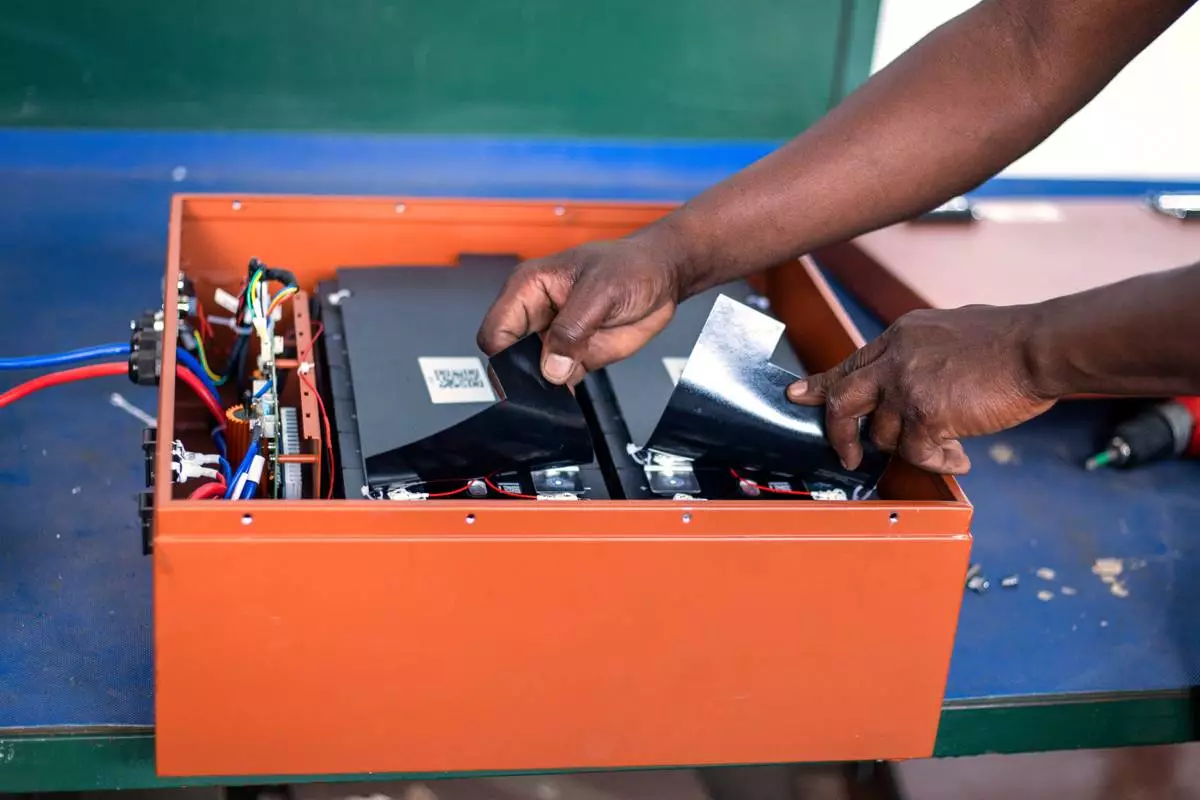
A worker shows a lithium-ion battery that is used to power tricycles at the Mobility for Africa assembly plant in Harare, Zimbabwe, Wednesday, Oct. 7, 2026. (AP Photo/Aaron Ufumeli)
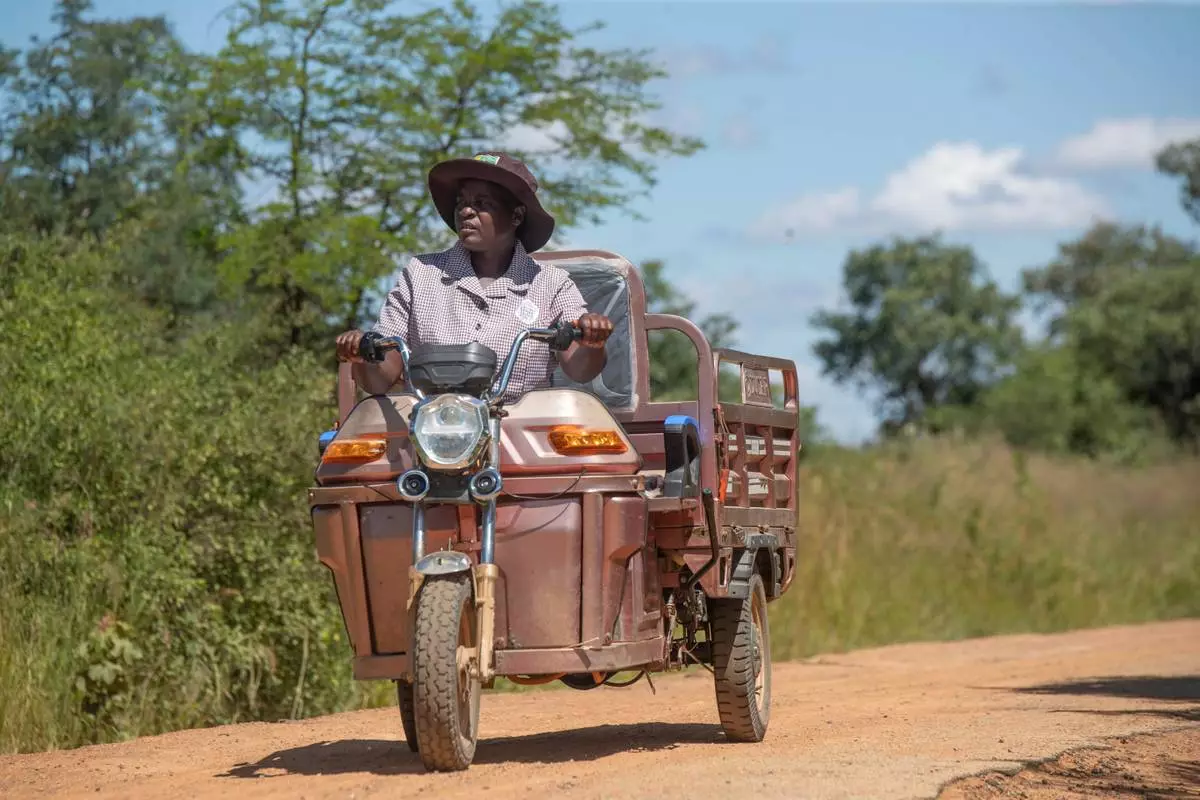
FILE - Josephine Nyevhe, a volunteer village health worker, conducts weekly visits on her electric tricycle in Hwedza, Zimbabwe, Thursday, March 6, 2025. (AP Photo/Aaron Ufumeli, File)
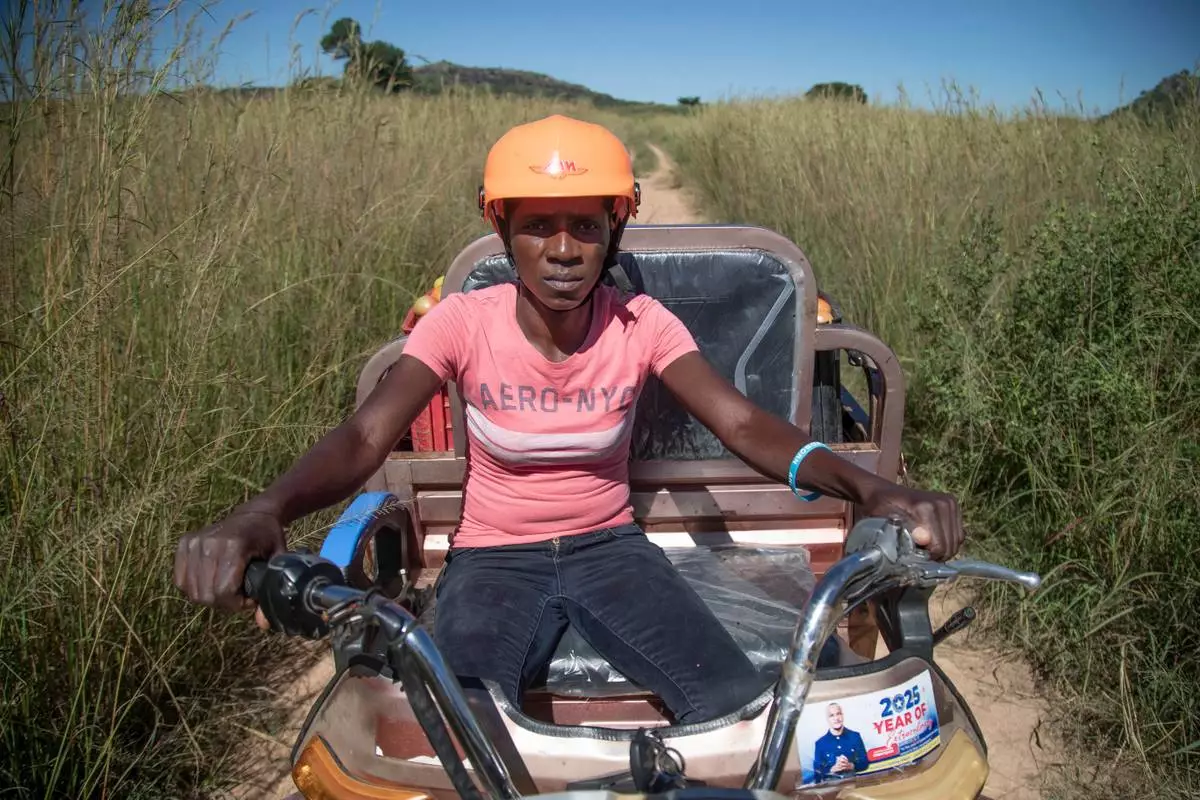
FILE - Anna Bhobho delivers tomatoes to a marketplace on her electric tricycle in Hwedza, Zimbabwe, Thursday, March 6 2025. (AP Photo/Aaron Ufumeli, File)
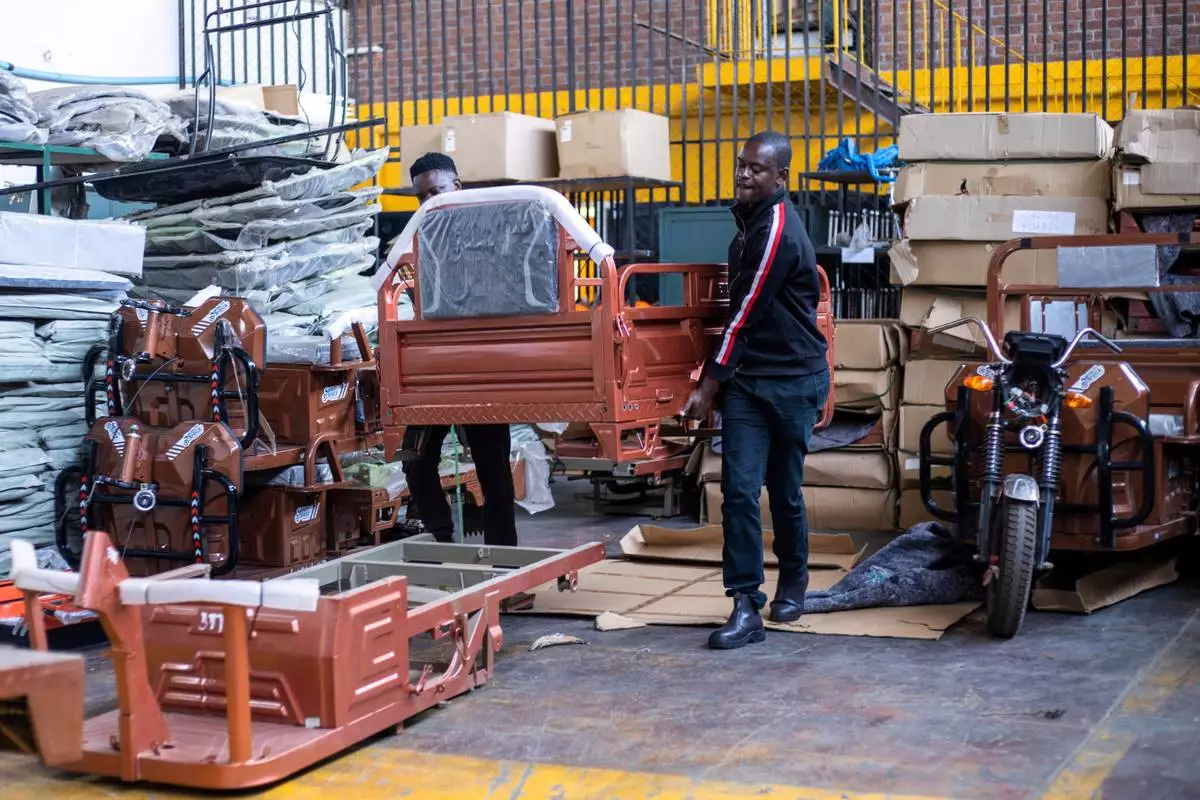
Workers assemble a lithium-ion battery-powered tricycle at the Mobility for Africa assembly plant in Harare, Zimbabwe, Wednesday, Oct. 7, 2026. (AP Photo/Aaron Ufumeli)
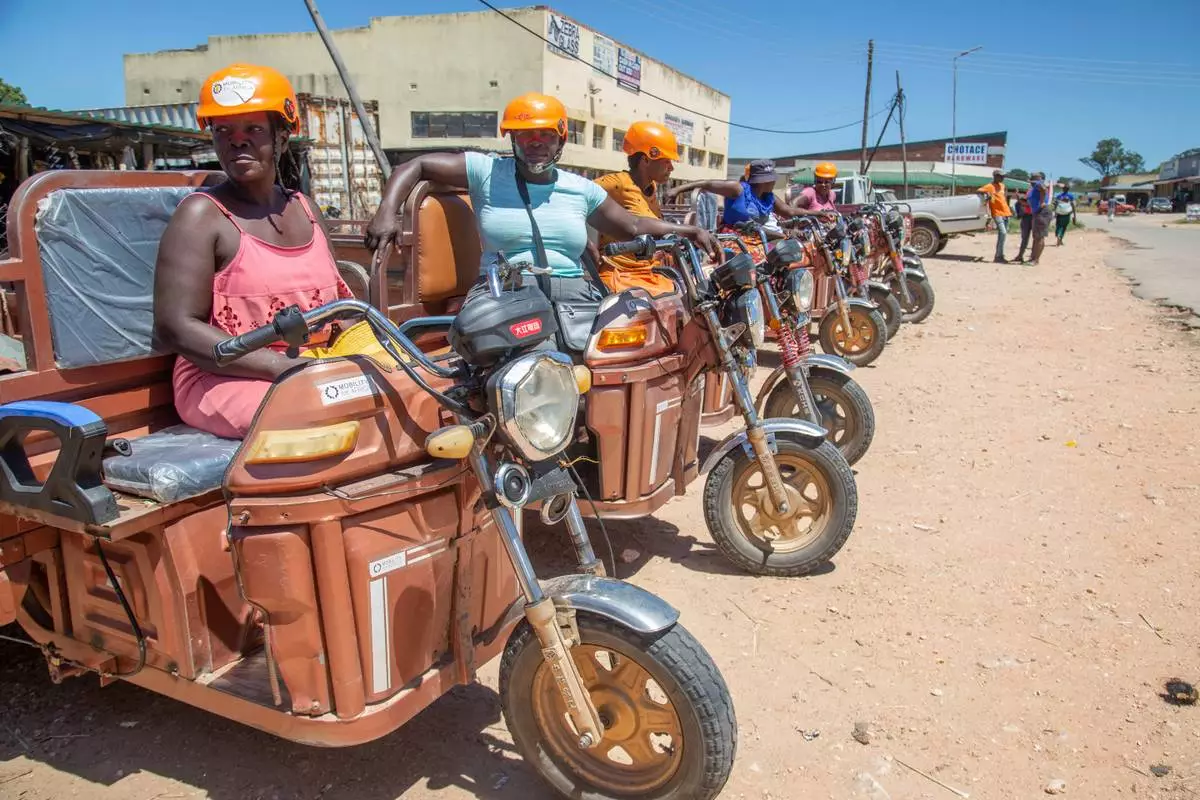
FILE - Women sit on three-wheeler tricycles waiting for clients at a marketplace in Hwedza, Zimbabwe, Thursday, March 6, 2025. (AP Photo/Aaron Ufumeli, File)
LOS ANGELES (AP) — Phil Collins gave a tearful acceptance speech and got an electrifying tribute from Cynthia Erivo, Oprah Winfrey inducted the late Luther Vandross, the crowd yelled along with Billy Idol, and Wu-Tang Clan crowded the stage for a rowdy celebration at the Rock & Roll Hall of Fame induction ceremony on Saturday night.
Queen Latifah, Oasis, MC Lyte, Sade and Joy Division/New Order and Iron Maiden were also inducted along with producer Rick Rubin, who got a long-bearded tribute from the Red Hot Chili Peppers at the Peacock Theater in Los Angeles.
A night that beforehand felt like it might fall flat with the absences of key inductees was as lively and overloaded as the induction ceremony ever is.
U2 was the night’s surprise opener, playing their new single “Silencio” while surrounded by dancers in riot squad gear with helmets and shields. They then launched into their 1984 classic “Pride (In the Name of Love)” as singer Bono alternately raised a peace sign and fist.
Run DMC and Aerosmith were the surprise closers with a loud jam of “Walk This Way,” their 1986 classic collaboration, produced by Rubin, that brought the merger of rock and rap to a new level.
Collins, whose mobility issues and other health problems kept him from performing, took the stage slowly using a pair of canes and cried at a huge ovation from a crowd that included his daughter, actor Lily Collins.
Blink-182 drummer Travis Barker inducted Collins and praised him for his unprecedented dual stardom as a drummer and a hit-making pop singer in the 1980s.
“I grew up just wanting to play the drums,” Collins said. “Everything else has been a really happy accident. I can’t believe, when I look back, how life has gone.”
Barker said Collins' song “In the Air Tonight” gave the world “arguably the most badass drum fill of all time.”
Minutes later, Barker played that drum fill himself as Erivo gave a slowed-down, epic rendition of the song with a wailing crescendo that brought the crowd to its feet.
Collins was already in the hall as a member of Genesis, but now gets the solo honor.
He hasn’t been able to take the stage since 2022, but assured the crowd that “you haven’t heard the last of me.”
The crowd leapt to its feet and shouted along with “White Wedding” during the induction of Idol — one of the few artists ticket buyers knew for sure would show up and perform.
He was inducted along with his longtime guitarist Steve Stevens by No Doubt members Tony Kanal and Gwen Stefani, who joined Idol for a duet on “Eyes Without a Face.”
"I say to all the young people out there who can barely tune a guitar and work a sampler, ‘Now it’s your turn,’” Idol said.
He ended with, “And now, I'm gonna party with the Wu-Tang Clan!”
Winfrey said with relish that Vandross was “the maestro of the love song” and said he was once correctly named “the top artist that people make looove to.”
Vandross, an R&B singer with a velvet voice, was one of the definitive singers of the 1980s and ’90s. He died in 2005.
“Luther Vandross sang with such passion and soul it could reach something deep inside that you didn’t even know needed to be reached,” Winfrey said.
Usher then took the stage and sang a sultry medley of Vandross hits, including “Here and Now” and “So Amazing.”
Wu-Tang Clan, the epic hip-hop collective from New York's Staten Island, filled the stage with its 10 current members, giving a memorable acceptance speech and a performance that had the crowd on its feet and dancing. Backed by a big jazz band, the musical medley included “C.R.E.A.M.," “Method Man" and late member Ol’ Dirty Bastard’s “Shimmy Shimmy Ya."
“Wu-Tang rewrote the rules of hip-hop and did it without a big machine behind them," said comedian Chris Rock, who inducted them.
“We took Staten Island to the world,” the group's leader RZA said. “We had a desire to conquer."
He added, “We wanted to make a mark. We made our mark.”
MC Lyte, a trailblazing female rapper starting in the late 1980s, was the first artist inducted, with hip-hop star Remy Ma doing the honors and calling her “one of the first women in hip-hop to make sure there was room for the rest of us.”
MC Lyte said she was a “B-girl from Brooklyn just looking for my chance to inspire and motivate.”
Her contemporary and fellow groundbreaker Latifah was inducted later in the evening by Megan Thee Stallion, who said Latifah “taught us to recognize royalty within ourselves.”
Latifah said for a long time, she would not have believed this night was possible.
“It’s difficult enough being a woman in hip-hop, let alone being a hip-hopper in the Rock & Roll Hall of Fame,” she said.
Latifah and MC Lyte then took the stage together to perform a medley of their hits, including Latifah's “U.N.I.T.Y.” and Lyte's “Ruffneck."
Latifah and Lyte entered the hall as recipients of the Early Influence Award along with posthumous inductees Gram Parsons, Fela Kuti and Celia Cruz, who were all inducted via video tribute.
Legendary rock, hip-hop and country producer Rubin accepted his induction with a one-sentence acceptance speech.
“You can’t kill rock ‘n’ roll,” he said, and left the stage.
The Red Hot Chili Peppers then appeared, all four of them wearing white wigs and long white fake beards to match Rubin’s signature look as they played their breakthrough hit “Give It Away,” one of many he produced for them.
Longtime Hall-of-Famer Neil Young inducted Rubin, making fun of his tendency to work while lying barefoot on the couch and praising him for the unmatched care he takes with his artists, including the Beastie Boys, Run DMC, Johnny Cash, the Chicks and Adele.
Oasis, the youngest of the inductees, didn't show up. Guitarist Noel Gallagher is playing a gig back home in Britain, and his little brother, Liam Gallagher, just didn't want to come.
“Anybody surprised they didn’t show up?” asked actor and Oasis superfan Bob Odenkirk, who inducted them. “It would’ve been out of character if they had. I would’ve been worried about them.”
Stephen Wilson Jr. gave an acoustic rendition of their biggest hit “Wonderwall.”
Iron Maiden, the quintessential British heavy metal band of the 1980s, opted to stay on tour in Australia.
“They aren’t even here tonight, because they’re rocking a world tour, as they have done for the last 50 years!” said actor Jack Black during their induction. A supergroup featuring members of Metallica, Rage Against the Machine and St. Vincent then played “The Trooper” in tribute.
Joy Division, a dark and seminal post-punk band, and New Order, which was formed by its members after singer Ian Curtis died in 1980, got a joint induction.
Trent Reznor of Nine Inch Nails inducted them, saying Joy Division's members were “the authors of an unbreakable archetype.”
Only the bassist for both bands, Peter Hook, appeared at the ceremony. He performed Joy Division's “Love Will Tear Us Apart” and New Order's “Bizarre Love Triangle,” with Deftones and singer Lauren Mayberry of the band Chvrches.
Hook said the young musicians “made an old man very happy.”
He has had long-running feuds with his fellow bandmates and, other than Curtis, didn't mention any of them in his acceptance.
Sade also decided to skip the induction. The singer and her band that’s named after her were inducted by singer Andra Day and celebrated by singer Sienna Spiro, who sang the group’s beloved hit “Smooth Operator.”
After streaming the ceremony live the past few years, the Rock Hall returned to its previous model, where the public won’t see it until an edited version airs on ABC and Disney+ on Dec. 9.
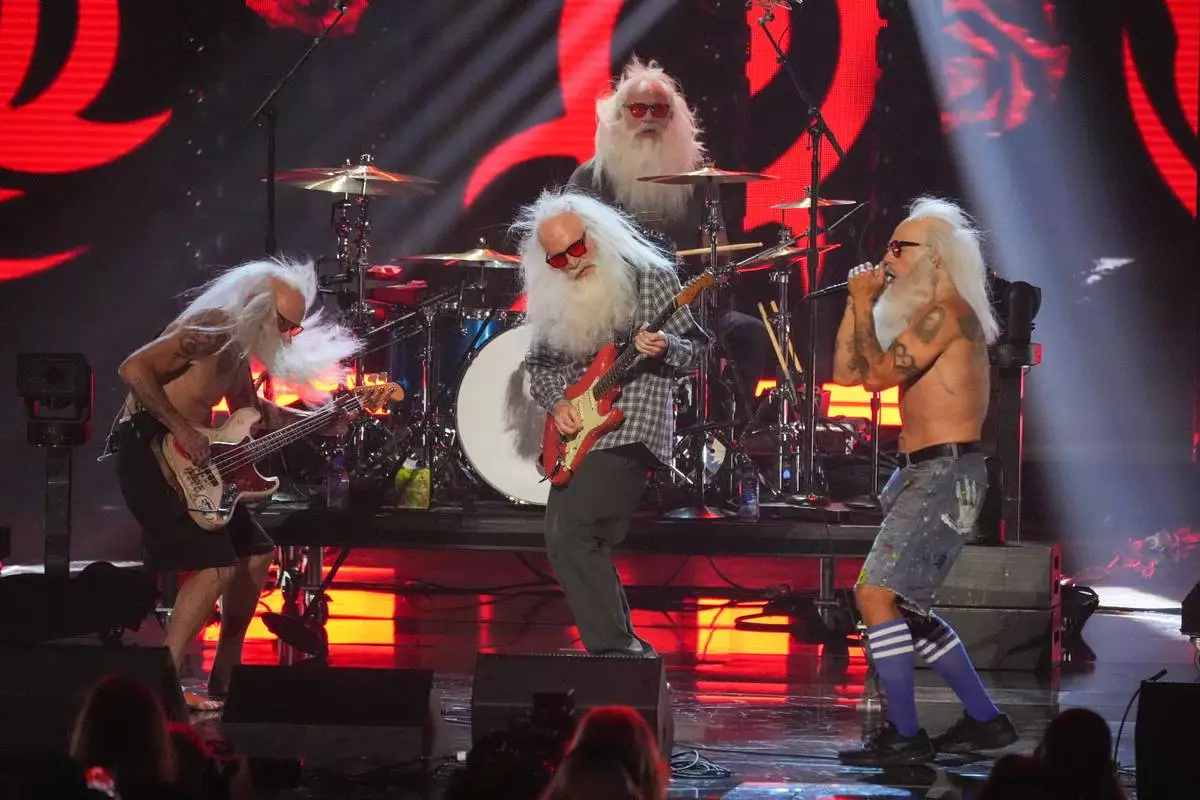
The Red Hot Chili Peppers dressed as Rick Rubin perform during the Rock and Roll Hall of Fame Induction Ceremony on Saturday, Nov. 14, 2026, at the Peacock Theater in Los Angeles. (AP Photo/Chris Pizzello)
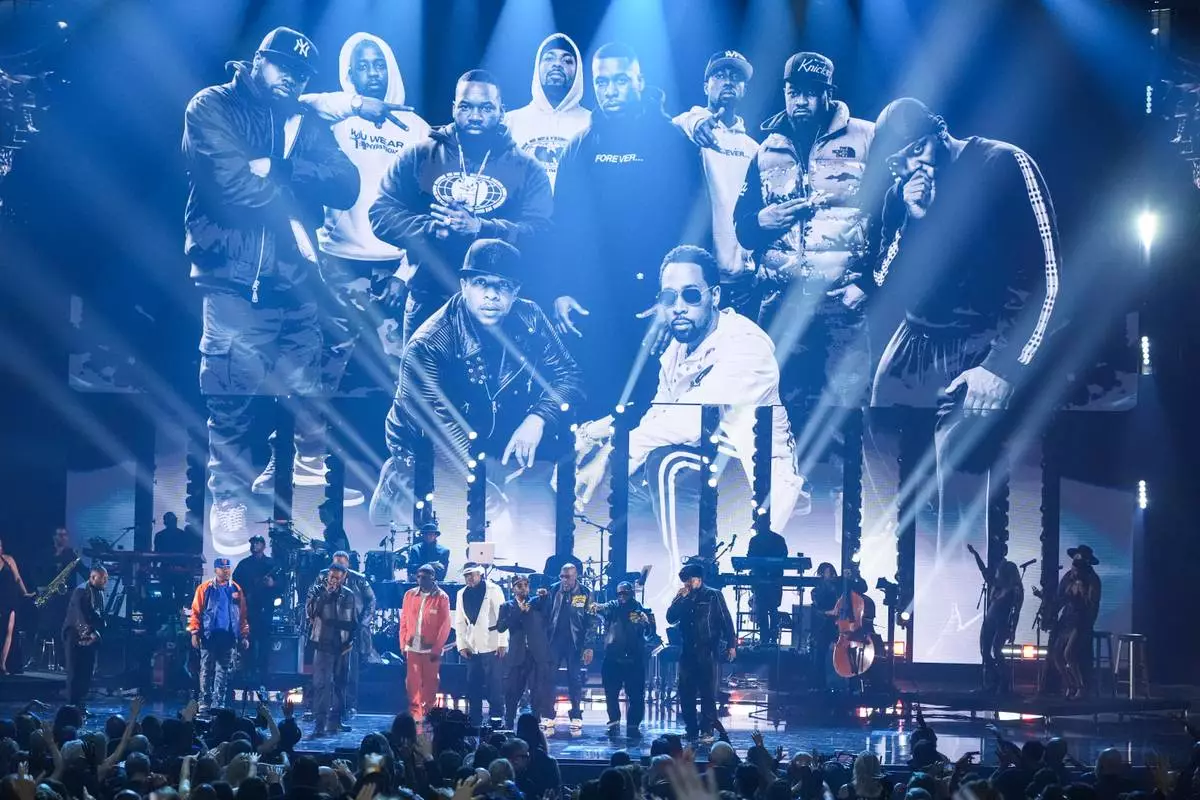
The Wu-Tang Clan performs during the Rock and Roll Hall of Fame Induction Ceremony on Saturday, Nov. 14, 2026, at the Peacock Theater in Los Angeles. (AP Photo/Chris Pizzello)
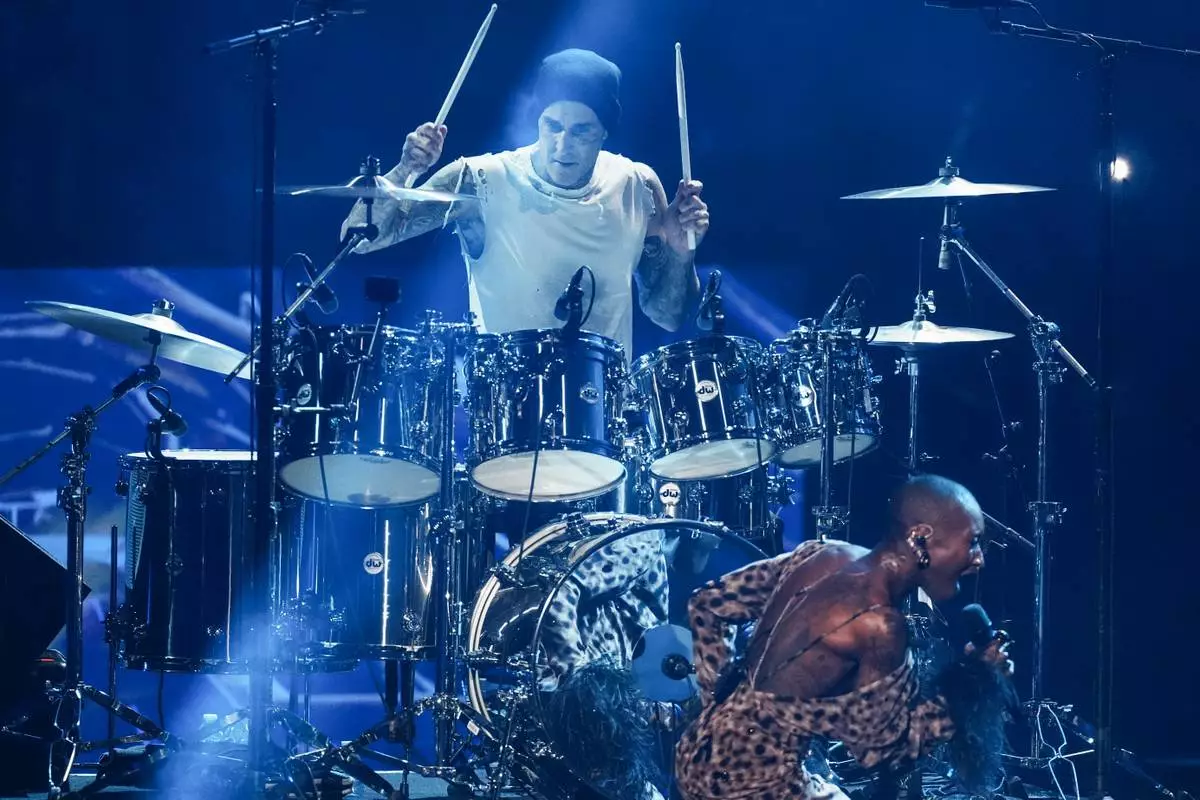
Travis Barker, top, and Cynthia Erivo perform during the Rock and Roll Hall of Fame Induction Ceremony on Saturday, Nov. 14, 2026, at the Peacock Theater in Los Angeles. (AP Photo/Chris Pizzello)
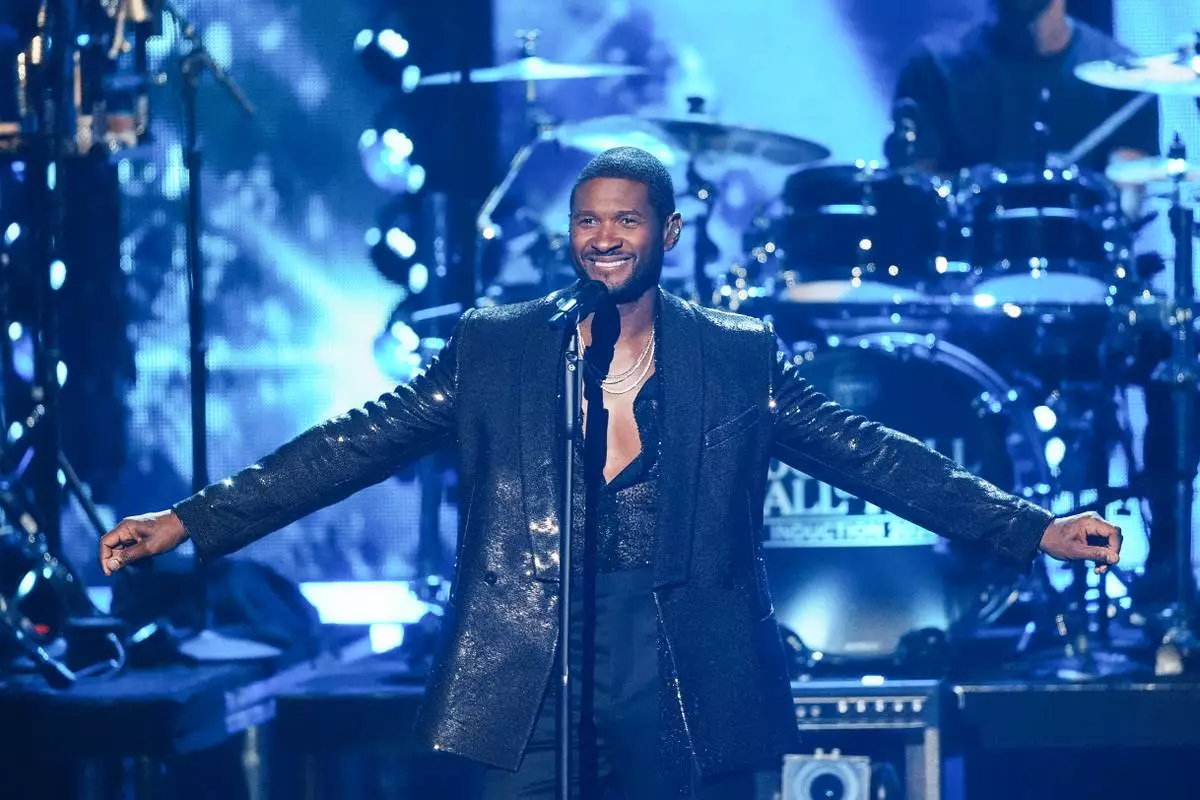
Usher performs during the Rock and Roll Hall of Fame Induction Ceremony on Saturday, Nov. 14, 2026, at the Peacock Theater in Los Angeles. (AP Photo/Chris Pizzello)
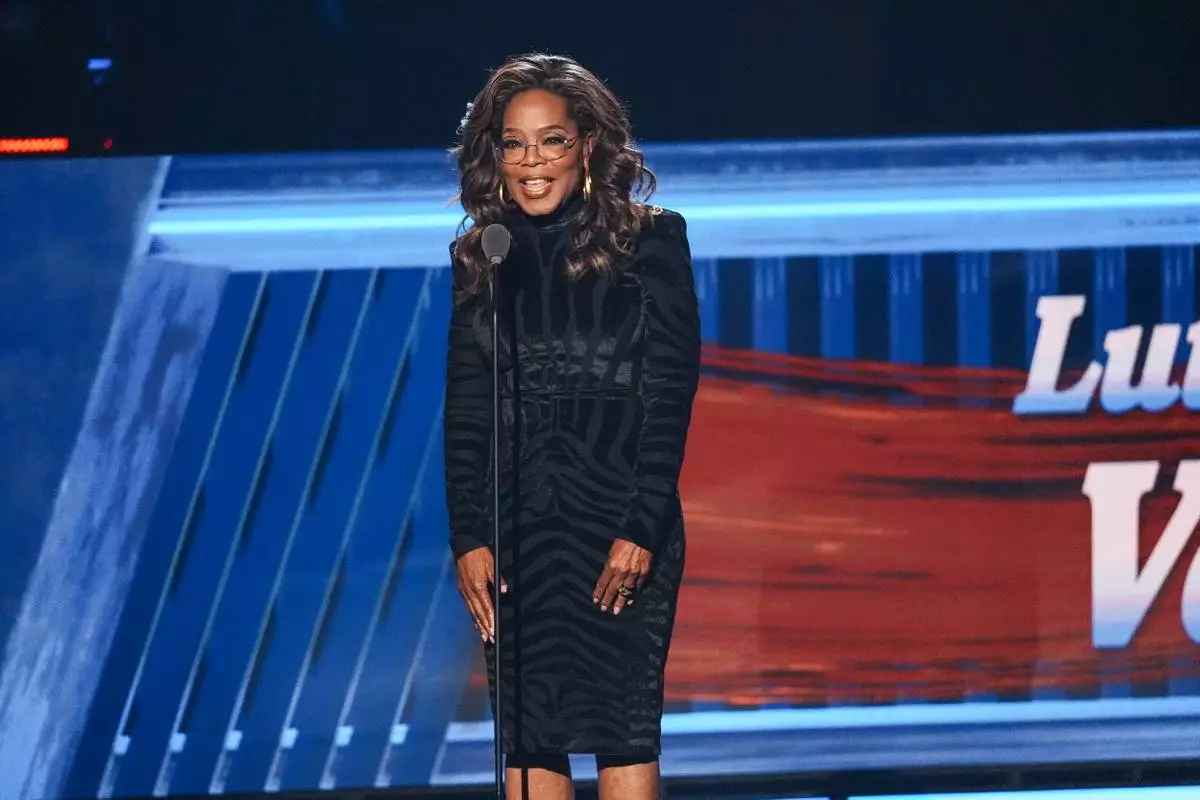
Oprah Winfrey speaks during the Rock and Roll Hall of Fame Induction Ceremony on Saturday, Nov. 14, 2026, at the Peacock Theater in Los Angeles. (AP Photo/Chris Pizzello)
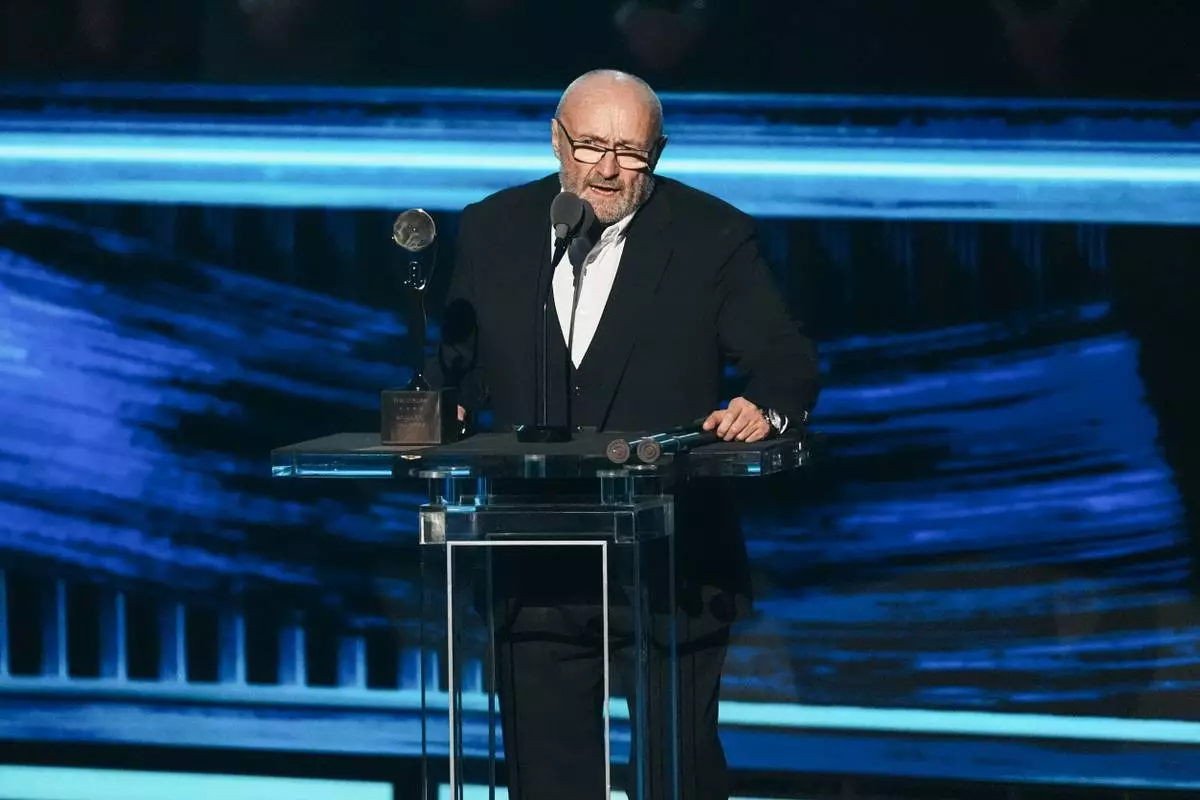
Inductee Phil Collins speaks during the Rock and Roll Hall of Fame Induction Ceremony on Saturday, Nov. 14, 2026, at the Peacock Theater in Los Angeles. (AP Photo/Chris Pizzello)
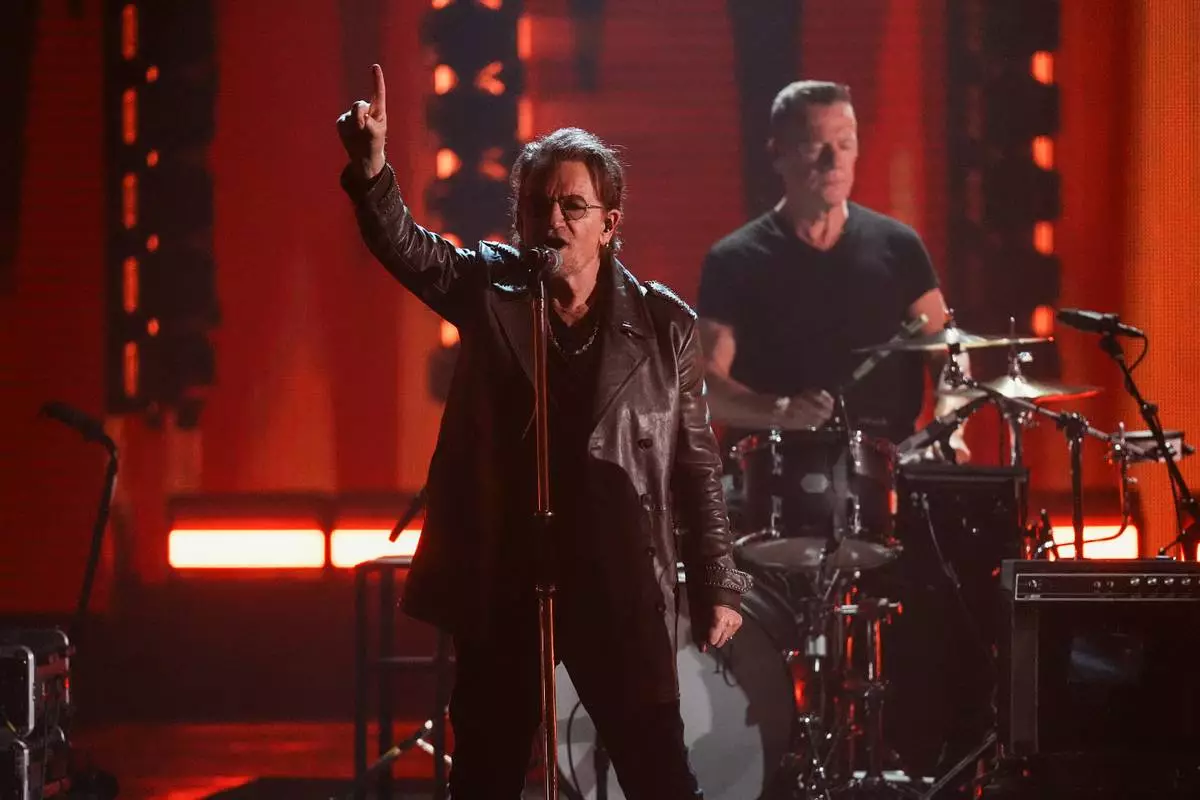
Bono of U2 performs during the Rock and Roll Hall of Fame Induction Ceremony on Saturday, Nov. 14, 2026, at the Peacock Theater in Los Angeles. (AP Photo/Chris Pizzello)
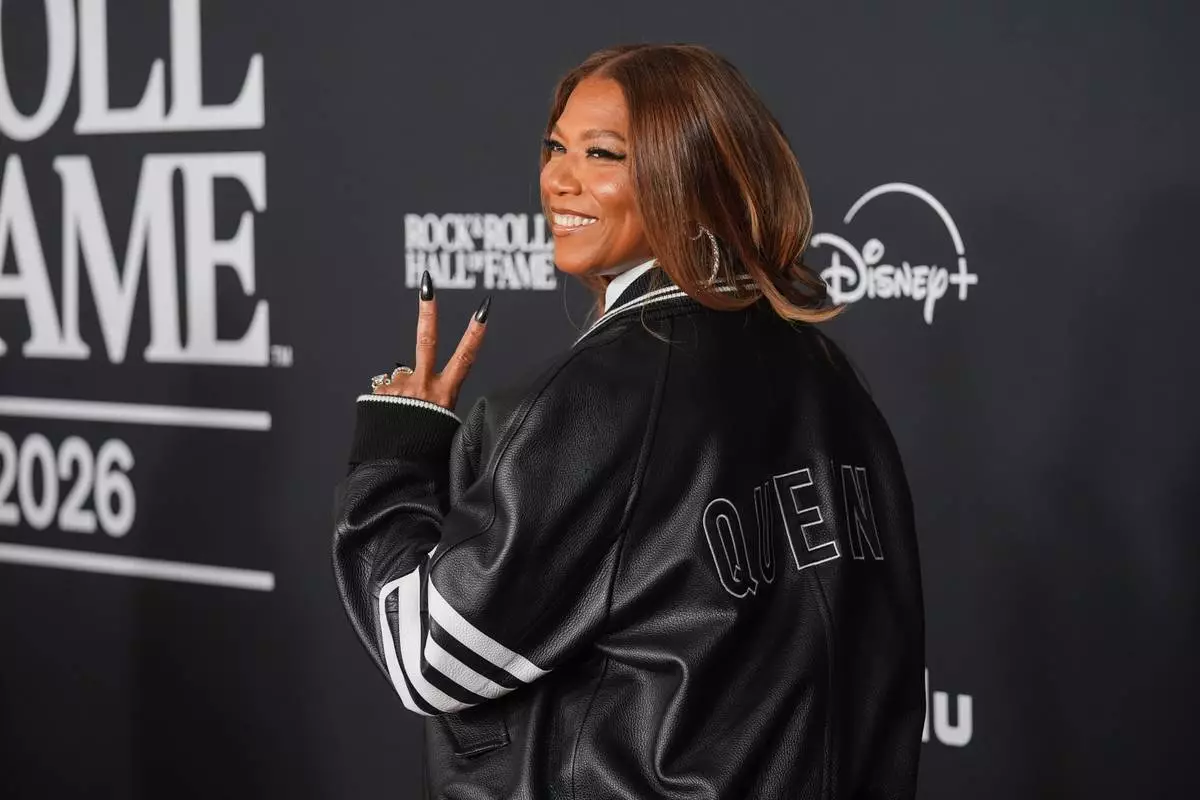
Queen Latifah arrives at the Rock and Roll Hall of Fame Induction Ceremony on Saturday, Nov. 14, 2026, at the Peacock Theater in Los Angeles. (AP Photo/Chris Pizzello)
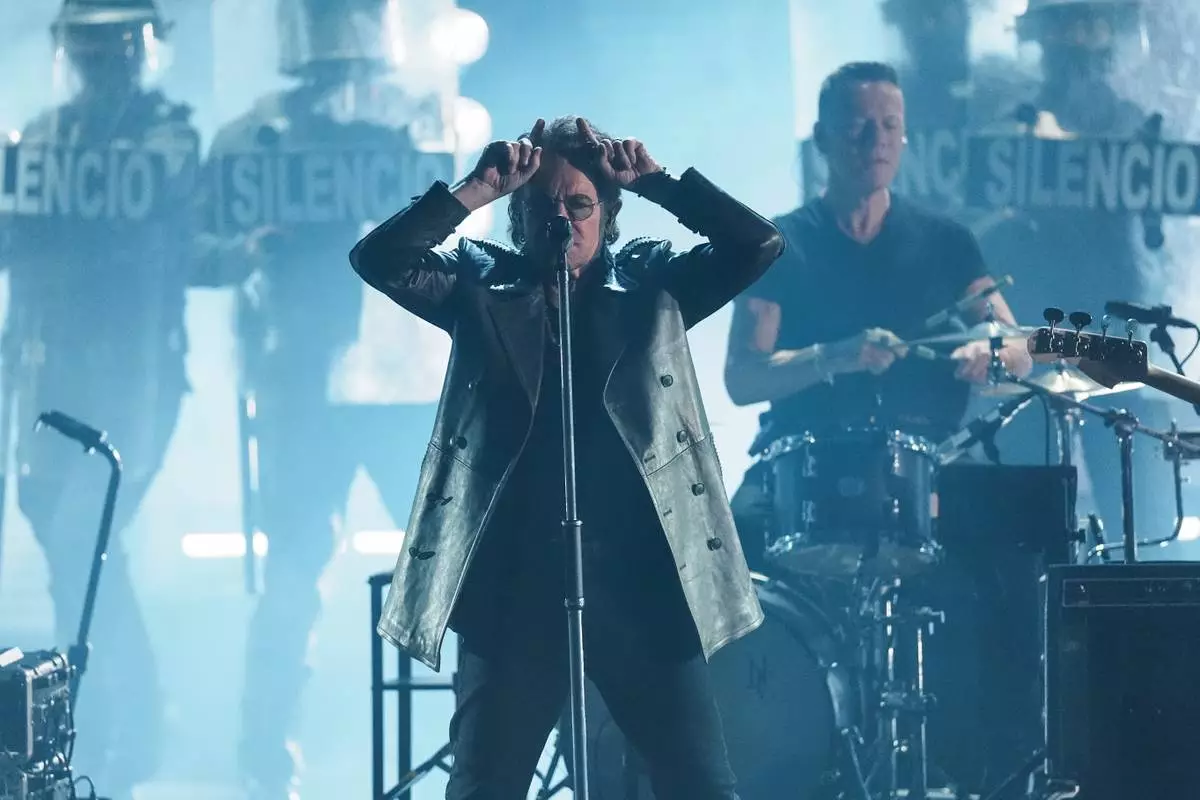
Bono of U2 performs during the Rock and Roll Hall of Fame Induction Ceremony on Saturday, Nov. 14, 2026, at the Peacock Theater in Los Angeles. (AP Photo/Chris Pizzello)
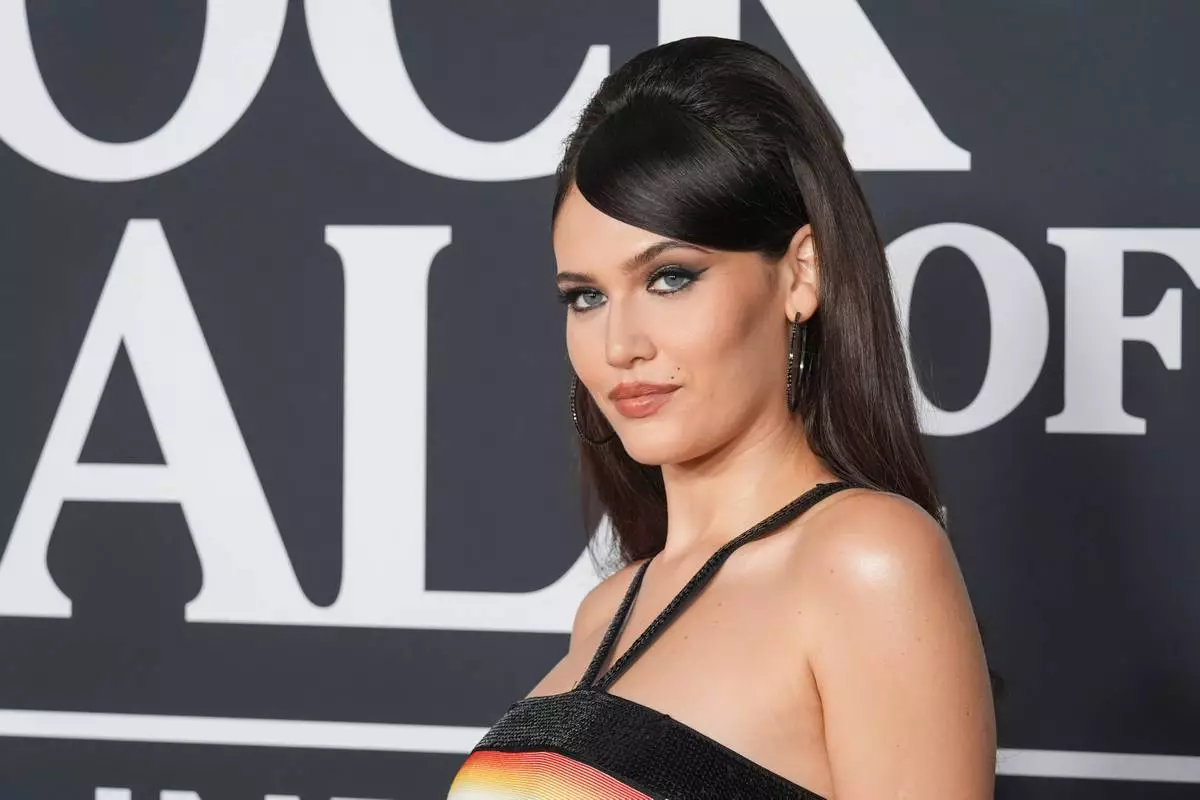
Sienna Spiro arrives at the Rock and Roll Hall of Fame Induction Ceremony on Saturday, Nov. 14, 2026, at the Peacock Theater in Los Angeles. (AP Photo/Chris Pizzello)
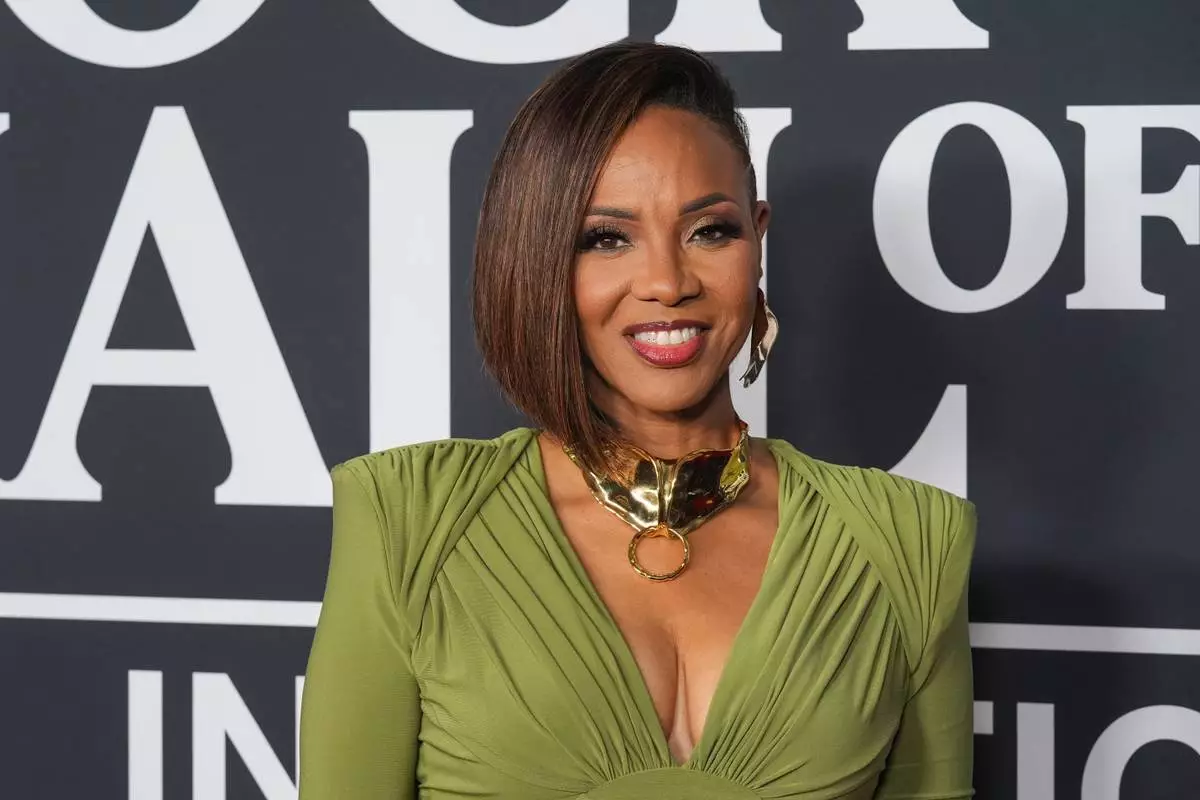
MC Lyte arrives at the Rock and Roll Hall of Fame Induction Ceremony on Saturday, Nov. 14, 2026, at the Peacock Theater in Los Angeles. (AP Photo/Chris Pizzello)
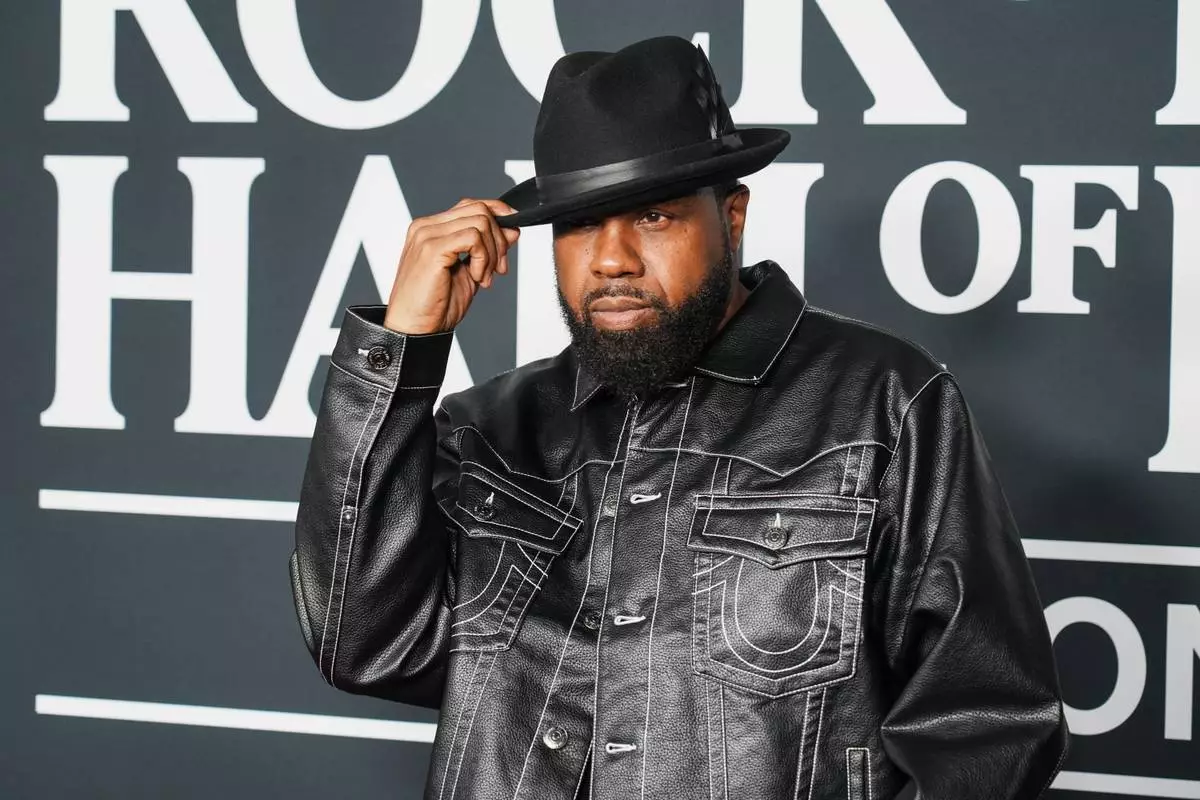
DJ Mathematics of the Wu-Tang Clan arrives at the Rock and Roll Hall of Fame Induction Ceremony on Saturday, Nov. 14, 2026, at the Peacock Theater in Los Angeles. (AP Photo/Chris Pizzello)
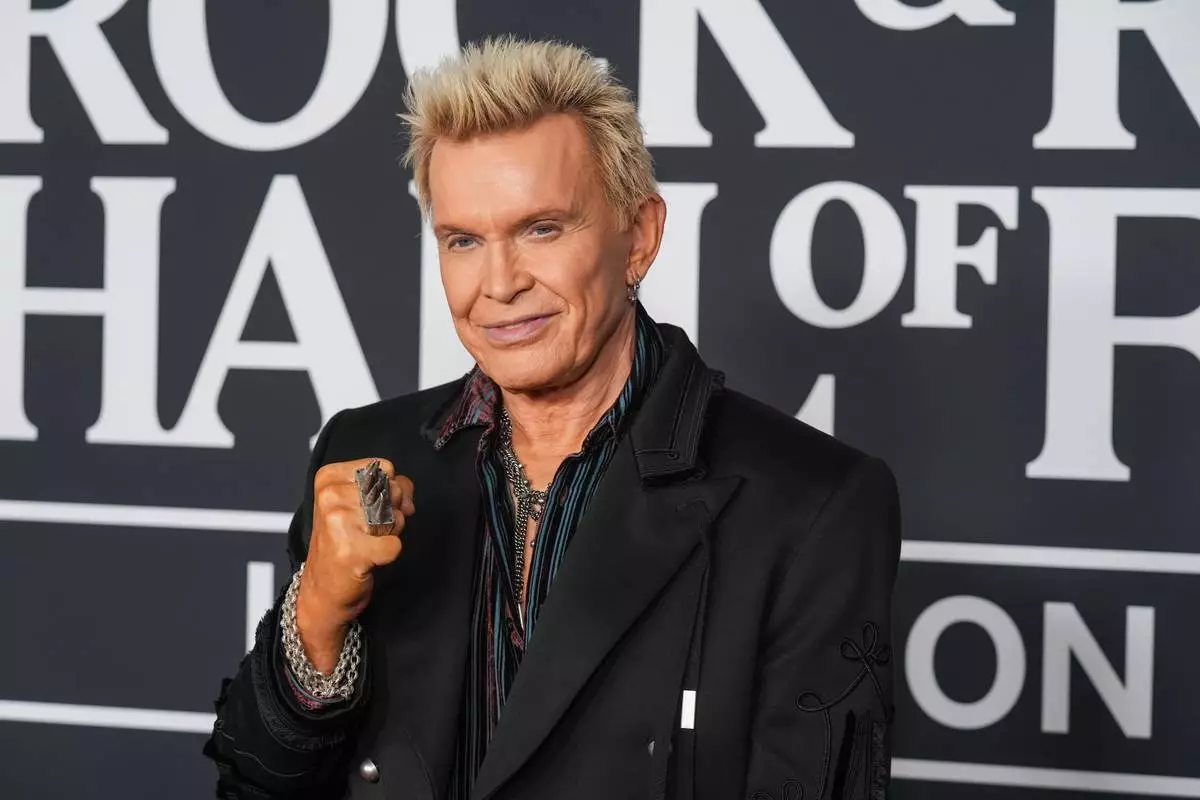
Billy Idol arrives at the Rock and Roll Hall of Fame Induction Ceremony on Saturday, Nov. 14, 2026, at the Peacock Theater in Los Angeles. (AP Photo/Chris Pizzello)
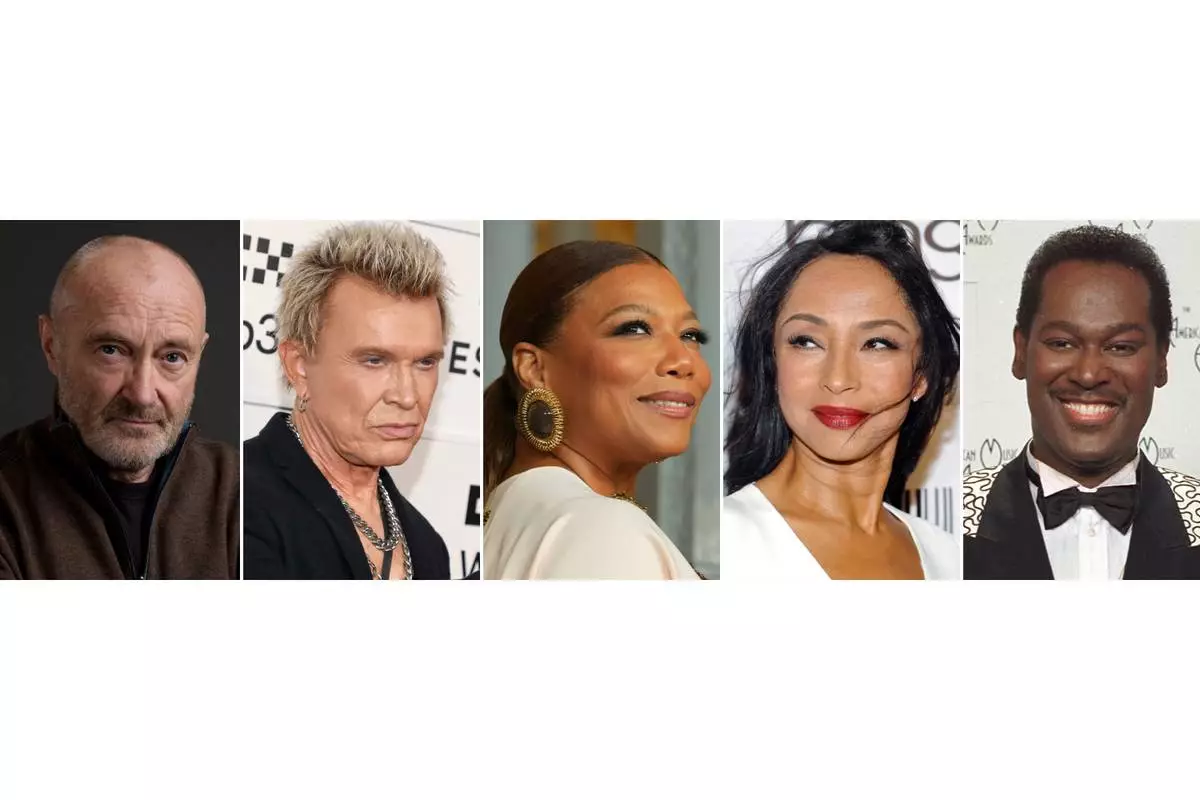
This combination of images show, from left, Phil Collins, Billy Idol, Queen Latifah, Sade and Luther Vandross. (AP Photo)
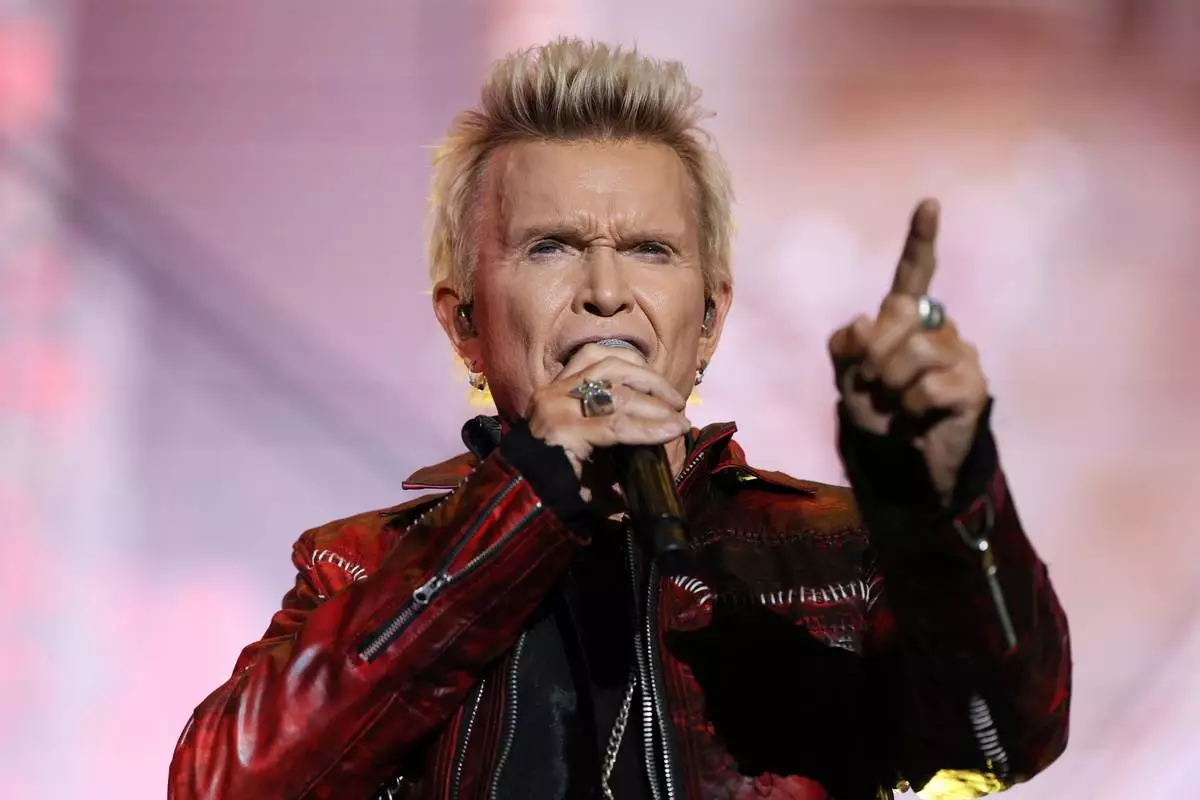
FILE - Billy Idol performs during the Vive Latino music festival in Mexico City on March 16, 2024. (AP Photo/Ginnette Riquelme, File)