Multiple northern parts of northwest China's Xinjiang Uygur Autonomous Region were hit by heavy snowfall and a sharp temperature drop on Saturday, prompting authorities to mount a swift response.
Affected by a cold air mass, Xinjinag's capital Urumqi experienced snowfall, which resulted in slippery road surfaces and reduced visibility, hindering traffic flow.
Police officers increased the frequency of patrols in key areas and locations prone to icing and traffic congestion.
"We've conducted traffic guidance and patrols in the possible congested and slippery sections within the jurisdiction. Anti-skid materials are also deployed in sections prone to slipping to ensure the normal travel of residents," said Chen Huicai, a police officer from Shuimogou district detachment of Urumqi Public Security Bureau's Traffic Management Division. Manas County of Changji Hui Autonomous Prefecture in Xinjiang experienced significant rain and snow, with temperatures in mountainous areas dropping below freezing.
Local animal husbandry authorities have implemented a range of measures to ensure protection against dampness and cold. Furthermore, they have adopted a targeted, refined approach to livestock management by grouping sheep according to their specific breeds and individual growth stages.
"The temperature has dropped over the past two days. Our factory has prepared 2,400 tons of forage. We'll also increase the feeding of concentrated feed to the lambs subsequently to raise their survival rate to over 95 percent," said Ren Chenkai, a technician from the Suffolk Sheep Core Breeding Base in Manas County.

Authorities mount swift response to snowfall in Xinjiang
Deteriorating fuel shortages are piling pressure on Sudan's fragile economy, further arresting its industrial, agricultural, and commercial sectors.
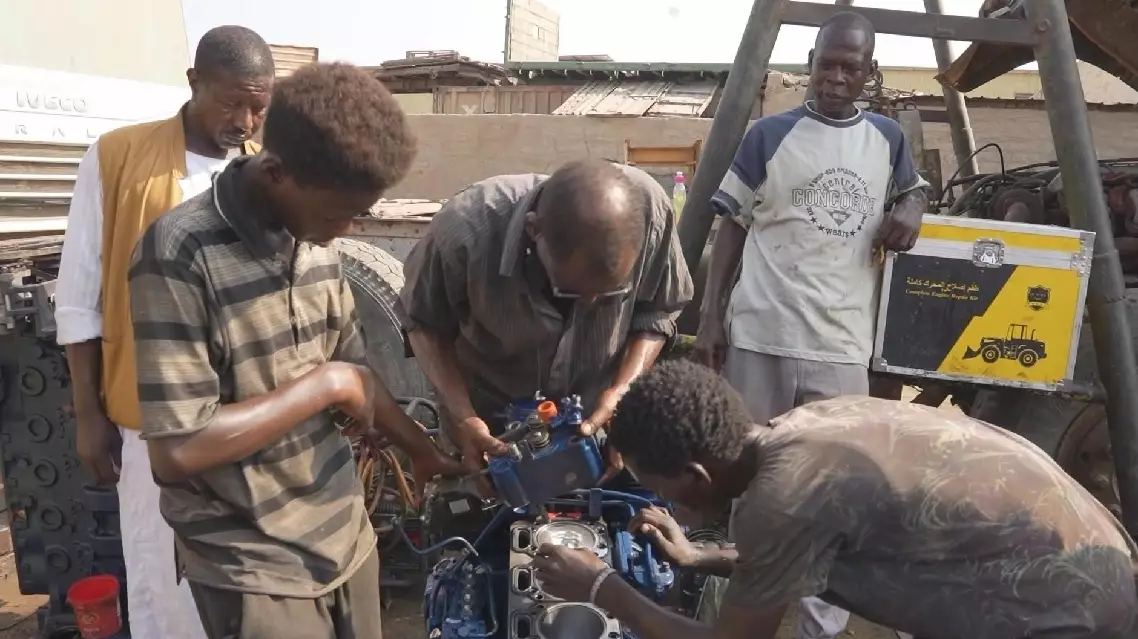
At a repair shop in Port Sudan, more than a dozen employees earn income repairing cars and heavy machinery. Unreliable fuel supplies have made it difficult to operate equipment, test vehicles, and transport spare parts, disrupting some of the shop's work.
"Fuel is essential to us. Without it, we can't test our equipment. Fuel is also needed to clean and maintain the engine and many other components," said Yasser Bukhari, head of a local vehicle repair shop.
At the same time, the fuel shortage has placed additional strain on the power supply. Many factories rely on electrically powered equipment, so when the power goes out, production is often forced to stop.
"Because of the fuel shortage, we have had to turn to the black market, where prices are exorbitant. Unreliable electricity supply is also severely hampering production. Whenever the power goes out, almost all work comes to a halt. Many production tasks have to be delayed, making it difficult for the factory to operate normally," said Mohamed Suliman, a local worker.
The fuel shortage has also had a significant impact on trade. Rising fuel prices have increased the cost of purchase, transportation, and distribution, driving up prices. At the same time, rising prices have eroded people's purchasing power, leaving many merchants struggling to stay afloat.
"Sudan relies heavily on imported fuel, and prices continue to rise. This has significantly increased the cost of transporting goods, which in turn has driven up fruit prices. Over the past three months, prices have nearly quadrupled. Prices for goods across the board have risen sharply, making it increasingly difficult to keep our business going," said Abdallah Hassan, a local store owner.
Sudan's economy under tremendous pressure amid fuel shortage