As the 33rd APEC Economic Leaders' Meeting is scheduled to open in the southern Chinese metropolis of Shenzhen on Wednesday, Mexico is looking to the high-profile summit to unlock new business opportunities with China and other APEC economies, aiming to diversify its trade partnerships and reduce its heavy reliance on the United States, said Agustin Garcia Rechy, a Mexican entrepreneur and member of the APEC Business Advisory Council (ABAC).
In an interview with China Global Television Network (CGTN),Rechy said the gathering could deliver tangible benefits for Mexican firms, from more exports to increased Chinese investment.
"There are three main opportunities -- the importing of Chinese products to Mexico, the exporting and positioning of Mexican products to China's enormous market, and then the attracting of investment. [We hope it will] bring more Chinese businesses to Mexico, to create jobs and opportunities for Mexican suppliers to integrate into those high-value chains," said Rechy.
A central theme of the APEC 2026 agenda is the empowerment of small and medium-sized enterprises (SMEs). Rechy considers SMEs to be the backbone of the regional economy.
"Ninety-seven percent of companies in the Asia-Pacific region are SMEs. It is the largest field within the productive sector -- the productive pillar of businesses -- which we have focused on and sought to highlight even further at the APEC meetings, where we can discuss greater integration," said the entrepreneur.
The summit arrives at the end of a highly tense year for global trade. With over 80 percent of Mexico's exports destined for the U.S., Rechy stressed the importance of diversifying trade partnerships in an unpredictable global environment.
"One key issue is diversifying our markets, which Mexico's business council has pushed this year. It is a very important issue that we have conveyed: enabling economies to have that vision, those possibilities, and above all, that access, as I have mentioned," he said.
As global leaders and top executives descend on Shenzhen, Mexico arrives with a clear and strategic wish list: securing new markets beyond North America, attracting Chinese investment into its supply chains, and acquiring digital tools to accelerate the growth of its small businesses.

Mexico eyes APEC Shenzhen summit to diversify trade, deepen ties with other regional economies
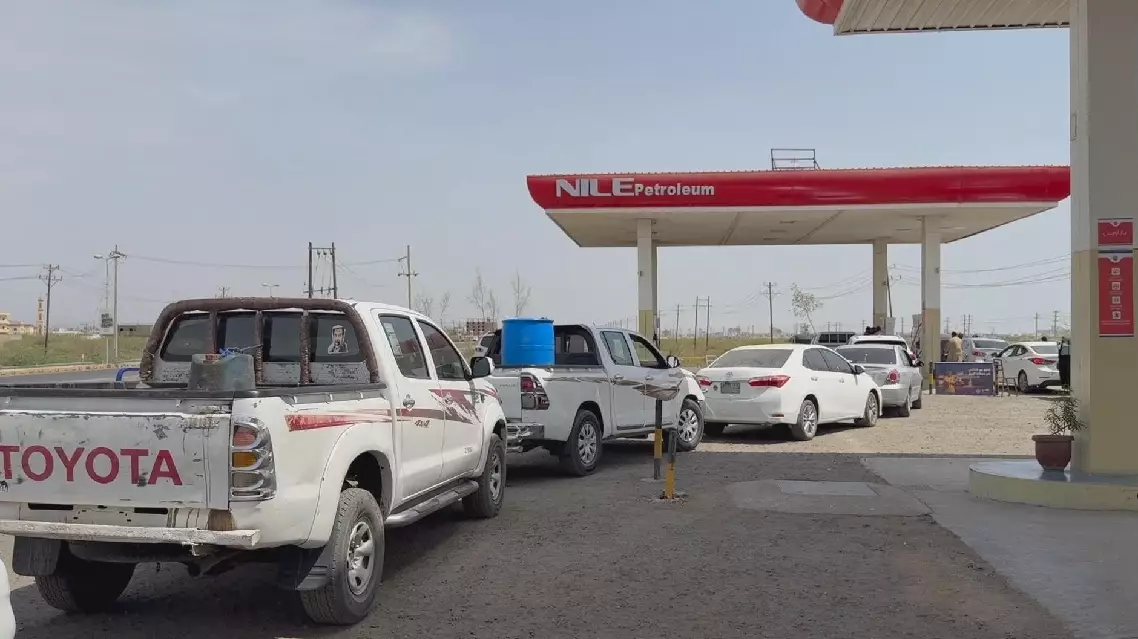
A deepening fuel crisis is paralyzing daily life across Sudan, where long lines of vehicles at the few operating stations have become a daily routine.
With domestic refining crippled and import prices rising, the country is under mounting pressure over its energy supply. The lingering and spreading crisis has also driven local prices sharply higher.
"I started queuing for gas at 7 this morning, and I've been waiting for over two hours now. I don't know how much longer I'll have to wait. I haven't been able to fill up for a week. And the price of gasoline has further gone up recently. Now it costs 35,000 Sudanese pounds (about 58.19 U.S. dollars) per gallon. It has increased by 5,000 Sudanese pounds in just several days," said Osman Faisal, a resident.
The crisis stems from war damage to Sudan's oil infrastructure. Relentless clashes since fighting erupted in April 2023 between the Sudanese Armed Forces and the paramilitary Rapid Support Forces have forced major oil fields to shut down. The Khartoum refinery, which once met about 70 percent of national fuel needs, has shut down. Several oil fields are also offline, forcing Sudan to rely almost entirely on imports.
The escalation in the Middle East since late February has led to significant fluctuations in international energy market prices, and Sudan's domestic supply is directly exposed to that backdrop.
This external shock has been coupled with the depreciation of the Sudanese pound against the U.S. dollar, making every imported shipment more expensive. Caught between rising global prices and a plummeting local currency, gas station operators are forced to constantly recalculate their rates and frequently shut down pumps.
The unpredictability forced workers into an impossible daily trade-off between earning a living and waiting in line.
"The Sudanese pound continues to depreciate against the U.S. dollar, exacerbating the fuel crisis. Hopefully, the exchange rate will stabilize as soon as possible. Every morning when we wake up, we are forced to make a choice -- go to work or queue for gas?" said Adnan Osman, another resident.
In addition to disrupting people's travel, the fuel shortage has driven up transportation and delivery costs, pushing the prices of food and daily necessities higher.
"The prices of food, including vegetables and bread, are also on the rise. The life of everyone in this country is being severely affected," said Alrazy Mohamed, a resident.
Sudan paralyzed by fuel crisis as war, currency collapse choke supply