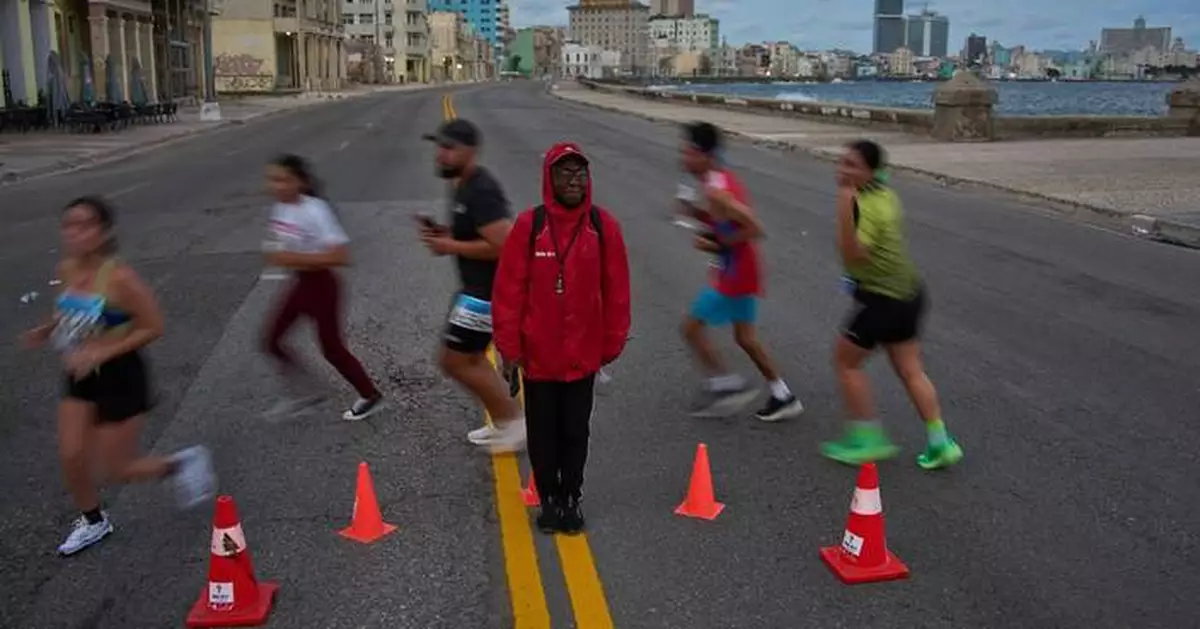
HAVANA (AP) — Thousands of people ran Sunday in Cuba’s most important international marathon, with some using the race to protest U.S. economic sanctions against the island.
The Marabana marathon, held every November to commemorate the founding of Havana, took runners along city's iconic streets and landmarks, such as the Paseo del Prado and the Capitol building. Many wore signs expressing solidarity with Cuba.
“Cuba is not a threat; the blockade is,” read the signs that many of the 3,000 participants wore on their backs.
The U.S. embargo against Cuba was first imposed in 1960, after Fidel Castro led a revolution that toppled dictator Fulgencio Batista and nationalized properties belonging to U.S. citizens and corporations. As a result, the Caribbean country has endured decades of economic and financial troubles and is now being pushed to a breaking point after U.S. President Donald Trump announced in late January that he would impose tariffs on any country that sells or provides oil to Cuba.
The warning has effectively cut off fuel to the island, leading to widespread power outages that disrupt water supplies and internet and telephone services.
“The blockade is suffocating the Cuban people," Yuraldi Cava, a 58-year-old state employee, said while running. “We are going to win this fight.”
Mayté Vigoa, Havana’s provincial government coordinator for sports, said the city had to make a major effort to hold the international race because of the island’s precarious economic conditions. She confirmed that the sportswear brand Adidas, a longtime sponsor of the competition, did not provide support this year.
Other companies with longstanding ties to Cuba, including Meliá Hotels International, said they were withdrawing from the island because of the tightening of sanctions.
Participants included families with children and people with disabilities dressed in sportswear and carrying water bottles as enthusiastic onlookers cheered them on from the sidewalks.
Those protesting the sanctions included foreigners who wore red-and-white sweatshirts with the message “Cuba is not alone.”
The marathon is recognized by the Association of International Marathons and Distance Races, and runners can use their times as official qualifying marks. The event also features a half-marathon, as well as the more popular 10-kilometer and 5-kilometer races.
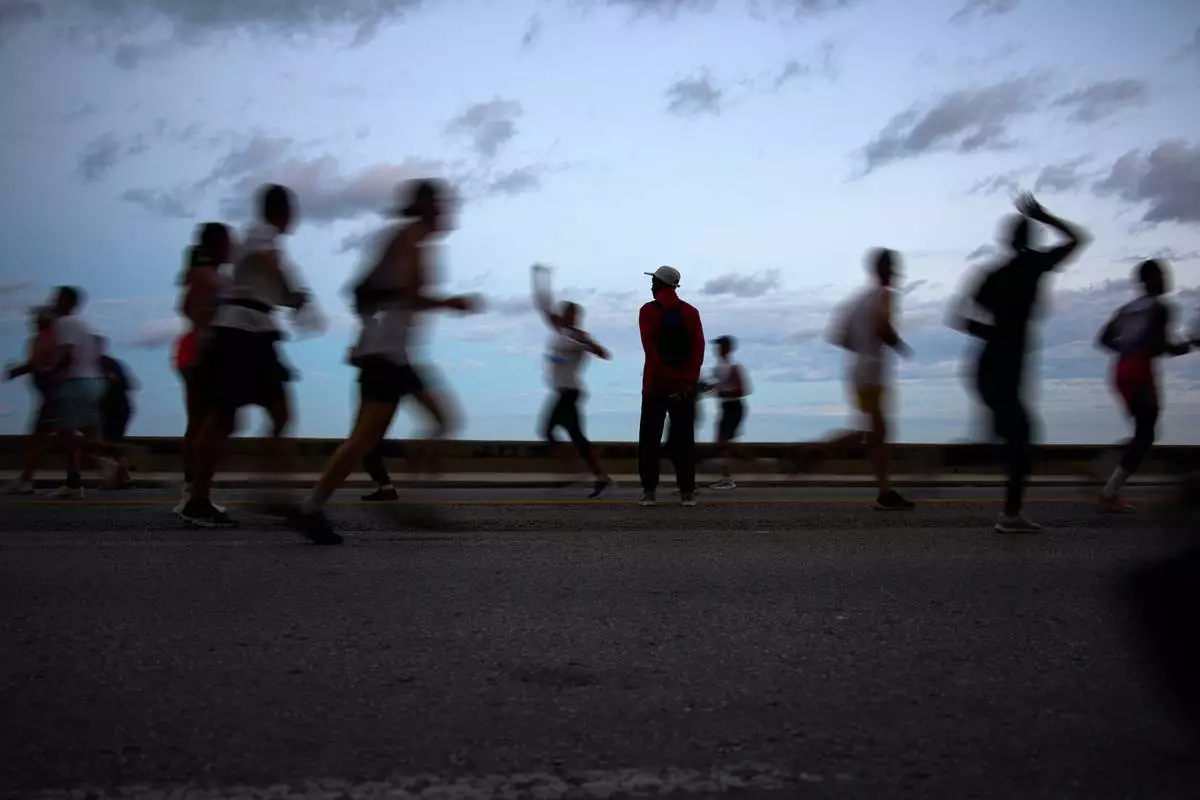
Runners participate in the 40th Marabana marathon in Havana, Sunday, Nov. 15, 2026. (AP Photo/Ramon Espinosa)
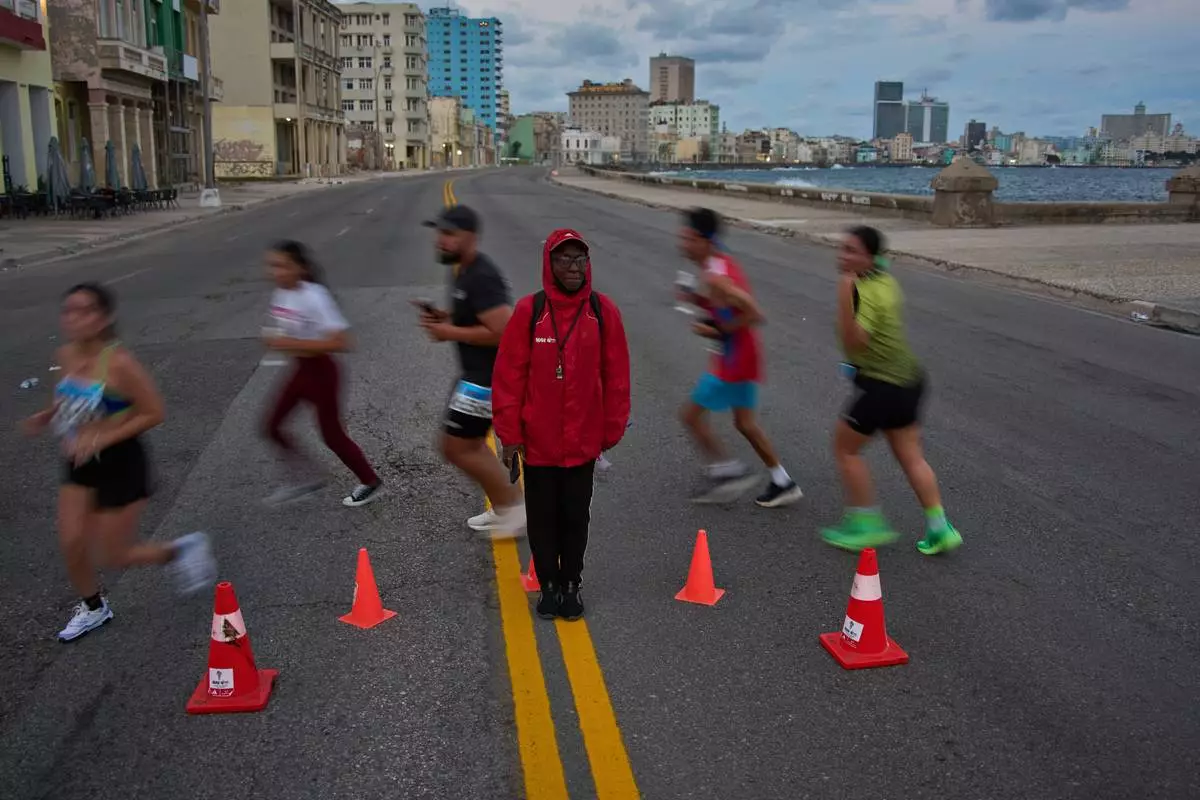
Runners participate in the 40th Marabana marathon in Havana, Sunday, Nov. 15, 2026. (AP Photo/Ramon Espinosa)
CUSCO, Peru (AP) — Pope Leo XIV traveled across Peru on Sunday to visit communities high in the Andes mountains and deep in the Amazon rainforest, as the plight of Indigenous peoples and the protection of the environment took center stage on his South American odyssey.
On the penultimate day of his visit to his adopted homeland, Leo channeled Pope Francis by emphasizing Catholic teaching that links care for the most vulnerable with care for God’s creation.
Leo arrived first in the Andean city of Cusco, the former capital of the Inca empire, before flying to the Amazonian city of Pucallpa, where illegal mining, deforestation and threats to Indigenous communities are central concerns.
In Cusco, Leo praised the traditional expression of popular piety, including processions and religious festivals, as effective ways of forging community and transmitting the faith, especially to young people.
“The future of these traditions lies not only in preserving what has been handed down, but also in passing it on in a living way,” he said from the grounds of Cusco’s historic Incan fortress, Sacsayhuamán.
Huge crowds lined Cusco's cobblestoned streets and packed its central Plaza de Armas, an imposing square decorated with a blend of Inca and Spanish colonial buildings. Many people wore the traditional Andean hats and colorful wool vests typical of the region, while others wore plastic ponchos to guard against a drizzling morning rain.
“It is all worth it,” said Margarida Salomon, 63, who said she came from Sucre in Bolivia to see the pontiff, spending about $500 to take a bus, sleep in a tent and eat Peruvian food from stalls. “I am still getting to know this pope, but the fact he is here in the Andes means a lot.”
Spectators at the archaeological site were treated to a performance of “Los Pablitos,” which translates to “The Little Pauls” but refers to the Ukukus (or Pabluchas). They are mythical half-man, half-bear figures who serve as the traditional guardians and peacekeepers during the Pilgrimage to the Sanctuary of the Lord of Qoyllurit’i in Cusco.
The visit to Cusco, 3,400 meters (more than 11,000 feet) above sea level, tested Leo's stamina as he continues recovering from lung cancer surgery. Leo sat in the chair of his popemobile during part of the ride around Cusco, but it wasn't clear if that was to preserve his energy or to steady himself on the uneven streets.
In general, the 71-year-old Leo has seemed unfazed by the toll of the three-nation South American trip, the longest of his pontificate. While others traveling on the papal plane have fallen ill, Leo has shown no sign of weakness or fatigue since the trip began Nov. 6, and in fact seemed energized, especially from the days spent in his former diocese of Chiclayo seeing old friends.
In Pucallpa, a rainforest city of 434,000 people, Leo is expected to reinforce Francis’ teachings on protecting the environment and Indigenous communities threatened by illegal mining and other forms of exploitation.
Illegal gold mining has become an increasingly lucrative business in the Amazon, devastating forests and polluting rivers. Miners use makeshift suction dredges and mercury, a toxic metal, to extract gold.
“This global context of war and conflict has contributed to gold prices rising to historic highs, and the direct impact of this is that gold — which is present in all Amazonian rivers — can be extracted using mercury, particularly if you want to do this on a large scale,” said Raphael Hoetmer, Western Amazon program director at Amazon Watch.
“It’s causing pollution, health issues, and environmental degradation,” he said.
On Saturday, police reported three operations against illegal mining in Madre de Dios, one of the country’s most biodiverse regions. They said they destroyed extraction equipment, including rafts and motors, valued at $4.1 million.
Illegal mining also drives deforestation and encroaches on Indigenous territories, threatening ancestral lands and exposing communities to violence and organized crime.
“The church in Peru perceives the continuity of his commitment to accompany Indigenous peoples in the defense of life and the care of the territory, which is increasingly threatened by deforestation and illegal mining,” Peruvian Cardinal Pedro Barreto, president of the Amazon bishops conference, told The Associated Press.
“Leo is clearing the path laid out” by Francis on environmental protection and human rights, Barreto said.
The Rev. Luca Zanta, one of the visit’s organizers, said Leo would “primarily listen to the Amazonian Indigenous peoples, including the Shipibo, Asháninka, and Kukama communities” gathered beside Lake Yarinacocha.
Zanta said Leo would lead a symbolic planting of a shihuahuaco, a native rainforest tree that can live for more than 1,000 years and grow dozens of meters tall.
“That is a symbol of how we want our common house to be. We want the Catholic Church to live long, protect those who need it and see its values and beauty admired by generations and generations,” Zanta told local radio Saturday.
The Rev. Peter Hughes, an 84-year-old Irish priest who has lived in Peru for more than six decades, said the visit reflects the church’s concern for the poor.
“In Latin American terms, the Indigenous peoples, or what is left of them, are the most important collective representing the truly poor,” he said. “That is what makes leaders like Pope Francis and Pope Leo speak the language of the Gospel in very human terms, putting a premium on justice and peace. In the Christian sense of justice, the most important people are the poor, the marginalized, and those who have no voice.”
Leo is also expected to address sexual violence against Indigenous women and girls. Barreto said the pope would likely pay particular attention to a recent case in Condorcanqui province in the northern Amazon, where teachers sexually abused Indigenous Awajún and Wampis girls.
There is particular concern in Peru for Indigenous peoples living in isolation, including the Mashco Piro in the forests of southeastern Madre de Dios.
Images released by Survival International in 2024 showed dozens of Mashco Piro people near logging concessions. Clashes between Indigenous people and loggers that year left at least two loggers dead.
Concerns also extend to Kakataibo communities living in isolation or initial contact.
“They have reservations that should protect them. But the Peruvian government is increasingly unwilling to acknowledge the existence of these peoples,” Hoetmer said. “And their reserves are also being invaded by drug cartels because, of course, they’re ideal places for them to operate since no one can get in.”
Suarez reported from Lima, Peru.
Associated Press religion coverage receives support through the AP’s collaboration with The Conversation US, with funding from Lilly Endowment Inc. The AP is solely responsible for this content.
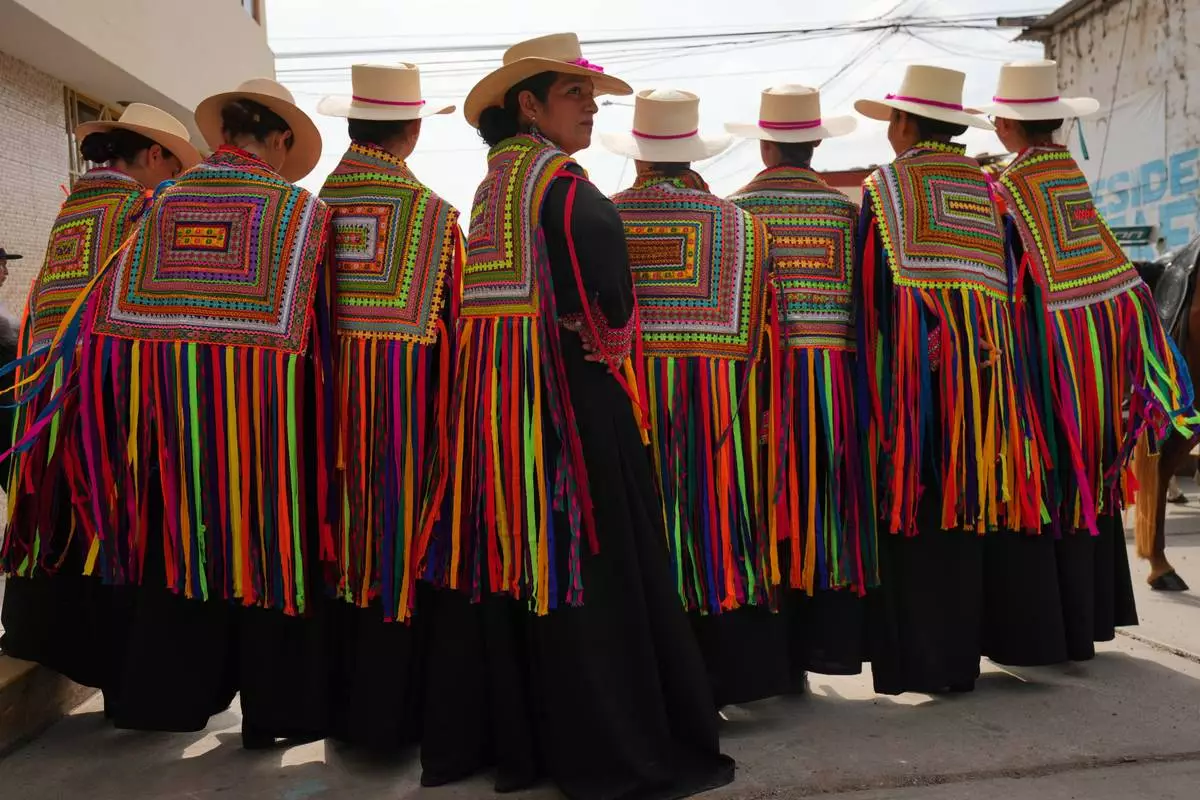
Women wait to welcome Pope Leo XIV ahead of his meeting with the Catholic community in Zaña, Peru, Saturday, Nov. 14, 2026. (AP Photo/Rodrigo Abd)
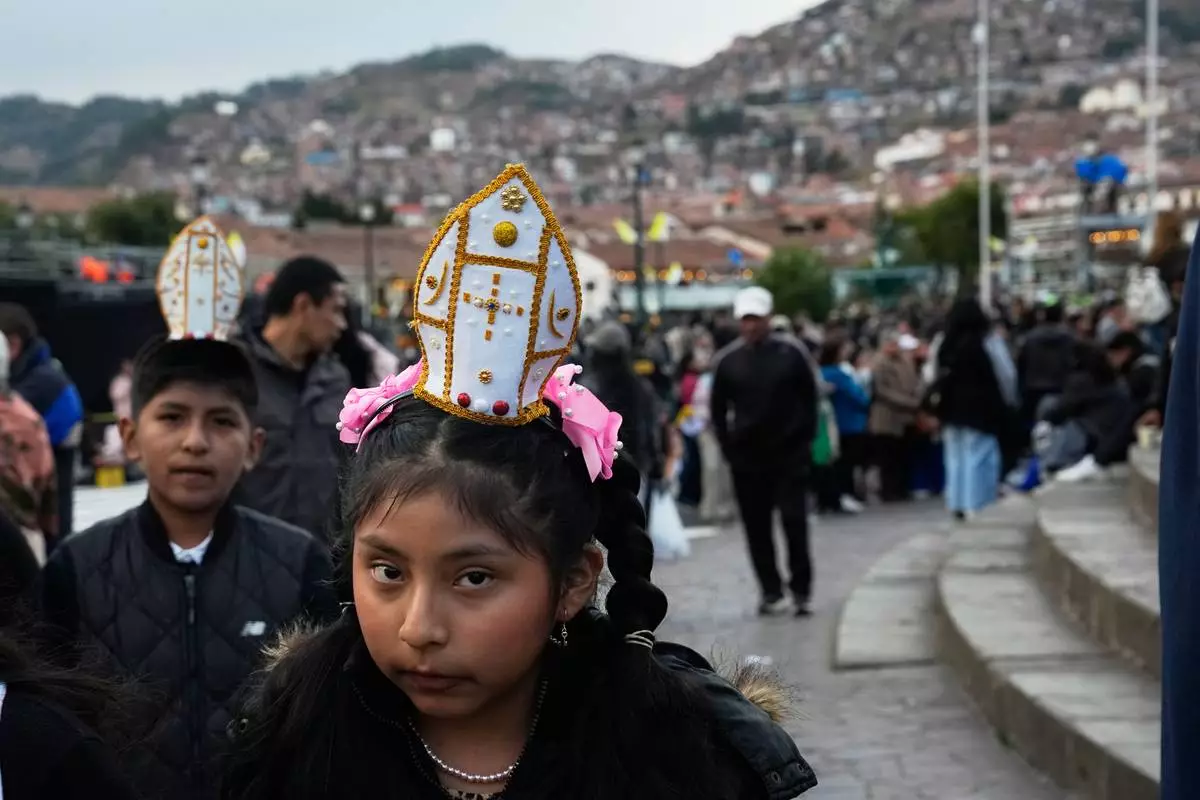
A girl wearing a papal hat walks out of a church a day before Pope Leo XIV's visit to Cusco, Peru, Saturday, Nov. 14, 2026. (AP Photo/Martin Mejia)
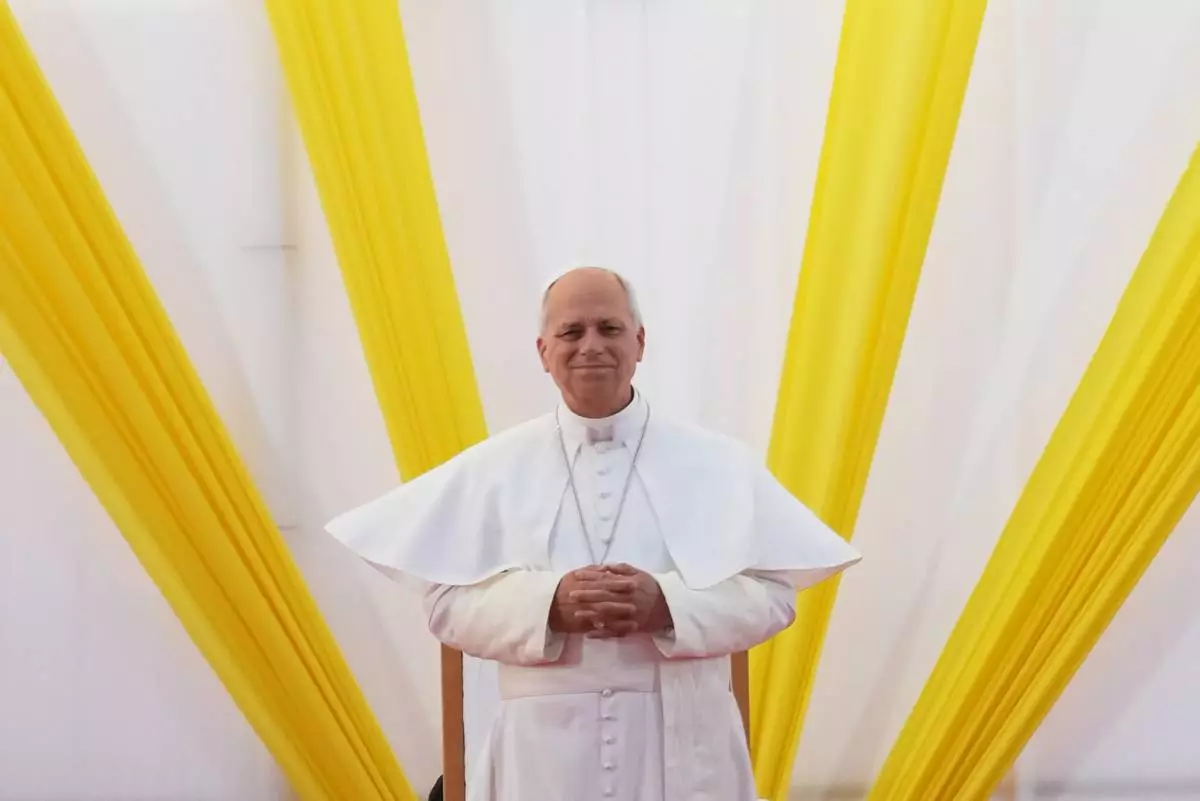
Pope Leo XIV attends a meeting with the Catholic community on the occasion of the closing of the Jubilee Year of Santo Toribio de Mogrovejo at the Shrine of Santo Toribio de Mogrovejo in Zana, Peru, on the ninth day of his twelve-day apostolic journey to South America, Saturday, Nov. 14, 2026. (AP Photo/Andrew Medichini)
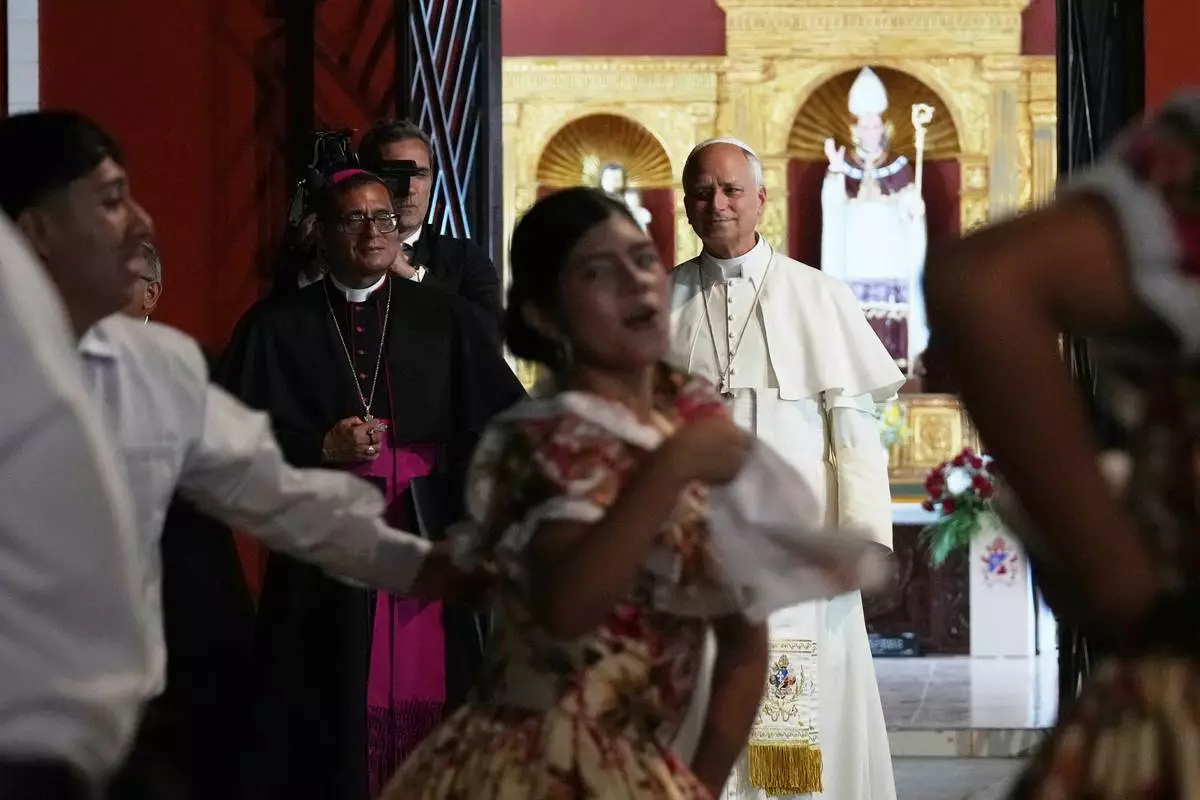
Pope Leo XIV watches dancers at the end of a meeting with the Catholic community on the occasion of the closing of the Jubilee Year of Santo Toribio de Mogrovejo at the Shrine of Santo Toribio de Mogrovejo in Zana, Peru, on the ninth day of his twelve-day apostolic journey to South America, Saturday, Nov. 14, 2026. (AP Photo/Andrew Medichini)
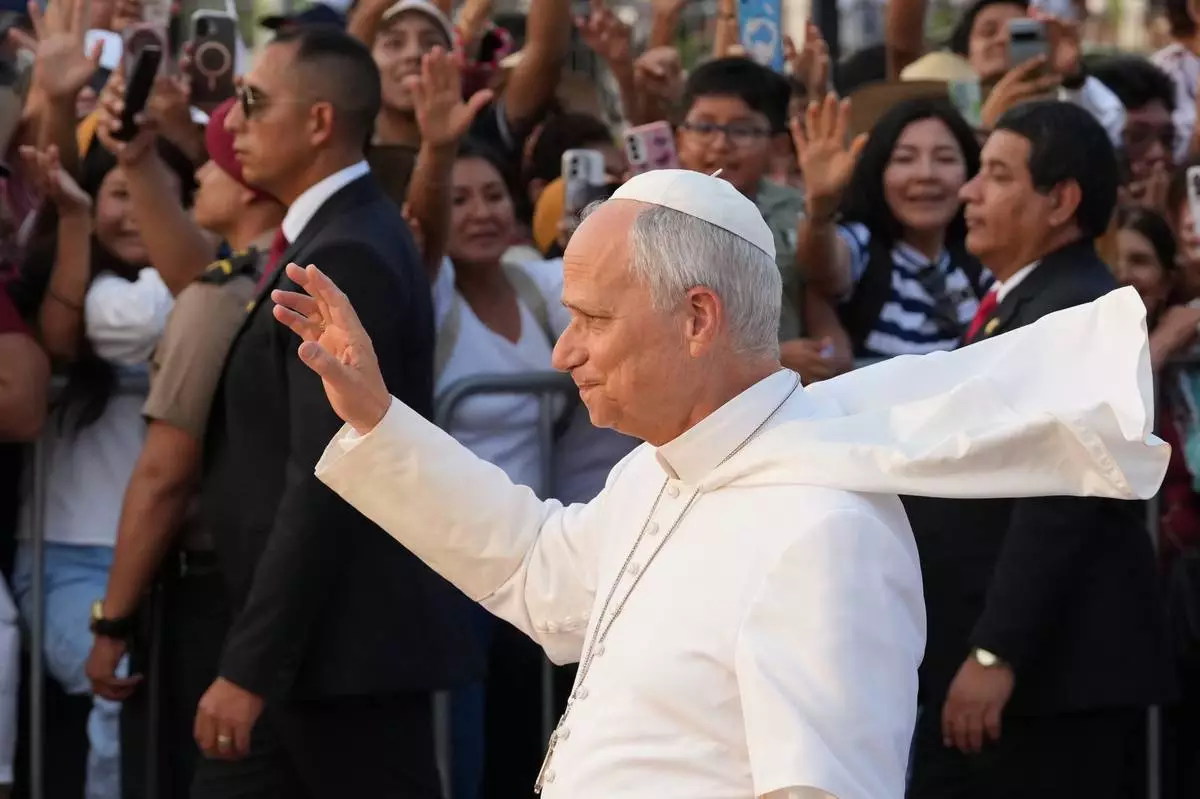
Pope Leo XIV arrives for a meeting with the Catholic community on the occasion of the closing of the Jubilee Year of Santo Toribio de Mogrovejo at the Shrine of Santo Toribio de Mogrovejo in Zana, Peru, on the ninth day of his twelve-day apostolic journey to South America, Saturday, Nov. 14, 2026. (AP Photo/Andrew Medichini)
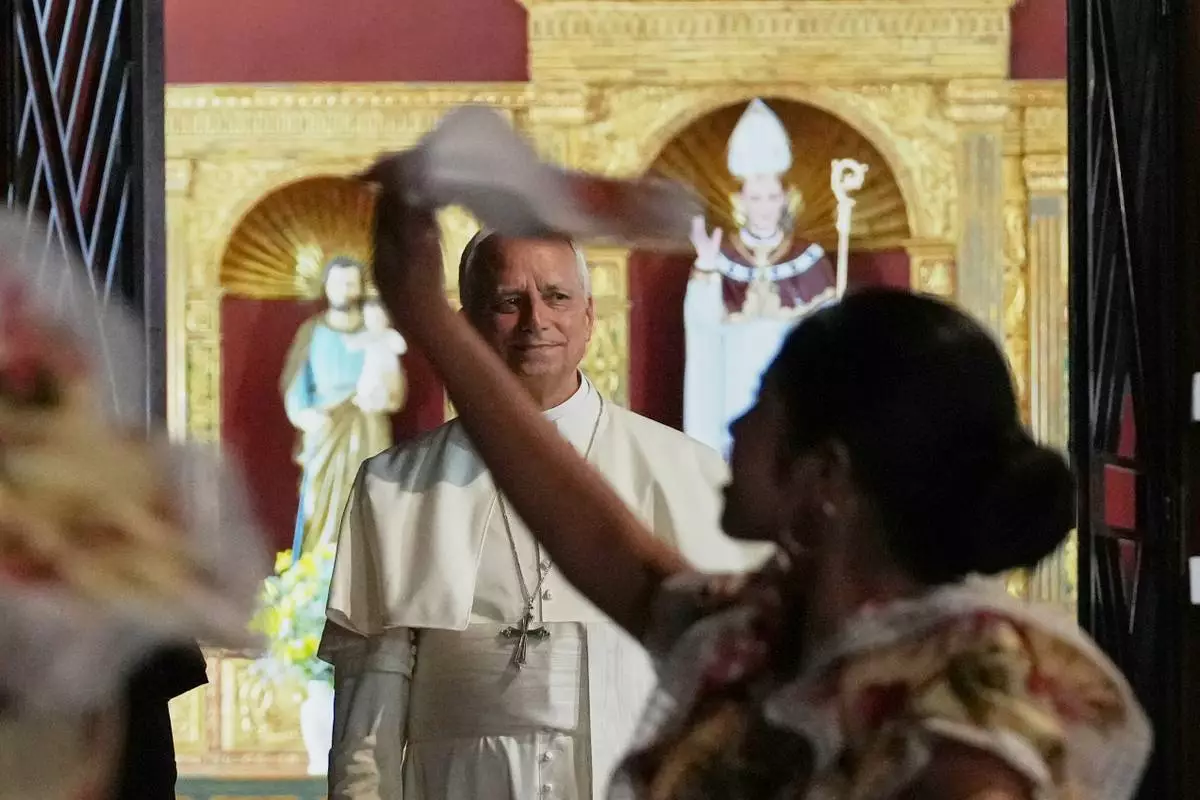
Pope Leo XIV watches dancers at the end of a meeting with the Catholic community on the occasion of the closing of the Jubilee Year of Santo Toribio de Mogrovejo at the Shrine of Santo Toribio de Mogrovejo in Zana, Peru, on the ninth day of his twelve-day apostolic journey to South America, Saturday, Nov. 14, 2026. (AP Photo/Andrew Medichini)