FORT COLLINS, Colo. (AP) — Pricey plane tickets and expensive gasoline are expected to keep some Americans from traveling this Thanksgiving, but not enough to make much difference in airport security lines and highway traffic, AAA said Monday.
The auto club federation predicted that 81.5 million people would travel at least 50 miles (80 kilometers) from home between the Tuesday before Thanksgiving and the Monday after the holiday.
That's about 121,000 fewer than traveled domestically over Thanksgiving last year, or a one-tenth of a percent decline, AAA said in its annual forecast. If proven accurate, the small drop would end three years of record-setting Thanksgiving travel that followed the COVID-19 pandemic, according to AAA's calculations.
“After three years of record highs, the number of travelers is slightly lower partly because of higher travel costs this year. But travelers won’t notice much of a difference," AAA Travel Vice President Stacey Barber said in a statement.
AAA prepared its forecast weeks before problems with U.S. air traffic control communications and radar feeds on Friday prompted the Federal Aviation Administration to impose a nationwide ground stop that lasted more than four hours and disrupted weekend flights.
Transportation Secretary Sean Duffy and Federal Aviation Administrator Bryan Bedford said they expected air traffic to normalize well before the start of the Thanksgiving travel rush.
AAA doesn't think Friday's unusually long ground stop will have a major impact on Thanksgiving travel unless it happens again, spokesperson Aixa Diaz said.
“Travelers are resilient, and from what AAA has seen in the past, it takes a lot to keep holiday travelers home,” Diaz wrote in an email Sunday.
As in past years, AAA expects the vast majority of holiday travelers to opt for car trips over flights. Meanwhile, it expects buses, trains and cruise ships will serve 4% more passengers than last year combined.
Last November, a government shutdown that led the FAA to order flight cuts at 40 of the busiest U.S. airports created extra stress for airline passengers with Thanksgiving week tickets.
Air travelers who didn't cancel their plans were rewarded; Congress ended the longest shutdown in history, and the FAA lifted its order 10 days before Thanksgiving.
This year, fuel prices that surged during the U.S. war with Iran are a concern. The overall inflation that influenced this month's midterm elections may also have made some Americans more cautious about venturing far afield for their Thanksgiving meals.
With U.S. airlines spending more on jet fuel, airfares were more than 22% higher in September than the same month a year earlier, according to the most recent government data. Carriers also raised fees for checked bags.
Visa’s economic research group said an analysis of September credit card transactions revealed that spending on plane tickets and related travel for trips starting between Nov. 1 and Jan. 15 were down from a year earlier for households of every income level except those earning more than $200,000.
Aviation analytics firm Cirium said Thanksgiving flight bookings were running 1.6% behind last year as of late October.
Gasoline could set a Thanksgiving Day price record
Compared to last year, round-trip domestic flights booked through AAA for the Thanksgiving period were 17% more expensive, averaging $800 per ticket.
AAA expects nearly 6 million people to fly from Nov. 24 through Nov. 30, about 12,000 fewer than last year. Three Florida cities — Orlando, Fort Lauderdale and Miami — are the top three domestic destinations for Thanksgiving flights, the auto club said.
Other organizations have come up with different projections based on the data they reviewed. Trade organization Airlines for America said it expected U.S. carriers to serve more passengers during the same seven-day period, though it did not specify if that includes international flights.
The group said airfares having risen much more modestly than jet fuel prices this year.
Gasoline prices have fallen over the past week, but motorists can expect to pay more than last year heading to and from Thanksgiving destinations, AAA's forecast said. Regular gas averaged $3.82 a gallon on Sunday compared to $3.08 a year earlier, AAA said.
If prices hold, gasoline would be more expensive this Thanksgiving Day than any previous. AAA’s previous Thanksgiving Day record was $3.58 in 2022.
AP writers Lisa Leff in London and Rebecca Boone in Boise, Idaho, contributed to this story.
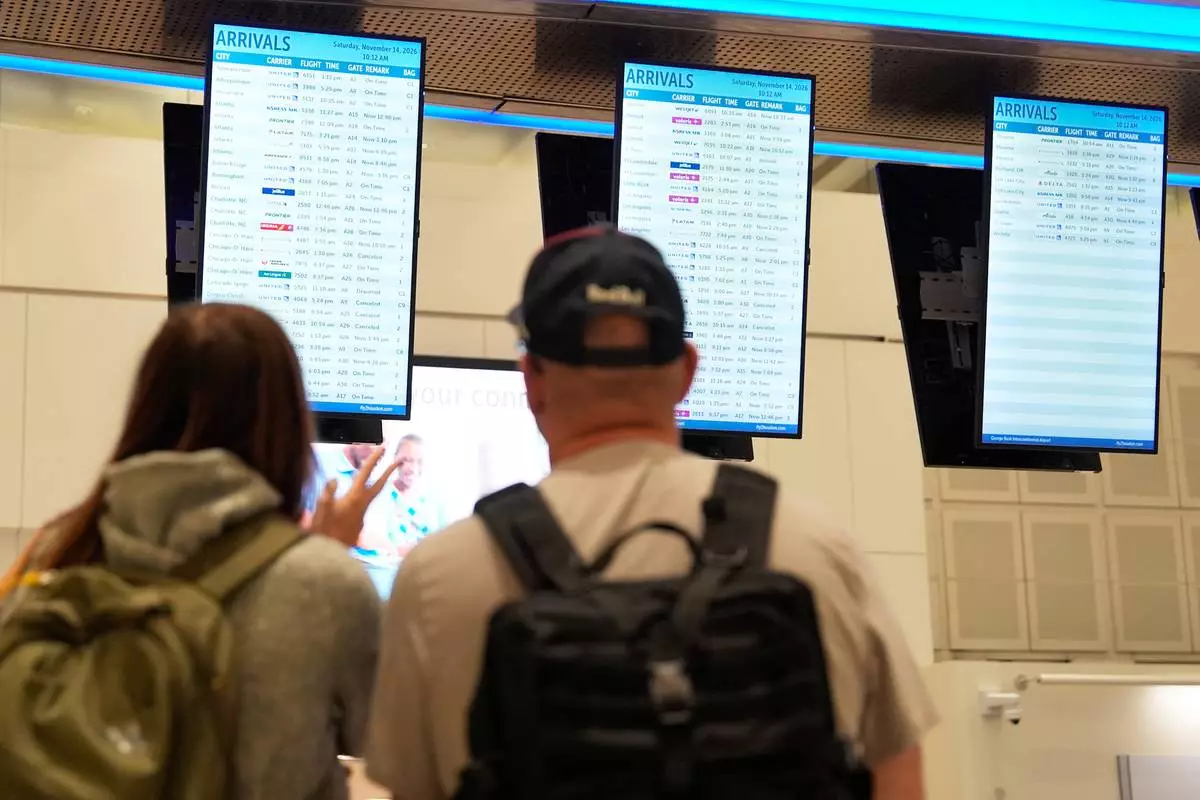
A couple looks at flight status times at George Bush International Airport on Saturday, Nov. 14, 2026, in Houston, after the Federal Aviation Administration lifted nationwide ground stops. (AP Photo/Ashley Landis)
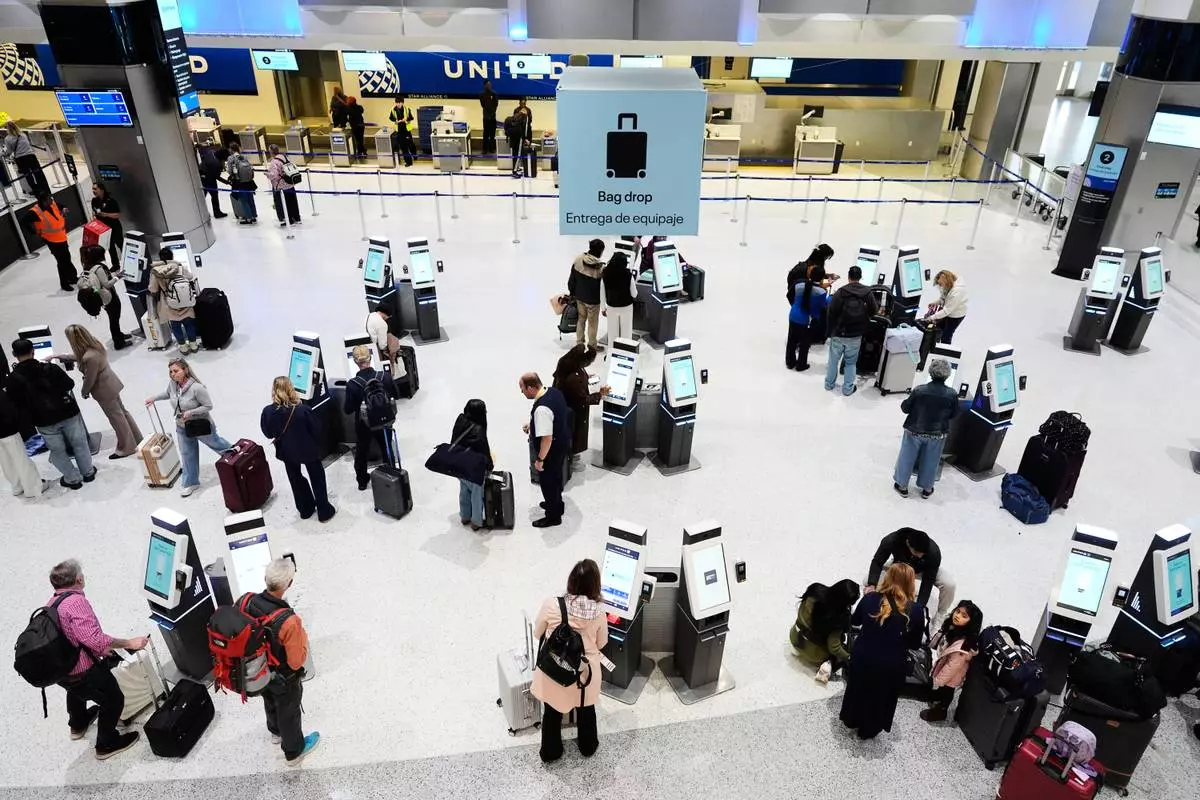
Passengers check in at George Bush International Airport on Saturday, Nov. 14, 2026, in Houston, after the Federal Aviation Administration lifted nationwide ground stops. (AP Photo/Ashley Landis)
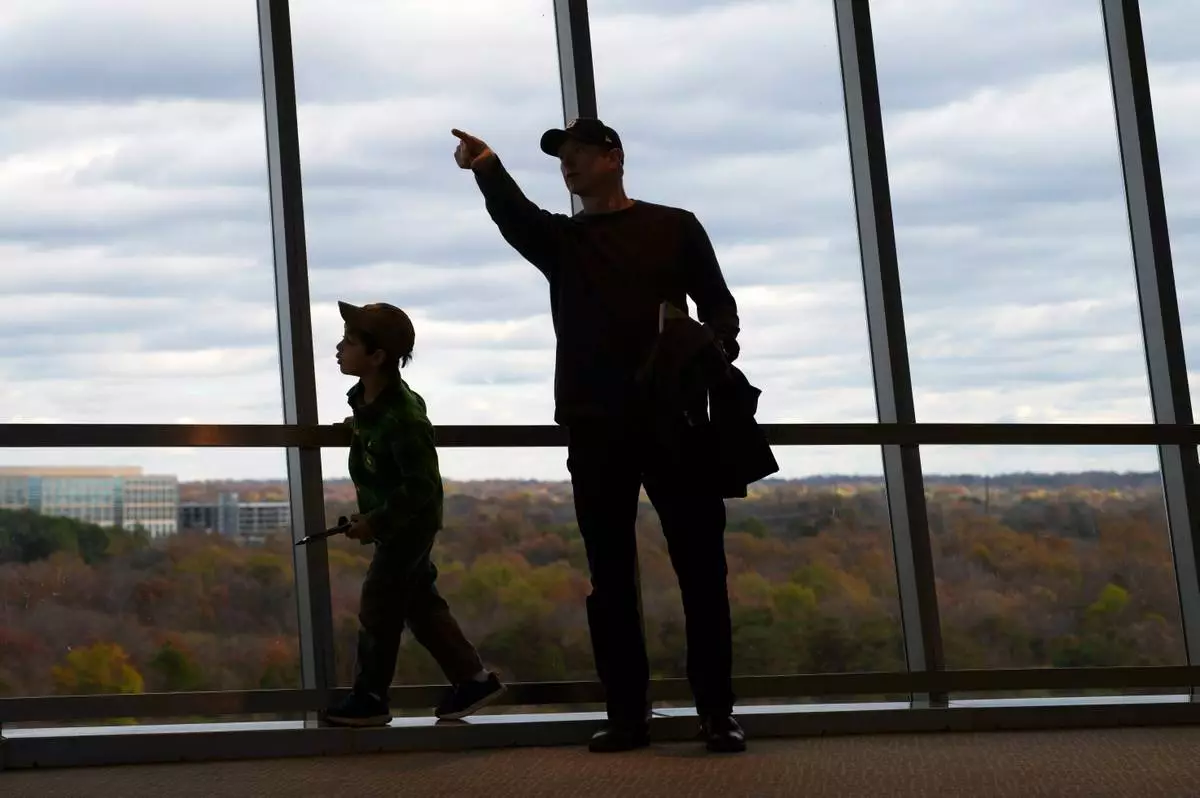
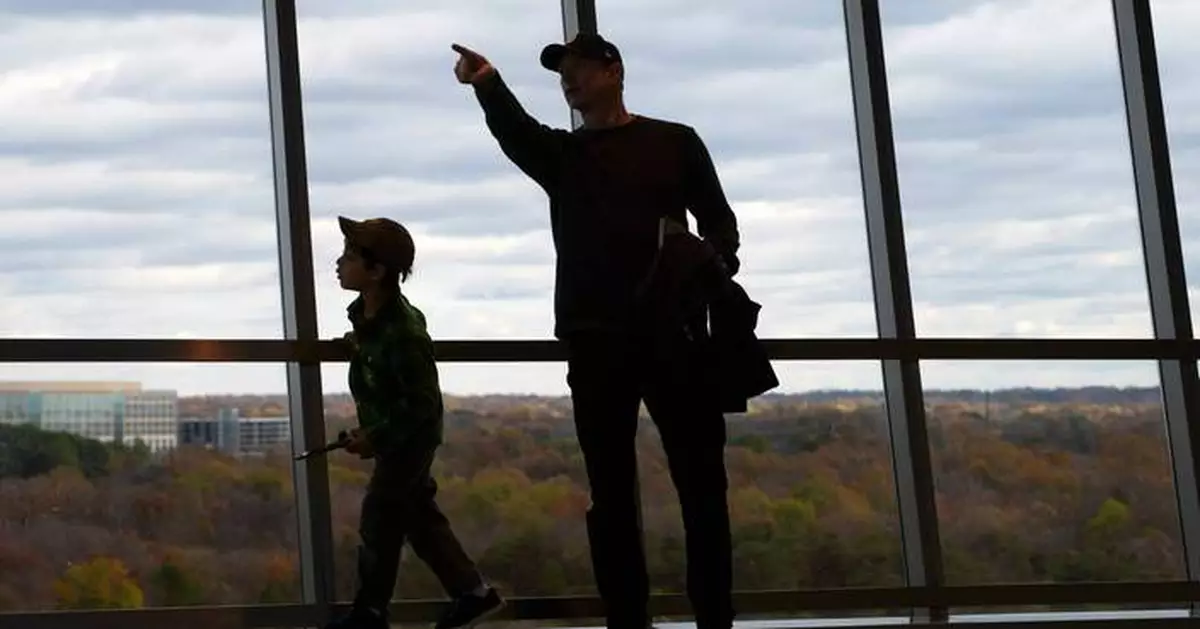
Visitors to the Steven F. Udvar-Hazy Center observation tower watch an airplane prepare to land at Washington Dulles International Airport after the Federal Aviation Administration lifted nationwide ground stops, in Chantilly, Va., Saturday, Nov. 14, 2026. (AP Photo/Cliff Owen)
Fewer international students are studying at U.S. universities as the Trump administration cracks down on immigration and reshapes higher education, data released Monday shows.
Overall, U.S. campuses saw a 9% decrease in international enrollment this fall compared with last year, according to a survey from the Institute of International Education. And the number of new students entering the United States for the first time fell by 15%.
“No one aspires to send their kids to get educated in the U.S.,” said Veena Dubal, general counsel for the American Association of University Professors, whose father traveled from India to attend Tuskegee University, then the Tuskegee Institute, in the late 1960s on a student visa.
"It feels like an unsafe place. That’s the message that the Trump administration has been sending to families all over the world and they’re listening.”
Last year, the enrollment decreases were partially offset by large numbers of students who stayed in the U.S. for temporary work after graduating. But after months of speculation, the Department of Homeland Security proposed requiring schools to pay a $70,000 fee for every student who participates in the optional practice training program.
Although the rule hasn't been finalized, participation in the program, known as OPT for short, dropped 6% this fall, according the survey.
The proposed rule, which is expected to face legal challenges, is part of wider DHS efforts that include terminating the legal status of thousands of international students, along with detaining and deporting many of them.
And this summer, the administration finalized a rule that will prevent international students from staying in the U.S. for more than four years without approval from the federal government, although a judge has temporarily blocked it.
DHS Secretary Markwayne Mullin has said the changes were intended to crack down on loopholes that international students were exploiting by extending their studies.
Although the U.S. remains the top destination for international students globally, the changes are having an affect, college leaders told the IIE.
Among more than 800 U.S. colleges and universities surveyed this fall, 88% blamed the visa application process and 70% blamed travel restrictions for the enrollment drops. And if OPT options are limited, 95% of schools predicted that international students would likely look to another country, according to the survey, which offers an early look at trends before full data is released next year.
Politics aren't the only reason students are looking elsewhere, said Mirka Martel, head of research, evaluation and learning for the institute. Its survey found more global competition for international students and the rising cost of a U.S. degree also contributed.
Fanta Aw, the executive director and CEO of NAFSA, an association that represents international education, said students also are worried about research funding. Last year, the Trump administration began dismantling the federal grant-giving process and attempting to exert more political influence over what projects get funded.
“They’re saying to themselves, ‘Too much uncertainty in the United States. It’s too difficult, and you know, more importantly, we have many more choices today than we did 10 years ago. Why subject ourselves to this?’” Aw said, noting that students are going to places like China.
NAFSA, in partnership with the international education technology company JB International, found that amid the enrollment decline, international students’ contributions to the U.S. economy dropped by $2.4 billion this fall.
American colleges and universities heavily recruit students from overseas as a source of tuition revenue. So the drops have punched big holes in tuition revenue at some schools.
At Cleveland State University, international enrollment has dropped by 46% in two years, from 1,542 in fall 2025 to 828 this fall. And fewer than 50 new international students started this fall, said Provost Nigamanth Sridhar, who estimated that the budgetary impact ranges from $2 million to $4 million.
Decades ago, he arrived in the U.S. on an F1 student visa and participated in OPT. Eventually, he went through the process to became a naturalized citizen.
“I am here in this position, in this job, because I had the opportunity to come to the United States as an international graduate student and then decided to stay here and build a career," said Sridhar, who is from India. "So international education is personal to me."
The biggest drops were at the graduate level. This fall's data shows a 15% drop in international graduate enrollment, compared to a 3% decrease at the undergraduate level. The report also found declines in international students from India, which sends more students to the U.S. to study than any other country.
Sarah Spreitzer, vice president at the American Council on Education, which represents college and university presidents, said substantial immigration bills are unlikely while Trump remains president. But she said congressional oversight might halt new policies targeted at international students.
“Those types of things could provide more certainty for our international students that there’s not just going to be these sudden or unexplainable changes," Spreitzer said.
——-
The Associated Press’ education coverage receives financial support from multiple private foundations. AP is solely responsible for all content. Find AP’s standards for working with philanthropies, a list of supporters and funded coverage areas at AP.org.
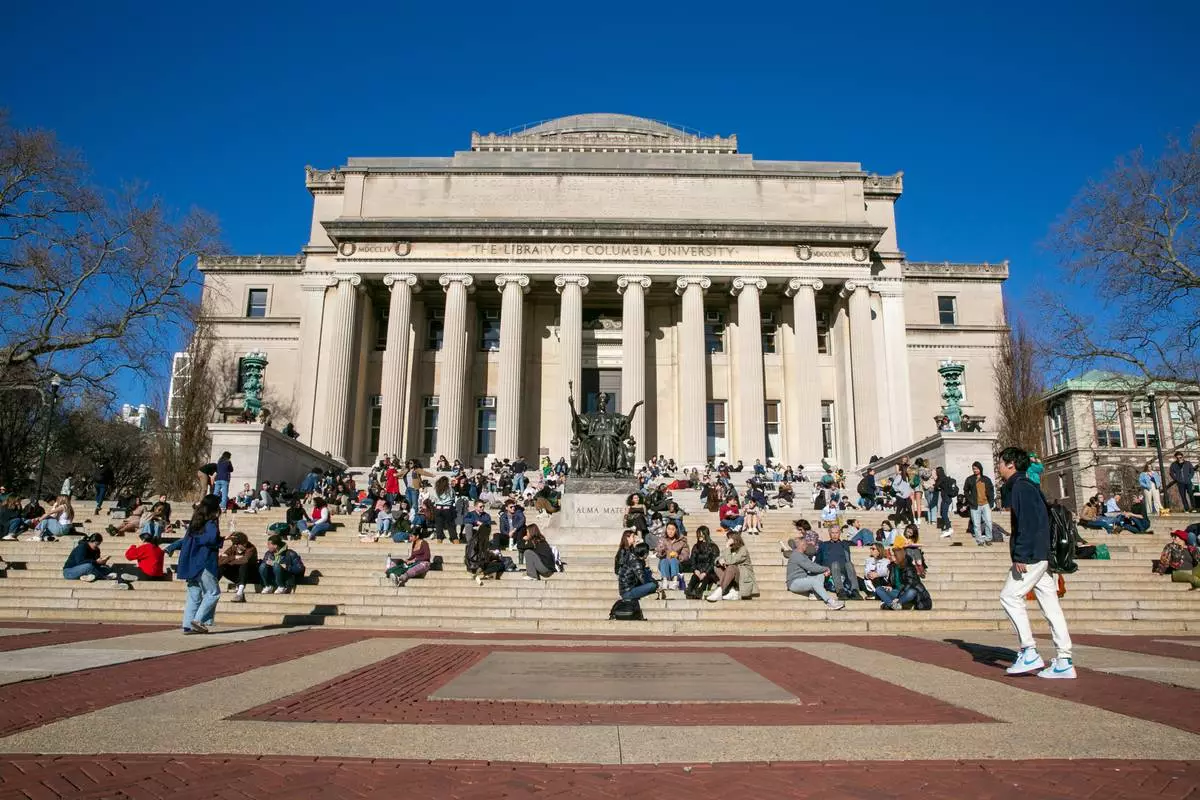
FILE - Students sit on the front steps of Low Memorial Library on the Columbia University campus in New York City, Feb. 10, 2023. (AP Photo/Ted Shaffrey, File)