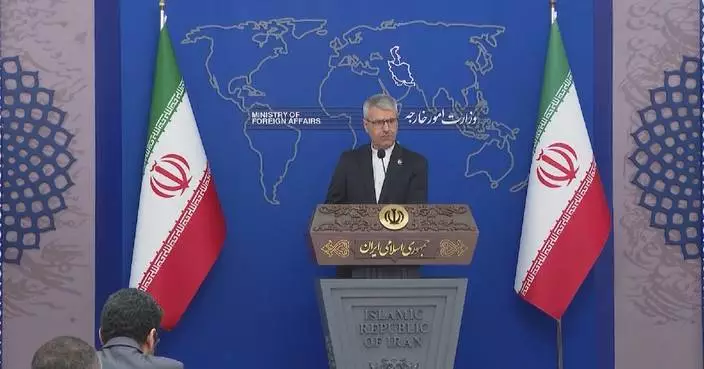
Iranian Foreign Ministry spokesperson Esmaeil Baghaei on Sunday rejected the demand by the Gulf Cooperation Council (GCC) that Iran should provide compensation for the damages, losses, and injuries resulting from its attacks on U.S. bases and assets in West Asia.
Baghaei made the remarks at a weekly press conference in response to "anti-Iran comments" by GCC Secretary-General Jasem Mohamed Albudaiwi during a UN Security Council meeting in New York on Friday, convened at Bahrain's request.
Albudaiwi said Iran had launched over 7,000 missiles and drones against Gulf states since Feb. 28, and that the GCC holds Iran fully responsible for the attacks and their consequences. He listed the GCC's demands to the UN Security Council, including "requiring Iran to provide full compensation for the damages resulting from its attacks in accordance with international law and Human Rights Council Resolution 61/1."
Baghaei said that regional countries that "actively participated in the military aggression" against Iran and made available their territories for use by the "aggressors" cannot demand reparations.
The Iranian spokesperson said there is "clear evidence" that the losses and damages inflicted upon Iran directly or indirectly during the 40-day war originated from certain countries in the region, stressing that under international law and UN General Assembly Resolution 3314, "any country that has played a role directly or indirectly in the U.S.-Israeli military aggression against Iran is considered an accomplice to the aggressors and bears responsibility for the crimes committed."
He said Iran is the party demanding reparations and has carried out the necessary documentation in that regard.
Baghaei reiterated that Iran's self-defense measures "were purely defensive in nature and targeted exclusively U.S. military bases and assets that had been used to launch attacks" against the country, stressing that Iran had taken no action against these countries' sovereignty.
On Feb. 28, Israel and the United States launched joint attacks on Tehran and other Iranian cities. Iran responded with waves of missile and drone attacks targeting Israel and U.S. bases and assets in the region, and tightened its grip on the Strait of Hormuz.

Iran rejects Gulf states' compensation demands
China plays an indispensable role in advancing regional integration, fostering open trade, and steering the Asia-Pacific toward a shared future, said international politicians and scholars ahead of the 33rd Asia-Pacific Economic Cooperation (APEC) Economic Leaders' Meeting.
The meeting will take place under the theme "Building an Asia-Pacific Community to Prosper Together" in Shenzhen City of south China's Guangdong Province on Wednesday and Thursday.
With the global economy facing mounting uncertainties, divisions and risks, international stakeholders emphasize the critical need to build consensus around sustainable development, openness and connectivity -- principles they say align closely with China's broader multilateral vision.
Marco Balarezo, director for Asia and Oceania at Peru's Ministry of Foreign Affairs, stressed the urgency of collaborative regional alignment.
"In a world fraught with uncertainty, division and risk today, we need to build consensus on fostering a prosperous Asia-Pacific. The goal is to drive deeper integration across the region, while steadfastly upholding the principles of openness, innovation and connectivity. This is precisely the vision that China advocates," said Balarezo.
For partner economies across the Pacific, China's economic advocacy translates into tangible commercial growth and market diversification, according to experts.
"The APEC accounts for roughly 67 percent of Chile's trade and absorbs about 75 percent of its exports. Important topics raised by China at APEC meetings, such as openness, innovation and cooperation, precisely match the high-potential areas of our domestic economy. The initiatives on services, technology, the digital economy, energy, agrifood, and efficient water management provide vital momentum for Chile's export diversification strategy," said Paula Estevez, Vice Minister of International Economic Relations of Chile.
Meanwhile, analysts noted that China is a primary anchor for regional commerce. Sourabh Gupta, a senior fellow at the Institute for China-America Studies, highlighted China's fundamental contribution to the bloc's economic architecture.
"Come fast forward today, China is the anchor of APEC in terms of liberalizing trade, and China has taken that role as becoming the ballast stone in a way for trade liberalization in the Asia-Pacific region and all its remarkable supply chains. My hope is that at this meeting, there will be a reinforcement of the consensus of meeting APEC's 2040 trade liberalization goals," said Gupta.
Emir Hadjikadunic, a researcher at the Center for a Community with a Shared Future for Humanity in Bosnia and Herzegovina, underscored the necessity of prioritizing economic connectivity, free trade, and sustainable multilateral dialogue to ensure equitable growth.
"This is also a very important highlight, especially to highlight economic interdependence, to talk about free trade, investment, multilateral economic dialogue and so on and so forth. It is very important to build a community, a regional community of sustainable economic development, development for all small nations, medium-sized countries and the big countries as well. So, in conclusion, I can say all countries, all members of the APEC, should rise peacefully. But the condition for these countries to rise peacefully is a community of nations, a regional community of nations, which provides sustainable and inclusive economic dialogue," he said.
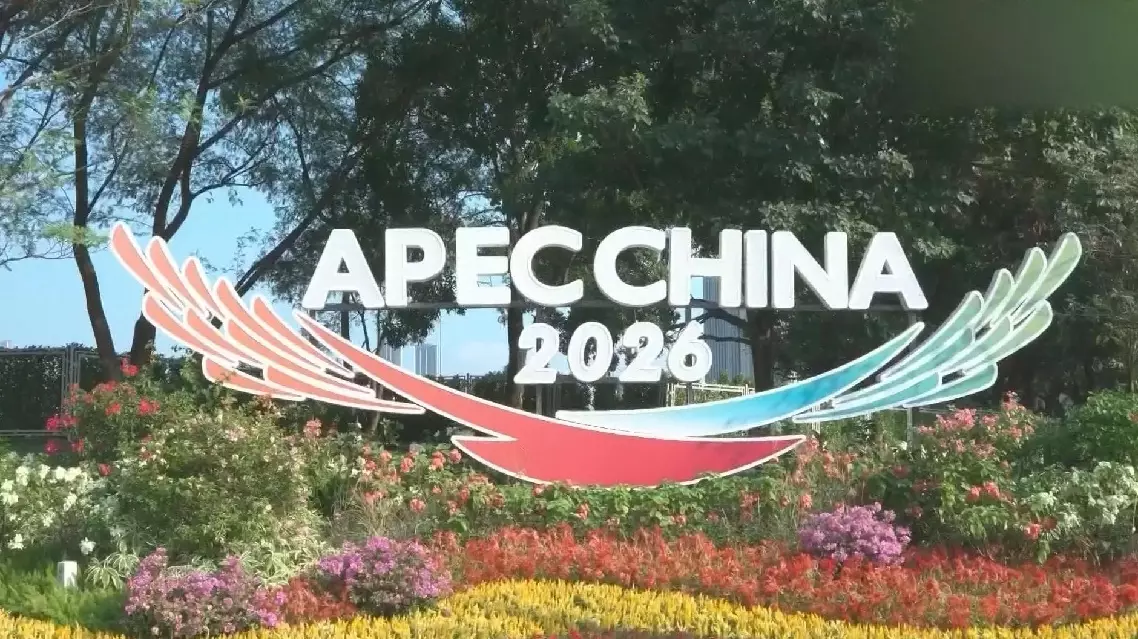
Int'l experts acknowledge China's role in driving APEC regional cooperation