Skip to Content Facebook Feature Image

WHO Holds Expert Meeting in Hong Kong, China to Advance Development of International Herbal Pharmacopoeia

HK

WHO Holds Expert Meeting in Hong Kong, China to Advance Development of International Herbal Pharmacopoeia
HK

HK

WHO Holds Expert Meeting in Hong Kong, China to Advance Development of International Herbal Pharmacopoeia

2026-11-16 18:00 Last Updated At:18:10

WHO holds expert meeting in Hong Kong, China to advance development of International Herbal Pharmacopoeia

The Department of Health (DH) is hosting the World Health Organization (WHO) expert meeting on the development of the International Herbal Pharmacopoeia (IHP) from today (November 16) to November18, following the previous meeting held in June this year. International experts are gathering in Hong Kong, China to review the proposed content of the first volume of the IHP and advance technical work on the development of internationally harmonised quality standards for herbal medicines.

Experts from six WHO regions (including Africa, the Americas, the Eastern Mediterranean, Europe, South-East Asia, and the Western Pacific) are participating in the meeting, which opened today. They will review and discuss the proposed quality specifications for 12 herbal medicines, and consider the content of the first volume of the IHP.

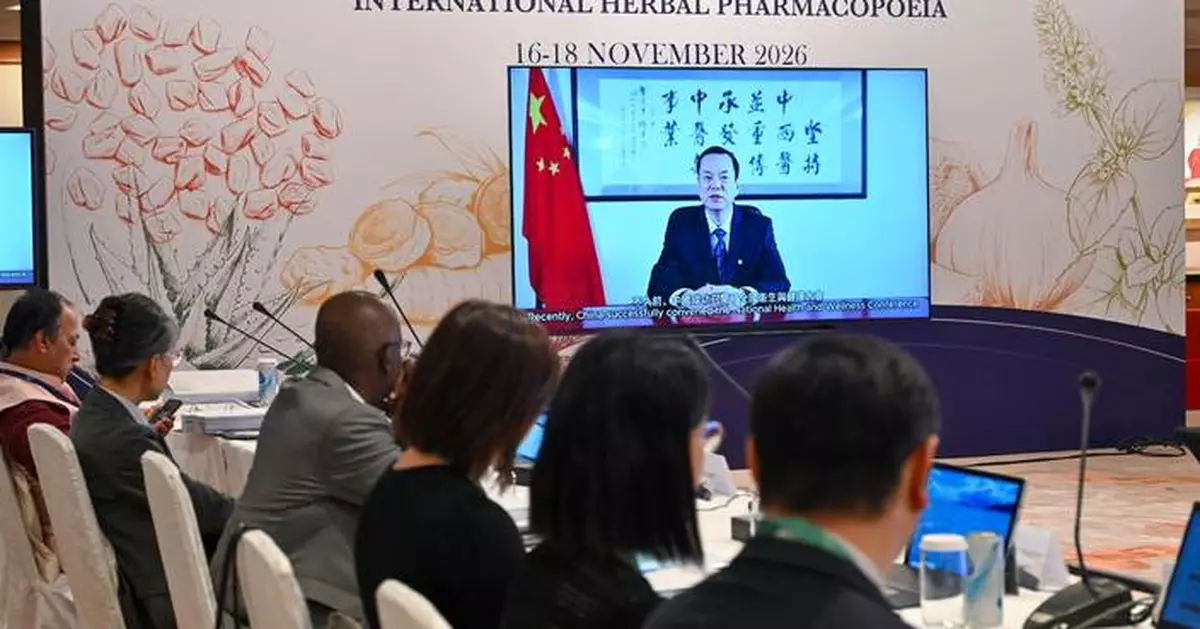
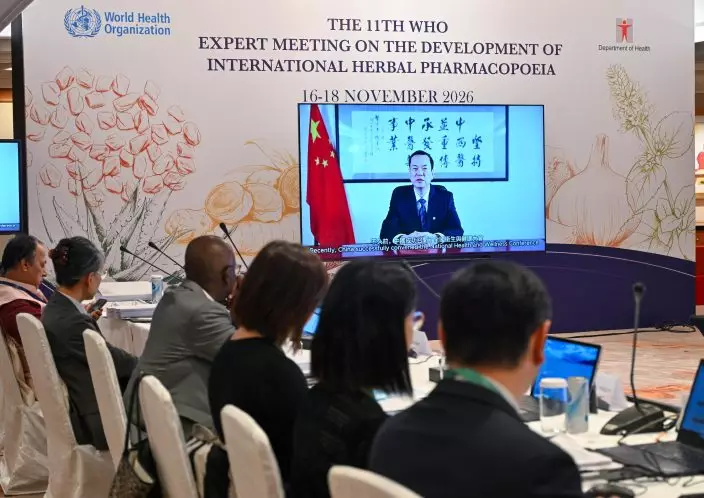
During the opening ceremony of the meeting, Vice Minister of the National Health Commission and Commissioner of the National Administration of Traditional Chinese Medicine (NATCM), Mr Liu Jinfeng, addressed the meeting by video.

"Traditional medicine plays an important role in health systems worldwide, complements modern medicine and makes positive contributions to advancing global health. The Beijing Initiative on the Conservation and Sustainable Use of Traditional Medicinal Plant Resources calls on the international community to jointly advance the 'New-Era Shennong Herbal Project' and related international cooperation initiatives. In developing the IHP, we should uphold scientific and evidence-based approaches, promote openness and collaboration, put people at the centre, and ensure that the standards provide practical guidance," he said.

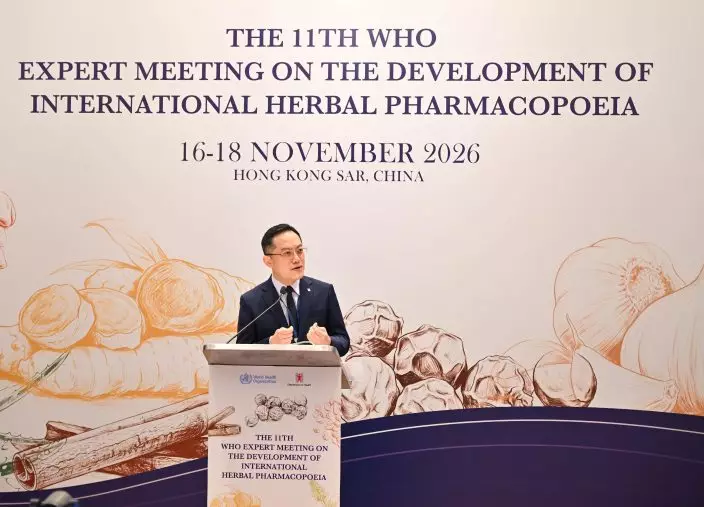
The Director of Health, Dr Ronald Lam, said at the opening ceremony, "As traditional medicine continues to play an important role in global healthcare systems, establishing evidence-based approaches for integrating traditional medicine into the global health system and harmonising quality standards of herbal medicines across different regions has become a shared global challenge. This meeting provides a valuable platform for experts to exchange knowledge and work towards greater consistency in the quality standards of herbal medicines. As a WHO Collaborating Centre (WHOCC) for Traditional Medicine, the Chinese Medicine Regulatory Office of the DH is pleased to host the meeting and, together with the Pharmacopoeia Commission for Indian Medicine & Homoeopathy (PCIM&H) of the Ministry of Ayush, Government of India, to contribute technical expertise to the development of herbal medicine monographs."

He also briefed attendees on the latest developments in Hong Kong regarding the formulation of quality control and regulation for Chinese medicines.

Dr Lam said, "The First Five-Year Plan for Economic and Social Development of the Hong Kong Special Administrative Region (HKSAR)(2026-2030) and the Chief Executive's 2026 Policy Address expressly set out support for the Government Chinese Medicines Testing Institute (GCMTI) under the DH in contributing to the development of international standards through platforms such as the WHOCC for Traditional Medicine. These efforts aim to promote Chinese medicine products in overseas markets, and develop Chinese Materia Medica (CMM) Standards that align with international standards, thereby extending the benefits of Chinese medicine services and products to more countries."

The WHO emphasises that developing the IHP falls under strategic objective 2 of the WHO Global Traditional Medicine Strategy 2025-2034. Drawing on available scientific evidence, experts at the meeting held technical discussions on 12 herbal medicine monographs. These meetings reviewed quality standards, general chapters as well as a chapter covering biodiversity, traditional knowledge and the sustainable use of herbal medicines. Through this process, internationally harmonised quality standards for herbal medicines are established by expert consensus, helping countries strengthen their regulatory capabilities and ensuring the safety and quality of traditional medicinal products.

The Unit Head, Traditional Medicine Norms, Standards and Systems Integration Unit, Global Traditional Medicine Centre of the WHO, Dr Kim Sungchol, delivered opening remarks. He highlighted the WHO's long-standing experience with the International Pharmacopoeia and emphasised the importance of rigorous, science-based quality standards for medicinal plants. He welcomed the continued work on the IHP as an important contribution to strengthening quality assurance, regulatory capacity and the appropriate integration of evidence-based traditional medicine into health systems.

On promoting the internationalisation of reference standards for CMM commonly used in Hong Kong, the DH's Hong Kong Chinese Materia Medica Standards (HKCMMS) project has covered 357 Chinese medicinal materials so far. Through the International Advisory Board of the HKCMMS (www.cmro.gov.hk/html/eng/useful_information/hkcmms/organisation_structure.html), it has provided reliable, comprehensive and internationally recognised reference standards and has published 12 HKCMMS Volumes (www.cmro.gov.hk/html/eng/useful_information/pgcmti/innovation_and_standards_setting/hkcmms/volumes.html). Looking ahead, the GCMTI will continue to take forward the HKCMMS project and advance innovative testing technologies. On the regulatory front, the Centre for Medical Products Regulation of the DH will be established this year to consolidate regulatory functions for Western and Chinese medicines, as well as medical devices to enhance the existing regulatory regime. The HKSAR Government will continue to fully leverage Hong Kong's unique advantages under "one country, two systems", enjoying the strong support of the motherland while remaining closely connected to the world, to establish the HKSAR as a bridgehead for Chinese medicine to go global and to better integrate into and serve the national strategy of "Healthy China".
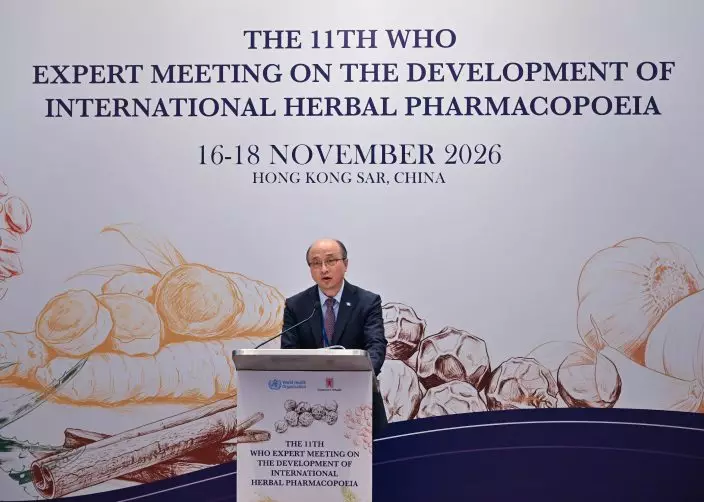
The Department of Health is hosting the World Health Organization (WHO) expert meeting on the development of the International Herbal Pharmacopoeia from today (November 16) to November 18, following the previous meeting held in June this year. Photo shows the Unit Head, Traditional Medicine Norms, Standards and Systems Integration Unit, Global Traditional Medicine Centre of the WHO, Dr Kim Sungchol, delivering opening remarks. Source: HKSAR Government Press Releases
The Department of Health is hosting the World Health Organization (WHO) expert meeting on the development of the International Herbal Pharmacopoeia from today (November 16) to November 18, following the previous meeting held in June this year. Photo shows the Unit Head, Traditional Medicine Norms, Standards and Systems Integration Unit, Global Traditional Medicine Centre of the WHO, Dr Kim Sungchol, delivering opening remarks. Source: HKSAR Government Press Releases

The Department of Health is hosting the World Health Organization expert meeting on the development of the International Herbal Pharmacopoeia from today (November 16) to November 18, following the previous meeting held in June this year. Photo shows the Director of Health, Dr Ronald Lam, delivering a speech at the opening ceremony. Source: HKSAR Government Press Releases
The Department of Health is hosting the World Health Organization expert meeting on the development of the International Herbal Pharmacopoeia from today (November 16) to November 18, following the previous meeting held in June this year. Photo shows the Director of Health, Dr Ronald Lam, delivering a speech at the opening ceremony. Source: HKSAR Government Press Releases

The Department of Health is hosting the World Health Organization expert meeting on the development of the International Herbal Pharmacopoeia from today (November 16) to November 18, following the previous meeting held in June this year. Photo shows Vice Minister of the National Health Commission and Commissioner of the National Administration of Traditional Chinese Medicine, Mr Liu Jinfeng, delivering a speech by video. Source: HKSAR Government Press Releases

The Department of Health is hosting the World Health Organization expert meeting on the development of the International Herbal Pharmacopoeia from today (November 16) to November 18, following the previous meeting held in June this year. Photo shows Vice Minister of the National Health Commission and Commissioner of the National Administration of Traditional Chinese Medicine, Mr Liu Jinfeng, delivering a speech by video. Source: HKSAR Government Press Releases

DH announces latest situation regarding Legionnaires' disease cases

The Centre for Health Protection (CHP) of the Department of Health (DH) today (November 16) reported the latest number of Legionnaires' disease (LD) cases, and reminded the public of the importance of using and maintaining properly designed man-made water systems, adding that susceptible groups should strictly observe relevant precautions.

From November 8 to 14, the CHP recorded three LD cases, including two community-acquired cases and one imported case, involving two males and one female aged between 62 and 67. All of them had underlying illnesses. Details are as follows:

Community-acquired cases

---------------------------------

  • a 63-year-old male living in Tuen Mun District; and

  • a 67-year-old male living in Wong Tai Sin District.

Imported case

------------------

  • a 62-year-old female who travelled to the Chinese Mainland during the incubation period.

The CHP is conducting epidemiological investigations to identify the potential sources of infection and high-risk exposure. An initial investigation revealed that the aforesaid cases are sporadic cases. No epidemiological linkages have been established between these cases and other confirmed cases previously recorded in Hong Kong.

As of November 14, 178 LD cases had been recorded this year. In 2025 and 2024, there were 167 and 135 LD cases respectively.

Men, people aged over 50, smokers, alcoholics and persons with weakened immunity are more susceptible to LD. Some situations may also increase the risk of infection, including poor maintenance of water systems; living in areas with old water systems, cooling towers or fountains; using electric water heaters, whirlpool spas or hot water spring spas; and recent stays in hotels or ships.

Legionellae are found in various environmental settings and grow well in warm water (20 to 45 degrees Celsius). They can be found in aqueous environments such as water tanks, hot and cold water systems, cooling towers, whirlpool spas, water fountains, humidifiers and home respiratory devices that support breathing. People may become infected when they breathe in contaminated droplets (aerosols) and mist generated by artificial water systems, or when handling garden soil, compost and potting mixes.

Immunocompromised persons should:

  • Use sterile or boiled water for drinking, tooth brushing and mouth rinsing;

  • Avoid using humidifiers, or other mist- or aerosol-generating devices; and

  • If using humidifiers, or other mist- or aerosol-generating devices, fill the water tank with only sterile or cooled freshly boiled water, and not water directly from the tap. Also, clean and maintain humidifiers/devices regularly according to manufacturers' instructions. Never leave stagnant water in a humidifier/device. Empty the water tank, wipe all surfaces dry, and change the water daily.

The public should observe the health advice below:

  • Observe personal hygiene;

  • Do not smoke and avoid alcohol consumption;

  • Strainers in water taps and shower heads should be inspected, cleaned, descaled and disinfected regularly or at a frequency recommended by the manufacturer;

  • If a fresh-water plumbing system is properly maintained, it is not necessary to install domestic water filters. Use of water filters is not encouraged as clogging occurs easily, which can promote growth of micro-organisms. In case water filters are used, the pore size should be 0.2 micrometres (µm) or less and the filter needs to be changed periodically according to the manufacturer's recommendations;

  • Drain and clean water tanks of buildings at least quarterly;

  • Drain or purge for at least one minute infrequently used water outlets (e.g. water taps, shower heads and hot water outlets) and stagnant points of the pipework weekly or before use;

  • Seek and follow doctors' professional advice regarding the use and maintenance of home respiratory devices and use only sterile water (not distilled or tap water) to clean and fill the reservoir. Clean and maintain the device regularly according to the manufacturer's instructions. After cleaning/disinfection, rinse the device with sterile water, cooled freshly boiled water or water filtered with 0.2 µm filters. Never leave stagnant water in the device. Empty the water tank, keep all surfaces dry, and change the water daily; and

  • When handling garden soil, compost and potting mixes:

  • Wear gloves and a face mask;

  • Water gardens and compost gently using low pressure;

  • Open composted potting mixes slowly and make sure the opening is directed away from the face;

  • Wet the soil to reduce dust when potting plants; and

  • Avoid working in poorly ventilated places such as enclosed greenhouses.

The public may visit the CHP's LD page, the Code of Practice for Prevention of LD and the Housekeeping Guidelines for Cold and Hot Water Systems for Building Management of the Prevention of LD Committee, and the CHP's risk-based strategy for prevention and control of LD.

Additionally, as smokers and alcoholics are more susceptible to LD, the Government urges members of the public to quit smoking and avoid drinking. Members of the public may call the DH Integrated Smoking Cessation Hotline at 1833 183, which is answered by registered nurses who provide professional counselling and referrals to a wide range of free smoking cessation services. The public may also visit the smoking cessation thematic website (www.livetobaccofree.hk) for more information on smoking cessation. The DH has also developed and promulgated the Alcohol Screening and Brief Intervention tool to primary healthcare service providers to facilitate the early identification and management of at-risk drinkers. For information on alcohol-related harm, please visit the DH's Change for Health website.

The Centre for Health Protection. Photo source: reference image

The Centre for Health Protection. Photo source: reference image

Recommended Articles