Import of poultry meat and products from areas in India, UK and Japan suspended
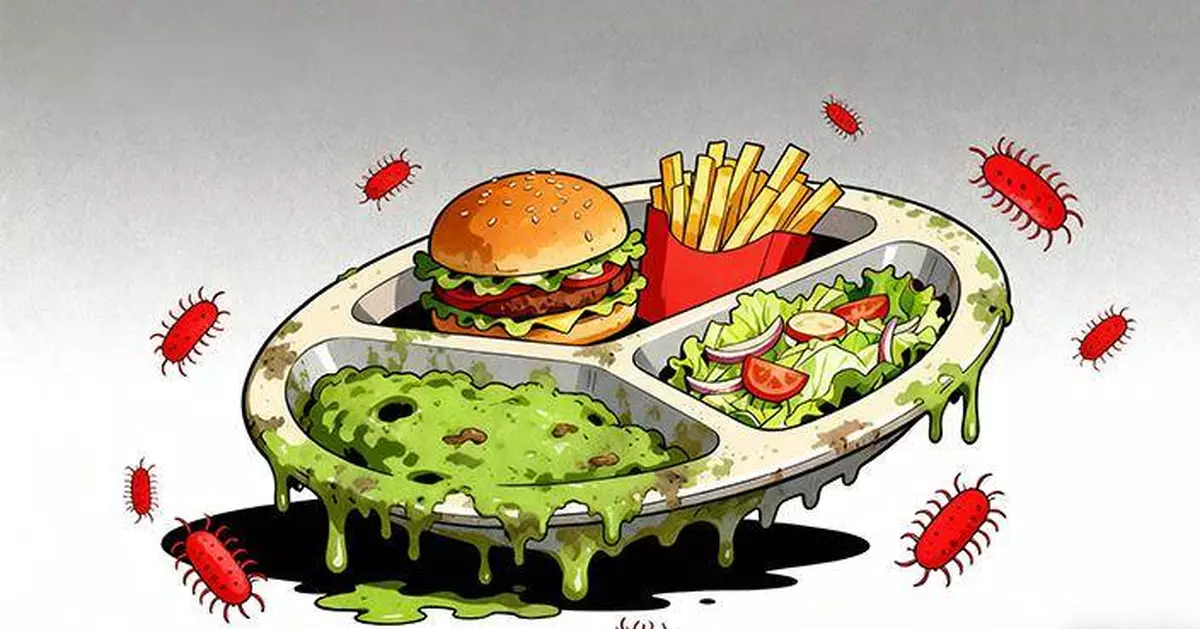
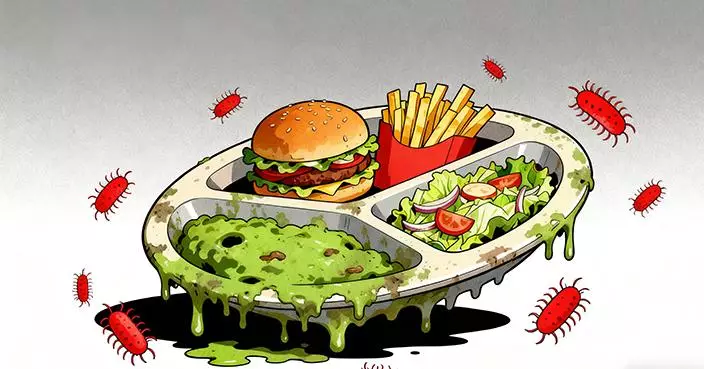
The Centre for Food Safety (CFS) of the Food and Environmental Hygiene Department announced today (November 16) that in view of notifications from the World Organisation for Animal Health (WOAH) about outbreaks of highly pathogenic H5N1 avian influenza in areas in India and the United Kingdom (UK), and a notification from the Ministry of Agriculture, Forestry and Fisheries of Japan about an outbreak of highly pathogenic H5 avian influenza in Japan, the CFS has instructed the trade to suspend the import of poultry meat and products (including poultry eggs) from the relevant areas with immediate effect to protect public health in Hong Kong.
The relevant areas are as follows:
India
----
Andhra Pradesh State
(1) Anantapur District
UK
----
Norfolk County
(2) King's Lynn and West Norfolk District
East Riding of Yorkshire County
(3) East Riding of Yorkshire District
Lancashire County
(4) Wyre District and the nearby Lancaster District, Fylde District, and Preston District
Japan
----
(5) Chiba Prefecture
A CFS spokesman said that Hong Kong has currently established a protocol with India for the import of poultry eggs but not for poultry meat. According to the Census and Statistics Department, no eggs were imported into Hong Kong from India; and Hong Kong imported imported about 680 tonnes of chilled and frozen poultry meat and about 220 000 poultry eggs from the UK, and about 1 030 tonnes of frozen poultry meat and about 249.94 million poultry eggs from Japan in the first nine months of this year.
"The CFS has contacted the Indian, British and Japanese authorities over the issues and will closely monitor information issued by the WOAH and the relevant authorities on the avian influenza outbreaks. Appropriate action will be taken in response to the development of the situation," the spokesman said.
Source: AI-found images
Speech by CE at 7th US-China Hong Kong Forum Official Dinner
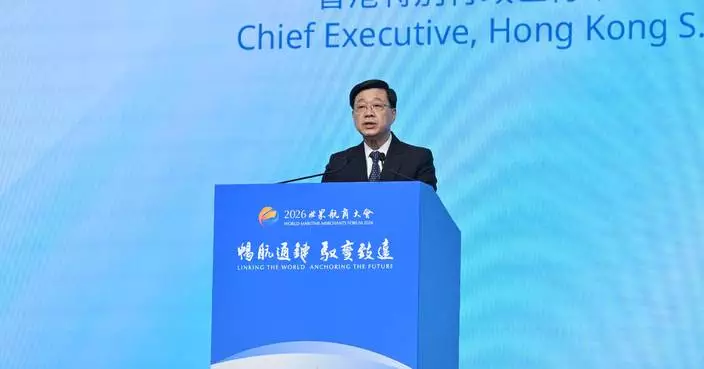
Following is the speech by the Chief Executive, Mr John Lee, at the 7th US-China Hong Kong Forum Official Dinner today (November 16):
Honourable Deputy Director-General Zhang Xiangchen (Deputy Director-General, World Trade Organization), Deputy Commissioner Li Yongsheng (Deputy Commissioner of the Office of the Commissioner of the Ministry of Foreign Affairs of the People's Republic of China in the Hong Kong Special Administrative Region), Vice Chairman Andy Tung (Vice Chairman of the China-United States Exchange Foundation), Vice President Shen Xin (Vice President of the Chinese People's Association for Friendship with Foreign Countries), distinguished guests from the United States and around the world, ladies and gentlemen,
Good evening. Welcome to Hong Kong, and to tonight's official dinner for the 7th US-China Hong Kong Forum.
The theme of this year's Forum, "Tomorrow Will Be Better Than Today", comes from an affirmation of hope by the late Mr Tung Chee Hwa, the first Chief Executive of the Hong Kong Special Administrative Region (HKSAR). Mr Tung founded the China-United States Exchange Foundation with the exemplary goal of promoting dialogue, understanding and exchange between China, our country, and the United States, the two largest economies in the world.
Mr Tung's full statement was this: "The future will be better than today, but it won't happen automatically. We need to work together."
That's why this Forum was created in 2019. Why you are here tonight and these next two days. After all, this Forum has now outlasted multiple US administrations, and quite a number of global supply-chain panics as well. So there's clearly a case for us to work together, for a better tomorrow.
President Xi Jinping was in the US in September, following President Donald Trump's official visit to China in May. While he was in Washington, President Xi said he hoped "to carry on our friendship, expand co-operation and promote the well-being of both our peoples". President Xi also noted that the interests of the two countries are "deeply intertwined", and that "achieving the great rejuvenation of the Chinese nation and making America great again can go hand in hand".
"Tomorrow will be better than today" is an aspiration shared by both sides. But aspiration only becomes progress when it is translated into trade, investment and jobs. That translation is what Hong Kong does — and it is why this city has been a free port since the 19th century. Yes, since our 19th century beginnings, Hong Kong has kept its harbour open and its tariffs at zero. We have always believed in free trade, in reaching out to the world for mutual opportunities.
Indeed, Hong Kong proudly retained its standing as the world's No. 1 in this year's Economic Freedom of the World Annual Report, published by the Canadian-based Fraser Institute.
We remain the world's third-largest global financial centre, behind London and New York, and Hong Kong tops the world in fintech offerings. Our economy is growing apace, with our GDP in the first three quarters of the year up 5.1 per cent, year on year. That's the fastest growth in five years over the corresponding period. And according to latest estimates, we are expecting full-year GDP growth of a whopping 4.8 per cent this year.
Last year, Hong Kong led the global IPO league table. And in the first ten months of 2026, we've raised over 51 billion US Dollars in IPOs – second only to Nasdaq. This year, too, Hong Kong became the world's largest cross-boundary wealth management centre. And we remain the world's leading offshore Renminbi business hub, processing about 75 per cent of global offshore Renminbi payments.
The opportunities here in Hong Kong are everywhere for the international community. And I welcome economies, businesses and investors from around the world to join us – to be part of the Hong Kong success story.
Under the "one country, two systems" principle, Hong Kong maintains unparalleled connectivity with both the Chinese Mainland and the rest of the world. At the doorstep of the world's second largest economy, Hong Kong endeavours to fully serve and integrate into national development.
One good area to start is the Guangdong-Hong Kong-Macao Greater Bay Area, a cluster city development that comprises Hong Kong, Macao and nine southern Mainland cities. It has a population of over 88 million, and a combined GDP of over 2.1 trillion US Dollars.
To put that in perspective, the Greater Bay Area is a market with a population larger than California and Texas combined, and an economy on par with New York State. So for those of you normally more familiar with the New York Bay Area or the San Francisco Bay Area – the next time someone says "the bay area", you may want to ask: which one?
Two months ago, we did something Hong Kong has not done before. The HKSAR Government launched Hong Kong's First Five-Year Plan, detailing our development priorities over the next five years.
Designed to align with our country's National 15th Five-Year Plan and ensure our long-term prosperity and stability, it's built on the concept of four centres and one hub. Finance, shipping, trade, and innovation and technology are our four international centres, while high-calibre talent is our rising global hub.
Putting a priority on their continuing progress will help drive Hong Kong's economic development. That, in turn, will create more opportunities for Hong Kong – and for the economies and companies that look to Hong Kong for long-term opportunities.
That very much includes the United States. Looking around this room, I see American companies that have been in Hong Kong longer than most of us in our current jobs – and they are still here, still hiring, still shipping, and thriving.
Yes, given Hong Kong's far-reaching value proposition, it is no surprise that trade and economic ties between us are so rewarding. More than 1 500 US companies operate in Hong Kong – that's up 23 per cent from 2022, when this term of the HKSAR Government assumed office. It also makes the US the largest source of foreign companies operating in Hong Kong, tied with Japan. US goods and services trade with Hong Kong totalled over 71 billion US Dollars last year, up nearly 12 per cent, year on year.
And I am pleased to note that US companies here are increasingly optimistic about their business outlook in Hong Kong, according to the American Chamber of Commerce in Hong Kong's 2026 Business Sentiment Survey.
US companies' confidence in Hong Kong's rule of law has increased to 94 per cent, with 86 per cent upbeat about Hong Kong's fundamental strengths as an international business hub in Asia. That level of optimism is encouraging.
It's also borne out by the numbers. Over the past 10 years, the US trade surplus with Hong Kong has exceeded 250 billion US Dollars.
US trade with Hong Kong supports more than 140 000 American jobs, from agriculture and fashion, to manufacturing and much more. That's according to the American Chamber of Commerce in Hong Kong.
Ladies and gentlemen, a lot of relationships are built on balance. But ours, it seems, is built on America selling more than it buys here – and, by all accounts, enjoying it. And, as a champion of free trade, Hong Kong is happy to keep it that way. After all, we believe that free trade is not a zero-sum game – it is, again, a relationship. The economy that sells earns a living. The economy that buys lives better. Both sides could win, and all could prosper.
No less important, the US and Hong Kong continue to connect at the people-to-people level, such as here. Hong Kong, ladies and gentlemen, is home to more than 80 000 US citizens.
Last year, we also welcomed more than one million tourists from the US, our largest long-haul market. From Hong Kong, there are direct flight services to seven destinations on the US mainland.
And the HKSAR Government welcomes more than US holidaymakers. We're keen, too, on attracting the professional and strategic talent we need to build Hong Kong's flourishing future.
Take our Top Talent Pass Scheme for example. It opens wide our doors for degree graduates of the world's top universities, allowing them to apply for work in Hong Kong even before getting a job offer here. And graduates from more than 50 US universities are eligible for the programme.
As of September, more than 140 000 Top Talent Pass applicants had been approved, most from the commerce, finance and innovation sectors. Close to 1 500 applications we have received were from the US, making the country one of the largest foreign sources for the scheme.
Ladies and gentlemen, tomorrow I shall depart for Shenzhen, to attend the Asia-Pacific Economic Cooperation (APEC) Economic Leaders' Meeting and related events. There, I will speak at the APEC CEO Summit. I will be attending the APEC Economic Leaders' Meeting on behalf of Hong Kong, China, one of the 21 member economies of APEC, alongside our country and the US.
They will be welcome opportunities to address the member economies of APEC once again – to contribute to this year's APEC China, as we did in October, at the APEC Finance Ministers' Meeting held here in Hong Kong. A historic first for our city.
Under the theme "Building an Asia-Pacific Community to Prosper Together", the meeting will focus on three priority areas, namely, "Openness, Innovation and Cooperation". Very much in line with what Hong Kong has always striven to achieve in advancing regional co-operation.
That, of course, is thanks to our country, and to the "one country, two systems" framework. They together shape Hong Kong's economy, our community and the flourishing future we are working to build.
It helps, too, that we can count on APEC and its mission of dialogue and co-operation in the pursuit of sustainable economic growth for all.
I am grateful, too, to you – the US-China Hong Kong Forum, and its organisers, the China-United States Exchange Foundation and the Chinese People's Association for Friendship with Foreign Countries.
And to the late Mr Tung Chee Hwa, proud founder of the Foundation. Mr Tung was a statesman of exceptional vision who dedicated his life to the service of our country and the Hong Kong Special Administrative Region. His remarkable foresight in promoting our city's connectivity with the Chinese Mainland and the world, the US very much included, is a hallmark of his enduring legacy.
We take solace in the knowledge that our work here today, fostering co-operation between China and the United States, is a fitting tribute to his life's mission.
The mission of advancing peace and prosperity for China, the United States and the world at large. And it is founded on co-operation and communication – on the promise that "the future will be better than today".
As long as we continue to work together.
Ladies and gentlemen, enjoy the evening and the company around you. Thank you very much.
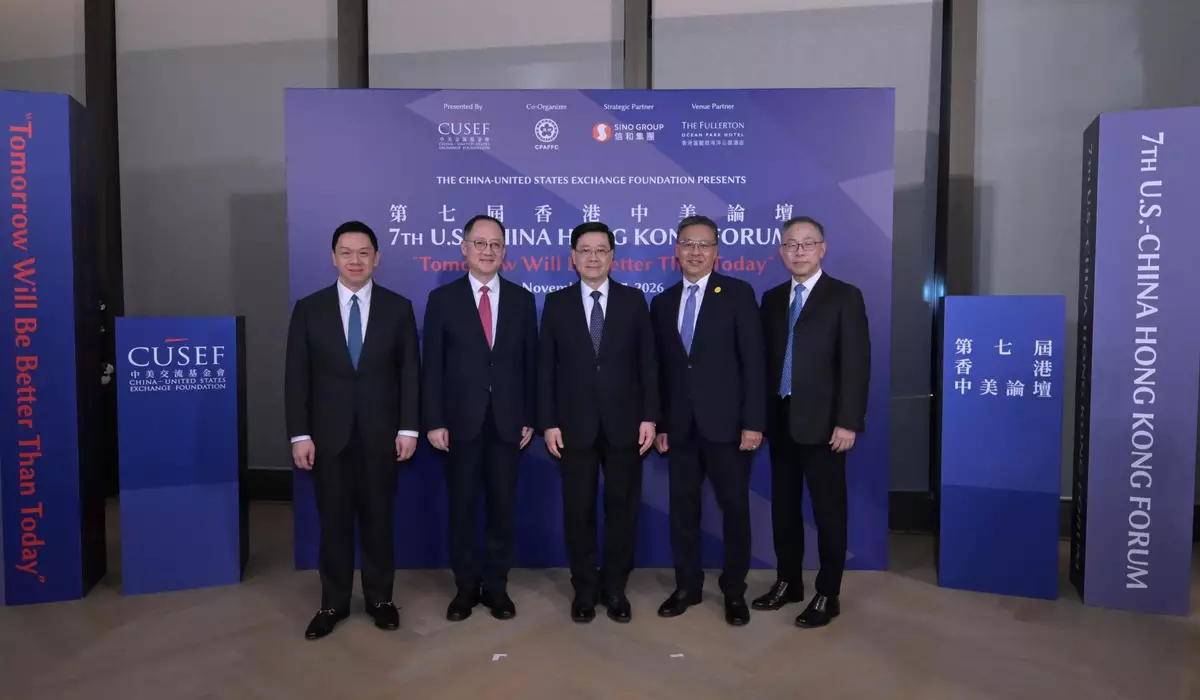
Speech by CE at 7th US-China Hong Kong Forum Official Dinner Source: HKSAR Government Press Releases
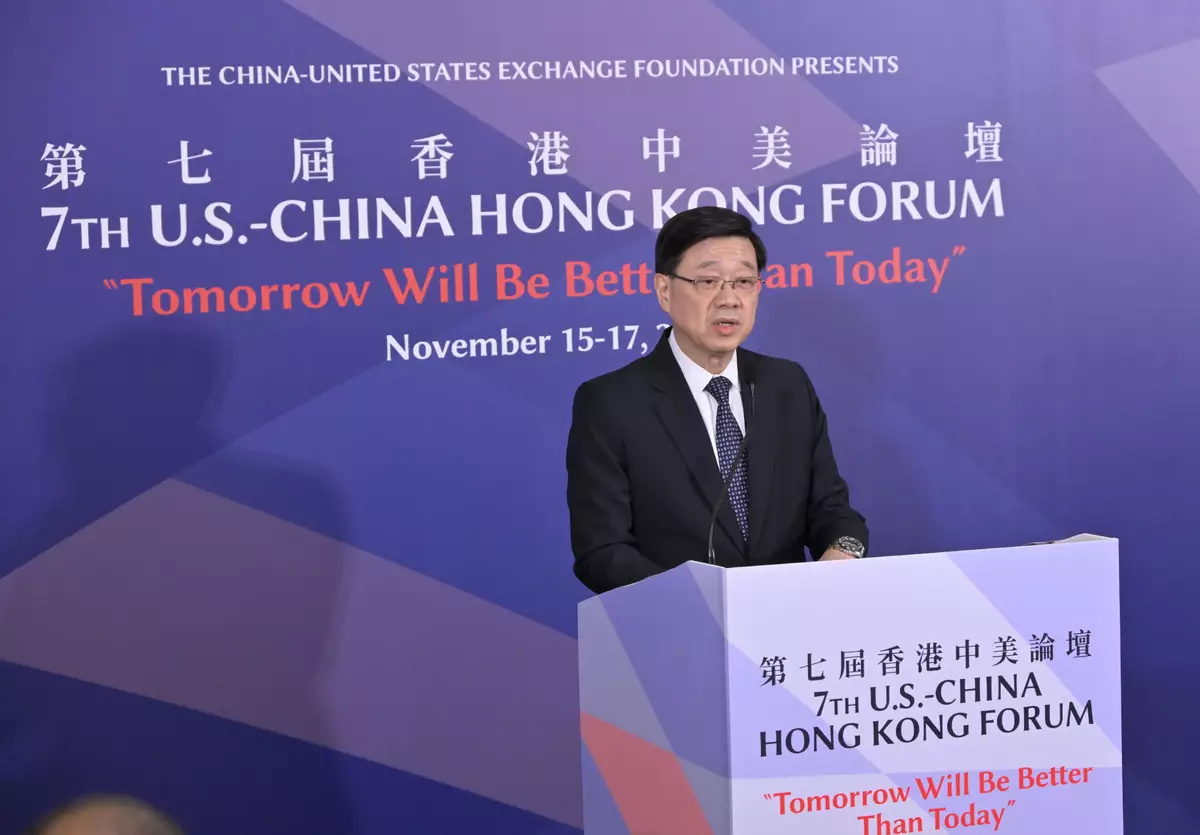
Speech by CE at 7th US-China Hong Kong Forum Official Dinner Source: HKSAR Government Press Releases