SANTIAGO, Chile--(BUSINESS WIRE)--Nov 16, 2026--
Ticketplus Ltd. ("Ticketplus" or the "Company") (NYSE American: TP), a technology company providing infrastructure that powers live entertainment across Latin America, today announced the launch of its platform in Bolivia, marking the Company’s 13 th active market and its second new market this month, following the Company's entry into Brazil on November 5. With the addition of Bolivia, Ticketplus has surpassed its previously announced full-year 2026 target of at least 12 active markets.
This press release features multimedia. View the full release here: https://www.businesswire.com/news/home/20261116733509/en/
"We set a goal of entering at least one new market by year-end, and in November alone, we delivered two," said Yethro Dinamarca, Chairman of Ticketplus. "We remain focused on disciplined execution against the goals we set, and we intend to continue building Ticketplus with that same approach. Our entry into Brazil established our presence in the region's largest market, while Bolivia further strengthens our footprint at the heart of South America. We believe each new market increases the value of our platform, creating greater opportunities for the local operators we serve today and those we expect to welcome in the future."
Highlights
About Ticketplus
Ticketplus Ltd. (NYSE American: TP) is a technology company providing underlying infrastructure that powers live events across Latin America. Its proprietary, end-to-end platform integrates ticketing, payments, access control and data analytics, enabling events of all sizes to operate on a unified technological foundation. The Company operates through a Full Operation model and a White-Label SaaS model in 13 markets: Argentina, Bolivia, Brazil, Chile, Colombia, Costa Rica, the Dominican Republic, Ecuador, Mexico, Paraguay, Peru, the United States and Uruguay. In the first nine months of 2026, the platform processed more than 62,400 events and Total Platform Sales (GMV) of US$457.8 million, up 131.5% year-over-year. For more information, please visit the Ticketplus investor relations website at investors.ticketplus.com.
Total Platform Sales (GMV) is an operating metric that represents the total value of all sales processed through the Company’s platform, including tickets and other products and services, before any deductions for fees, refunds, or commissions, and regardless of revenue recognition treatment.
Forward-Looking Statements
This press release contains forward-looking statements within the meaning of Section 27A of the Securities Act of 1933, as amended, and Section 21E of the Securities Exchange Act of 1934, as amended, including statements about the Company's operations in Bolivia and Brazil, its regional presence and expansion into new markets, its white-label model and its outlook for active markets. Words such as "anticipate," "believe," "expect," "opportunity," "outlook," "plan," "will," "may," "intend," "goal," "target" and similar expressions identify forward-looking statements. These statements are based on current expectations and assumptions and are subject to risks and uncertainties, including: the pace of adoption of the platform by promoters, venues and ticketing operators in Bolivia and Brazil; competition; the Company's ability to comply with Bolivian and Brazilian consumer protection, tax and invoicing requirements; the performance of third-party payment providers; access to foreign currency and fluctuations of the Bolivian boliviano, Brazilian real and other local currencies; macroeconomic and political conditions in Latin America; the Company's ability to launch additional markets on its expected timeline; and the other factors described under "Risk Factors" in the Company's filings with the U.S. Securities and Exchange Commission. Actual results may differ materially. Forward-looking statements speak only as of the date of this press release, and the Company undertakes no obligation to update them, except as required by law.
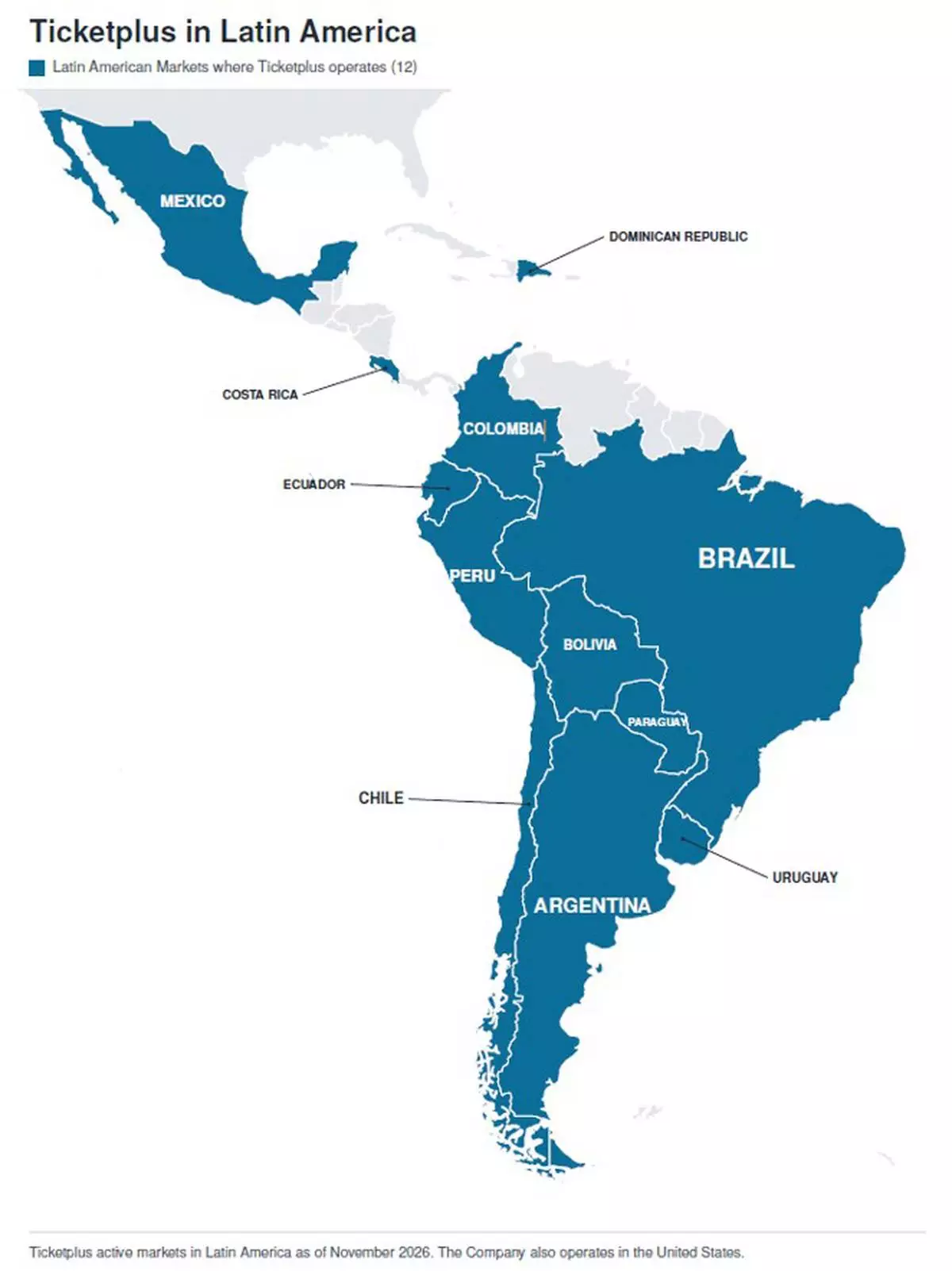
Ticketplus active markets in Latin America as of November 2026. The company also operates in the United States.
Tech stocks are leading U.S. futures lower ahead of the first quarterly earnings from Nvidia after the abrupt departure of CEO Jensen Huang, as well as the potential market debut of Anthropic in what is expected to be among the largest ever.
Futures for the S&P 500 fell 0.6% on Monday, while those for the Nasdaq declined 1.4%. Futures for the Dow Jones Industrial Average slipped 0.1%.
Stocks across the artificial intelligence sector are almost universally lower and Nvidia is down nearly 4% before the company posts earnings Tuesday. Huang’s resignation hit AI stocks last week. Huang had been one of the biggest advocates for AI and his downfall triggered questions over how the global AI boom could be impacted.
There have been increasing concerns that the robust growth of AI capital spending may slow, even before Huang's departure. The sweep of Congress by Democrats in midterm elections is seen as a risk by some for the development of AI data centers, which had flourished under a friendly administration. A backlash against those data centers by many voters coalesced this year.
“The market was already worried about this risk before what happened at Nvidia,” Zhiwei Zhang, president and chief economist at Pinpoint Asset Management, said in a commentary Monday. “Now the risk has become even more serious.”
The stock market debut of Anthropic is expected this week. Anthropic is looking for an approximately $1.3 trillion valuation when it goes public. The company behind the Claude chatbot said in a regulatory filing on Tuesday that it will sell 825 million shares priced between $70 and $78 a share. That would give Anthropic the ability to raise more than $61 billion, if the IPO is priced at the midpoint.
Shares of L3Harris, a contractor for the Federal Aviation Administration, declined 3.4% in premarket trading after Trump administration officials suggested it may be at fault for a nationwide ground stop Friday that grounded thousands of flights.
President Donald Trump, Chinese leader Xi Jinping and Russian President Vladimir Putin will meet Thursday on the sidelines of the Asia-Pacific Economic Cooperation summit in Shenzhen, China.
Also this week, the minutes from the Federal Reserve’s latest policy meeting are set to be released Wednesday, which could offer more detail on potential rate hikes later this year and in early 2027.
Energy prices stabilized as tensions in the Middle East drag on, though the flow of crude is recovering to prewar levels. The International Energy Agency said last week that Gulf exports “recovered much faster than global oil demand.”
Brent crude, the international standard, declined 0.5% to $95.34 per barrel, still much higher than the approximately $72 a barrel in late February before the Iran war began. Benchmark U.S. crude fell 0.3%, to $88.31 a barrel.
Diesel prices fell below $6 per gallon for the first time since early September, according to the motor club AAA.
In Europe, Britain’s FTSE 100 added 0.3% to 10,939.35. Germany’s DAX dipped 0.1% to 26,719.17, while France’s CAC 40 edged up 0.1% to 8,379.14. Asian markets were mostly lower.
The U.S. dollar was trading at 159.61 Japanese yen and was almost unchanged. The euro was trading at $1.1011, down from $1.1029.
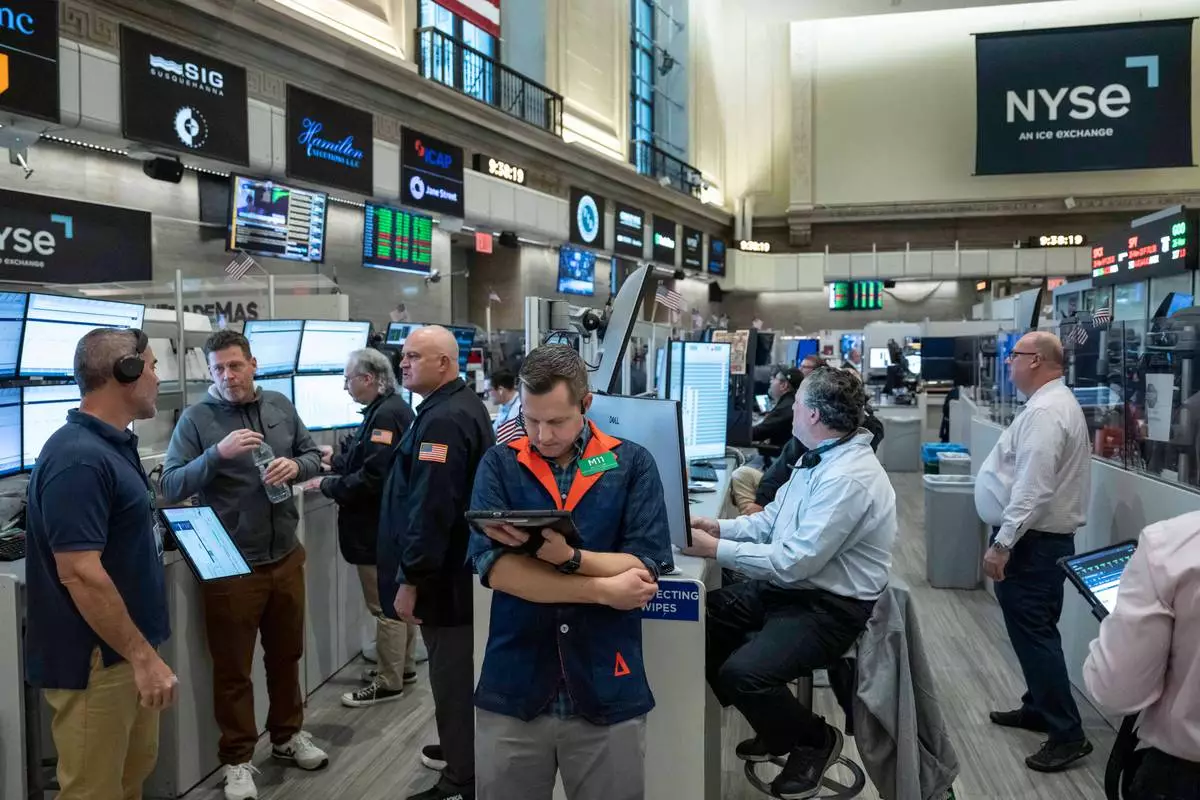
Options traders, including Bill Taylor, center, work on the floor of the New York Stock Exchange in New York, Monday, Nov. 9, 2026. (AP Photo/Yuki Iwamura)
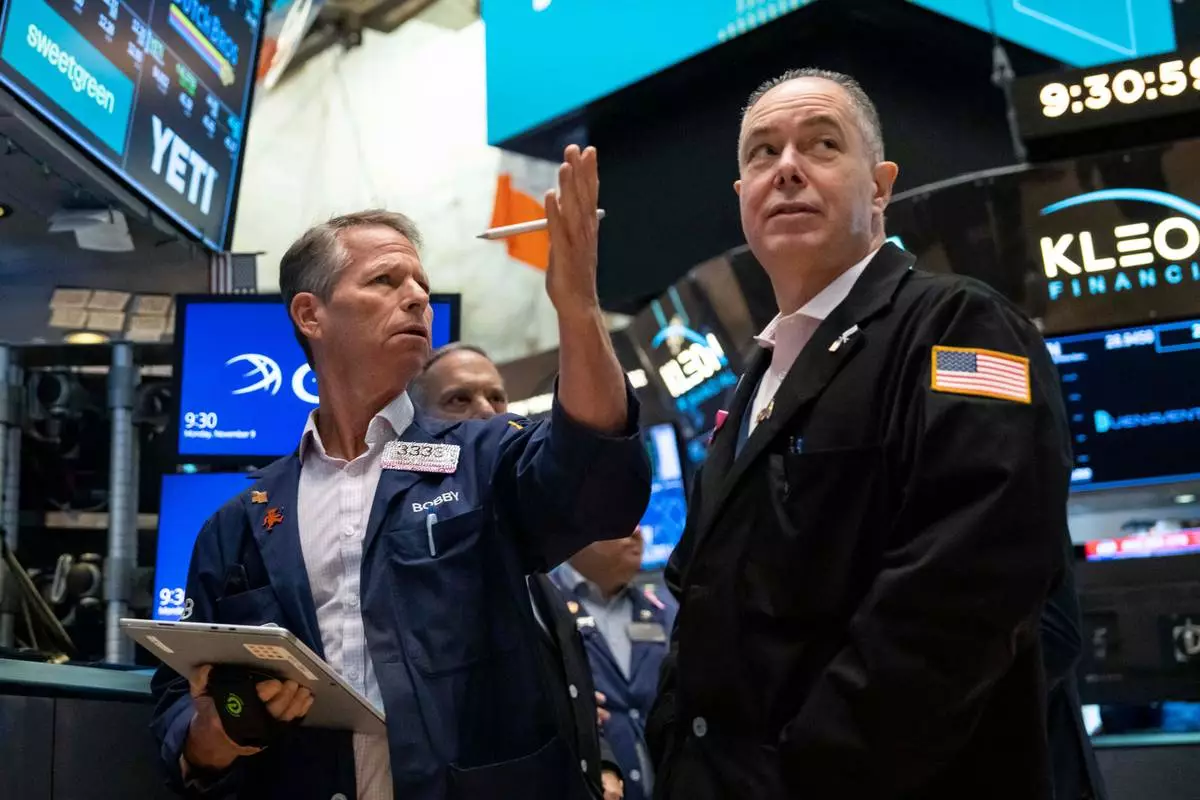
Trader Robert Charmak, left, works on the floor of the New York Stock Exchange in New York, Monday, Nov. 9, 2026. (AP Photo/Yuki Iwamura)
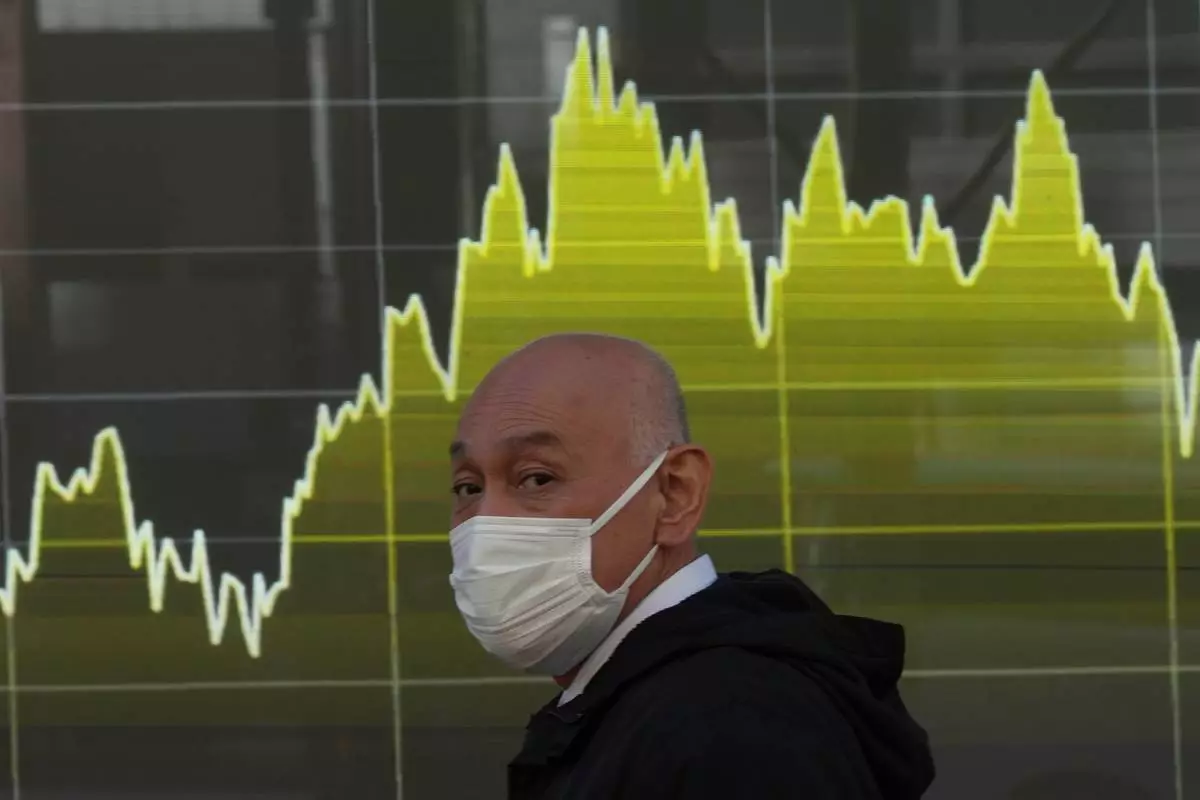
A person walks in front of an electronic stock board showing Japan's Nikkei index at a securities firm Monday, Nov. 16, 2026, in Tokyo.(AP Photo/Eugene Hoshiko)
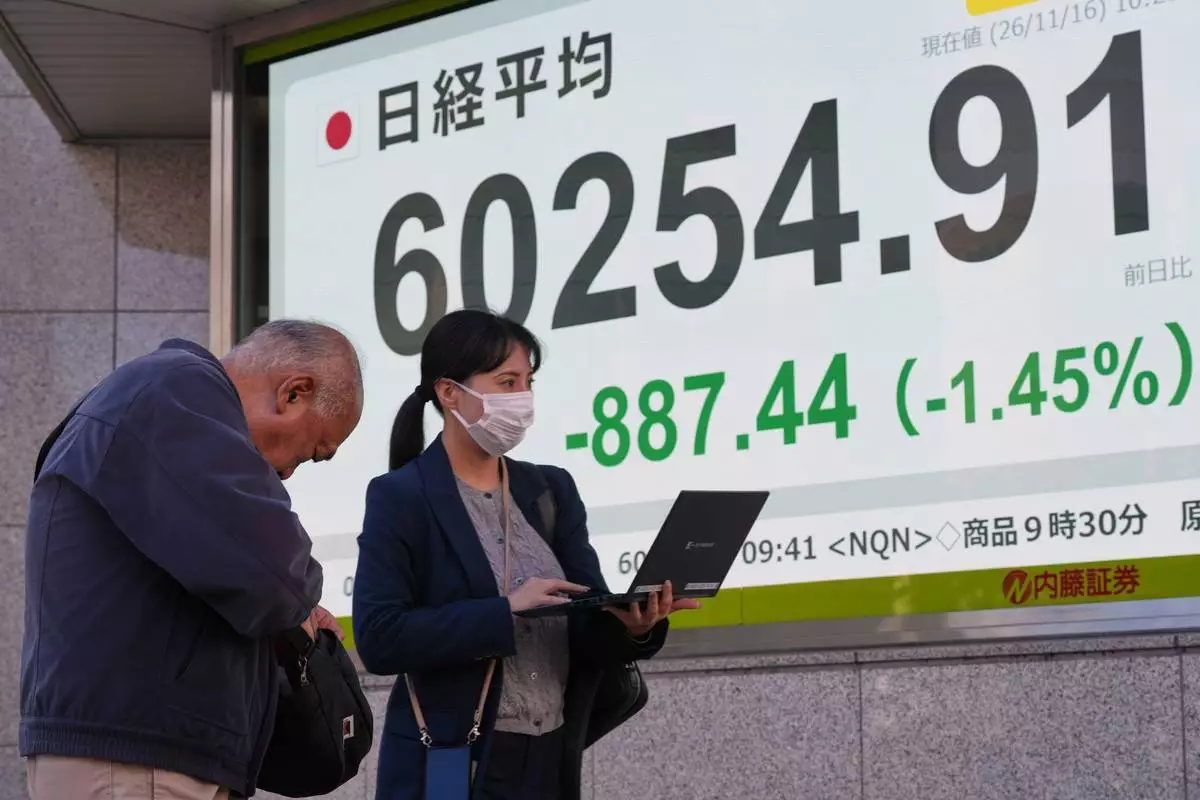
People walk in front of an electronic stock board showing Japan's Nikkei index at a securities firm Monday, Nov. 16, 2026, in Tokyo. (AP Photo/Eugene Hoshiko)
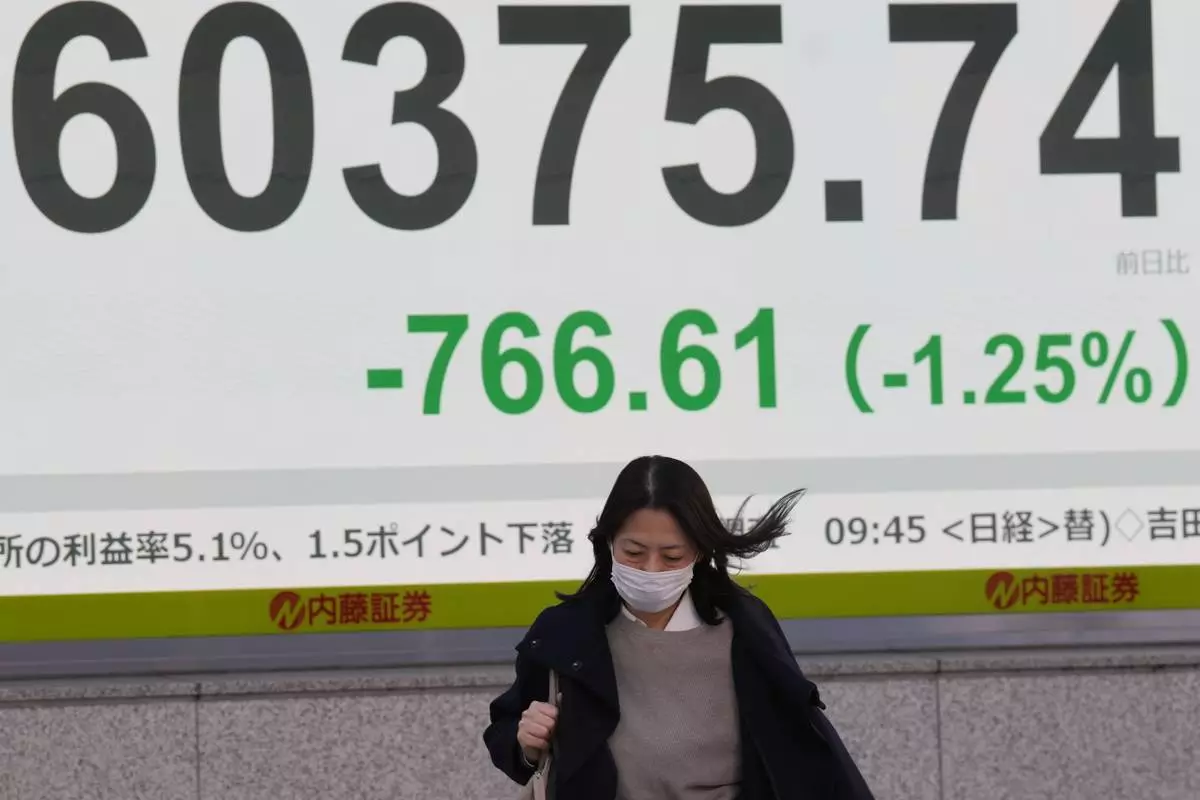
A person walks in front of an electronic stock board showing Japan's Nikkei index at a securities firm Monday, Nov. 16, 2026, in Tokyo.(AP Photo/Eugene Hoshiko)
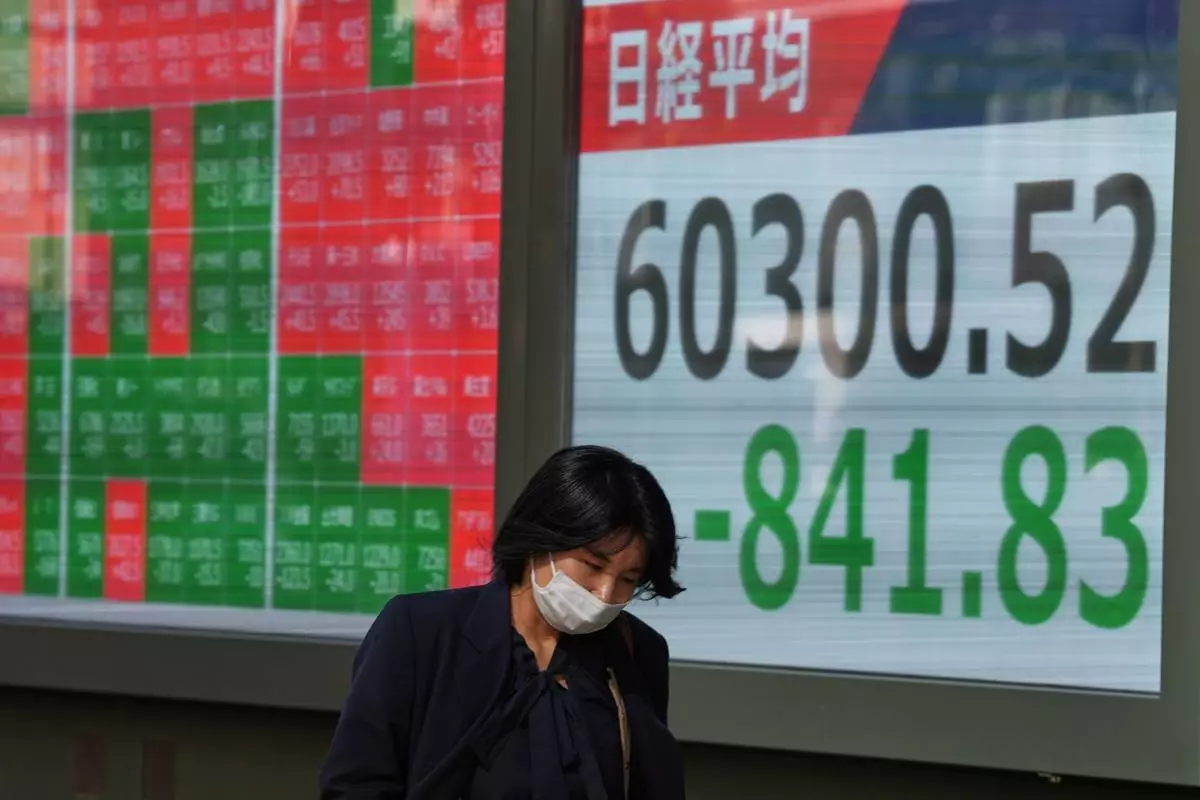
A person walks in front of an electronic stock board showing Japan's Nikkei index at a securities firm Monday, Nov. 16, 2026, in Tokyo. (AP Photo/Eugene Hoshiko)
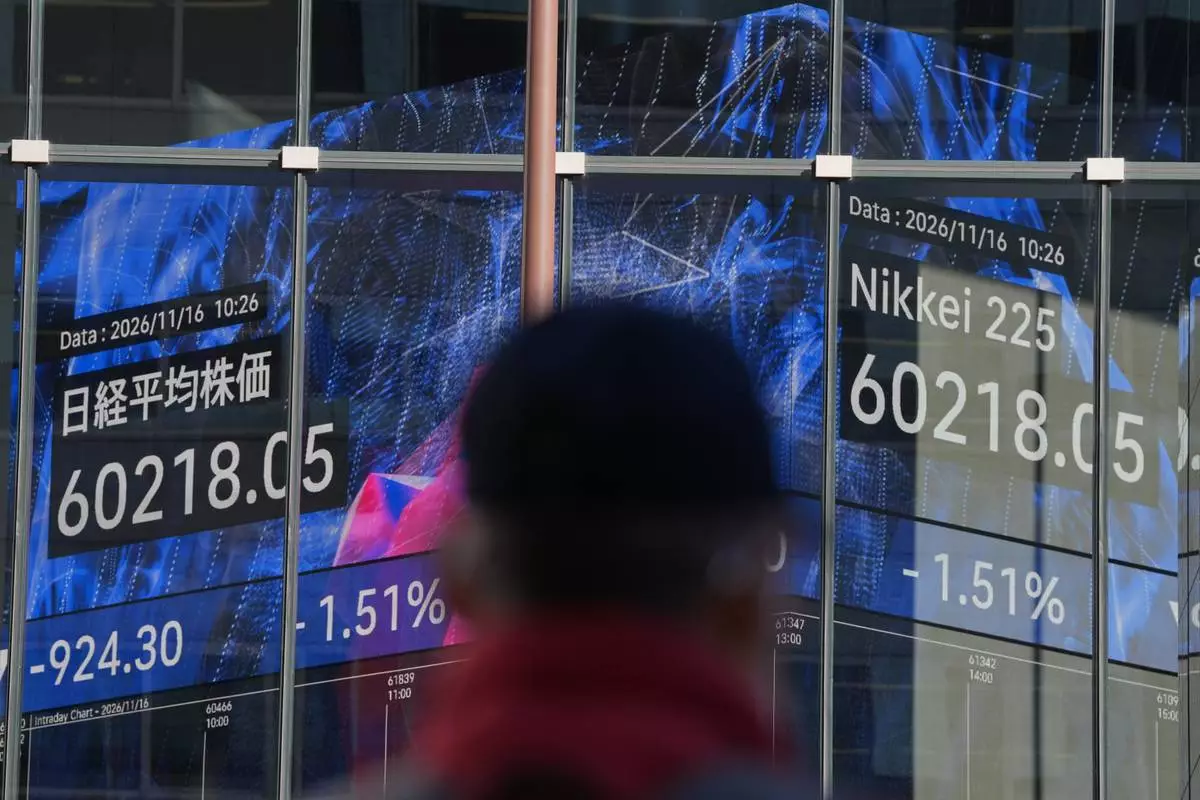
A person watches an electronic stock board showing Japan's Nikkei index at a securities firm Monday, Nov. 16, 2026, in Tokyo. (AP Photo/Eugene Hoshiko)