- First-of-its-kind biotechnology trait helps soybean farmers protect yield against damaging nematodes
- Peak sales potential of more than €300 million
- Planned launches from 2028 in the United States and Brazil reinforce growth ambitions for Seed Solutions business
LIMBURGERHOF, Germany, Nov. 16, 2026 /PRNewswire/ -- BASF Agricultural Solutions is advancing the global commercialization of Nemasphere™, a groundbreaking nematode resistance trait for soybeans. Nemasphere varieties are expected to be available in the United States and Brazil from 2028. With a peak sales potential of more than €300 million, the trait is one example of the company's strong innovation pipeline and will support its growth strategy for Seed Solutions, which brings together its field crops seeds and traits, vegetable seeds and seed treatment businesses.
"Nemasphere technology is remarkable for two reasons: It introduces the first ever biotech trait providing nematode resistance and represents a major growth opportunity for our Seed Solutions business. Combining our portfolio with a scalable licensing model will broaden our market reach, open additional revenue streams and give farmers greater access to crucial technologies," said Livio Tedeschi, Head of the Management Board of BASF Agricultural Solutions.
Nematodes cause an estimated $4.5 billion in crop losses in Brazil[1] and the United States[2] each season. Nemasphere introduces a novel mode of action against key plant-parasitic soybean nematodes, delivering up to 90% control and helping protect against associated yield loss[3]. In field trials, soybeans with the trait helped increase yields by an average of up to 10 percent[4] and in Brazil, soybean fields with high root lesion nematode populations helped deliver yield gains in cotton or corn grown in the following season.[5]
"Today's tools for nematode control are reaching their limits, and I'm proud that our teams have developed a breakthrough trait innovation with a new protection mechanism. By acting from within the plant, Nemasphere addresses a persistent threat that often remains invisible above ground and can help farmers protect significant yield potential throughout the season and sustain field productivity over time," said Melanie Bausen-Wiens, Member of the Management Board of BASF Agricultural Solutions, in charge of Technology.
The latest import authorization of soybeans containing the Nemasphere trait in the European Union completes the regulatory approvals currently required in key export markets. This milestone maintains access to important international soybean markets and enables the company to advance preparations for the planned launches from 2028. To offer farmers additional value, the launch varieties will stack Nemasphere from BASF Agricultural Solutions with the Enlist E3® soybean trait, jointly developed and owned by Vylor and M.S. Technologies, L.L.C.
About BASF Agricultural Solutions
Everything we do, we do for the love of farming. Farming is fundamental to provide sufficient and affordable food for a rapidly growing population, while reducing environmental impacts. That's why we are working with partners and experts to integrate sustainability criteria into all business decisions. With €990 million in 2025, we invest in a strong R&D pipeline, and our solutions are purpose-designed for different crop systems. Connecting seeds and traits, crop protection products, digital tools and sustainability approaches, to help deliver the best possible outcomes for farmers, growers and stakeholders along the value chain. In 2025, our business generated sales of €9.6 billion. For more information, please visit www.agriculture.basf.com or our social media channels.
About BASF
At BASF, we create chemistry for a sustainable future. Our ambition: We want to be the preferred chemical company to enable our customers' green transformation. We combine economic success with environmental protection and social responsibility. Around 95,000 employees in the BASF Group contribute to the success of our customers in nearly all sectors and almost every country in the world. Our portfolio comprises, as core businesses, the segments Chemicals, Materials, Industrial Solutions, and Nutrition & Care; our standalone businesses are bundled in the segments Surface Technologies and Agricultural Solutions. BASF generated sales of around €60 billion in 2025. BASF shares are traded on the stock exchange in Frankfurt (BAS) and as American Depositary Receipts (BASFY) in the United States. Further information at www.basf.com.
The Nemasphere™-Trait is owned and developed by BASF Agricultural Solutions. Nemasphere is a trademark of BASF Agricultural Solutions. The transgenic soybean event in Enlist E3® soybeans is jointly developed and owned by Vylor and M.S. Technologies, L.L.C. BASF licensed its Nemasphere nematode resistance trait to Vylor and M.S. Technologies, L.L.C. for use with Enlist E3 soybeans. Enlist E3 is a trademark of Vylor.
[1]Brazilian Society of Nematology (2021): ~$3 billion per season in Brazil.
[2]Crop Protection Network (2025): ~$1.5 billion per season in the U.S.
[3]BASF field trials in Brazil and U.S. over 7 years.
[4]McCarville et al.: Plant Disease (2023).
[5]BASF field trials in Brazil over 4 years.
** This press release is distributed by PR Newswire through automated distribution system, for which the client assumes full responsibility. **
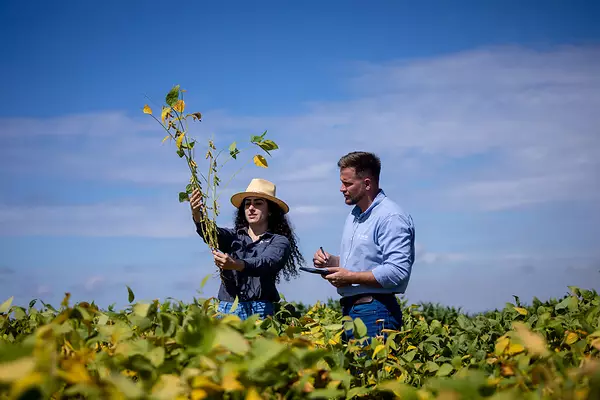
BASF Agricultural Solutions strengthens Seed Solutions portfolio with breakthrough Nemasphere™ technology
Partnerships with World Green Building Council, Mærsk Mc-Kinney Møller Center for Zero Carbon Shipping and XIBER Energy Solutions extend Physical AI across buildings, maritime and industry, building on Univers' growing global ecosystem
ANTALYA, Türkiye, Nov. 16, 2026 /PRNewswire/ -- Univers, a Singapore-headquartered global leader in Physical AI for intelligent infrastructure, today announced three separate global partnerships, each aimed at accelerating the application of Physical AI across the built environment, maritime and industrial operations.
The separate agreements with World Green Building Council, Mærsk Mc-Kinney Møller Center for Zero Carbon Shipping and XIBER Energy Solutions were signed at the Singapore Pavilion at COP31, with the signing ceremony witnessed by Singapore's Minister for Sustainability and the Environment Grace Fu. While distinct in scope, the three collaborations extend the application of Physical AI across major areas of the physical economy: the built environment, maritime and industrial operations.
As energy and infrastructure systems become more electrified and interconnected, the challenge is shifting from climate ambition to implementation. Univers's Platform for Physical AI connects operational technology, information technology and AI to help organisations understand, optimise and orchestrate complex physical systems at scale.
Valerio Dilda, Senior Vice President of Europe, Univers, said:
"The world has set its climate ambitions. The next challenge is implementation across the physical economy. By combining our partners' deep domain expertise with Univers's Physical AI capabilities, we can help countries accelerate the energy transition towards energy systems that are sustainable, resilient, affordable and sovereign, while scaling proven approaches across markets."
Taking Physical AI into global industries
As World Green Building Council's first AI Global Knowledge Partner, Univers will work with its global network to advance the role of AI in more intelligent building operations and sustainable infrastructure. The partnership creates an opportunity to bring Physical AI expertise into a global network focused on accelerating built-environment decarbonisation.
Cristina Gamboa, CEO, World Green Building Council, said:
"Decarbonising the built environment requires us to go beyond measuring performance to continuously improving how buildings actually operate. This partnership will explore how AI can enable buildings to become more intelligent, responsive and sustainable at scale."
Through its partnership with XIBER Energy Solutions, TESYA Group's in-house decarbonisation start-up, Univers will implement Physical AI across XIBER Energy Solutions' global industrial and manufacturing customer base, helping businesses improve energy and operational performance and reduce emissions.
Giovanni Longari, CEO, XIBER Energy Solutions, said:
"Industrial decarbonisation has to deliver tangible results on the factory floor. Bringing AI together with real operational and energy data can help manufacturers improve productivity and energy performance while reducing emissions."
Univers will also become one of the first AI partners of the Mærsk Mc-Kinney Møller Center for Zero Carbon Shipping, working together on systemic maritime decarbonisation. The collaboration will explore how AI can improve maritime operations, including through a Return on Intelligence framework focused on the economic and environmental value of more intelligent operational decisions.
Pernille Dahlgaard, Chief Impact Officer, Mærsk Mc-Kinney Møller Center for Zero Carbon Shipping, said:
"Maritime decarbonisation is a systems challenge. AI has the potential to connect decisions across vessels, fuels, ports and operations, translating intelligence into measurable operational, economic and environmental outcomes."
The partnerships also coincide with the launch of Univers' new Return on Intelligence framework at COP31, which proposes a new way for businesses to assess the value created by AI in physical operations. The framework is explored in a new whitepaper with input from Mærsk Mc-Kinney Møller Center for Zero Carbon Shipping. Entitled Return on Intelligence: How AI Changes the Economics of Transport, it is being launched at COP31 with perspectives from across the transport, energy and financial ecosystem.
Fox Chu, Senior Vice President and Global Head of Aviation, Transportation & Logistics, Univers said:
"Rather than measuring AI primarily through technology performance or emissions reduction, the framework looks at how better operational decisions create enterprise value, including through improved capital productivity, stronger operating economics, new revenue opportunities and the removal of constraints to growth."
Building global momentum for Physical AI
The COP31 partnerships form part of a wider expansion of Univers's Physical AI ecosystem and build upon partnerships signed ahead of COP31.
Ahead of COP31, Univers expanded its partnership with Voltalis in Europe to turn commercial building portfolios into flexible grid assets. Following the strong start in the UK and France announced in June, the partners are now beginning to explore opportunities in new regions. The collaboration brings together demand-side flexibility and Physical AI to help buildings respond more intelligently to grid and market conditions.
In Singapore, Univers is also deepening its strategic partnership with SBS Transit, extending its collaboration into Physical AI for energy and operations, beginning with e-bus operations and exploring applications in rail maintenance.
Together, these distinct collaborations extend Univers's Physical AI ecosystem across buildings, energy, public transport, maritime and industry, demonstrating how intelligence can be applied to real-world infrastructure and scaled across sectors and markets.
About Univers
Univers is a global leader in Physical AI for energy and infrastructure. Its Platform for Physical AI brings together operational technology, information technology and AI to help organisations understand, optimise and orchestrate complex physical systems. Headquartered in Singapore and operating globally, Univers works across energy, buildings, transportation and industry to make infrastructure more intelligent, efficient, resilient and sustainable. Currently, over 450 million devices and sensors are connected and approximately 20% of global renewable capacity runs through Univers's technology across 45 markets around the world.
For more information, please visit univers.com.
** This press release is distributed by PR Newswire through automated distribution system, for which the client assumes full responsibility. **
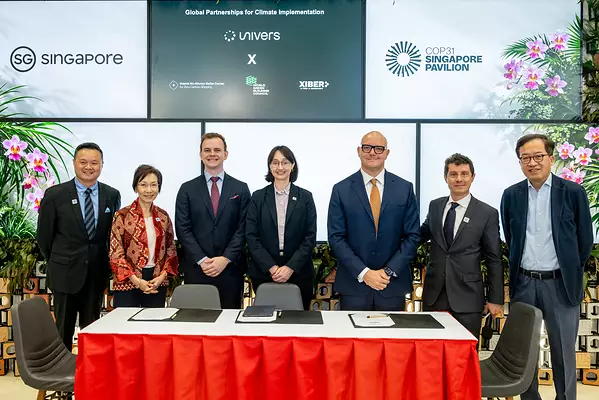
Univers expands global Physical AI ecosystem to make critical infrastructure intelligent