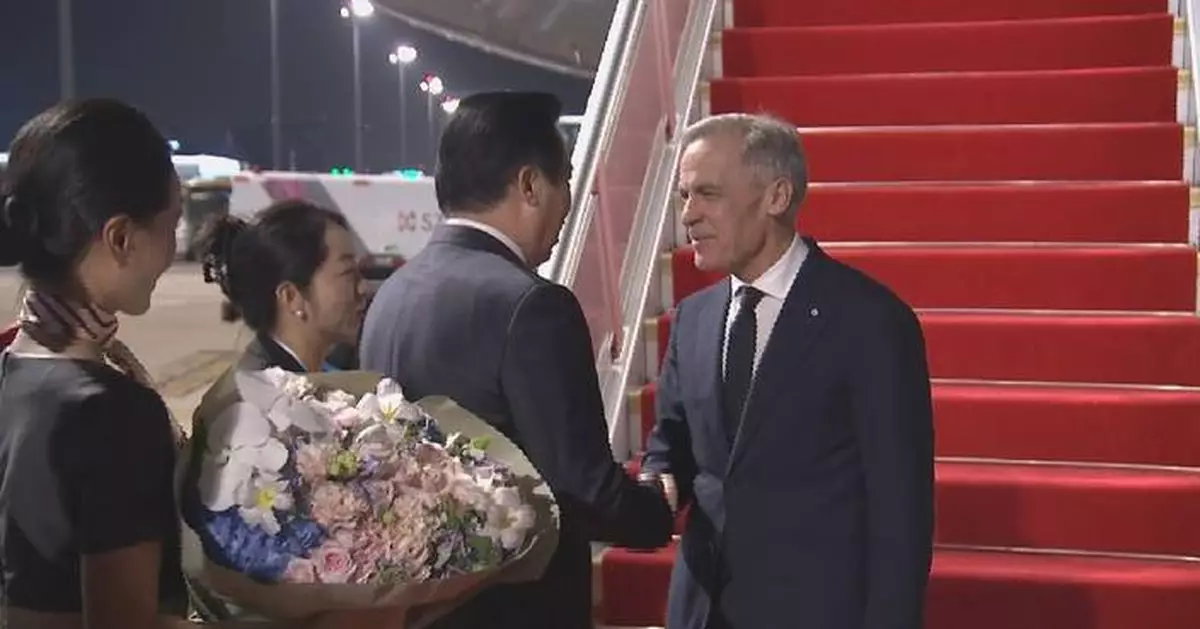
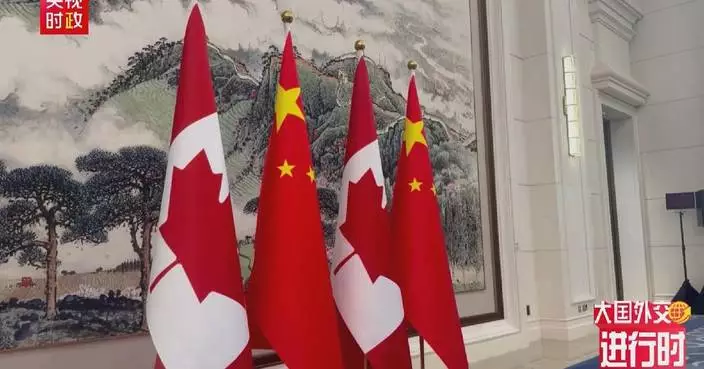
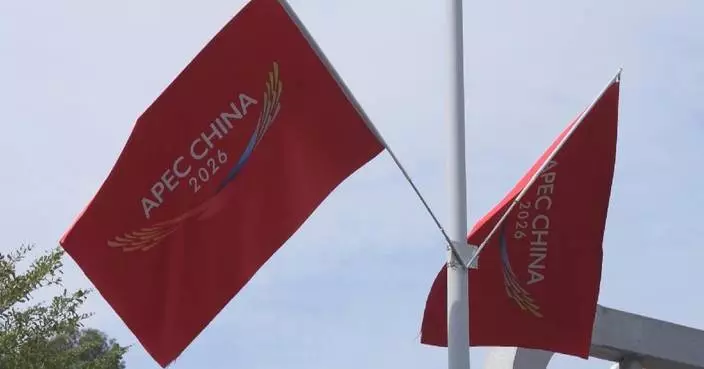
Canadian Prime Minister Mark Carney arrived in Shenzhen, south China's Guangdong Province Monday evening to attend the 33rd Asia-Pacific Economic Cooperation (APEC) Economic Leaders' Meeting, scheduled for Wednesday and Thursday.
China and Canada are both important economies in the Asia-Pacific region. The two sides are highly complementary in resource endowments and economic structures, share broad common interests in regional cooperation and addressing global challenges, and both attach importance to upholding multilateralism.
In January this year, Carney paid a successful visit to China, and the leaders of the two countries agreed to advance the China-Canada new strategic partnership.
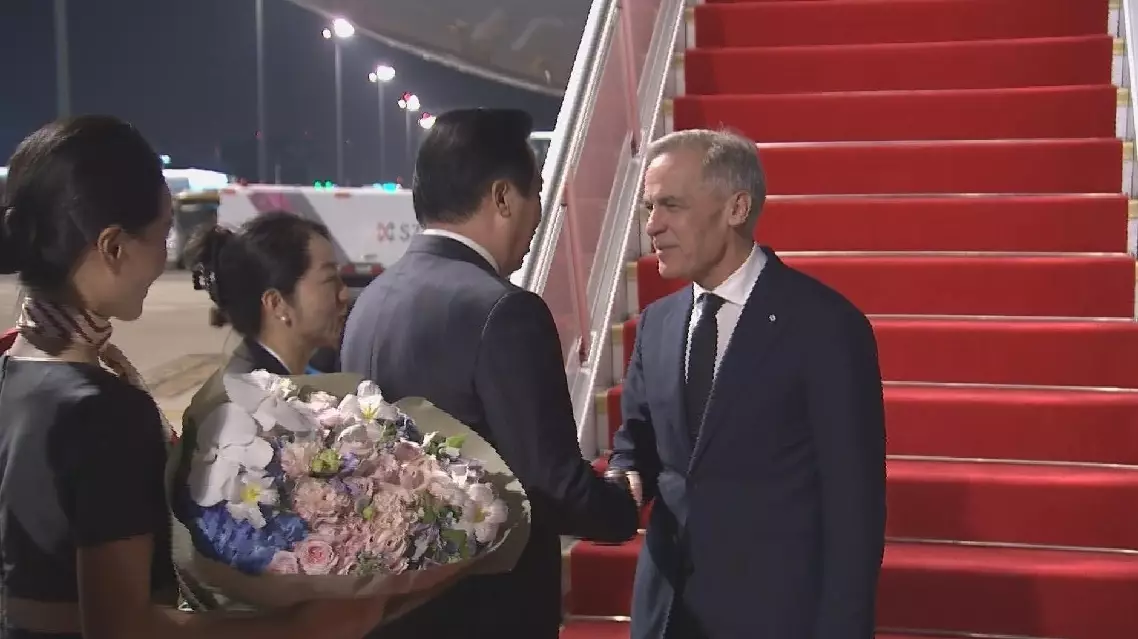
Canadian PM arrives in Shenzhen for APEC Economic Leaders' Meeting

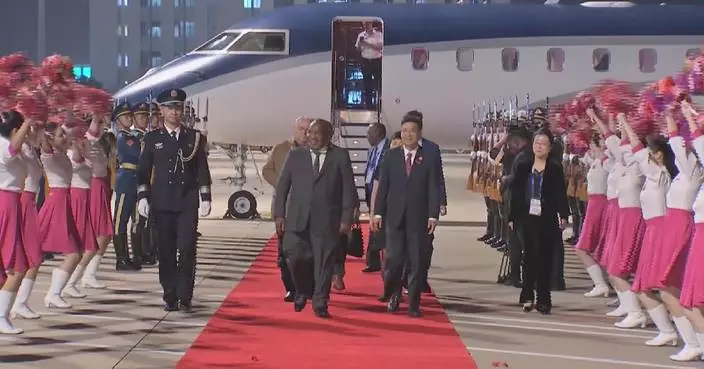
Canadian PM arrives in Shenzhen for APEC Economic Leaders' Meeting
China is consulting with other Asia-Pacific Economic Cooperation (APEC) economies on an outcome document related to the Free Trade Area of the Asia-Pacific (FTAAP), said an official with the Ministry of Commerce on Monday in south China's Shenzhen, where the 33rd APEC Economic Leaders' Meeting will be held on Wednesday and Thursday.
Noting that this year marks the 20th anniversary of the proposal of the FTAAP vision by APEC leaders, Chen Chao, director-general of the ministry's Department of International Trade and Economic Affairs, said at a press conference that APEC has advanced the FTAAP in two major aspects this year.
It has promoted dialogue and alignment among regional economic and trade arrangements and advance high-level opening up in the Asia-Pacific, while playing a role of an incubator to continuously tap into the Free Trade Area and enhance rule coordination in emerging fields, Chen said.
"We are consulting with other APEC economies on an outcome document related to the Free Trade Area of the Asia-Pacific, and encouraging all parties to pursue pilot initiatives through flexible and pragmatic means, such as the Pathfinder approach, reduce trade and investment barriers, and improve the FTAAP's development pathways, action framework and institutional arrangements in the new era. In the future, based on the new achievements and consensus, all parties will continue to actively promote dialogue, exchanges and practical cooperation in relevant fields, constantly enrich the connotation of the FTAAP, and make contributions to trade and economic development in the region," he said.
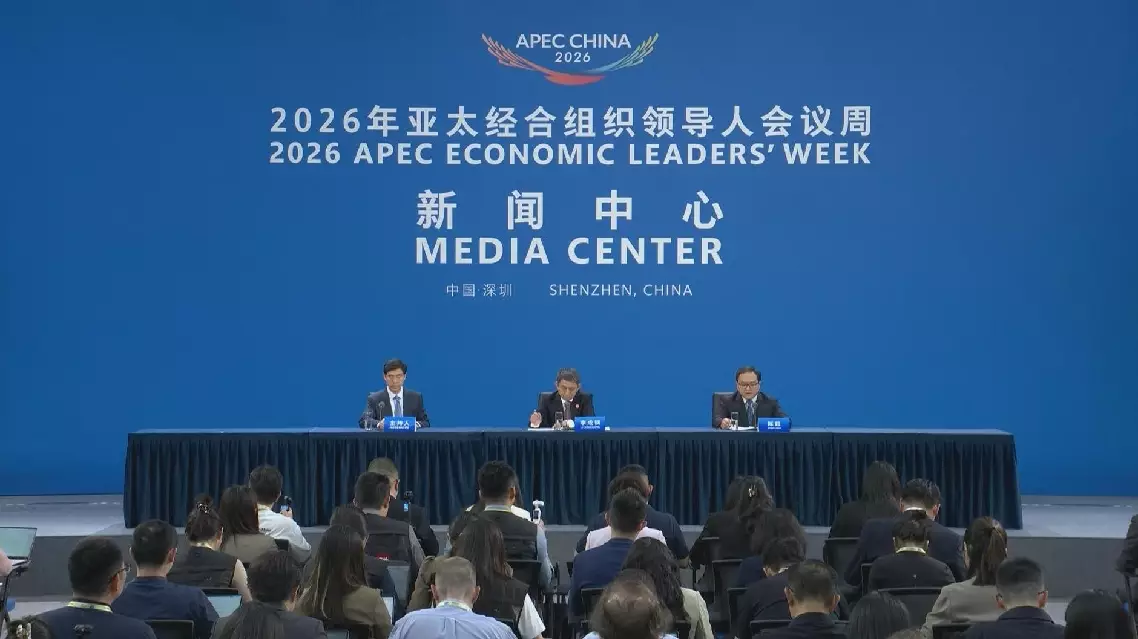
China is pushing Asia-Pacific free trade area agenda through consultation: official