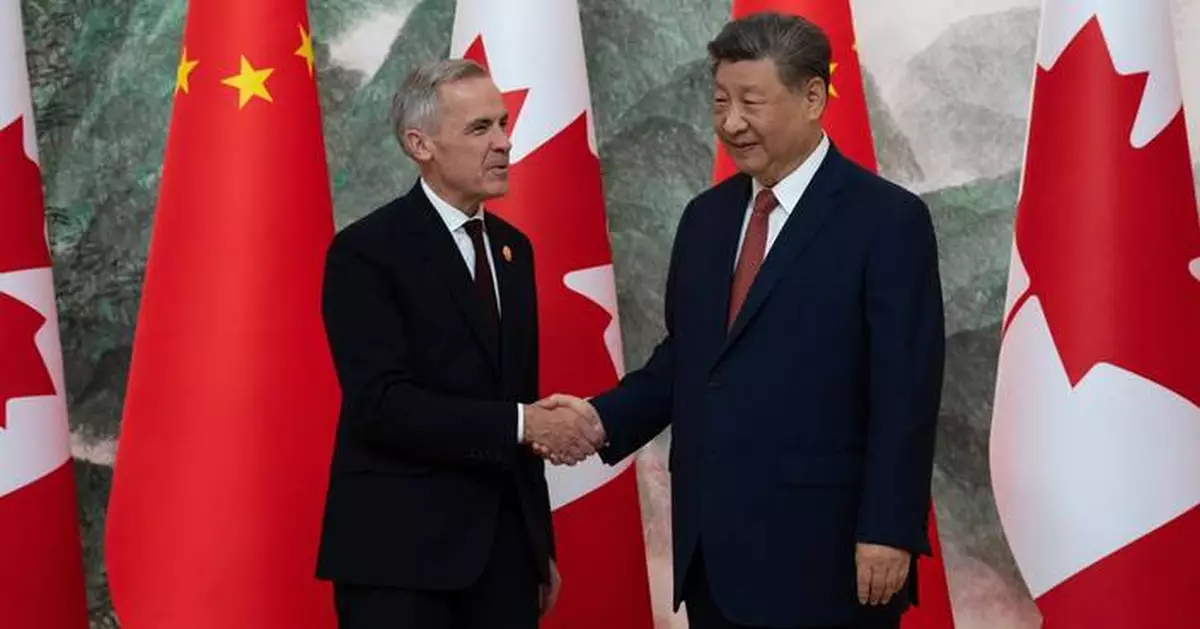
SHENZHEN, China (AP) — The leaders of China and Canada called for deeper ties Tuesday as Ottawa navigates strained relations with the United States and seeks closer cooperation with Beijing.
Chinese President Xi Jinping and Canadian Prime Minister Mark Carney met ahead of the Asia-Pacific Economic Cooperation leaders’ summit, and both praised the strategic partnership they agreed to pursue this year and pointed to improving economic ties.
The meeting came a day after Carney said Canada could turn to Chinese automakers if trade negotiations with U.S. President Donald Trump fail to maintain an integrated North American auto industry.
“Improving and developing China-Canada relations serves the interests of the people of both countries and is also conducive to safeguarding world peace, stability, development and prosperity,” said Xi. “This is the right choice.”
Carney said that the exchanges between Canada and China have increased in the past months and praised that now there is “greater predictability and stability” in their relationship.
“The stabilization of our bilateral trade arrangement is indicative of how we can work together more broadly, pragmatically, to solve problems,” he said.
Xi and Carney reached an agreement in January allowing tens of thousands of Chinese electric vehicles into Canada at reduced tariffs.
Under the January agreement, Canada reduced its 100% tariff on Chinese electric vehicles to 6.1%, initially allowing up to 49,000 vehicles annually, with the cap increasing over time. In exchange, China agreed to lower tariffs on Canadian agricultural products, including canola.
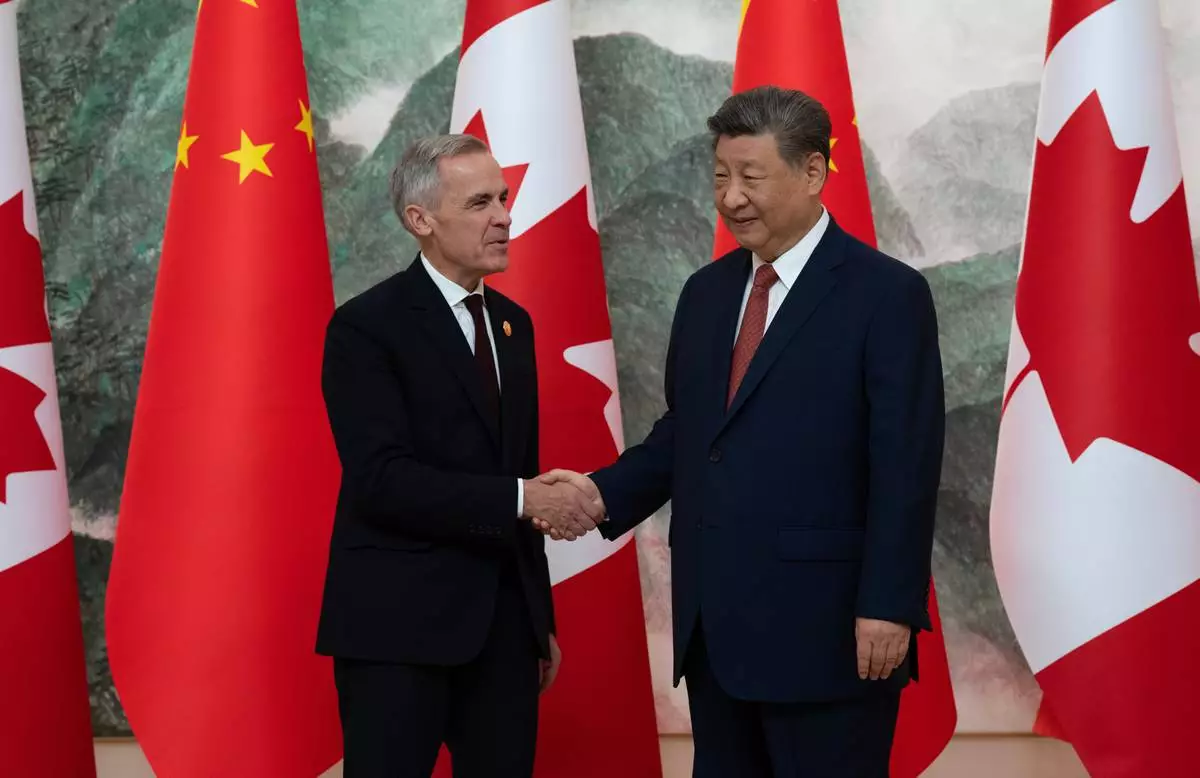
Canada Prime Minister Mark Carney, left, greets Chinese President Xi Jinping in Shenzhen, China, Tuesday, Nov. 17, 2026. (Adrian Wyld/The Canadian Press via AP)
LONDON--(BUSINESS WIRE)--Nov 16, 2026--
Smartphone shipments in the Middle East (excluding Turkey) fell 29% year-on-year (YoY) to 10.7 million units in 3Q26, according to Omdia’s latest research. Rising component costs, limited availability of entry-level devices and weaker retail demand drove the decline. Seasonal softness during summer travel, geopolitical uncertainty and cautious channel replenishment added further pressure. As prices continued to rise, vendors focused on managing inventory and allocating support selectively, particularly in lower-priced smartphone segments.
This press release features multimedia. View the full release here: https://www.businesswire.com/news/home/20261116715868/en/
The downturn was uneven across the region. Shipments in Saudi Arabia declined 29% and those in the UAE fell 12%, with retailers reporting fewer store visits during the extended summer travel season despite back-to-school promotions and National Day offers. In Iraq, shipments fell 58% YoY to their lowest quarterly level since 1Q23. Currency pressures, political and economic instability, and climbing smartphone prices made devices less affordable in this price-sensitive market. Elsewhere in the region, macroeconomic challenges added to vendors’ operational pressures.
“The Middle East smartphone market is becoming more expensive, although this does not necessarily reflect a shift in consumer preferences toward premium devices,” said Manish Pravinkumar, Principal Analyst at Omdia. “As rising component costs squeeze entry-level profitability, vendors are scaling back lower-priced models and prioritizing higher-margin devices. This has contributed to a 56% contraction in sub-$200 shipments, while shipments in the $400–599 segment expanded 65%, pushing the regional average selling prices to a record $511. The changing mix of available devices is contributing to this increase, with many price-sensitive buyers extending replacement cycles as affordable choices narrow.”
Looking ahead, markets across the region are expected to follow different trajectories. Vendors in Saudi Arabia are likely to rely more on financing and tighter inventory management to sustain replacement demand. The UAE is projected to remain comparatively resilient, supported by premium smartphone demand, trade-in programmes, and its established retail ecosystem. Iraq faces a more prolonged adjustment, with consumers replacing devices less frequently and becoming more selective about purchases, while vendors streamline their entry-level portfolios. These differences are likely to persist as vendors adapt their strategies to local affordability conditions.
"After a challenging 2026, the Middle East smartphone market is forecast to record a single-digit decline in 2027," concluded Pravinkumar. “Consumers are becoming more cautious about spending as geopolitical uncertainty and rising component costs affect purchasing decisions. Financing options and trade-in values are playing a greater role in upgrade decisions alongside brand preferences. In the near term, vendors and retailers are projected to focus on leaner inventories, tighter working capital management and selective model launches to protect profitability amid elevated component costs. Over the longer term, vendors are expected to place greater emphasis on sustainable returns, streamline operating and marketing expenses, and strengthen channel support and partnerships.”
ABOUT OMDIA
Omdia, part of TechTarget, Inc. d/b/a Informa TechTarget (Nasdaq: TTGT), is a technology research and advisory group. Our deep knowledge of tech markets, grounded in real conversations with industry leaders and hundreds of thousands of data points, makes our market intelligence our clients’ strategic advantage. From R&D to ROI, we identify the greatest opportunities and move the industry forward.
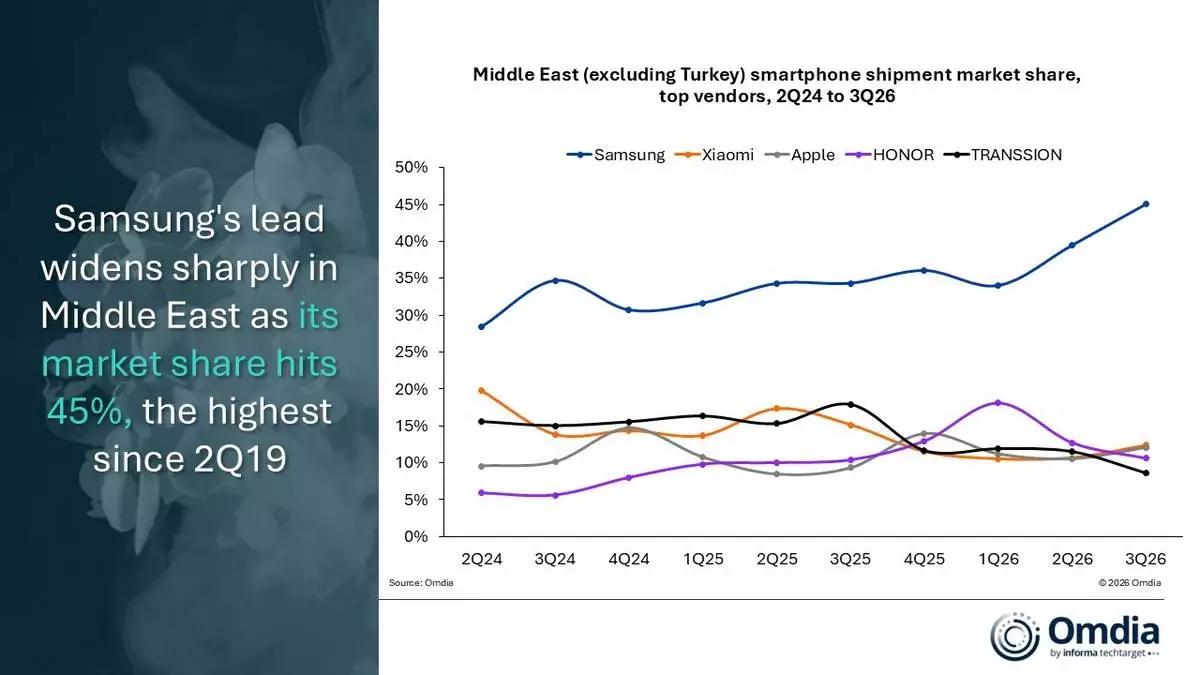
Middle East (excluding Turkey) smartphone shipment market share, top vendors, 2Q24 to 3Q26
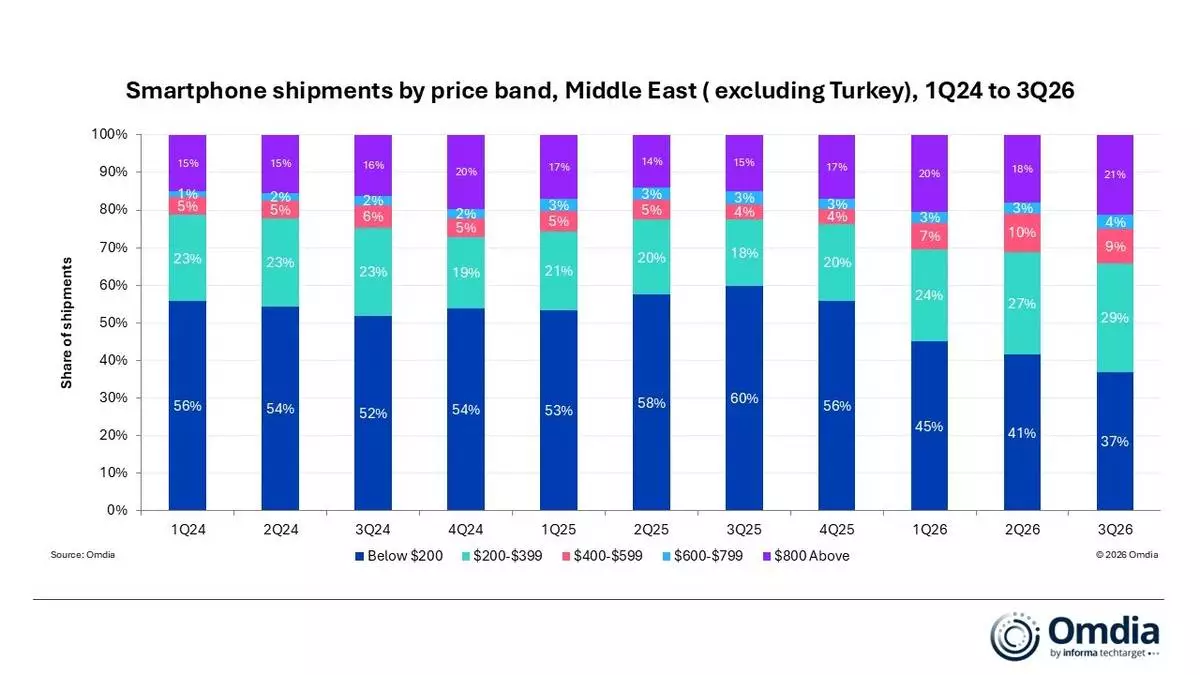
Smartphone shipments by price band, Middle East (excluding Turkey), 1Q24 to 3Q26
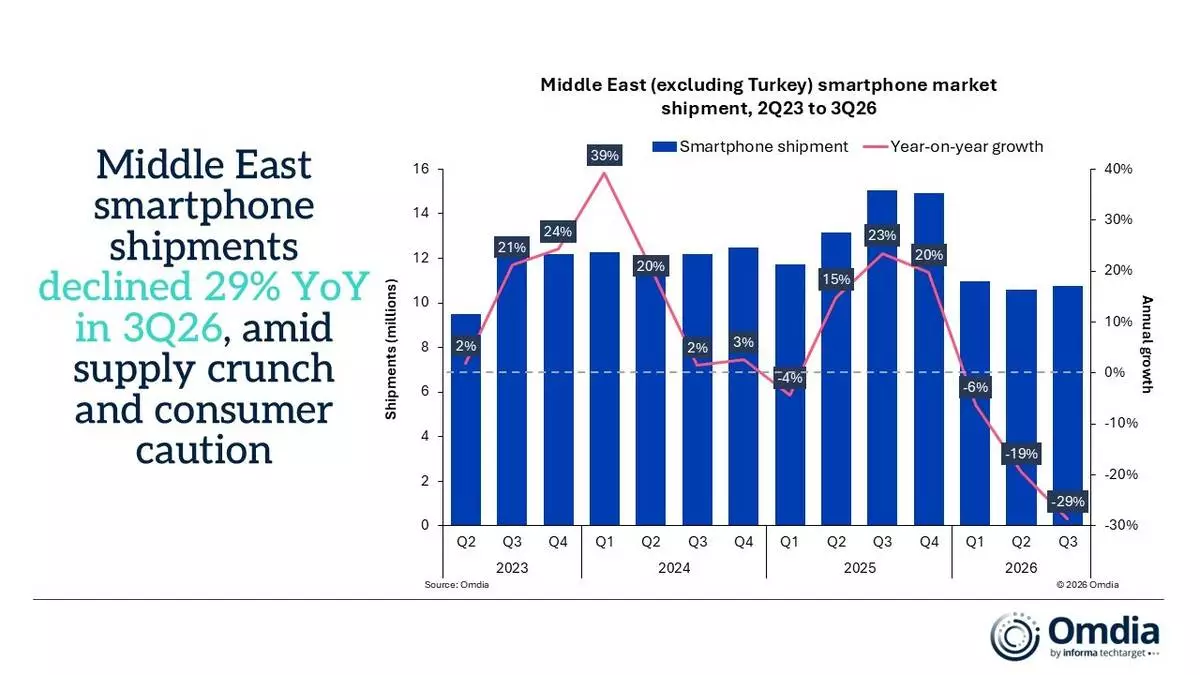
Middle East (excluding Turkey) smartphone market shipment, 2Q23 to 3Q26