A delegation attended events in Shanghai on Sunday to commemorate the 160th anniversary of the birth of Sun Yat-sen, hailed as a great national hero, patriot and pioneer of China's democratic revolution.
The delegation consisted of representatives of Sun's overseas relatives, descendants of his friends, and representatives from Hong Kong, Macao, Taiwan and overseas Chinese communities. Sun's four decades of revolutionary work made Shanghai one of his key bases. He visited the city more than 20 times, and much of his legacy remains tied to it.
During a ceremony, the delegation stood in silent tribute before a portrait of Sun and laid flower baskets.
"People on both sides of the Strait share the same roots and origin as Chinese. All the more reason we should join hands and work hard to realize his ideals," said Sun Yali, Sun's great-grandniece and president of the Sun Yat-sen Cultural Foundation.
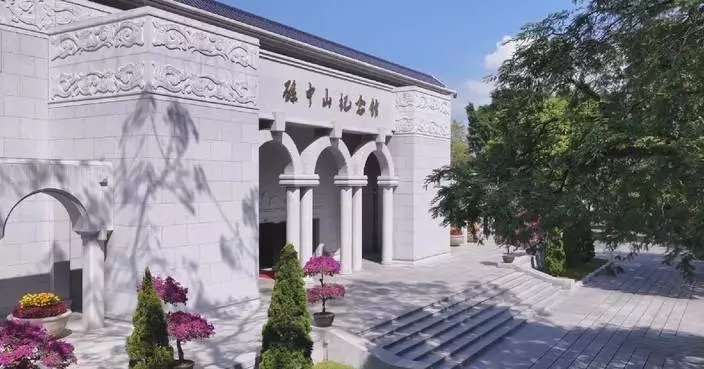
The delegation arrived in Shanghai on Sunday after attending a memorial ceremony at the Sun Yat-sen Mausoleum in Nanjing, capital of east China's Jiangsu Province. During their visit in Shanghai, they also visited the former residence of Soong Ching Ling, Sun's wife.
At the Shanghai History Museum, they viewed an exhibition of artifacts and documents on Sun and Shanghai, tracing his revolutionary footsteps in the city.
"Dr. Sun Yat-sen was a revolutionary pioneer and a great national hero. We must carry on his legacy and press ahead with the great rejuvenation of the Chinese nation," said Liang Guanjun, vice president of the China Overseas Friendship Association.
Starry Lee Wai-king, a member of the Standing Committee of the National People's Congress and president of the eighth-term Legislative Council (LegCo) of the Hong Kong Special Administrative Region (HKSAR), called for joint efforts to strive for reunification.
"Reviving the Chinese nation still requires the joint efforts of all Chinese sons and daughters. We need to work together for our reunification," she said.
Born in 1866, Sun led the Revolution of 1911 more than a century ago to abolish the absolute monarchy that had ruled China for thousands of years.
On March 12, 1925, he died in Beijing and his body was kept in Biyun Temple at Fragrant Hills in the western suburbs of Beijing before being transferred to the Sun Yat-sen Mausoleum in Nanjing in 1929.
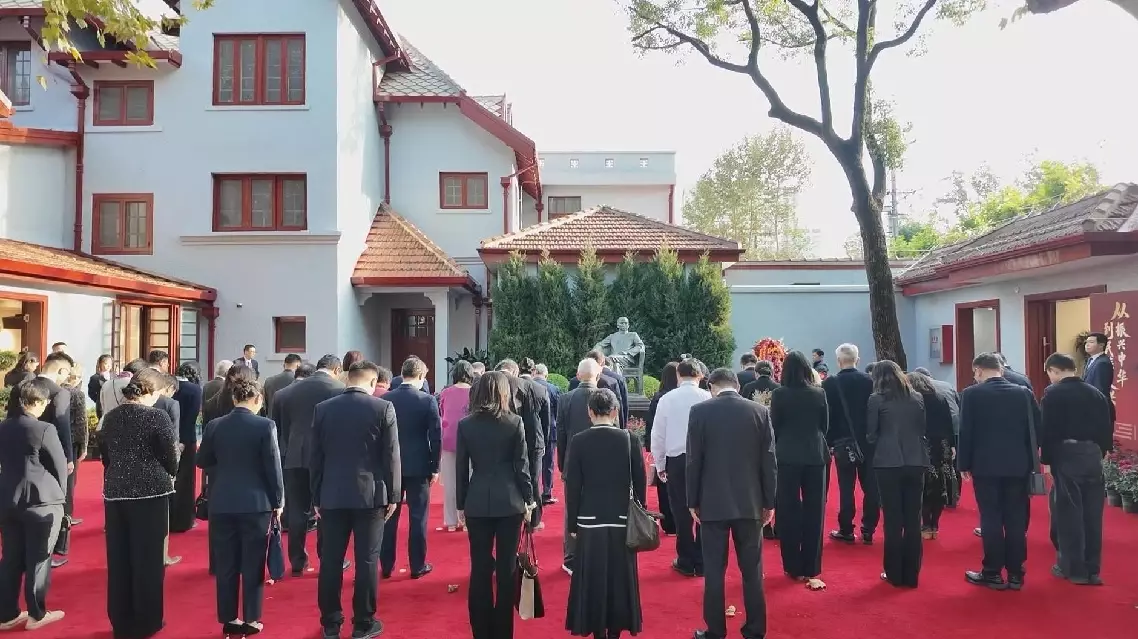
Delegation attends commemorative events in Shanghai to pay tribute to Sun Yat-sen