As the United States expands its pressure campaign from a naval blockade to Iran's land routes, freight is still moving across the country's borders, but the economic strain has already reached ordinary households.
With tensions between Iran and the U.S. still running high and diplomacy at a standstill, the U.S. naval blockade of Iranian ports remains in force. Now Washington is opening a second front on land, with U.S. Central Command announcing Task Force Iron Gate on Nov. 7.
The unit, about 20 military and civilian personnel, will coordinate across U.S. government agencies to disrupt the movement of advanced weapons and other materials across Iran's land borders and other routes.
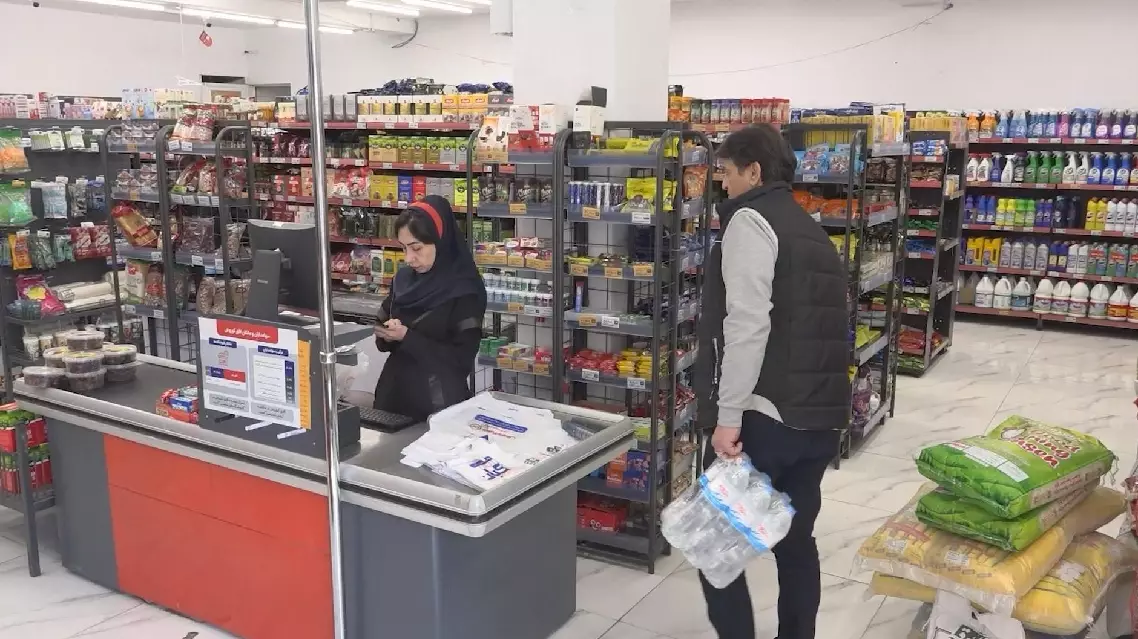
Iran has dismissed the initiative, but the economic strain is already visible in everyday shopping, with many households cutting back to essentials.
"Things have reached a point where you can only work to cover your basic daily needs. You can no longer plan to buy anything," said Amin, a Tehran resident.
"Well, the things we used to buy before, we don't buy anymore. We try to buy only the essentials, like potatoes, onions, and eggs," said Saeede, another Tehran resident.
Some analysts describe the naval blockade as a significant moment in Iran's history.
"To be fair, the naval blockade has been the most serious economic and military event in Iran's modern history," said Saeed Laylaz, an Iranian economist.
The International Transport Companies Association of Iran, one of the country's oldest industry bodies, established in 1969, has assessed how much pressure can be placed on Iran's trade routes.
"As of now, fortunately, there have been no closures or restrictions affecting road transport at the border crossings. As I mentioned, the borders are operational. We are facing some statistical challenges regarding fleet movements, but traffic is continuing," said Mohammad Ali Kargosha, board member and treasurer at the association.
Kargosha also says freight is moving through several western and northeastern crossings, as well as rail routes, though some border points are facing problems.
"There is traffic at the western borders and the northeastern border crossings, including Sarakhs and Lotfabad. Traffic is also moving through Incheh Borun, which is our rail route, as well as through the Dogharoun crossing on the Afghan border and the Mahirud crossing. At present, however, there are problems at the Mirjaveh and Taftan crossings," he said.
In Tehran, the markets remain stocked despite high prices, with supply chains still functioning. Businesses and transport operators are working to keep trade moving, while the authorities focus on ensuring people have access to what they need. Under mounting pressure, that effort is what keeps the economy running.
Iranian households feel squeeze as US pressure spreads to land routes