The argument for school cellphone bans is simple: Phones offer endless distraction. Take them away and students can focus on classwork, engage with peers and, ultimately, learn more.
But the reality is more complicated, as emerging research shows. Schools can lock phones away in pouches or banish them to backpacks, but they can’t shut out the digital world.
In the past few years, more than 40 U.S. states have passed laws that restrict cellphones at schools, according to the Phone Free Schools State Report Card, which tracks state phone legislation. But those laws vary widely and often let schools design their own policies, resulting in a patchwork of rules and enforcement across the country.
A large-scale study published Tuesday found strict cellphone restrictions — ones that require students to put phones in locked pouches for the entire school day — result in small academic gains. But, the researchers said, the gains can add up if schools continue banning phones.
The study, led by Harvard’s Center for Education Policy Research, found the schools with strict phone restrictions saw “modest” improvements in academic growth, compared with students in similar schools without those restrictions. The study, which analyzed test scores of 3.3 million students at 4,600 schools nationally, estimates the academic gains were equivalent to about an additional week or two of learning over a school year.
Student achievement has been falling globally since 2013, which is roughly when social media-enabled smartphones took off. The researchers sought to determine if the decline is being reversed now that schools have started taking phones away, said Harvard professor Thomas Kane, one of the study’s authors.
“Our answer is yes, phone bans do have a positive effect on growth. But it’s not a panacea,” Kane said. Learning loss was gradual over a decade, he notes, and it’s not surprising that gains would also be gradual. The study used math and reading test data for grades four through 10 from the past five academic years.
“While schools should not expect large boosts in achievement immediately, storing students' phones seems to be a cost-effective way to add 1-2 weeks of instruction each year, which could add up over time, just as the initial declines did,” the study says.
The boost is equal to about half the annual decline in test scores since smartphones became mainstream, the study said.
Still, the connection between phones and learning is not clear-cut.
A different study published in May concluded strict school phone bans had “close to zero” effect on test scores. It compared schools with bans with tens of thousands of other schools.
The National Bureau of Economic Research study looked at a different set of standardized test scores than Harvard’s study, as well as GPS phone activity, teacher surveys and data from Yondr, the leading provider of lockable phone pouches, at 4,600 schools that use the pouches.
The study had found “modest positive effects” in high school test scores over three years, particularly in math. But the report’s authors, researchers at Stanford, the University of Michigan, Duke and the University of Pennsylvania, were hesitant to conclude overall learning benefits from the bans.
Both studies point to a similar conclusion, said Stanford education economist Thomas Dee, an author of the NBER study. “The early results from school phone bans are largely disappointing and raise unresolved questions,” Dee said.
Noting that the Harvard study showed learning gains may accumulate over time, Dee said: "I hope they're right. However, I’m not comfortable making that extrapolation from estimates that are small, sensitive and based on just a few years of phone bans.”
The reasons, Dee said, could be that students are still distracted on other devices at school. Or, he said, "it may be that we see these disappointing results because out-of-school phone use is harming child development.”
Just because schools or states have phone bans does not mean they’re being enforced, said Jean Twenge, a psychologist at San Diego State University and author of “10 Rules for Raising Kids in a High-Tech World.”
Ask any teacher — or teenager — and they’ll tell you that some phone bans are largely cosmetic. Teens come up with creative workarounds, including stowing burner phones or even phone-shaped rocks in their locked pouches. At schools that rely on students to keep phones in backpacks, adherence to the ban can be spotty.
“It happens pretty often that there’s a policy of no phones during the school day, bell-to-bell, and you go into the school and phones are everywhere,” Twenge said.
Even without phones, "Do they have laptops at school? Are they just doing social media on laptops instead?” Twenge said.
Phone use outside of school affects academics too, Twenge said. “If they have that phone available when they’re studying, how much are they really taking in?”
Kane, of the Harvard study, agrees the effect of cellphone use outside of school is “the big question.” But researchers have not been able to investigate parents and educators’ suspicions that late-night binges on YouTube and other platforms are costly for students.
“I find it astonishing that social media companies know how much time kids spend on their platforms, but that data has never been linked to student outcomes,” Kane said. “We can’t provide answers until the social media companies share data.”
The Associated Press’ education coverage receives financial support from multiple private foundations. AP is solely responsible for all content. Find AP’s standards for working with philanthropies, a list of supporters and funded coverage areas at AP.org.
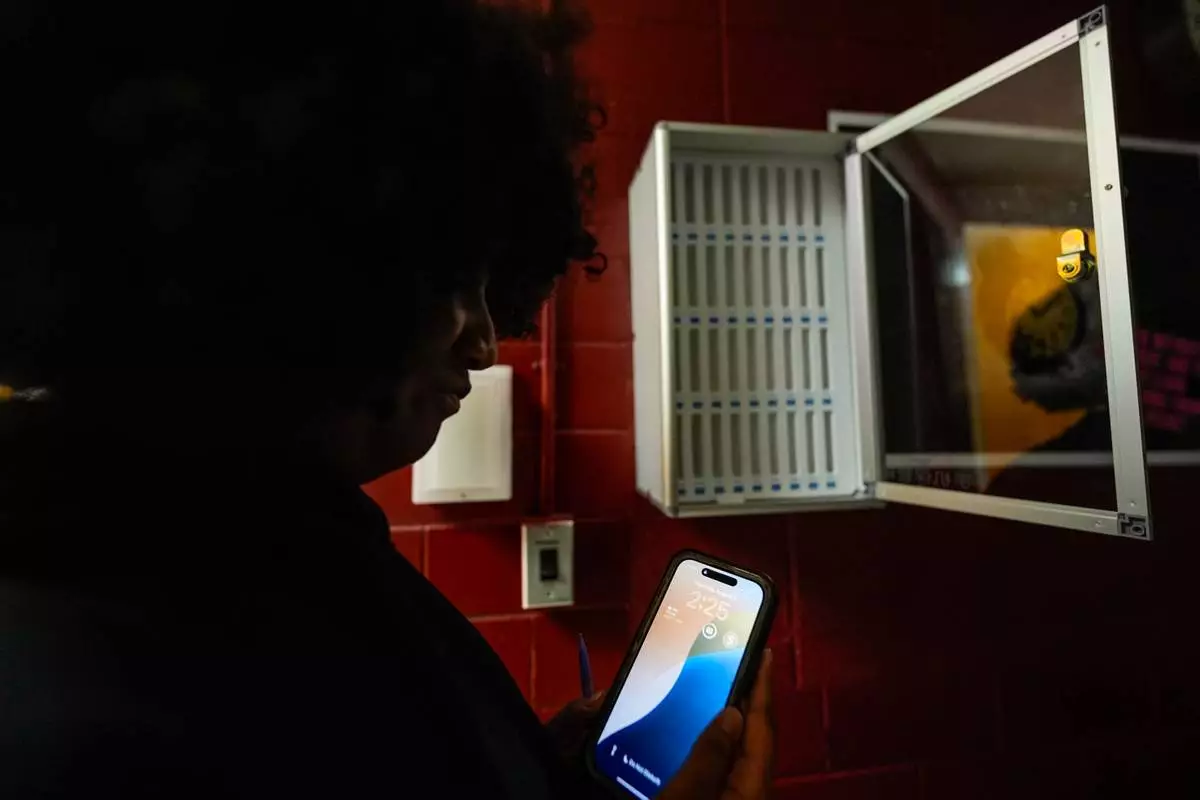
FILE - A student views her cell phone near a cell phone locker at Ronald McNair Sr. High School, Aug. 7, 2025, in Atlanta. (AP Photo/Mike Stewart, File)
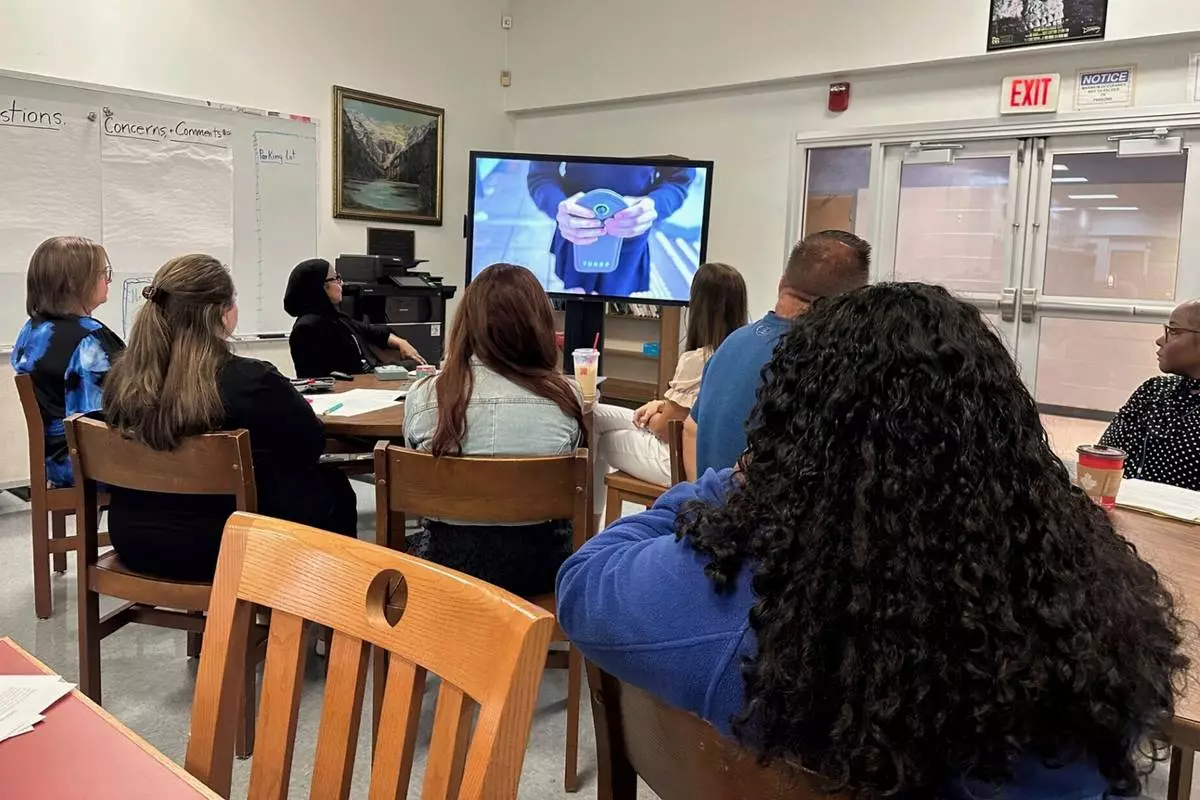
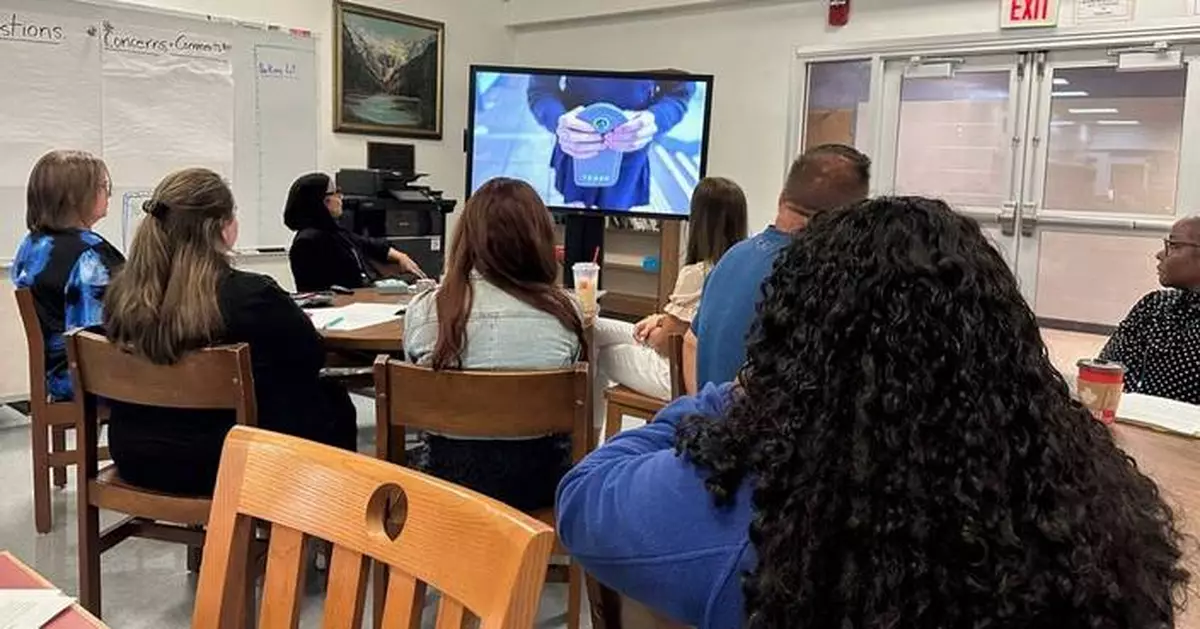
FILE - Parents and students in the Lackawanna City School District watch a video demonstrating a new policy that will require the students to lock their cellphones in pouches during the school day, Aug. 19, 2024, in Lackawanna, N.Y. (AP Photo/Carolyn Thompson, File)