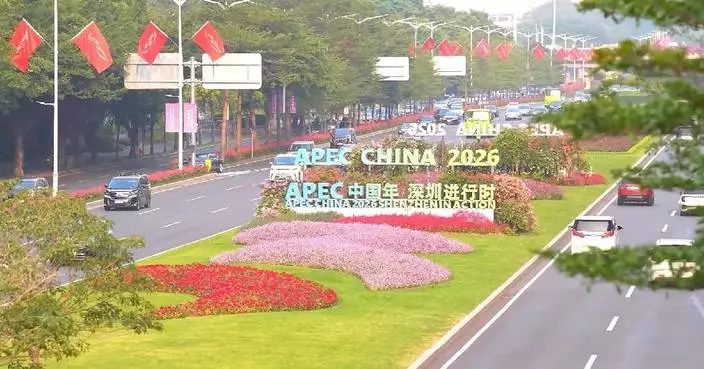
As guests from the 21 economies in the Asia-Pacific region gather in south China's tech hub of Shenzhen for the 33rd APEC Economic Leaders' Meeting, APEC Secretariat Executive Director Eduardo Pedrosa has pointed to the digital economy and education as the topics generating the most fierce discussions in the lead-up to the meeting scheduled for Wednesday and Thursday.
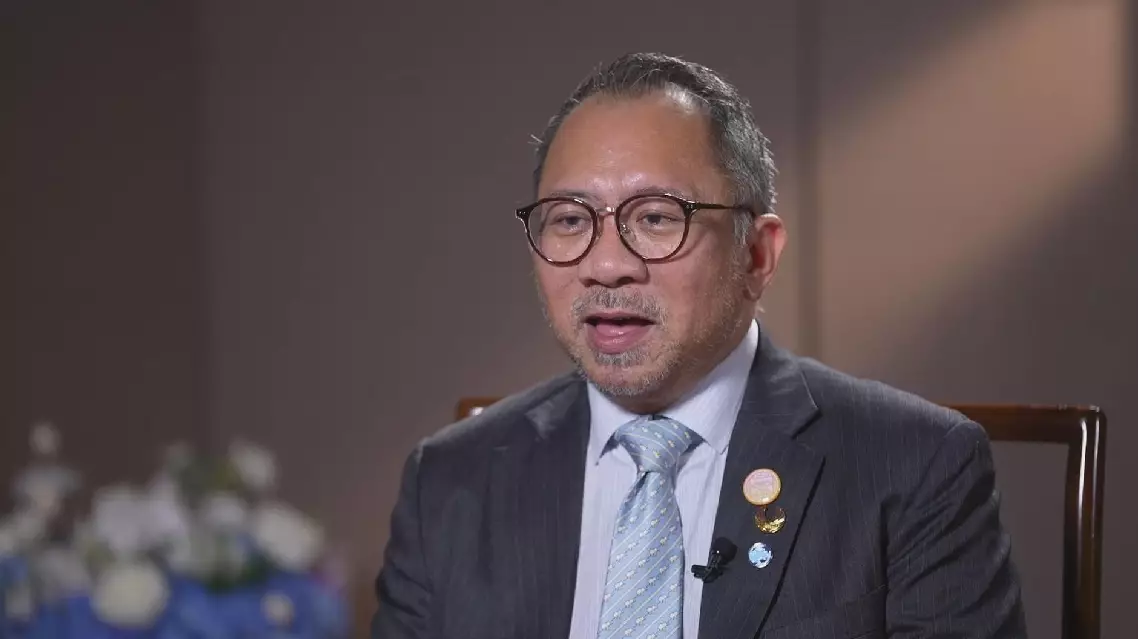
Speaking to China Media Group (CMG) ahead of the meeting, Pedrosa said that the gathering marks the culmination of a whole year's work with roughly 300 meetings, and participants will have useful, practical, and frank conversations during the Leaders' Meeting.
"I think the first thing to realize that this is really the culmination of a whole year's work. This year, there have been about 300 APEC meetings throughout the whole year, spread over I don't know how many Chinese cities anymore and about 15 or so ministerial and high-level dialogues that have taken place. And now we'll have representatives from the 21 APEC members, the economic leaders. So what can we really expect? The first is to have a very useful, practical and frank conversation amongst each other. That's the really important thing about APEC," said Pedrosa.
"What brings you together to ensure that as we move forward with artificial intelligence, as we move forward with globalization, integration, changing demographics and so on -- that will all be part of the conversation," Pedrosa continued.
Recalling preparations leading up to the meeting, Pedrosa said that the most fierce discussions have centered on the digital economy and technological disparities across the region.
"The most, I guess, intense discussions we have are on the digital economy. Everyone's moving ahead at their own pace with their own challenges. So to give you a very good example, APEC, of course, has some economies that are moving so quickly with artificial intelligence. One of them, of course, is China. Another, of course, is the United States. But other economies in our region don't have that. They don't have the digital infrastructure. So we need to talk about closing that gap, closing the gap between the leaders in this and also those who still need to build out the infrastructure," said Pedrosa.
Pedrosa said that education has emerged as another key area of discussion.
"Another area where we need to work together is education. So earlier this year, we had human resource development ministers come together and they focused on that re-skilling, how can we deliver education, how do we prepare our workforces, our people, to take advantage of the technologies that are coming," Pedrosa added.
Reflecting on China's year as host, Pedrosa praised the strong engagement of local communities, saying that Chinese cities worked hand-in-hand with organizers to put their best foot forward and showcase their technological strengths.
"I think one thing I really like about APEC, and it's of course the China year, is the engagement with the local community. So throughout all of these meetings, we've seen cities really try very hard to put their best foot forward to demonstrate the strengths of their cities. And working hand in hand with them has been a real pleasure. So of course we're here in Shenzhen now, we were here I think three other times this year, but the focus is very much on technology, on artificial intelligence," said Pedrosa.
Digital economy, education lead discussion ahead of APEC meeting: APEC official