LUXEMBOURG--(BUSINESS WIRE)--Nov 17, 2026--
SES today announced it will lead the industrial activities of SELYCE, a new European initiative focused on developing the technologies needed to enable future Direct-to-Device (D2D) satellite services.
This press release features multimedia. View the full release here: https://www.businesswire.com/news/home/20261117544892/en/
Conducted under a Partnership Project with the European Space Agency (ESA) and supported by the Luxembourg Space Agency (LSA), Belgian Science Policy Office (BELSPO) and UK Space Agency (UKSA), SELYCE brings together European industry and research organisations to advance standards-based 5G Non-Terrestrial Network (NTN) capabilities that will allow everyday smartphones and IoT devices to connect seamlessly via satellite beyond the reach of terrestrial networks.
As demand grows for ubiquitous and resilient connectivity, Direct-to-Device services are expected to become an important complement to terrestrial mobile networks, extending coverage, enhancing network resilience and enabling new connectivity solutions for consumers, enterprises and governments.
As industrial lead, SES will coordinate the development, integration and validation of key technology building blocks required for future commercial D2D services. The project will initially focus on technologies supporting satellite connectivity for vehicles, messaging and emergency communications services outside terrestrial coverage, and resilient communications during disasters and other critical situations.
Following a phased development approach, SES and its technology providers will validate these technologies in a high-fidelity end-to-end test environment, helping pave the way for future in-orbit demonstrations and commercial deployments. The initiative will also foster collaboration across Europe's space and telecommunications sectors, supporting the development of an open, interoperable and standards-based ecosystem for satellite-enabled mobile connectivity.
“Direct-to-Device connectivity represents an important evolution in how people and devices will remain connected in the future,” said Dr. Xavier Bertran, Chief Product and Innovation Officer of SES. “As industrial lead for SELYCE, SES is bringing together expertise from across Europe's space and telecommunications ecosystem to develop the technologies needed for future commercial D2D services. Jointly with ESA and our technology providers, we are helping lay the foundation for resilient, standards-based connectivity that complements terrestrial networks and extends communications wherever users are located.”
The SELYCE initiative is led by SES and includes Amphinicy Luxembourg, the University of Luxembourg, SES’s wholly-owned subsidiary Redu Space Services in Belgium, with additional European participants expected to join during the project.
Follow us on:
LinkedIn | Facebook | YouTube | X | Instagram
Read our Blogs >
Visit the Media Gallery >
About SES
At SES, we believe that space has the power to make a difference. That’s why we design space solutions that help governments protect, businesses grow, and people stay connected—no matter where they are. With integrated multi-orbit satellites and our global terrestrial network, we deliver resilient, seamless connectivity and the highest quality video content to those shaping what’s next. Following our Intelsat acquisition, we now offer more than 100 years of combined global industry leadership—backed by a track record of bringing innovation “firsts” to market. As a trusted partner to customers and the global space ecosystem, SES is driving impact that goes far beyond coverage. The company is headquartered in Luxembourg and listed on Paris and Luxembourg stock exchanges (Ticker: SESG). Further information is available at: www.ses.com
ESA’s Space for 5G/6G & Sustainable Connectivity programme
The European Space Agency (ESA) is Europe's gateway to space, coordinating the financial and intellectual resources of its Member States to conduct space programmes and activities. ESA’s ‘Space for 5G/6G & Sustainable Connectivity’ strategic programme line is advancing 5G and 6G technologies to support the digital transformation of Europe by integrating satellite and ground networks. This fusion of terrestrial (TN) and non-terrestrial networks (NTN) will revolutionise how we live, work and communicate in terms of smart mobility, global coverage, security and network resilience. The programme aims to promote the standardisation of seamless global connectivity for various industries and applications, including telemedicine, tele-education, and autonomous vehicles, airplanes and ships.
This programme is part of Advanced Research in Telecommunications Systems (ARTES). It is overseen by ESA's Commercialisation and Industry Partnership (CIP) Directorate and aims to connect everyone, everywhere, at all times.
Forward-looking Statements
This press release contains certain “forward-looking statements” within the meaning of the safe harbor provisions of the U.S. Private Securities Litigation Reform Act of 1995. Forward-looking statements can be identified by words such as “will” and “expected.”
Forward-looking statements are not assurances of future performance and are subject to inherent uncertainties and risks that are difficult to predict. Factors that might cause such a difference include those discussed in our filings with the US Securities and Exchange Commission, including our Form 20-F, such as risks that pursuit of external growth opportunities or contracts may not yield the expected benefits; industry changes and competition could impact our systems or result in lower or reduced demand; and failure to obtain or maintain regulatory approvals could result in the inability to maintain or expand operations. The forward-looking statements included in this press release are made only as of the date hereof and we undertake no obligation to publicly update or revise any forward-looking statements, whether as a result of new information, future events or otherwise.

SES to Develop European Direct-to-Device Technologies under ESA Partnership Project
ADEN, Yemen (AP) — Saudi-backed forces in Yemen deployed more troops to a key district near the southern port city of Aden in anticipation of a major offensive by the Iran-backed Houthi rebels, officials said Tuesday.
The Houthis, meanwhile, accused Saudi Arabia of carrying out an airstrike on a sponge factory in the port city of Hodeida, killing at least seven people and wounding nine. The kingdom did not comment on the claim.
An attack on a tanker in the Strait of Hormuz sparked a fire in its engine room, the United Kingdom Maritime Trade Organization reported. The extent of the damage and any environmental impact were not immediately known.
Here is the latest news from the Middle East on Tuesday. Read our full coverage here.
For weeks, Yemen's Houthis have tried to take the district of Tur al-Baha, some 85 kilometers (52 miles) from the port city of Aden.
The Saudi-backed forces allied with the government have put up a stiff resistance, according to two Yemeni military officials who spoke on condition of anonymity because they were not authorized to brief the media.
The Saudi-backed forces deployed more troops and equipment Tuesday in and around Tur al-Baha, considered the first line of defense for Aden, the officials said. One of the officials, who is close to the Houthis, said the rebels have suffered significant casualties in their recent battles in and around the Bab el-Mandeb Strait and the Red Sea, as well as in other front lines in Marib and Jawf provinces.
A spokesman for the rebels didn’t respond to calls seeking comment. The Houthis have repeatedly said they won’t attack Aden.
Saudi-backed forces withdrew from areas along the Bab el-Mandeb Strait over the weekend to avert being encircled by the Houthis and to focus on securing Aden. That has allowed the rebels to consolidate their grip on the key Red Sea strait.
The pullback has “only temporarily” held off the Houthis and has not resolved the Saudi-backed forces' “underlying vulnerabilities” that include fragmentation, poor coordination and overextension, the Institute for the Study of War think tank said Monday.
— By Ahmed al-Haj
According to Anees al-Asbahi, a Houthi health spokesman, a strike on a sponge factory in Hodeida killed at least seven people and wounded nine. The death toll was likely to increase.
Two people were also killed in a strike in the northern province of Saada, while a strike on a shoe factory in the rebel-held capital, Sanaa, wounded nine, al-Asbahi said. Four were wounded in an attack in the Wadi Al Gabara in Kitaf District.
The Houthi-run Al-Masirah satellite television said airstrikes also hit the Houthi-held Red Sea island of Kamaran, and also the district of Beni al-Harith, without offering further details.
Saudi Arabia did not immediately comment on the Houthi claims.
The United Kingdom Maritime Trade Organization said a tanker was attacked Tuesday in the Strait of Hormuz, north of the Gulf Arab country of Oman.
The attack ignited a fire in the vessel's engine room, the agency said, but the extent of the damage and the environmental impact were not immediately known.
A fifth of the world’s gas and oil transited the key waterway prior to the start of the U.S. war with Iran on Feb. 28.
Meanwhile, Qatar's Foreign Ministry spokesman Majed Al Ansari said Tuesday mediation efforts between the U.S. and Iran were continuing and that a meeting with the Iranian side would be held later in the day to exchange views on proposals under discussion.
He warned that any escalation on the ground posed an “extremely grave danger” to the prospects of reaching an agreement.
Earlier, U.S. President Donald Trump said Iran would “pay a price the likes of which no country has ever paid before” if it follows through on its threats against the American capital.
Trump made the remark after being quizzed by reporters about whether there was an imminent threat to Washington from Iran.
“I hope it’s not. But we take it very seriously because they happen to be crazy,” said Trump, who was meeting with leaders of Japan, India and Australia in the Philippines.
The United Kingdom on Tuesday imposed sanctions on property and development companies involved in the West Bank settlement expansion as well as an activist group that the British government says has blocked aid to Gaza.
These are the first sanctions announced since Foreign Secretary Ed Miliband said in September that the U.K. would toughen its stance toward Israel in an effort to protect the viability of a two-state solution.
European countries have raised concerns that the accelerated rate of settlement building in the West Bank risks making a two-state solution impossible.
Miliband said the sanctions apply to eight property development and construction firms, disrupting the flow of finance that supports building in the West Bank. The sanctions also target Tzav 9, an Israeli activist movement that has prevented humanitarian aid convoys entering Gaza, the government said.
The U.N. human rights office said Tuesday it had documented 2,230 civilian deaths in Sudan’s war through the end of October this year, more than two-thirds caused by drone strikes.
The office said drone use has become the “defining feature” of the war between Sudan’s military and the paramilitary Rapid Support Forces.
Li Fung, who heads the office’s Sudan team, told reporters in Geneva by video from Khartoum, Sudan’s capital, that these tactics have continued since July.
The war, now in its fourth year, has created one of the world’s worst humanitarian crises, killing at least 59,000 people, displacing around 13 million and pushing parts of the country into famine, aid groups say.
This report will be updated throughout the day as new developments emerge.
Hadjicostis reported from Nicosia, Cyprus, and Magdy from Cairo.
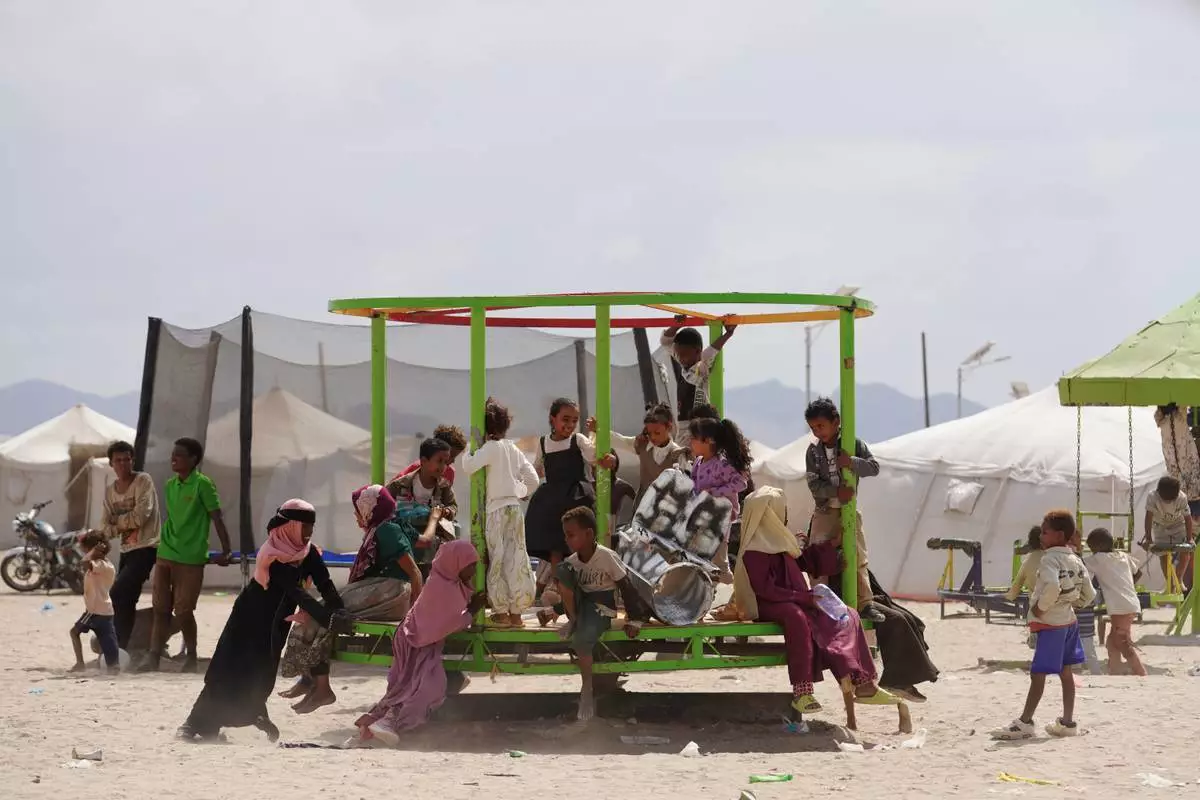
Displaced children play on a merry-go-round at a displacement camp on the outskirts of Aden, Yemen, Wednesday, Nov. 11, 2026. (AP Photo/Abdulnasser Alseddik)
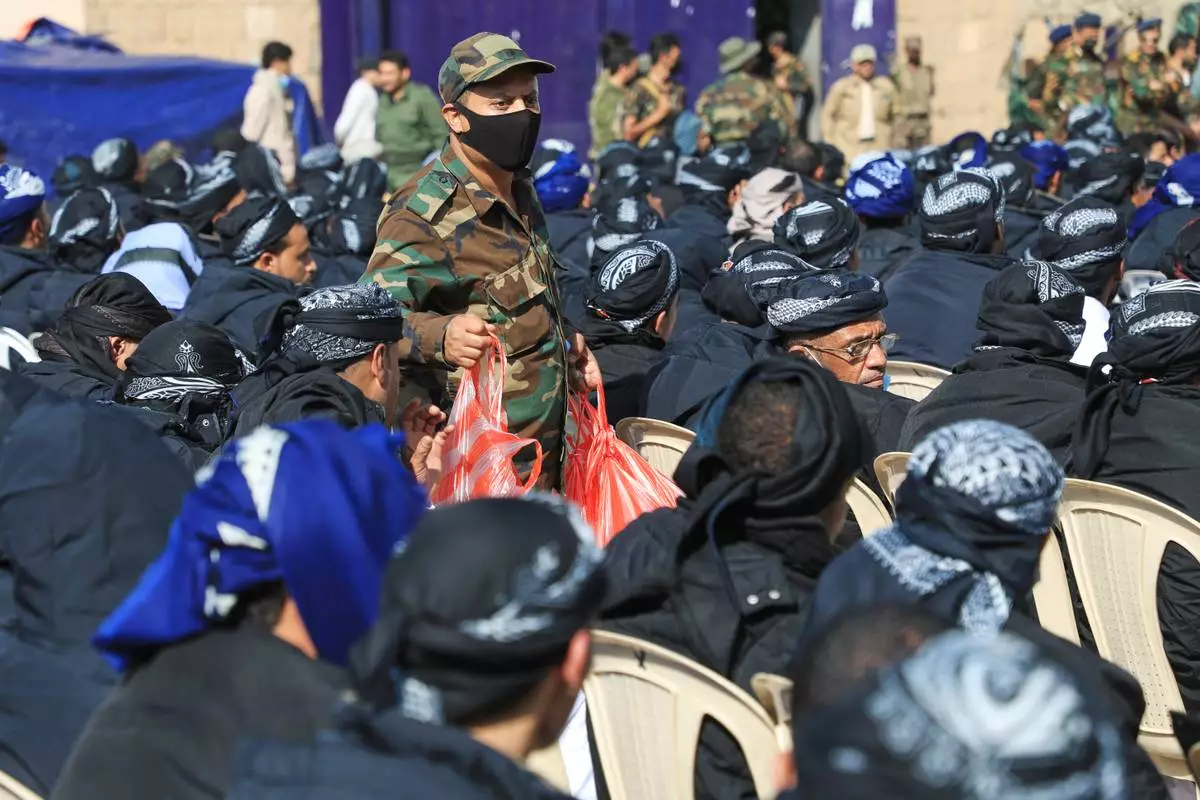
A soldier distributes refreshment to prisoners detained in connection with Yemen's ongoing conflict before they are freed by the Houthis in a release supported by the International Committee of the Red Cross, in Sanaa, Yemen, Sunday, Nov. 15, 2026. (AP Photo/Osamah Abdulrahman)
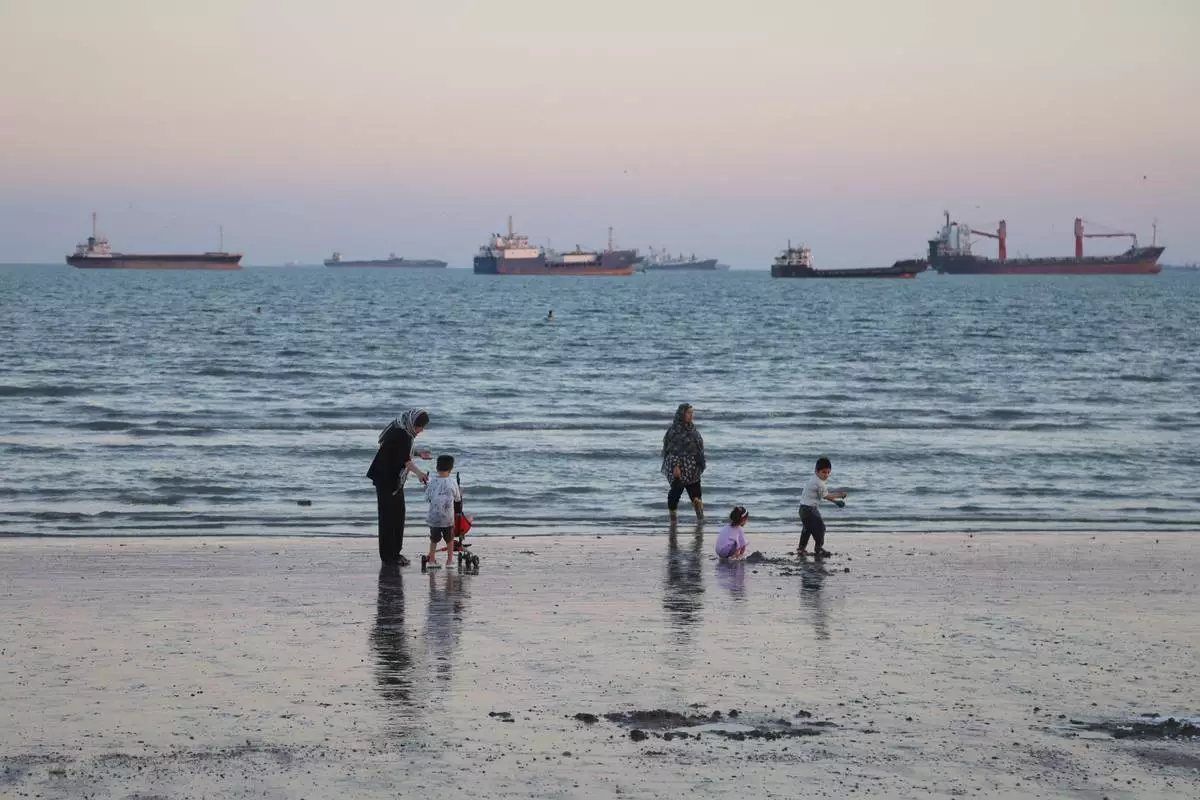
Children play beside women along the shore as cargo ships lie at anchor in the Strait of Hormuz off Bandar Abbas, Iran, Friday, Nov. 13, 2026. (Amirhosein Khorgooi/ISNA via AP)