Democrats in the Senate on Tuesday called for pausing the replacement of thousands of routers across the nation’s air traffic control system after the work was blamed for setting off last week’s air traffic snarls.
They also demanded that the Trump administration provide clear answers about what went wrong.
“Identifying the device that failed does not establish why it failed. FAA must investigate further to determine the root cause and report to Congress on how it intends to prevent future issues,” said the letter sent to Transportation Secretary Sean Duffy.
President Donald Trump has blamed old technology and Democrats for the nationwide grounding of all planes and upheaval at the nation’s airports. But the FAA has been struggling to modernize the air traffic control system for decades — going back well before the first Trump administration.
The system became overloaded when a federal contractor that maintains the FAA’s telecommunications network was replacing outdated copper wires with fiber optic lines across the nation.
The closure of U.S. airspace was needed, Duffy said, after a new router that L3Harris installed in El Dorado, Arkansas, resulted in a cascade of intermittent communications and radar signals at 17 of the 22 regional air traffic control centers. The centers direct planes cruising at high altitudes.
The Federal Aviation Administration said that “excessive data” was flooding the system “at a rate of 1,000 connection attempts every 4 to 5 seconds.” That deluge created instability with “aircraft communications and radar feeds” when those connection attempts overwhelmed the 25-year-old routers throughout the network, the agency said.
Democrats on the Senate Commerce Committee said they believe that only 400 out of more than 3,600 routers have been installed. Work on installing the new devices should be stopped until “the root cause of the failure has been identified,” the letter stated.
Upgrading the nation’s air transportation system is an effort that Congress has dedicated significant sums to in recent years. The problems with aging equipment at the FAA date back decades and past efforts to modernize the system have come up short.
Duffy has pushed Congress for billions more dollars to upgrade a system he said had been neglected for decades, saying on Friday that $50 billion is needed.
The Trump administration on Tuesday sent a letter to key lawmakers updating its request for $50.1 billion to modernize the system and make other improvements at airports.
The request calls for $10.1 billion for updating the nation’s air traffic control system. Similar amounts would go toward boosting airport infrastructure, replacing or refurbishing terminals at high-impact hubs, constructing five new traffic control centers and improving or replacing up to 140 FAA-owned air traffic control towers.
“Congressional approval of these funds will equip the FAA to deliver to the American people a brand-new air traffic control system that is safer, smarter, faster, and more efficient,” states the letter, which was obtained by The Associated Press.
Congress approved $12.5 billion last year to modernize much of the key infrastructure that more than 45,000 flights a day rely on to reach their destinations safely. The funds were earmarked for replacing outdated technologies such as copper wires, floppy discs and radars built in the 1980s, but much of that money will also go toward runway upgrades and other construction projects.

A traveler with a smartphone walks across a pedestrian bridge at Philadelphia International Airport in Philadelphia, Monday, Nov. 16, 2026. (AP Photo/Matt Rourke)

Luggage is set out for travelers to pick up at a baggage claim at Philadelphia International Airport in Philadelphia, Monday, Nov. 16, 2026. (AP Photo/Matt Rourke)

A building that housed a router blamed for a technical issue that caused a nationwide ground stop is seen Monday, Nov. 16, 2026, at South Arkansas Regional Airport in El Dorado, Ark. (Penny Chanler/The El Dorado News-Times via AP)
EL SEGUNDO, Calif. & TOKYO--(BUSINESS WIRE)--Nov 17, 2026--
HARIO Co., Ltd., a leading manufacturer of heatproof glass and specialty coffee equipment, today announced the U.S. launch of the Kyusu Matcha Bowl, a heatproof glass Matcha bowl that combines a traditional Japanese Kyusu teapot-inspired side handle with the clarity and contemporary aesthetics of transparent glass. The United States is the first market to introduce the product, reflecting both the growing popularity of Matcha among American consumers and HARIO's commitment to offering a visually distinctive alternative to conventional ceramic Matcha bowls.
This press release features multimedia. View the full release here: https://www.businesswire.com/news/home/20261117148880/en/
The bowl features a rounded, deep interior that allows the Chasen (bamboo whisk) to move smoothly for a fine froth with less splashing, while the side handle provides added stability and control during whisking. Its transparent heatproof glass construction highlights Matcha's vibrant green color while making it easy to observe the texture and development of the froth throughout preparation. A built-in pouring spout also enables users to transfer freshly whisked Matcha neatly into a mug, glass, or milk for a latte.
The Kyusu Matcha Bowl is available starting today, November 17, for $48 through the HARIO USA online store: https://globalhario.com/products/masbt-1-t-kyusu-matcha-bowl
As Matcha consumption diversifies, preparation tools remain largely unchanged
Matcha’s popularity among U.S. consumers continues to grow, and its role has expanded well beyond the traditional tea ceremony into daily routines at home and in cafés. For many enthusiasts, preparing Matcha has become a mindful ritual that blends craftsmanship, aesthetics and personal enjoyment. People are also drinking it in more ways than ever, from traditional preparations to iced drinks and Matcha lattes.
The tools, however, have changed little. Traditional ceramic Matcha bowls have long been valued also within the Japanese tea culture, but they were designed primarily for whisking and drinking Matcha straight from the bowl. Recognizing that consumers now enjoy Matcha in a variety of settings and beverage formats, HARIO saw an opportunity to offer a new type of Matcha bowls that could become part of these rituals while showcasing Matcha’s vibrant green color and bringing greater visibility into the whisking process through the transparency of heatproof glass. In addition, as Matcha preparation increasingly extends beyond the bowl itself to mugs, glasses, and lattes, HARIO also explored how the bowl’s form could be reimagined to support a smoother preparation and serving experience, from minimizing splashing during whisking to making it easier to pour freshly prepared Matcha into a variety of beverages.
How HARIO reimagined the Matcha bowl
The Kyusu Matcha Bowl was developed to support the way consumers enjoy Matcha today, whether prepared traditionally or as part of contemporary beverages such as Matcha lattes and iced drinks. As a company with more than a century of experience manufacturing heatproof glass, HARIO saw an opportunity to apply its glassmaking expertise to one of Matcha preparation's most enduring tools. By reimagining the traditional Matcha bowl in transparent heatproof glass, HARIO sought to address the limited visibility and serving versatility of conventional ceramic bowls while preserving the essence of the Matcha-making ritual.
To achieve this, HARIO drew inspiration from the traditional Japanese Kyusu teapot, incorporating a distinctive side handle as well as a pouring spout into the design. The side handle provides greater stability and control while whisking, while the spout allows freshly prepared Matcha to be transferred neatly into a mug, glass, or milk pitcher without the mess often associated with conventional Matcha bowls. Together, these elements create a smoother and more intuitive preparation experience while preserving the ritualistic nature of Matcha making.
Particular attention was also paid to the bowl's deeper, rounder shape. Designed to support smooth, unrestricted movement of the Chasen (bamboo whisk), the form helps create a fine, delicate froth while reducing splashing, making Matcha preparation both cleaner and more enjoyable.
The use of transparent heatproof glass also creates a visual experience that conventional ceramic Matcha bowls cannot provide, showcasing Matcha's vivid green color and allows users to observe the development of foam and texture throughout the whisking process. Made from HARIO Glass®*, HARIO's proprietary heatproof glass made from 100% natural minerals, the bowl is manufactured at the company's Koga Factory in Japan, a chimney-free, exhaust-gas-free production facility. By combining the functional inspiration of a traditional Kyusu with HARIO's century-long expertise in heatproof glass, HARIO has created a vessel that brings greater visibility, versatility, and enjoyment to the Matcha-making ritual.
Product details
*HARIO Glass® is the registered trademark for HARIO’s proprietary heatproof glass made in Japan using 100% natural minerals. The material is produced exclusively at HARIO’s Koga Factory in Ibaraki Prefecture, and is Japan’s only mass-production site for heatproof glass as well as the only chimney-free facility dedicated to its manufacture.
About HARIO
Founded in 1921, HARIO is a Tokyo-based heatproof glass manufacturer and the only company in Japan with its own heatproof glass factory. Known worldwide for the iconic V60 Coffee Dripper, HARIO has expanded from laboratory glassware into coffee and tea equipment, as well as microwave-safe cookware, kitchenware, and industrial glass components.
With nine offices across eight countries, HARIO products are distributed in more than 80 countries, bringing Japanese heatproof glass to homes, cafés, and industries around the world. https://globalhario.com/
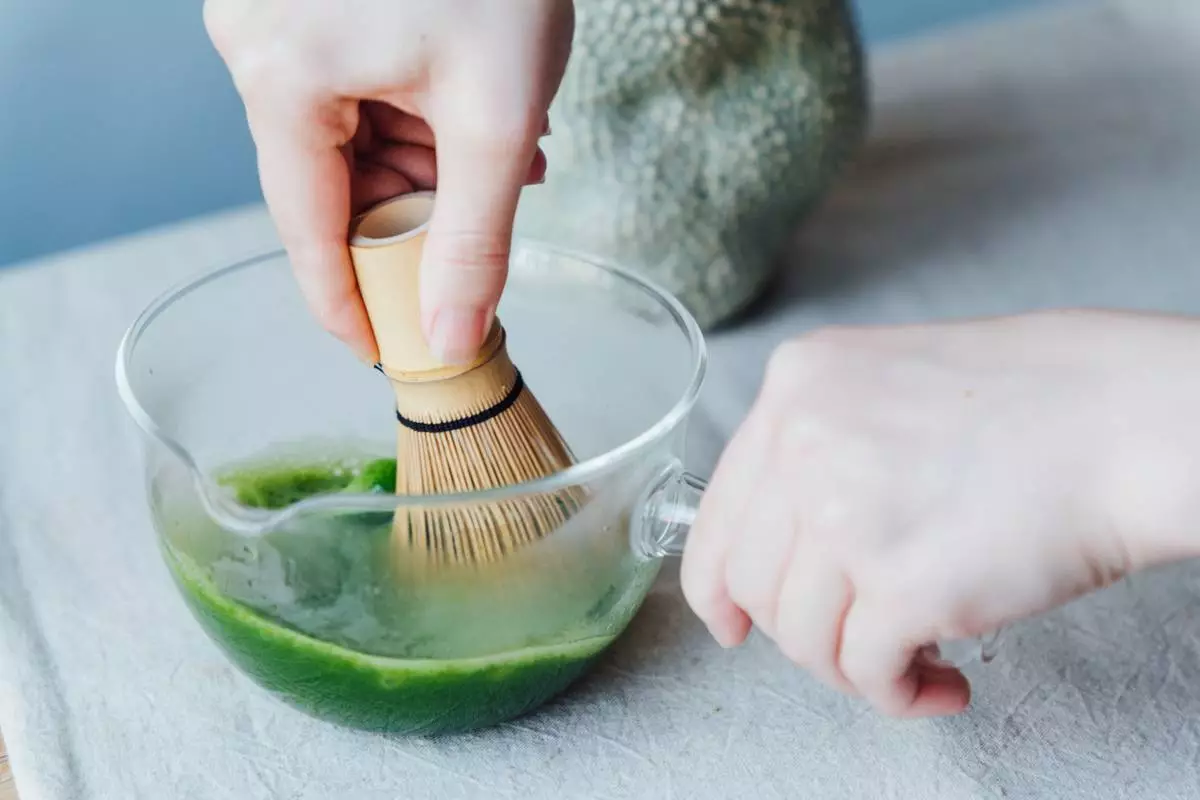
The Kyusu Matcha Bowl's side handle provides added stability during whisking, while its deep, rounded shape allows the Chasen (bamboo whisk) to move smoothly for a finer froth with less splashing. (HARIO©)

Inspired by the traditional Japanese Kyusu teapot, HARIO's Kyusu Matcha Bowl features a side handle, pouring spout, and transparent heatproof glass construction that make Matcha easier to whisk, observe, and pour. (HARIO©)