CHICAGO (AP) — New airline tickets: $300. Hours waiting for luggage: four. And the topper: a four-hour Uber ride from Detroit to Chicago that cost $400.
Call it outage math, a hellish calculation spawned by ever-more-common flight delays. This one was part of Angelina and Kyle Phoenix's anniversary trip to Chicago.
On Friday, they flew from Jacksonville, Florida, into the maw of the Great Ground Stoppage of 2026 with as many as a million other travelers. Instantly, the financial and emotional toll of the four-hour flight outage radiated outward from the airports as everyone involved scrambled for costly workarounds to a crisis no one expected, can fully explain or wants to pay for.
Emergency child care. Outrageous taxi ride fees. Rebooked tickets, lost vacation rentals and little idea what expenses might be reimbursed.
But beyond finances, travelers told The Associated Press on Monday, perhaps the most consequential cost is also the most intimate: Stress and grief over time lost — a cumulative toll that is generally not, as customer service might say, eligible for reimbursement.
Kyle Phoenix got a whiff of it more than 12 hours and hundreds of dollars of unexpected expenses into the couple’s journey, as he watched chaos unfold in the baggage claim area of Detroit airport. Officials, he noticed, had stopped announcing which canceled flights would disgorge checked baggage onto which turnstiles.
Answers were hard to come by. That made decisions about what to do next increasingly difficult.
“A lot of confusion, a lot of scrambling from a lot of people,” Kyle recalls of the scene. “I think that was probably the roughest part, not knowing anything.”
When the couple finally retrieved their luggage at midnight, the $400 Uber ride began to look like the best option. They forfeited their rebooked flight — as well as a hotel room they would have stayed in for a few hours — and embarked on the four-hour ride to Chicago.
“We just took the loss,” Angelina Phoenix said.
Dread lingers around such events because they're getting more commonplace, with no end in sight.
Even as travelers spoke to the AP about Friday's ground stop, United Airlines suffered a malfunction and halted its flights for 90 minutes. Several top U.S. banks reported significant slowdowns. And that was after AI chaos and Microsoft’s global meltdown just a few days earlier. Ahead loomed the busy Thanksgiving travel week, when TSA agents typically screen more than 2 million passengers nationwide.
It was enough to make any thinking person ask: Could everything be broken? And it forced humanity to reckon once again with the fragility of the systems that anchor modern life.
Delays are accelerating faster than the increase of scheduled passenger flights since the COVID-19 pandemic, the International Air Transport Association reported in July. Between 2015 and 2025, delays affecting scheduled passenger flights generated about $10.9 billion in costs for airlines and travelers, with sharp increases in holdups starting in 2021.
The issues are costing travelers time, which even the Federal Aviation Administration agrees is worth money.
Federal guidance issued a decade ago valued airline passengers’ time at $47.10 an hour, expressed in 2015 dollars. That's about $66 an hour today. The figure accounted for travel time that would otherwise be available for work or leisure.
More recently, an economist at the Federal Reserve Bank of Richmond estimated that last year’s 43-day federal government shutdown caused roughly 1 million additional hours of passenger delays at six airports. Economist Russell Wong calculated the lost time’s value at $66 million, based on metro area wage data and the higher-than-average incomes of people who take flights. Wong excluded canceled flights.
Harder to measure is the loss absorbed by the population downstream from the airports, including hourly workers, freelancers and caregivers — in short, everyone affected by the ripples.
Another cost: Trust in government, which has been low for years.
The nationwide shutdown, the nation's longest in 25 years, could cost billions of dollars, Transportation Secretary Sean Duffy said over the weekend. He blamed a contractor and aging infrastructure. President Donald Trump testily pointed to Democrats, who in turn demanded answers about how the administration has spent billions it’s already been given and why its funding request has soared to $50 billion.
Downplaying the event as a glitch with a faulty router raised questions, if not suspicions, one communications expert says.
“It wasn’t simply a crisis, it was an actual emergency of impending disaster-level scale,” Shannon A. Bowen, a journalism and mass communications professor at the University of South Carolina told “The Conversation.”
Inside airports, travelers weren't easily accepting the official explanation.
“I’m super skeptical about what we’re being told as to why this event happened at all,” said Sonia Saini Simpson, 56, whose flight from Orlando, Florida, landed in Philadelphia after hours of uncertainty, during which she said she considered renting a car to drive the nearly 1,000 miles (1,587 kilometers). “I look forward to getting some answers that are believable.”
Days after the stoppage, questions arose among some travelers about delays that sound like routine maintenance issues.
Glenn Anthony Cooper, a disc jockey, said he was told his flight from Philadelphia to Toronto on Monday had been delayed nine hours for “a hole in the tire.”
“It’s like, what’s really going on, you know? Is there something behind it, or what are they doing?” he said in an interview at the Philadelphia airport. “It’s just a bummer to just have these types of situations happen and you can’t really control it.”
The most cursory scroll through social media reveals the nightmare of Friday's historic stoppage in all its dramatic detail, much of it posted live: The 10-hour drives, the epic Uber rides, the lost wages, the stunned faces.
There's advice, too: Buy travel insurance, advised some. Don't check luggage if it's avoidable. Be nice to airline and security workers. And skip, if you can, to the acceptance phase of grief — because there's a limit to what you can control.
For young father William Ware, 24, the peak of stress may have been the moment he realized the shutdown created overwhelming traffic outside LAX that was keeping his Uber from dropping him off in time to make his flight home to Chicago to care for his child.
Ware was rebooked for the next day and could only find a hotel in Long Beach more than 20 miles away — “scary, but that was the only hotel that was available.” That meant another two Uber rides round trip back to the airport.
Maybe, Ware thinks, he'll get a refund for the ticket. But there was another cost: his time.
“I actually had to get home to my kid and I couldn’t, so it was horrible for me,” he told the AP Monday, back in Chicago at last. “I got a great support system, so my family was able to watch my child.”
Kellman reported from London. AP writers Lisa Leff in London and Mingson Lau in Philadelphia contributed to this report.
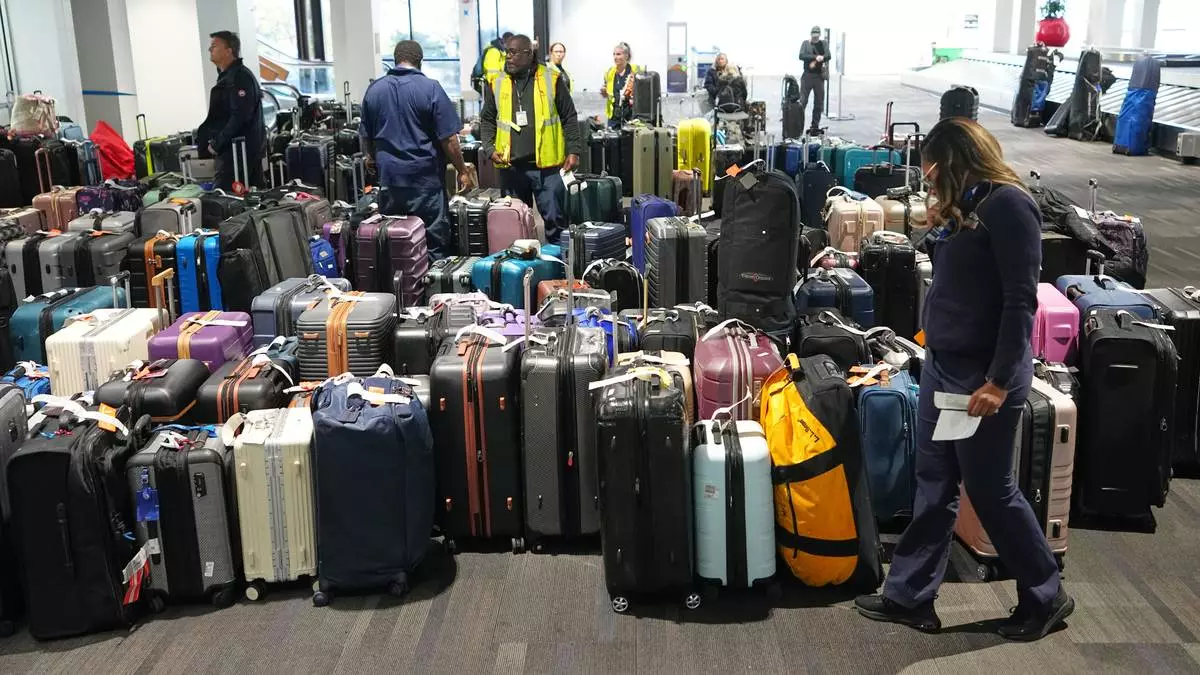
Luggage is set out for travelers to pick up at a baggage claim at Philadelphia International Airport in Philadelphia, Monday, Nov. 16, 2026. (AP Photo/Matt Rourke)
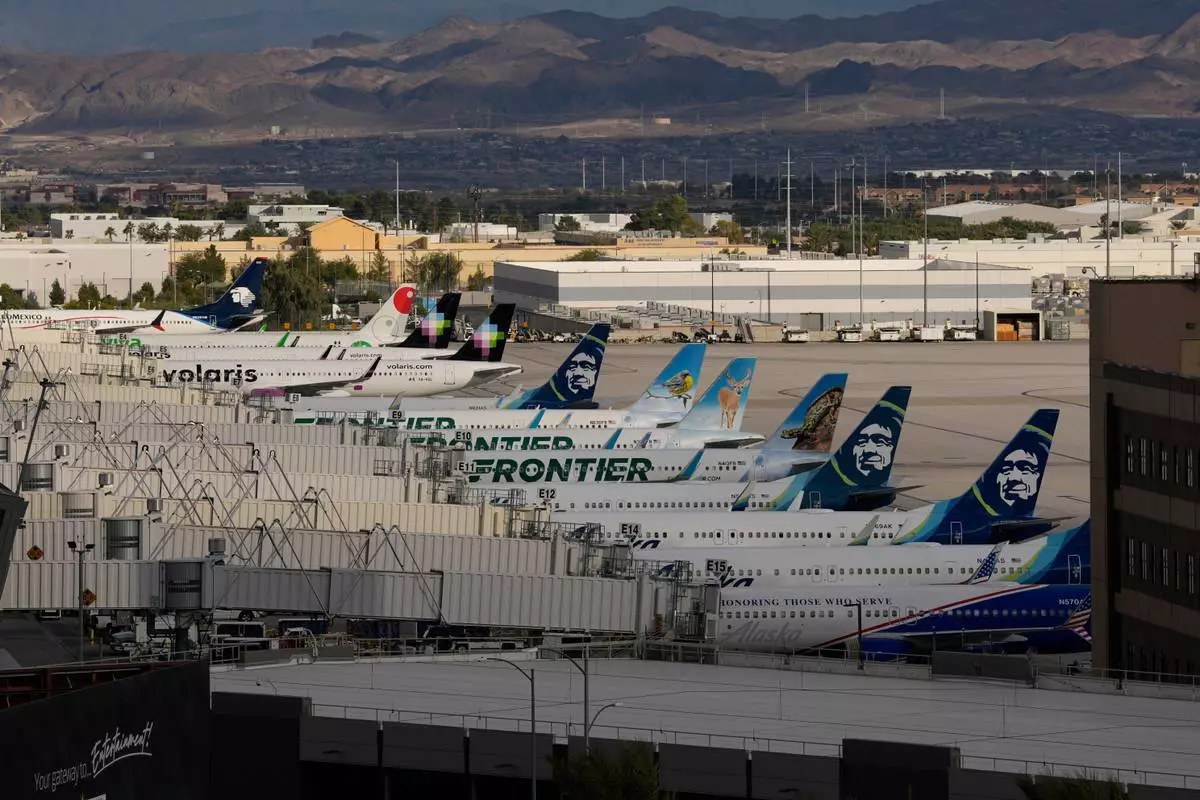
Planes are parked at Harry Reid International Airport during a nationwide ground stop, Friday, Nov. 13, 2026, in Las Vegas. (AP Photo/John Locher)
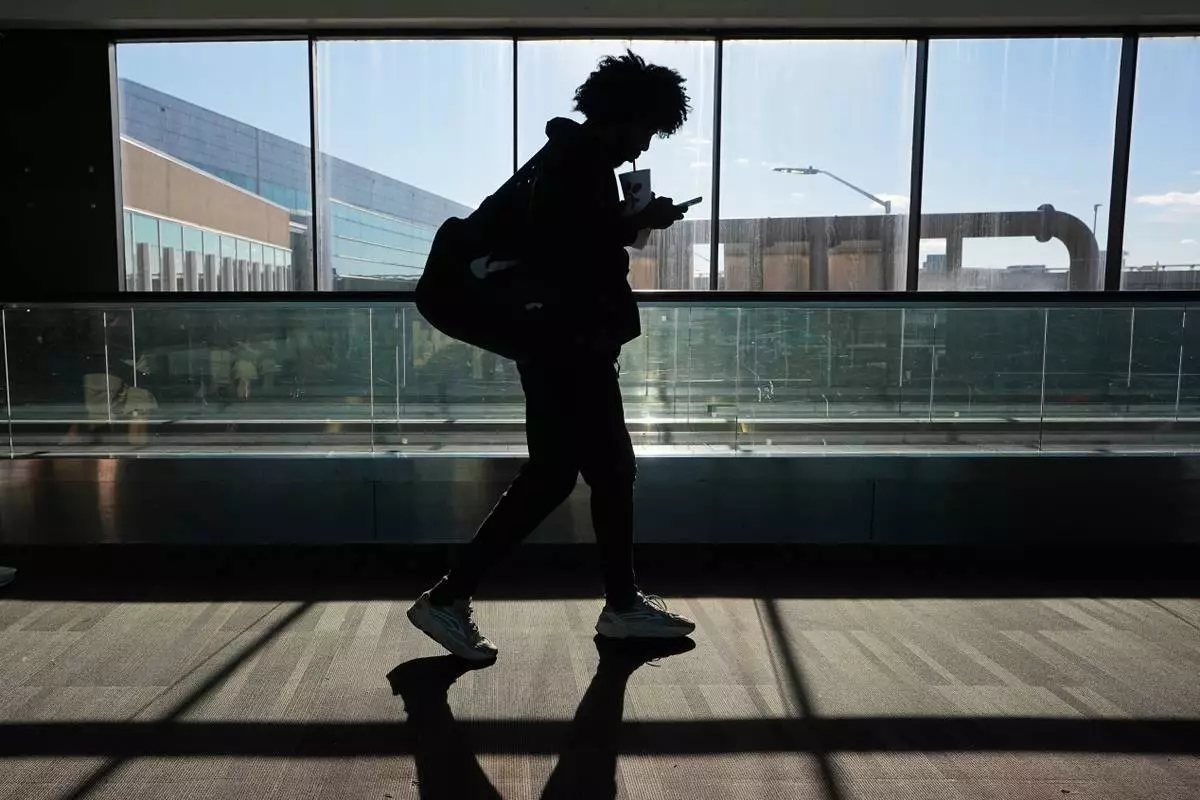
A traveler with a smartphone walks across a pedestrian bridge at Philadelphia International Airport in Philadelphia, Monday, Nov. 16, 2026. (AP Photo/Matt Rourke)