JERUSALEM (AP) — The Israeli parliament elected a new speaker on Tuesday, a key step toward rolling back policies passed by the outgoing government led by Prime Minister Benjamin Netanyahu.
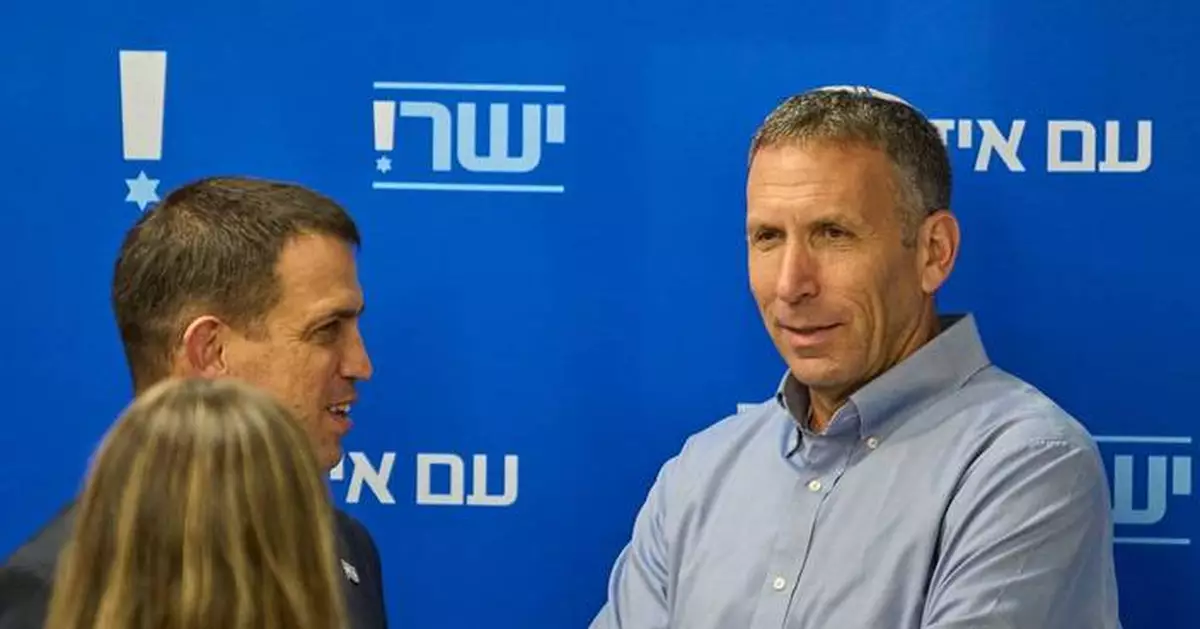
The newly-elected speaker is Matan Kahana, an ally of Gadi Eisenkot, the party leader currently working to form the next government and replace Netanyahu. Eisenkot’s bloc has pledged to undo some of Netanyahu’s most contentious policies following Kahana’s election.
He was approved as speaker with 66 votes in the 120-member chamber, backed by the Jewish-led opposition parties and by the Arab-led parties. The candidate backed by Netanyahu's bloc, Ofir Katz, received 52 votes following a stormy debate that stretched some seven hours.
In his first comments as speaker, Kahana struck a conciliatory note. “It is possible to be divided and hold opposing positions, yet still respect the institutions of the state and, above all, respect those who think differently," he said. "The Knesset of Israel is the home of all the citizens of the state of Israel, and I intend to be the speaker of everyone.”
The vote took place weeks after Oct. 27 parliamentary elections in which Netanyahu and his allies lost their parliamentary majority. Eisenkot was subsequently given the task by Israel's president to try to form a new coalition government.
“The appointment of Matan Kahana as Knesset speaker is a worthy democratic move that reflects the absolute majority in favor of change,” Eisenkot said ahead of Tuesday's vote.
Eisenkot has up to five more weeks to secure enough alliances to form a coalition. As negotiations continue on the sidelines, his bloc, along with the Arab-led parties, can use their majority in the newly-sworn in Knesset to advance their legislative agenda. They introduced several bills last week, including to set term limits on the role of prime minister, to form a government-led inquiry into the Hamas-led Oct. 7, 2023, attacks and to reverse laws to limit the powers of the judiciary.
Kahana gives the opposition bloc a major legislative advantage, according to Assaf Shapira with the Israel Democracy Institute, a Jerusalem think tank.
“It’s important because there is not much time, because the speaker of the Knesset can make the legislative process much, much faster or much slower,” Shapira said.
Kahana replaced Amir Ohana, a Netanyahu ally, as speaker.
Eisenkot and his allies are under pressure to swiftly advance their legislative priorities in the weeks ahead. Currently a member of Eisenkot’s Yashar party, Roy Folkman, heads the temporary committee that decides much of the Knesset’s work until a government is formed.
If Eisenkot fails to form a government, the Israeli president could give Netanyahu an opportunity to do so. That would likely give Netanyahu’s Likud party control of the committee.
Even though Netanyahu’s opponents would still hold a majority, they would “feel that their momentum has gone,” Shapira said, and there would be a “real danger that some of the legislation will be delayed.”
Chamber procedures will pose a further challenge. A bill has to be introduced on the floor, considered in committee, and voted on several times on the floor before it passes the Knesset. That winding process could make it hard to move bills across the finish line before time runs out.
Shapira said Eisenkot and his allies are likely to prioritize rolling back controversial laws that gave the government a larger role in appointing judges and weakened the power of Israel’s attorney general, an independent role that is seen by many as central to Israel’s system of government checks and balances. “It’s very easy to abolish these laws because no new institution has to be created,” he said.
Establishing a body to investigate the Oct. 7 attack would be easier, Shapira added, and carry greater legitimacy once a government is formed. Netanyahu’s opponents argue he has blocked an independent probe into any military or intelligence failures around the day, the deadliest in Israel’s history, and evaded accountability.
The scars of Oct. 7 were on display in the chamber on Tuesday. Hours into the debate, Talik Gvili, a Likud member whose son was a police officer killed by Palestinian militants on Oct. 7, interrupted Ahmad Tibi, a senior member of the Arab Joint List, as he was criticizing far-right Knesset members for racist comments.
“Who killed my son?” Gvili shouted.
“Why are you starting to pin it on me?” Tibi replied. “Don’t ask such a question to an Arab member of the Knesset.”
A shouting match ensued, with Tibi from the dais urging Gvili not to rely on insinuation.
“The one who committed the murder is Hamas. The one responsible is your prime minister,” he said.
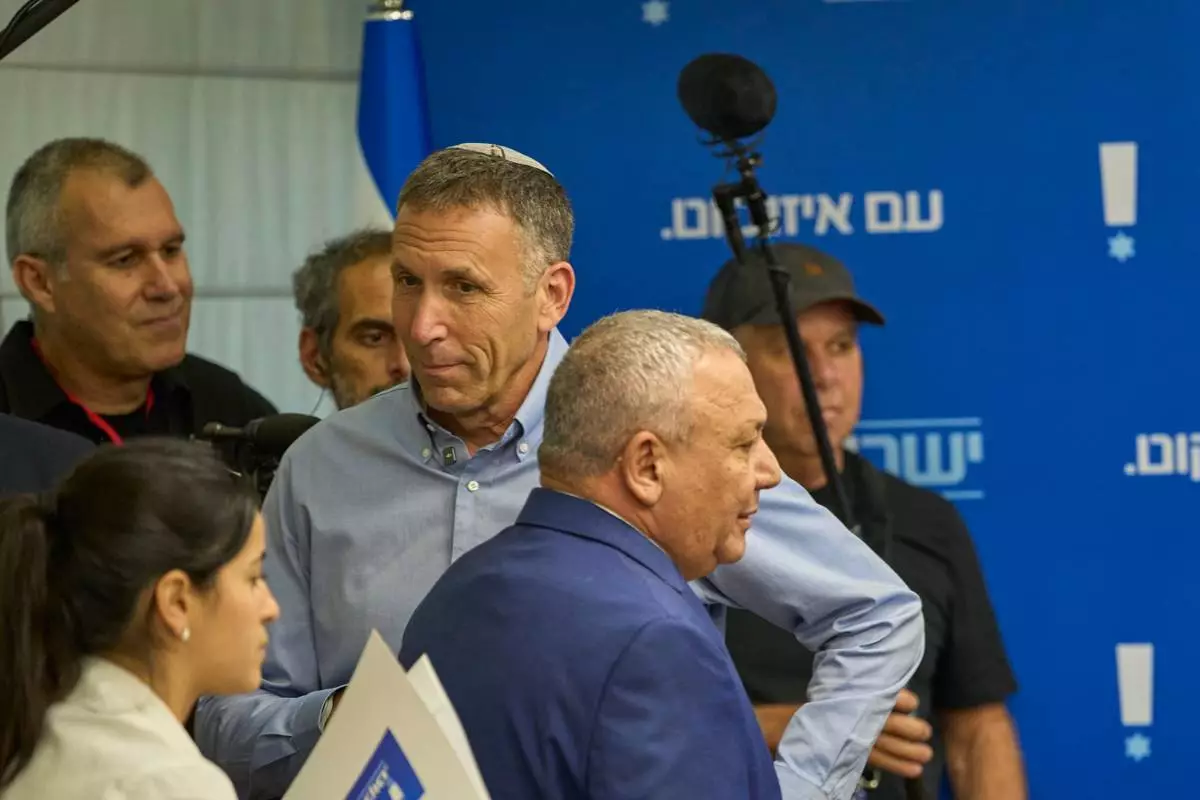
Gadi Eisenkot, center, leader of the Yashar party, and MK Matan Kahana ,left, attend a faction meeting at the Knesset, Israel's parliament, in Jerusalem, Tuesday, Nov. 17, 2026. (AP Photo/Ohad Zwigenberg)
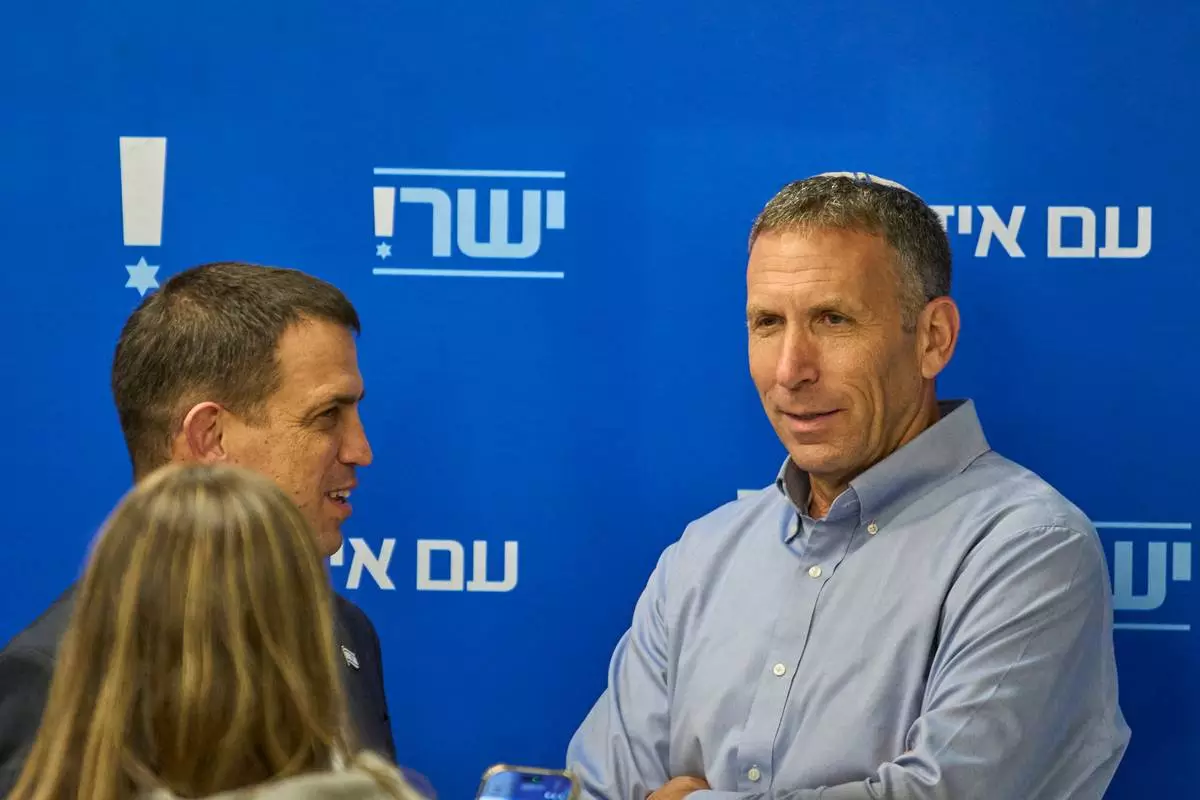
MK Matan Kahana, right, attends his party's faction meeting at the Knesset, Israel's parliament, in Jerusalem, Tuesday, Nov. 17, 2026. (AP Photo/Ohad Zwigenberg)
WASHINGTON (AP) — Senate Democrats elect their leader every two years behind closed doors and on a secret ballot. But this year’s race has burst into the public eye as Maryland Sen. Chris Van Hollen mounts an insurgent bid against New York incumbent Chuck Schumer.
The Dec. 1 contest has put Senate Democrats on edge and has forced what could become an ugly fight immediately after major victories in the midterm elections. It has also put the more moderate incoming Democrats in a tough spot, forced to take sides in a leadership race before they are even sworn into office.
Schumer, who recruited several of those moderate Democrats who helped win the majority, has said he has the votes to be reelected, and around 15 of the 55 elected Democrats in next year’s caucus have said publicly that they will support him. Four Democratic senators have said they will support Van Hollen. Everyone else is staying quiet for now.
“Leave it to the Democrats,” said Colorado Sen. John Hickenlooper, who flipped an imaginary coin when asked by reporters on Monday how he would vote. “We flipped nine seats, and the person who actually helps put it all together and do all that, and all of a sudden, there’s a revolt.”
Van Hollen, who is backed by progressive groups, says it’s time for new leadership after Schumer's nearly decade-long tenure. While the two men align on most issues, Van Hollen says Democrats need to more aggressively push to end the Iran war and potentially even shut down the government next month, if necessary, to stop the flow of war funding.
“To deliver, we need new leadership,” Van Hollen says. “This isn’t about any one person – it’s about answering that call.”
Van Hollen is making his argument to the public as Schumer mostly keeps quiet and holds private his conversations with the senators who will decide his fate. Schumer shared his agenda for the next Congress in a caucus luncheon last week, laying out a plan to try to quickly pass legislation on healthcare and tariffs and to launch multiple investigations into President Donald Trump’s Republican administration.
Asked about Van Hollen's challenge on Tuesday, Schumer said again that he's confident he has the votes.
“We are united together on lowering costs and ending corruption,” Schumer said.
The unusually public race — the first contested election for Senate Democratic leader in decades — comes when Schumer has drawn intense criticism from the party's base. Some voters and progressive groups called for his removal in 2025 after he voted with Republicans to keep the government open and as they called for stronger opposition to Israel's war in Gaza.
Still, many in the caucus see the role not as a national figurehead but as an inside operator who can navigate intraparty politics and the 100-member Senate’s arcane rules to pass legislation.
“I want to hear from any candidate what their vision is for the floor and managing the caucus,” said Georgia Sen. Jon Ossoff, who was just reelected. He said he hasn’t committed to either Schumer or Van Hollen.
Party leaders also spend much of their time fundraising and recruiting candidates — a particular interest for Schumer, who has been directly or indirectly in charge of the Senate Democrats’ campaign arm for two decades.
Returning to Washington on Monday for the first time since Van Hollen entered the race, most Democrats would not answer questions about who they would support. That included prominent progressives like Massachusetts Sen. Elizabeth Warren.
Michigan Sen. Elissa Slotkin appeared last week at a press conference with Vermont Sen. Bernie Sanders, an independent who caucuses with Democrats, as he declared that he would not support Schumer. Van Hollen entered the race two days later, and Sanders immediately endorsed him. But Slotkin has not.
“I’m not saying anything,” she told reporters on Monday.
Others like Virginia Sen. Tim Kaine defended Schumer while saying that they are still open to Van Hollen or someone else.
“Chuck delivered an amazing win,” said Kaine. “Chuck knows Trump, and that will be really, really important going forward."
Still, Kaine said, "The voters are demanding change, so we have to figure that out as a caucus, and we’re going to be able to. We’re not afraid to have a discussion.”
The eight incoming freshmen Democratic senators — nine if Mary Peltola wins the Alaska Senate race, which has still not been called — are set to alter the caucus next year. But only two have said how they will vote in the leadership election.
Abdul El-Sayed of Michigan and Peggy Flanagan of Minnesota, both of whom were backed by progressive groups in their campaigns, say they support Van Hollen. Schumer supported both of their opponents in their primaries, though he eventually put $67 million into El-Sayed’s competitive race.
El-Sayed said Tuesday that he likes Schumer and will work alongside him if he wins. But he said he thinks Van Hollen is the best person to take on affordability challenges and liberal priorities like Medicare for All.
“We have not seen an open Senate fight for leadership for a very long time," El-Sayed said at The Atlantic Summit in Washington. "This is healthy. It’s good.”
For some of the other freshmen, many of them moderates from Republican-leaning states, the decision could be more difficult. Some said during their campaigns that they wouldn’t vote for Schumer. But it's unclear if any of them would back the more liberal Van Hollen.
In South Carolina on Tuesday, Sen.-elect Annie Andrews, a doctor, said that she is in conversations with both candidates and has been “sharing my plans to fix our healthcare system.”
Incoming Iowa Sen. Josh Turek told reporters he’s met with both Schumer and Van Hollen. He said he wants more specifics on how they will help rural families, overhaul campaign finance and ban lawmakers from trading stocks. Turek said he also wants to assess “who is going to put forth the most robust anti-corruption agenda."
Hawaii Sen. Mazie Hirono, who is backing Schumer, said that the caucus needs to hear more from the new senators who “have been through the fire to get here.”
“I think that we have to make sure that all these voices are heard,” she said. “They’ve got a lot of talent to bring to the table.”
Associated Press writers Joey Cappelletti and Kevin Freking in Washington, Meg Kinnard in Columbia, S.C., and Hannah Fingerhut in Des Moines, Iowa, contributed to this report.
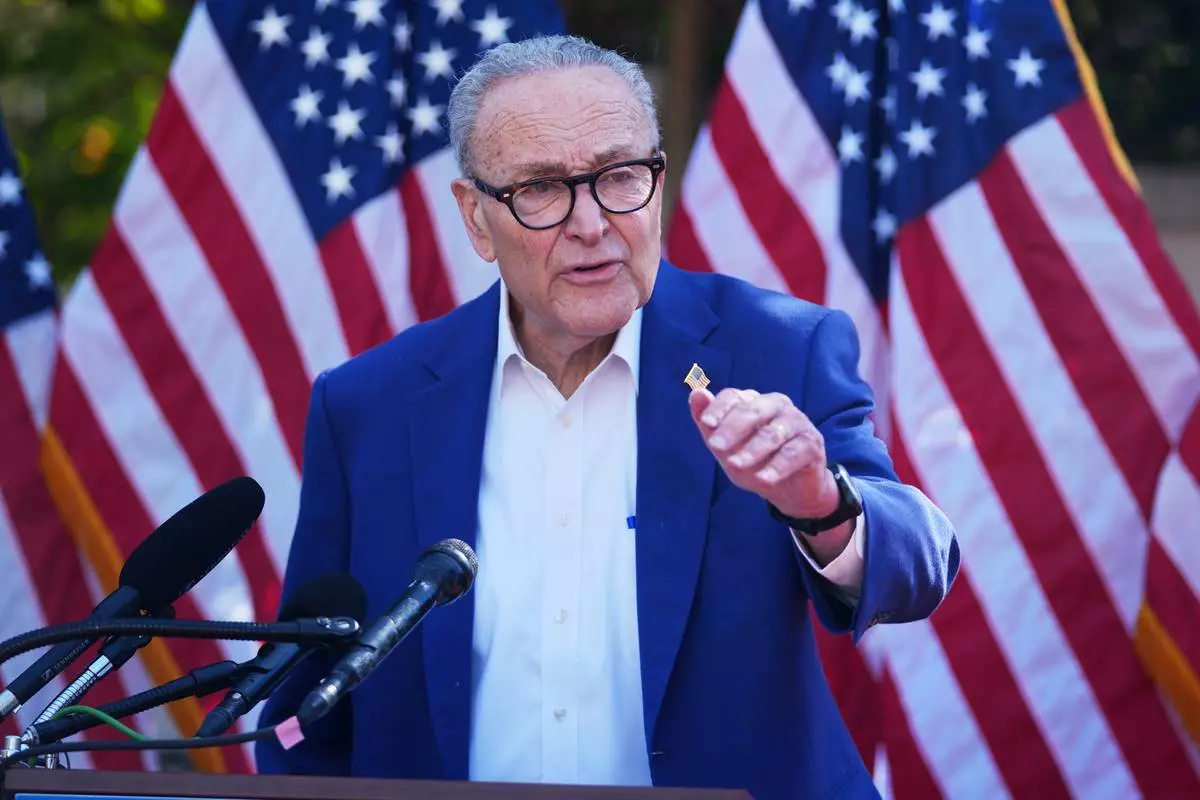
Senate Minority Leader Chuck Schumer, D-N.Y., speaks at the Democratic Senatorial Campaign Committee office, Wednesday, Nov. 4, 2026, in Washington. (AP Photo/Allison Robbert)
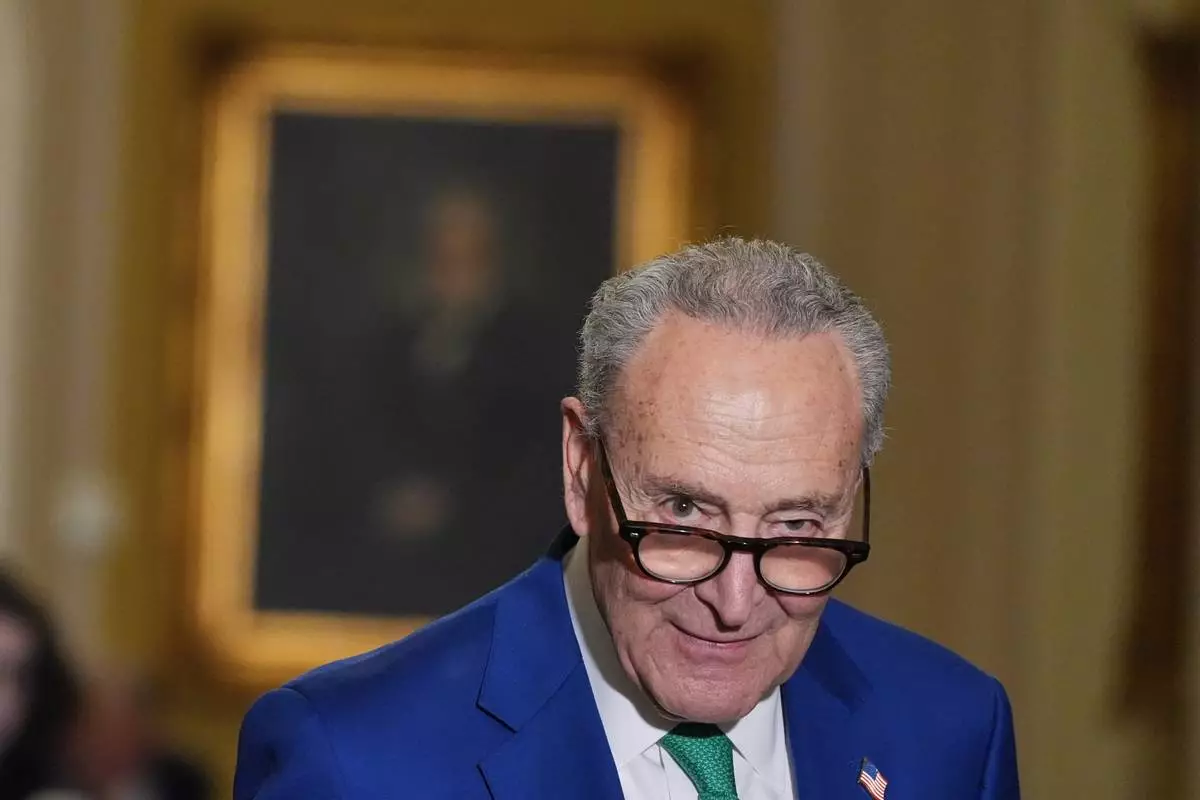
Senate Minority Leader Chuck Schumer, D-N.Y., listens during a news conference after a policy luncheon on Capitol Hill, Tuesday, Nov. 10, 2026, in Washington. (AP Photo/Mariam Zuhaib)
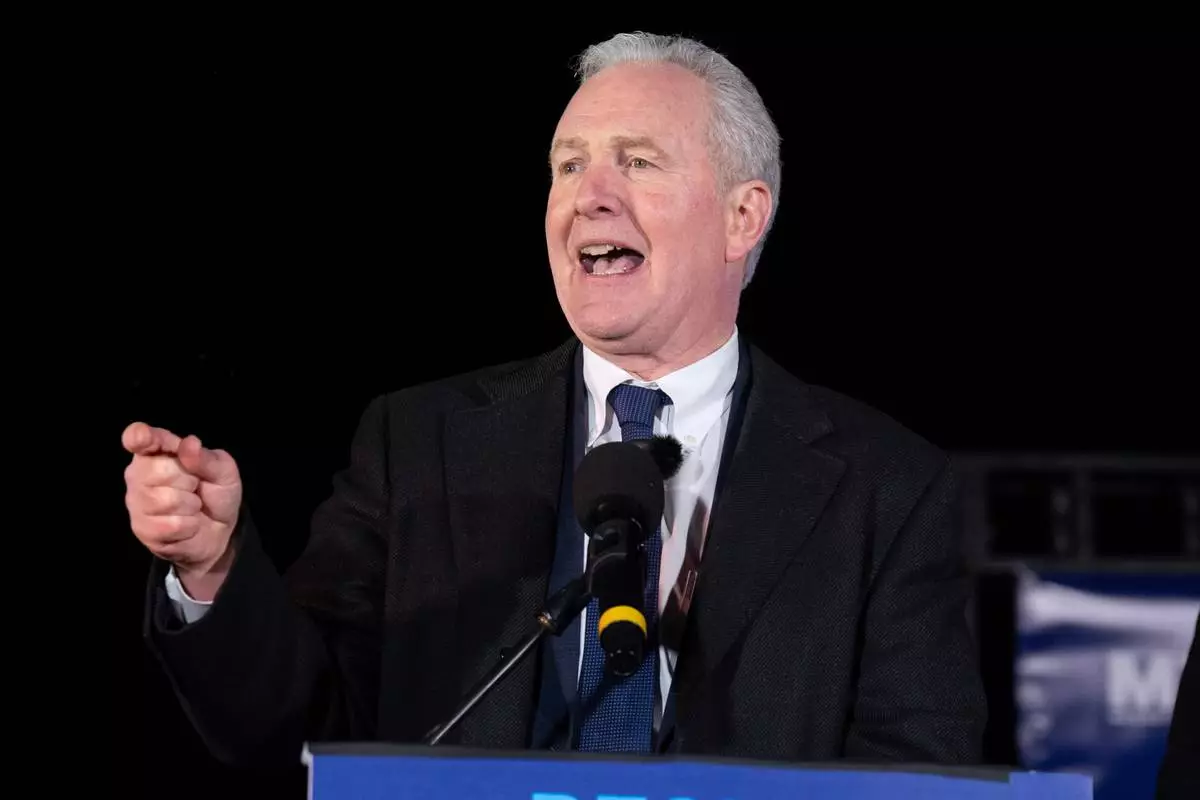
FILE - Sen. Chris Van Hollen, D-Md., speaks during the "People's State of the Union" rally outside of the U.S. Capitol, Feb. 24, 2026, in Washington. (AP Photo/Jose Luis Magana, File)
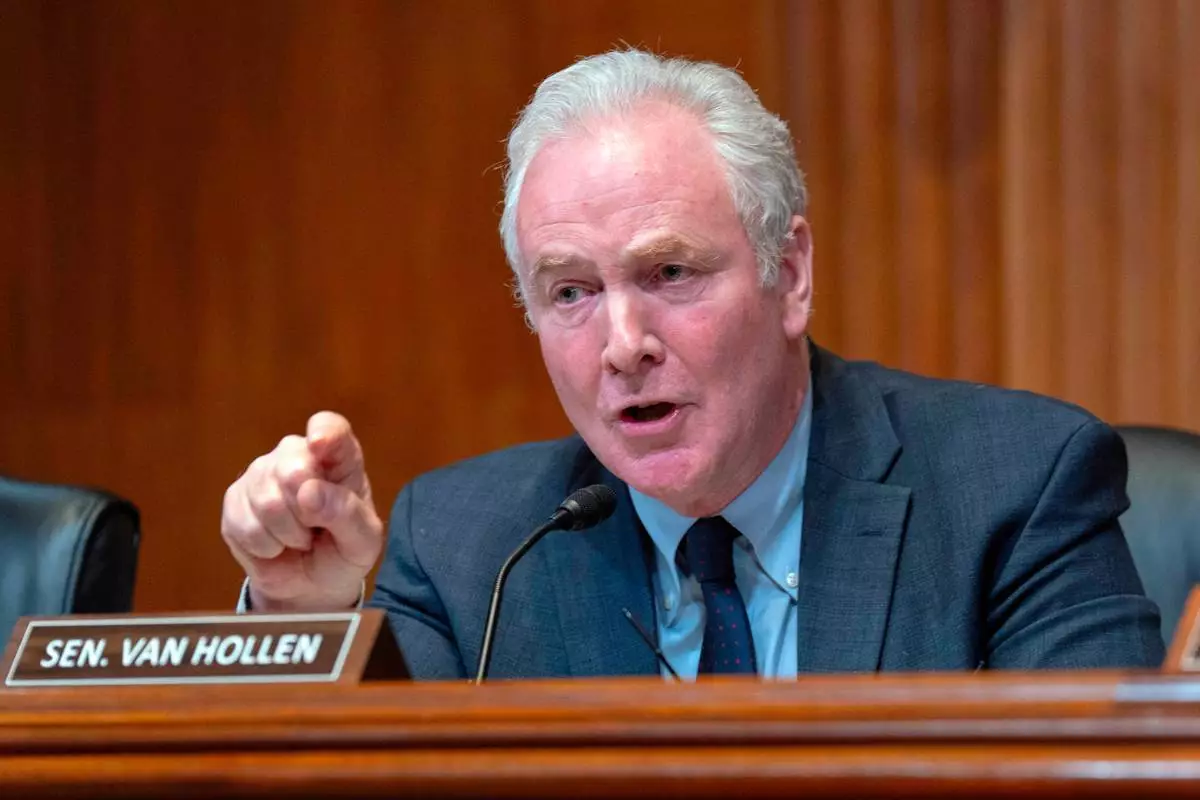
FILE - Sen. Chris Van Hollen, D-Md., speaks during the Senate Subcommittee on Commerce, Justice, Science, and Related Agencies hearing on Capitol Hill, May 12, 2026, in Washington. (AP Photo/Jose Luis Magana, File)