As Haiti and the United States national soccer teams prepare to take the field for the second leg of their Concacaf Nations League match-up on Nov.17, the stadium they will play in sits just 16 miles from an Immigration and Customs Enforcement ( ICE ) office.
For many fans of Haiti in the region, the game at TQL Stadium is an opportunity to celebrate national pride despite a bruising loss to the U.S. in Miami Saturday. For others, the excitement comes with heightened concern about immigration agents, whose actions in carrying out the administration’s mass deportation agenda have caused widespread panic and humiliation for Haitians in Ohio.
“There’s a lot of things that are going on right now that are unfortunate, so it’s nice to come together and actually be happy about something,” said Asecou Clermon, who plans to attend the match.
“Whether we win or lose, it will be just a good environment to be in,” Clermon added.
ICE’s offices in suburban Blue Ash are a 25-minute drive from TQL Stadium. Over the summer, after the Trump administration ended TPS for Haiti, the site became a well-known location to the estimated 20,000 Haitian newcomers in the region. Many living in Springfield, long a target of President Donald Trump, and elsewhere were summoned to the Blue Ash offices for check-ins.
By August, videos of Haitians being fitted with GPS ankle monitors went viral as ICE arrests increased overall around the region. Advocates also rallied outside the offices to protest detentions there.
For Haitian immigrants living in the region, even those with legal status, the office became a source of anxiety where they or family members and friends have faced deportation. It also drew attention after Pierre Damas Bel died by suicide for being the location where the 20-year-old traveled to request that his ankle monitor be removed.
Overall, the ICE office’s proximity to the stadium illustrates a contrasting experience for the Haitian community in many ways. At one location, Haitians face immigration procedures that have placed their futures in the balance. At the other, the USMNT is welcoming their country’s athletes as sports guests.
Chris Knoester, a sport sociologist at The Ohio State University who has led the National Sports and Society Survey (NSASS), said the Haiti-US match carries significance beyond athletic competition.
“Sports interactions can be symbolic, influential, and meaningful on many different levels,” Knoester said. “They are never just a form of entertainment or display of athleticism.”
“Especially in the wake of outrageous lies, scapegoating, and targeted immigration enforcement aimed at Haitian Americans, the upcoming Haiti-USA match is likely to carry extraordinary significance,” Knoester explained.
On Match day, however, questions for policymakers, community organizations, and institutions will take a backseat as Haiti fans put their primary objective front and center.
For Haitian immigrants in Ohio, the opportunity to see their national team compete on American soil may offer a rare moment of connection and joy amid difficult circumstances. In addition to immigration policies that caused many to avoid outings or reduce their incomes this year, some Haitians in the Midwest found the matches featuring Haiti during the 2026 FIFA World Cup either too expensive or too far to attend in Boston, Philadelphia and Atlanta.
Tuesday’s game is within driving distance not only for central Ohio Haitians, but also for those living in nearby Indiana and other Midwestern cities. Ticket prices were as low as $40 the day before the match, a much more affordable option than the Miami leg, where prices exceeded $150.
Party promoters have also used Tuesday’s game to organize several after-parties as an option to celebrate outside the stadium.
Natafon Korel says he has to support, even though immigration enforcement affecting Haitians in the area have left him “more aware and more alarmed.”
“I do want to be more aware of, you know, watching my surroundings,” Korel said. “Just having that culture around me is another thing that drove me to go.”
For Smith Francois, a local activist, the trip to Cincinnati will mark his first time ever attending a professional soccer game. He plans to go with other Haitian fans, drawn by the opportunity to share in the occasion.
“To celebrate this moment,” Francois said.
This report is a collaboration between The Haitian Times and The Associated Press.
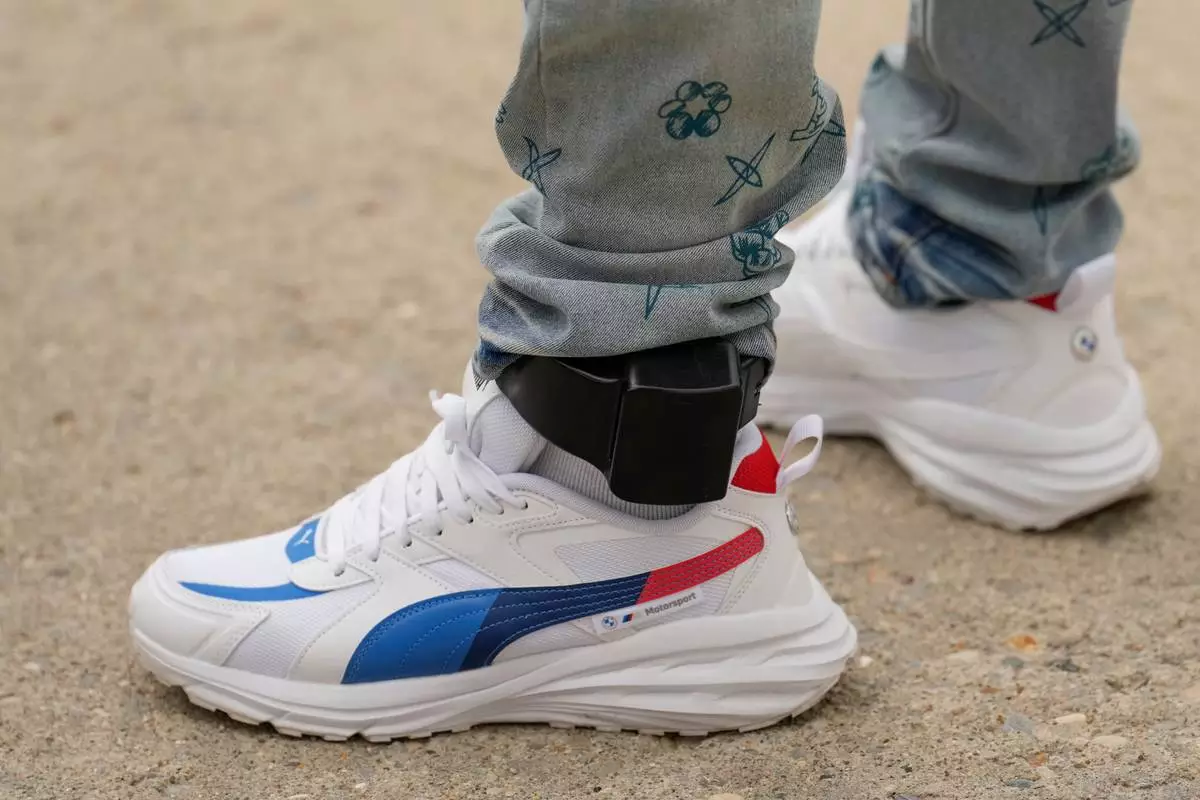
FILE - A Haitian resident of Columbus, Ohio, departs the ICE Enforcement and Removal Operations field office with an ankle monitor after an appointment in Cincinnati, Aug. 2, 2026. (AP Photo/Carolyn Kaster, File)
United States and Haiti flags fly before a CONCACAF Nations League quarterfinal soccer match on Saturday, Nov. 14, 2026, in Miami, Fla. (AP Photo/Alie Skowronski)