The southern Chinese city of Shenzhen has been rolling out a series of convenient, foreigner-friendly services for inbound tourists while receiving a record-breaking number of international visitors in recent months, as it also prepares to welcome more high-profile guests as the host city of the upcoming 33rd APEC Economic Leaders' Meeting.
The two-day APEC meeting will open in the city on Wednesday under the theme "Building an Asia-Pacific Community to Prosper Together," with the gathering focusing on three priority areas identified by China -- openness, innovation, and cooperation.
Shenzhen has already been seeing a large influx of foreign visitors ahead of the event. Data from local border inspection authorities shows that foreign passenger traffic from APEC member economies at Shenzhen's Bao'an International Airport hit a historic high of 1.25 million in the first 10 months of this year.
The travel boom also comes as China has been expanding its visa-free travel policies in recent times, while the popularity of the "China Travel" trend has grown online, with Shenzhen proving an enticing destination for curious visitors who are keen to come and experience its high-tech offerings.
Shenzhen authorities have sought to upgrade services to make cross-border travel, payments and healthcare much easier for these visitors.
A cross-border healthcare platform launched by Chinese insurer Ping An offers international users one-on-one audio and video consultations with real-time two-way interpretation. The platform also provides timely and helpful assistance during hospital visits, allowing users to overcome language barriers and unfamiliarity with hospital procedures from registration and check-in to picking up prescriptions.
Beyond healthcare, international visitors can also enjoy a more convenient range of payment options. One is "TenPayGo," a payment app for overseas users traveling to China. Launched by Chinese tech giant Tencent, the app supports bank cards issued overseas by seven major international card organizations including Visa and Mastercard, as well as Apple Pay and about 60 overseas e-wallets such as Starryblu.
After linking their desired payment method, users can scan QR codes and pay directly through TenPayGo. The app will also enable overseas visitors to activate a ride code for Shenzhen's buses and metro, with no phone number or transit card required, letting them get around the city with ease.
These developments in Shenzhen are part of China's broader push to facilitate inbound travel in recent years.
Since December 2023, when China launched a trial policy granting unilateral visa exemptions to visitors from six countries, it has now expanded unilateral visa-free entry to travelers from 50 countries, allowing eligible visitors to stay for up to 30 days.
In a separate move, authorities extended the visa-free transit period for certain countries from 72 or 144 hours to 240 hours in December 2024. Kyrgyzstan and Vietnam were added to the program in August 2026, bringing the number of eligible countries to 57.
Moreover, improving travel facilitation was a key focus of discussions at the 13th APEC Tourism Ministerial Meeting that was held in the Macao Special Administrative Region (SAR) in June.
According to Chair's Statement of the Meeting, APEC members encourage economies to support efforts to enhance the tourism consumption experience for visitors, including through promoting interoperability and voluntary cooperation in cross-border payments. The statement also said APEC members encourage efficient and positive visitor experiences at entry and exit, including, where appropriate, through the use of digital solutions such as electronic visas.
Dai Bin, President of the China Tourism Academy, attributed the prosperity and development of tourism across the Asia-Pacific region within the APEC framework to the high-level push and policy coordination from the leaders of APEC member economies.
China's measures to facilitate inbound travel have streamlined customs clearance, boosted consumption and made payments more efficient, creating a more convenient environment for international visitors traveling to the country, whether for sightseeing, tourism or study, Dai said.
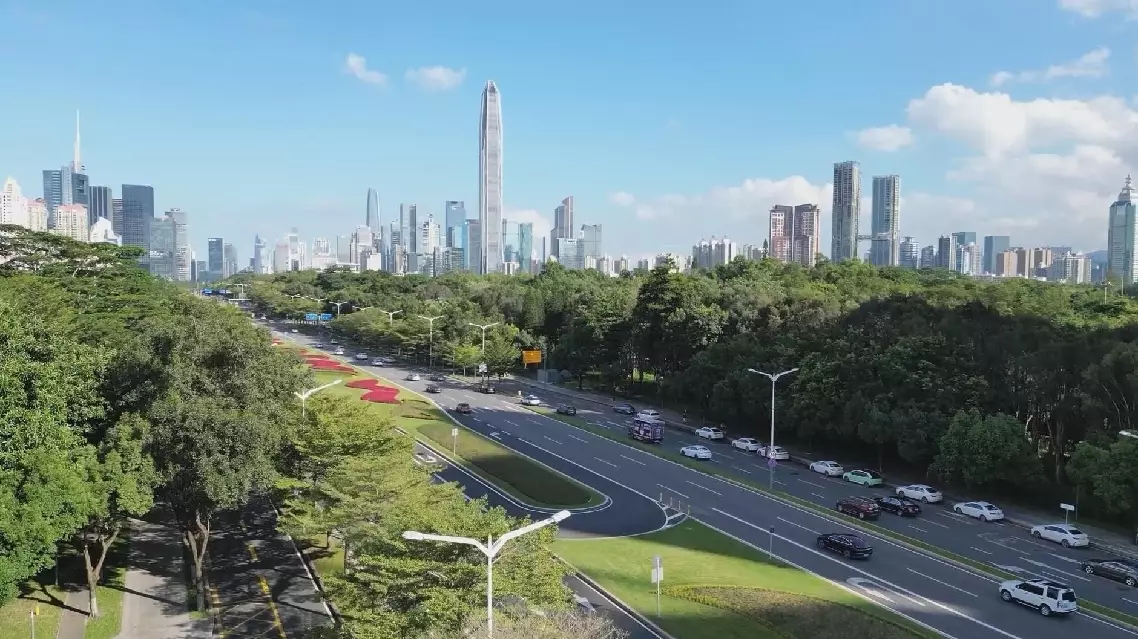
Shenzhen braces for influx of inbound tourists with upgraded services